Introduction
UI Design Tools are platforms that help designers create, prototype, and manage digital interfaces across web, mobile, and desktop applications. They provide designers with the ability to craft visually consistent layouts, interactive components, and responsive designs while collaborating seamlessly with developers and product teams. Modern UI design tools go beyond static screens, integrating prototyping, design system management, and real-time collaboration.
In UI design is more critical than ever. Users expect seamless, intuitive experiences across multiple devices, and organizations need fast iteration cycles. UI Design Tools allow teams to maintain brand consistency, reduce design-to-development friction, and accelerate product delivery through reusable components, libraries, and interactive prototypes.
Real-world use cases include:
- Creating responsive web and mobile interface designs.
- Rapid prototyping for user testing and iteration.
- Centralizing design systems for enterprise teams.
- Collaborating across distributed design and development teams.
- Managing version control and component updates in large projects.
Evaluation Criteria for Buyers:
- Prototyping and interactive design capabilities.
- Collaboration and real-time editing features.
- Component library and design system management.
- Cross-platform and device support.
- Integration with developer tools and code repositories.
- Version control and design iteration tracking.
- Accessibility and compliance features.
- Ease of use and learning curve.
- Security and enterprise-grade controls.
- Pricing and scalability.
Best for: UX/UI designers, product managers, developers, and enterprise design teams managing multiple products.
Not ideal for: Small teams with single projects or organizations that do not require interactive design features.
Key Trends in UI Design Tools
- AI-assisted design: Tools suggest color palettes, layouts, and component optimizations.
- Real-time collaboration: Multiple designers can work on the same file simultaneously.
- Integrated prototyping: Direct interactive prototypes without third-party plugins.
- Component reuse and design systems: Centralized libraries and tokens ensure consistency.
- Cross-platform support: Designs seamlessly adapt across web, iOS, Android, and desktop.
- Accessibility integration: Automated checks for WCAG and ARIA compliance.
- Version control and branching: Tracks changes and supports rollback of designs.
- Analytics for design decisions: Tracks component usage and iteration effectiveness.
- Plugin ecosystems: Extends functionality with automation, integration, and productivity tools.
- Cloud-native deployment: Centralized, secure, and accessible from anywhere.
How We Selected These Tools (Methodology)
- Market adoption and recognition across enterprises and SMBs.
- Completeness of design, prototyping, and component library features.
- Reliability and performance signals from real-world deployments.
- Security posture and compliance features.
- Integrations with code repositories, design systems, and collaboration tools.
- Ecosystem support for plugins, automation, and extensions.
- Customer fit across different team sizes and industries.
- Support, documentation, and community strength.
Top 10 UI Design Tools
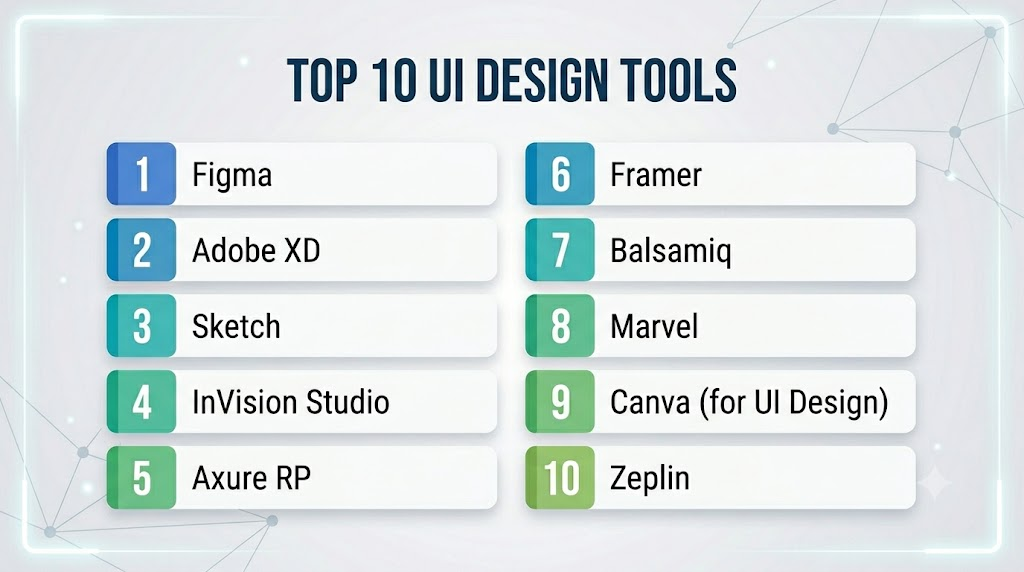
1- Figma
Short description:
Figma is a cloud-based design tool enabling real-time collaboration. It supports vector design, prototyping, and design system management, allowing designers and developers to work seamlessly across platforms.
Key Features
- Vector-based design and prototyping
- Real-time collaboration and commenting
- Shared component libraries
- Design system management
- Interactive prototyping
- Plugin ecosystem for extended functionality
- Cross-platform support
Pros
- Real-time collaboration for distributed teams
- Easy to manage design systems
- Cloud-based accessibility from any device
Cons
- Some advanced features require paid subscription
- Performance can lag on complex projects
Platforms / Deployment
Web / macOS / Windows / Cloud
Security & Compliance
SSO, MFA, encryption, GDPR compliant
Integrations & Ecosystem
- Jira, Slack, GitHub
- CI/CD design token integration
- Third-party plugin support
Support & Community
Extensive documentation, tutorials, community forums
2- Adobe XD
Short description:
Adobe XD offers vector-based design, prototyping, and shared libraries for UI design. It integrates well with other Adobe Creative Cloud apps, enabling a full design workflow from ideation to prototype.
Key Features
- Vector-based UI design and prototyping
- Interactive prototypes and animations
- Shared component libraries and assets
- Responsive resize and grids
- Plugin ecosystem
- Collaboration through cloud documents
- Version history
Pros
- Strong integration with Adobe ecosystem
- Interactive prototype capabilities
- Cloud-based sharing and collaboration
Cons
- Some features require Creative Cloud subscription
- Limited component analytics
Platforms / Deployment
macOS / Windows / Cloud
Security & Compliance
SSO, encryption, audit logs
Integrations & Ecosystem
- Adobe Creative Cloud
- Jira, Slack
- Third-party plugins
Support & Community
Official documentation, community forums, tutorials
3- Sketch
Short description:
Sketch is a macOS-focused vector design tool for UI and UX. It supports symbol libraries, prototyping, and plugin integrations to maintain consistency across design teams.
Key Features
- Shared libraries and symbols
- Design tokens management
- Vector-based UI design
- Prototyping tools
- Plugin ecosystem
- Version control integrations
- Export for multiple platforms
Pros
- Mature plugin ecosystem
- Efficient component management
- Popular among macOS designers
Cons
- macOS-only
- Collaboration features limited without third-party tools
Platforms / Deployment
macOS / Cloud
Security & Compliance
Varies / N/A
Integrations & Ecosystem
- Zeplin, Abstract
- Jira, Slack
- Plugin ecosystem
Support & Community
Documentation, tutorials, active community
4- InVision Studio
Short description:
InVision Studio provides design, prototyping, and animation tools, with a focus on rapid iteration and interactive UI design. It integrates with InVision cloud for team collaboration.
Key Features
- Interactive UI prototyping
- Animation and motion design
- Component library management
- Real-time collaboration
- Integration with InVision Cloud
- Version control
- Cross-platform export
Pros
- Strong animation and prototyping tools
- Integration with team workflows
- Centralized component management
Cons
- Learning curve for complex animations
- Heavier resource usage on large projects
Platforms / Deployment
macOS / Windows / Cloud
Security & Compliance
SSO, encryption, MFA
Integrations & Ecosystem
- Jira, Slack
- GitHub for developer handoff
- Plugin marketplace
Support & Community
Documentation, forums, onboarding guides
5- Axure RP
Short description:
Axure RP focuses on advanced prototyping with logic, conditional interactions, and dynamic content, allowing teams to test complex UI flows before development.
Key Features
- High-fidelity interactive prototyping
- Conditional logic and dynamic content
- Component libraries
- Collaboration and commenting
- Adaptive views for multiple screens
- Version control
- Developer handoff tools
Pros
- Supports complex prototypes
- Ideal for enterprise UX testing
- Integrated team collaboration
Cons
- Steeper learning curve
- Less lightweight than simpler design tools
Platforms / Deployment
Windows / macOS / Cloud
Security & Compliance
Varies / N/A
Integrations & Ecosystem
- Jira, Slack
- Sketch/Photoshop import
- Versioning plugins
Support & Community
Documentation, webinars, community forums
6- Framer
Short description:
Framer allows designers to create interactive prototypes with real-time collaboration and advanced animations. It integrates component libraries and supports design handoff to developers.
Key Features
- Interactive prototyping and animations
- Real-time collaboration
- Component libraries
- React-based code integration
- Version control
- Cross-platform previews
- Plugin ecosystem
Pros
- High-quality animations
- Developer-friendly with React integration
- Rapid iteration
Cons
- Requires learning for advanced features
- Cloud reliance for collaboration
Platforms / Deployment
Web / macOS / Windows / Cloud
Security & Compliance
SSO, encryption, MFA
Integrations & Ecosystem
- GitHub, Slack
- Figma import
- Design system libraries
Support & Community
Tutorials, documentation, community forums
7- Balsamiq
Short description:
Balsamiq focuses on low-fidelity wireframing to quickly mock up UI concepts and gather early-stage feedback. Its simplicity aids collaboration and rapid iteration.
Key Features
- Drag-and-drop wireframing
- Pre-built UI components
- Collaboration and commenting
- Export and sharing tools
- Version control
- Cloud and desktop support
Pros
- Quick prototyping
- Easy for beginners
- Lightweight and fast
Cons
- Not suitable for high-fidelity design
- Limited animation and prototyping
Platforms / Deployment
Web / Windows / macOS / Cloud
Security & Compliance
Varies / N/A
Integrations & Ecosystem
- Jira, Confluence
- Export to PDF/PNG
- Team collaboration features
Support & Community
Documentation, tutorials, customer support
8- Marvel
Short description:
Marvel is a UI design and prototyping tool with integrated design system management, enabling designers to create interactive prototypes and manage reusable components.
Key Features
- Design and prototyping
- Component libraries
- Real-time collaboration
- Developer handoff
- Versioning
- User testing integration
- Responsive design tools
Pros
- Intuitive interface
- Quick prototyping
- Supports design systems
Cons
- Limited advanced animation features
- Requires subscription for full access
Platforms / Deployment
Web / macOS / Windows / Cloud
Security & Compliance
SSO, MFA, encryption
Integrations & Ecosystem
- Jira, Slack
- Figma import/export
- User testing tools
Support & Community
Tutorials, documentation, forums
9- Canva (for UI Design)
Short description:
Canva provides simplified UI design capabilities for teams creating web and mobile interfaces, emphasizing templates, component reuse, and brand consistency.
Key Features
- Drag-and-drop UI design
- Component templates
- Branding kits and style guides
- Collaboration features
- Export options
- Versioning and history
Pros
- Easy for non-designers
- Quick template-based design
- Cloud-based collaboration
Cons
- Limited advanced prototyping
- Less suitable for complex UI systems
Platforms / Deployment
Web / iOS / Android / Cloud
Security & Compliance
SSO, encryption, GDPR compliance
Integrations & Ecosystem
- Slack, Google Workspace
- Figma/Sketch import
- Cloud storage
Support & Community
Documentation, tutorials, community
10- Zeplin
Short description:
Zeplin facilitates design handoff by translating UI designs into developer-friendly specifications with style guides, component libraries, and asset management.
Key Features
- Design-to-code handoff
- Style guides and component documentation
- Versioning and project management
- Team collaboration
- Integration with Figma, Sketch, XD
- Asset export tools
Pros
- Streamlines designer-to-developer workflow
- Clear component specs
- Supports multiple design platforms
Cons
- Not a full design tool
- Paid subscription required for teams
Platforms / Deployment
Web / macOS / Windows / Cloud
Security & Compliance
SSO, MFA, encryption
Integrations & Ecosystem
- Figma, Sketch, Adobe XD
- Slack, Jira
- CI/CD workflows
Support & Community
Documentation, onboarding, community forums
Comparison Table (Top 10)
| Tool Name | Best For | Platform(s) Supported | Deployment | Standout Feature | Public Rating |
|---|---|---|---|---|---|
| Figma | Enterprise collaboration | Web/macOS/Windows | Cloud | Real-time component libraries | N/A |
| Adobe XD | Adobe ecosystem users | macOS/Windows | Cloud | Interactive prototypes | N/A |
| Sketch | macOS design teams | macOS | Cloud/Self-hosted | Symbol management | N/A |
| InVision Studio | Prototyping & animation | macOS/Windows | Cloud | Advanced animation | N/A |
| Axure RP | Complex interactions | macOS/Windows | Cloud | Conditional logic prototypes | N/A |
| Framer | React integration & prototyping | Web/macOS/Windows | Cloud | React-based component integration | N/A |
| Balsamiq | Low-fidelity wireframes | Web/macOS/Windows | Cloud | Rapid wireframing | N/A |
| Marvel | UI & prototyping | Web/macOS/Windows | Cloud | Integrated design systems | N/A |
| Canva | Non-designers | Web/iOS/Android | Cloud | Template-based UI design | N/A |
| Zeplin | Developer handoff | Web/macOS/Windows | Cloud | Design-to-code workflow | N/A |
Evaluation & Scoring of UI Design Tools
| Tool Name | Core (25%) | Ease (15%) | Integrations (15%) | Security (10%) | Performance (10%) | Support (10%) | Value (15%) | Weighted Total |
|---|---|---|---|---|---|---|---|---|
| Figma | 9.5 | 8.5 | 9.0 | 8.5 | 9.0 | 8.5 | 8.0 | 8.80 |
| Adobe XD | 8.5 | 8.0 | 8.5 | 8.0 | 8.5 | 8.0 | 7.5 | 8.15 |
| Sketch | 8.0 | 8.0 | 7.5 | 7.5 | 8.0 | 7.5 | 7.5 | 7.80 |
| InVision Studio | 8.0 | 7.5 | 8.0 | 7.5 | 8.0 | 7.5 | 7.5 | 7.80 |
| Axure RP | 8.5 | 7.5 | 8.0 | 7.5 | 8.0 | 7.5 | 7.5 | 7.95 |
| Framer | 8.0 | 7.5 | 8.0 | 7.5 | 7.5 | 7.5 | 8.0 | 7.85 |
| Balsamiq | 7.5 | 8.5 | 7.0 | 7.0 | 7.5 | 7.0 | 8.0 | 7.65 |
| Marvel | 8.0 | 8.0 | 7.5 | 7.5 | 7.5 | 7.5 | 8.0 | 7.85 |
| Canva | 7.5 | 9.0 | 7.0 | 7.5 | 7.5 | 7.5 | 8.0 | 7.75 |
| Zeplin | 7.5 | 8.0 | 7.5 | 7.5 | 7.5 | 7.5 | 7.5 | 7.70 |
Which UI Design Tool Is Right for You?
Solo / Freelancer
Canva, Balsamiq, and Framer provide lightweight options for rapid design and prototyping.
SMB
Figma, Adobe XD, and Marvel balance collaboration and functionality for small teams.
Mid-Market
Figma, Zeplin, and Framer provide scalable libraries, collaboration, and versioning.
Enterprise
Figma, Figma Organization Libraries, and Adobe XD deliver robust governance and integration for large design teams.
Budget vs Premium
Open-source/lightweight tools (Balsamiq, Canva) are cost-effective; premium tools (Figma, Adobe XD, Zeplin) offer enterprise features.
Feature Depth vs Ease of Use
Advanced interactions: Axure RP, Framer, InVision Studio.
Rapid prototyping and simplicity: Canva, Balsamiq, Marvel.
Integrations & Scalability
Figma, Zeplin, and Adobe XD integrate with development tools, CI/CD, and design systems for large-scale deployment.
Security & Compliance Needs
Enterprise-focused tools like Figma Organization Libraries and Zeplin provide SSO, MFA, audit logs, and encryption.
Frequently Asked Questions (FAQs)
1. What is a UI Design Tool?
UI Design Tools allow designers to create, prototype, and manage interfaces across multiple platforms while maintaining consistency.
2. Do these tools support collaborative work?
Yes, most platforms offer real-time collaboration and commenting for teams.
3. Can I integrate these tools with code repositories?
Yes, platforms like Figma, Zeplin, and Framer integrate with GitHub, GitLab, and CI/CD pipelines.
4. Are there open-source UI design tools?
Storybook and Lona provide open-source frameworks for component-driven design.
5. Can these tools manage design systems?
Yes, most support component libraries, style guides, and reusable tokens.
6. Do these platforms include prototyping?
Yes, Adobe XD, Figma, Framer, and InVision Studio offer interactive prototyping.
7. Are these tools suitable for mobile design?
Yes, all major UI design tools support web and mobile screen sizes and responsive design.
8. How secure are these platforms?
Enterprise platforms provide encryption, SSO, MFA, and audit logs; open-source tools rely on deployment security.
9. Can I use these tools for rapid prototyping?
Yes, tools like Balsamiq, Canva, and Marvel enable fast wireframing and prototype testing.
10. Do UI Design Tools support accessibility compliance?
Many include WCAG and accessibility token support to maintain inclusive interfaces.
Conclusion
UI Design Tools are essential for creating consistent, interactive, and high-quality digital experiences. Figma and Adobe XD lead in real-time collaboration and prototyping, while Framer and InVision Studio excel in interactive components and animations. Sketch and Abstract provide version control and library management. Lightweight tools like Balsamiq and Canva offer quick wireframing and low-fidelity prototyping. Teams should evaluate their scale, collaboration needs, integration requirements, and budget, then pilot 2–3 tools to determine the best fit. Selecting the right UI design platform accelerates design workflows, ensures consistency, and enhances user experiences across all products.
