Source: engineering.com
A new simulation system allows driverless vehicles to be trained in an environment with infinite steering possibilities. While autonomous vehicles typically rely on datasets from real-world human drivers, simulated testing opens up opportunities for cars to encounter and navigate through a variety of worst-case scenarios before they’re even released out on the streets.
“It’s tough to collect data in these edge cases that humans don’t experience on the road,” said researcher Alexander Amini. “In our simulation, however, control systems can experience those situations, learn for themselves to recover from them and remain robust when deployed onto vehicles in the real world.”
Real-world environments are ultimately more complex. Realistically, there are numerous factors to consider, making it impossible to incorporate all variables in a simulator. This creates a discrepancy between the results in a simulator and when the vehicle is finally deployed in real-world streets.
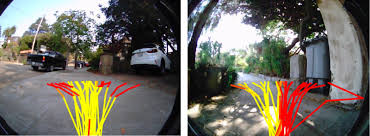
For this purpose, researchers from MIT created the Virtual Image Synthesis and Transformation for Autonomy (VISTA), a photorealistic simulator capable of rendering detailed virtual roads. The biggest difference with this simulation engine is that it uses datasets from drivers to “synthesize” trajectories consistently, particularly in terms of road appearance, as well as the distance and motion of objects in a given space. The vehicle’s control system must learn on its own how to reach its destination safely. This includes the ability to recover and maintain control when swerving between lanes or encountering a near-crash scenario.
Using an end-to-end framework, the team also integrated a reinforcement learning approach, providing feedback signals whenever the control system commits an error. This means it will only receive a feedback signal if, for example, the car crashes. When that happens, a new simulated location is immediately generated. From this point, the system has to once again attempt to successfully use different steering angles to avoid crashing again.
The control system was deployed on an autonomous vehicle after driving 10,000km in the simulated environment. This is the first controller system using an end-to-end reinforcement technique that has ever been successfully deployed onto an actual autonomous vehicle.
In multiple tests using VISTA with a driverless car, the control system was able to successfully and safely navigate across streets it was deployed in for the first time. The vehicle was able to recover back into a safe driving trajectory within seconds whenever the simulator replicated near-crash situations.
According to the researchers, they aim to further simulate more types of road conditions from a single driving trajectory, including night and day and sunny and rainy weather. Additionally, they expressed that they will be studying how to simulate more complex interactions with other vehicles on the road.
The complete study was published in the IEEE Robotics and Automation Letters journal. More details will be presented at the upcoming ICRA conference in May.
For similar stories, check out how augmented reality is being used to improve autonomous vehicle testing here.