Introduction
Asset Lifecycle Management (ALM) tools help organizations manage physical and digital assets throughout their entire lifecycle—from planning and procurement to maintenance, optimization, retirement, and disposal. These platforms provide visibility into asset performance, costs, maintenance schedules, compliance requirements, and replacement planning.
As organizations continue investing in digital transformation, sustainability initiatives, predictive maintenance, and operational efficiency, asset lifecycle management has become a strategic business function rather than a simple inventory-tracking exercise. Modern ALM platforms now incorporate AI-powered analytics, IoT integration, workflow automation, and predictive insights to maximize asset utilization and reduce operational costs.
Real-world use cases include:
- Managing manufacturing equipment and production assets.
- Tracking IT hardware and software lifecycles.
- Optimizing fleet and transportation assets.
- Monitoring healthcare equipment utilization and maintenance.
- Managing infrastructure assets across utilities and public sector organizations.
Evaluation Criteria for Buyers
When evaluating Asset Lifecycle Management platforms, consider:
- Asset tracking and inventory capabilities.
- Maintenance and work order management.
- Predictive maintenance and analytics.
- IoT and sensor integration.
- Reporting and dashboards.
- Compliance and audit capabilities.
- Scalability and deployment flexibility.
- Integration ecosystem.
- Security controls.
- Total cost of ownership.
Best for: Asset managers, facilities managers, operations leaders, maintenance teams, IT asset managers, manufacturing companies, healthcare organizations, utilities, transportation firms, and enterprises with large asset portfolios.
Not ideal for: Small businesses with limited assets, organizations requiring only basic inventory tracking, or teams needing lightweight asset registers rather than comprehensive lifecycle management.
Key Trends in Asset Lifecycle Management Tools
- AI-powered predictive maintenance is becoming a standard capability.
- IoT-connected assets provide real-time operational insights.
- Digital twin technology is increasingly used for asset simulation and planning.
- Sustainability tracking is becoming integrated into asset management workflows.
- Mobile-first maintenance operations continue to expand.
- Cloud-native ALM platforms are replacing legacy on-premise systems.
- Automated compliance reporting is reducing audit workloads.
- Low-code workflow customization is improving adaptability.
- Integration with ERP, CMMS, and EAM platforms is becoming essential.
- Machine learning models are improving asset replacement forecasting.
How We Selected These Tools (Methodology)
The tools in this list were evaluated based on:
- Market adoption and industry recognition.
- Breadth of asset lifecycle management capabilities.
- Maintenance and operational functionality.
- Scalability across industries and company sizes.
- Reliability and platform maturity.
- Security and access-control capabilities.
- Integration ecosystem and API support.
- Customer adoption across enterprise and mid-market segments.
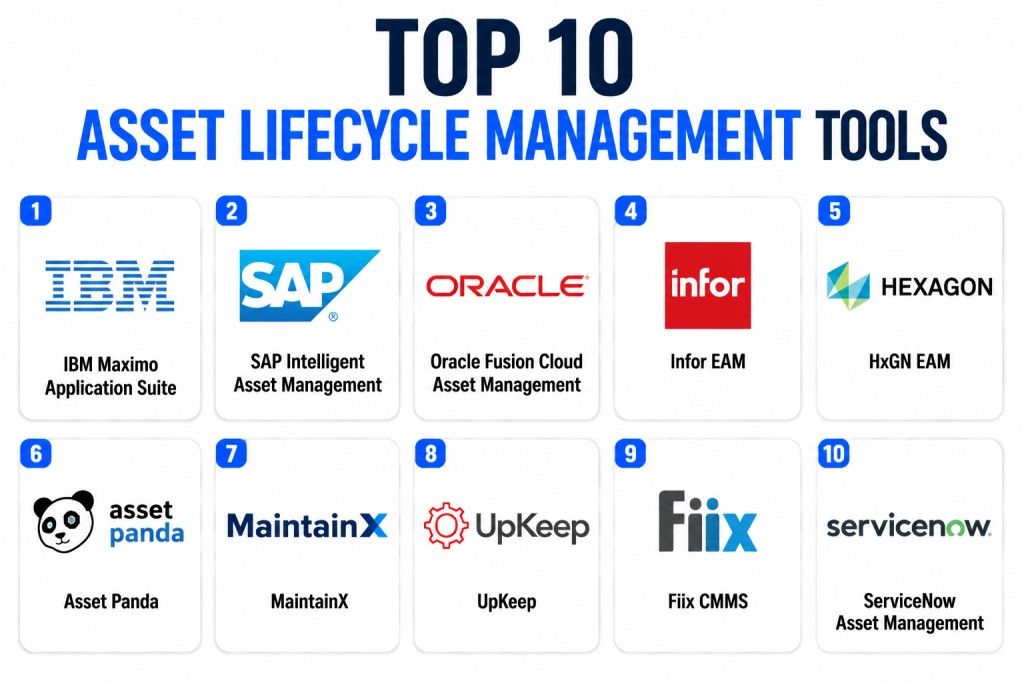
Top 10 Asset Lifecycle Management Tools
1- IBM Maximo Application Suite
Short Description:
IBM Maximo is one of the most comprehensive enterprise asset management platforms available. It helps organizations manage assets, maintenance operations, inspections, reliability programs, and predictive maintenance initiatives. The platform is particularly strong in industrial, utility, transportation, and infrastructure environments. AI-powered insights and digital twin capabilities make it suitable for large enterprises seeking advanced asset intelligence. Organizations can monitor asset health, optimize maintenance schedules, and improve operational efficiency through centralized management.
Key Features
- Enterprise asset management
- Predictive maintenance
- AI-driven asset monitoring
- Digital twin capabilities
- Work order management
- Mobile inspections
- Asset performance analytics
Pros
- Comprehensive enterprise functionality
- Strong AI and analytics capabilities
- Extensive industry adoption
Cons
- Complex implementation
- Significant learning curve
- Premium pricing
Platforms / Deployment
- Web
- iOS
- Android
- Cloud
- Hybrid
Security & Compliance
- SSO/SAML
- MFA
- RBAC
- Audit logging
- Encryption
Integrations & Ecosystem
IBM Maximo integrates extensively with enterprise systems and industrial environments.
- ERP platforms
- IoT platforms
- SCADA systems
- Enterprise APIs
- IBM ecosystem
Support & Community
Strong enterprise support, extensive documentation, consulting services, and a mature user community.
2- SAP Intelligent Asset Management
Short Description:
SAP Intelligent Asset Management helps organizations optimize asset performance using analytics, maintenance planning, and enterprise-wide asset visibility. The platform integrates deeply with SAP ERP environments and supports complex operational workflows. Large enterprises benefit from its centralized asset intelligence and lifecycle planning capabilities. It is particularly popular among manufacturing, utilities, and asset-intensive industries.
Key Features
- Asset intelligence network
- Predictive maintenance
- Work order management
- Maintenance planning
- Asset analytics
- Digital asset records
Pros
- Deep SAP integration
- Strong enterprise scalability
- Comprehensive lifecycle visibility
Cons
- Best suited for SAP environments
- Complex deployment
- Higher cost
Platforms / Deployment
- Web
- Cloud
- Hybrid
Security & Compliance
- RBAC
- Audit logs
- SSO support
- Enterprise security controls
Integrations & Ecosystem
Extensive SAP ecosystem integration.
- SAP S/4HANA
- SAP ERP
- IoT services
- APIs
- Analytics platforms
Support & Community
Large enterprise support network and extensive documentation resources.
3- Oracle Fusion Cloud Asset Management
Short Description:
Oracle Fusion Cloud Asset Management provides enterprise-grade asset lifecycle management capabilities integrated with finance, procurement, and maintenance operations. Organizations can track assets from acquisition through retirement while optimizing maintenance activities. Oracle’s cloud architecture supports scalability and centralized governance.
Key Features
- Asset lifecycle tracking
- Maintenance management
- Asset performance monitoring
- Financial integration
- Work order automation
- Predictive analytics
Pros
- Strong financial integration
- Cloud-native architecture
- Enterprise scalability
Cons
- Complex implementation
- Premium licensing
- Requires Oracle expertise
Platforms / Deployment
- Web
- Cloud
Security & Compliance
- Encryption
- MFA
- RBAC
- Audit trails
Integrations & Ecosystem
- Oracle ERP
- Procurement systems
- Analytics tools
- APIs
- Cloud services
Support & Community
Strong enterprise support and extensive training resources.
4- Infor EAM
Short Description:
Infor EAM is a mature enterprise asset management platform designed for asset-intensive organizations. It supports maintenance operations, inventory management, procurement workflows, and regulatory compliance. Industries such as healthcare, transportation, manufacturing, and government commonly use Infor EAM.
Key Features
- Asset management
- Preventive maintenance
- Work order management
- Inventory control
- Compliance tracking
- Mobile maintenance
Pros
- Industry-specific capabilities
- Flexible deployment options
- Mature feature set
Cons
- User interface may feel dated
- Configuration complexity
- Enterprise-focused pricing
Platforms / Deployment
- Web
- Mobile
- Cloud
- On-premises
Security & Compliance
- RBAC
- Audit logs
- Authentication controls
Integrations & Ecosystem
- ERP systems
- Procurement platforms
- Mobile solutions
- APIs
Support & Community
Well-established support organization and active customer base.
5- Hexagon HxGN EAM
Short Description:
Hexagon HxGN EAM focuses on maximizing asset reliability and operational efficiency. It supports maintenance planning, asset performance management, and regulatory compliance. Organizations managing large infrastructure and industrial environments benefit from its advanced asset analytics capabilities.
Key Features
- Asset performance management
- Reliability analytics
- Preventive maintenance
- Compliance management
- Mobile inspections
- Work order tracking
Pros
- Strong reliability focus
- Advanced reporting
- Industry-specific workflows
Cons
- Enterprise-oriented pricing
- Training requirements
- Complex implementation
Platforms / Deployment
- Cloud
- On-premises
- Mobile
Security & Compliance
- Audit logging
- Access controls
- Authentication features
Integrations & Ecosystem
- ERP systems
- GIS platforms
- IoT integrations
- APIs
Support & Community
Good enterprise support and professional services availability.
6- Asset Panda
Short Description:
Asset Panda provides a highly customizable cloud-based asset management platform suitable for organizations of varying sizes. Users can track assets, manage maintenance, monitor lifecycle events, and generate reports without extensive technical expertise. Its flexibility makes it popular among education, healthcare, and business environments.
Key Features
- Asset tracking
- Maintenance scheduling
- Mobile access
- Custom workflows
- Barcode scanning
- Reporting dashboards
Pros
- Easy customization
- User-friendly interface
- Fast deployment
Cons
- Limited advanced EAM features
- Enterprise capabilities may be limited
- Advanced analytics less comprehensive
Platforms / Deployment
- Web
- iOS
- Android
- Cloud
Security & Compliance
- MFA
- Role-based permissions
- Audit tracking
Integrations & Ecosystem
- APIs
- Barcode solutions
- Business applications
- Reporting tools
Support & Community
Responsive support and straightforward onboarding experience.
7- MaintainX
Short Description:
MaintainX is a modern maintenance and asset management platform focused on frontline teams. It helps organizations manage work orders, inspections, preventive maintenance, and asset tracking using a mobile-first approach. The platform is widely adopted by manufacturing and facility management teams.
Key Features
- Work order management
- Preventive maintenance
- Asset tracking
- Mobile inspections
- Procedure management
- Team collaboration
Pros
- Excellent mobile experience
- Fast implementation
- User-friendly workflows
Cons
- Less comprehensive than enterprise EAM platforms
- Advanced customization may be limited
- Large-scale enterprise needs may require additional tools
Platforms / Deployment
- Web
- iOS
- Android
- Cloud
Security & Compliance
- SSO
- Role-based permissions
- Audit logs
Integrations & Ecosystem
- ERP systems
- Business applications
- APIs
- Operational systems
Support & Community
Strong customer support and active user community.
8- UpKeep
Short Description:
UpKeep is a cloud-based maintenance and asset management platform designed to simplify maintenance operations. It offers preventive maintenance scheduling, asset tracking, inventory management, and mobile work order functionality. Organizations seeking rapid deployment often consider UpKeep.
Key Features
- Preventive maintenance
- Asset management
- Inventory tracking
- Work orders
- Mobile applications
- Analytics dashboards
Pros
- Easy to use
- Mobile-first design
- Quick deployment
Cons
- Enterprise functionality is limited
- Complex workflows may require customization
- Advanced analytics less extensive
Platforms / Deployment
- Web
- Android
- iOS
- Cloud
Security & Compliance
- User permissions
- Audit logs
- MFA support
Integrations & Ecosystem
- ERP systems
- APIs
- Business software
- Reporting tools
Support & Community
Strong onboarding resources and responsive support.
9- Fiix CMMS
Short Description:
Fiix provides maintenance management and asset lifecycle functionality for organizations seeking preventive maintenance and operational efficiency improvements. The platform combines work order management, analytics, and mobile capabilities to improve asset reliability.
Key Features
- Asset management
- Preventive maintenance
- Work order workflows
- Reporting tools
- Mobile access
- Asset analytics
Pros
- Easy implementation
- Good reporting capabilities
- Flexible maintenance workflows
Cons
- Limited enterprise depth
- Advanced customization may require effort
- Less comprehensive than large EAM suites
Platforms / Deployment
- Web
- Mobile
- Cloud
Security & Compliance
- Access controls
- Authentication options
- Audit capabilities
Integrations & Ecosystem
- ERP platforms
- APIs
- Operational tools
- Business applications
Support & Community
Good documentation and customer support resources.
10- ServiceNow Asset Management
Short Description:
ServiceNow Asset Management extends the ServiceNow platform to manage IT and enterprise assets throughout their lifecycle. Organizations gain visibility into procurement, usage, maintenance, compliance, and retirement processes. The platform is especially attractive for enterprises already using ServiceNow workflows.
Key Features
- Asset lifecycle tracking
- IT asset management
- Procurement workflows
- License management
- Reporting dashboards
- Workflow automation
Pros
- Excellent workflow automation
- Strong enterprise integrations
- Unified platform approach
Cons
- Premium pricing
- Complex implementation
- Best suited for ServiceNow environments
Platforms / Deployment
- Web
- Mobile
- Cloud
Security & Compliance
- SSO/SAML
- MFA
- RBAC
- Audit logging
Integrations & Ecosystem
ServiceNow provides one of the largest enterprise workflow ecosystems available.
- ITSM integrations
- ERP integrations
- APIs
- Automation tools
- Third-party connectors
Support & Community
Large enterprise community with extensive documentation and partner support.
Comparison Table
| Tool Name | Best For | Platforms Supported | Deployment | Standout Feature | Public Rating |
|---|---|---|---|---|---|
| IBM Maximo | Large Enterprises | Web, Mobile | Cloud, Hybrid | AI-Powered Asset Intelligence | N/A |
| SAP Intelligent Asset Management | SAP Customers | Web | Cloud, Hybrid | SAP Ecosystem Integration | N/A |
| Oracle Fusion Asset Management | Enterprise Operations | Web | Cloud | Financial Integration | N/A |
| Infor EAM | Asset-Intensive Industries | Web, Mobile | Cloud, On-Premises | Industry-Specific Workflows | N/A |
| Hexagon HxGN EAM | Infrastructure Organizations | Web, Mobile | Cloud, On-Premises | Reliability Analytics | N/A |
| Asset Panda | SMB and Mid-Market | Web, Mobile | Cloud | Customizable Asset Tracking | N/A |
| MaintainX | Frontline Teams | Web, Mobile | Cloud | Mobile-First Maintenance | N/A |
| UpKeep | Growing Organizations | Web, Mobile | Cloud | Rapid Deployment | N/A |
| Fiix CMMS | Maintenance Teams | Web, Mobile | Cloud | Maintenance Optimization | N/A |
| ServiceNow Asset Management | Enterprise IT Assets | Web, Mobile | Cloud | Workflow Automation | N/A |
Evaluation & Scoring of Asset Lifecycle Management Tools
| Tool | Core | Ease | Integrations | Security | Performance | Support | Value | Weighted Total |
|---|---|---|---|---|---|---|---|---|
| IBM Maximo | 10 | 7 | 9 | 9 | 10 | 9 | 7 | 8.85 |
| SAP IAM | 9 | 7 | 10 | 9 | 9 | 9 | 7 | 8.65 |
| Oracle Fusion | 9 | 7 | 9 | 9 | 9 | 8 | 7 | 8.40 |
| Infor EAM | 9 | 7 | 8 | 8 | 9 | 8 | 8 | 8.30 |
| Hexagon HxGN EAM | 9 | 7 | 8 | 8 | 9 | 8 | 7 | 8.15 |
| ServiceNow | 8 | 8 | 10 | 9 | 8 | 9 | 7 | 8.35 |
| Asset Panda | 7 | 9 | 7 | 8 | 7 | 8 | 9 | 7.95 |
| MaintainX | 7 | 9 | 7 | 8 | 8 | 8 | 9 | 8.00 |
| UpKeep | 7 | 9 | 7 | 8 | 8 | 8 | 9 | 8.00 |
| Fiix CMMS | 7 | 8 | 7 | 7 | 8 | 8 | 8 | 7.60 |
How to Interpret the Scores
These scores are comparative rather than absolute. Enterprise-focused platforms generally score higher in functionality, integrations, and scalability, while SMB-focused platforms score better in ease of use and value. Organizations should prioritize criteria based on business requirements rather than selecting purely by total score. A higher score does not necessarily mean a better fit for every environment.
Which Asset Lifecycle Management Tool Is Right for You?
Solo / Freelancer
Most freelancers do not require full ALM platforms. Lightweight solutions such as Asset Panda may provide sufficient asset tracking without excessive complexity.
SMB
UpKeep, MaintainX, and Asset Panda offer excellent usability, rapid deployment, and affordable scalability for growing businesses.
Mid-Market
Infor EAM, Fiix CMMS, and MaintainX provide balanced functionality without the complexity of the largest enterprise suites.
Enterprise
IBM Maximo, SAP Intelligent Asset Management, Oracle Fusion Asset Management, and ServiceNow deliver enterprise-scale governance and integration capabilities.
Budget vs Premium
Budget-conscious organizations should consider UpKeep, MaintainX, or Fiix. Premium buyers seeking advanced analytics and AI should evaluate IBM Maximo and SAP IAM.
Feature Depth vs Ease of Use
IBM Maximo and SAP IAM provide deep functionality. MaintainX and UpKeep prioritize usability and rapid adoption.
Integrations & Scalability
ServiceNow, SAP, Oracle, and IBM provide extensive integration ecosystems suitable for large-scale environments.
Security & Compliance Needs
Organizations with strict compliance requirements should evaluate IBM Maximo, SAP IAM, Oracle Fusion, and ServiceNow due to their enterprise security capabilities.
Frequently Asked Questions (FAQs)
1- What is Asset Lifecycle Management?
Asset Lifecycle Management is the process of managing assets from acquisition through maintenance, optimization, and eventual retirement. It helps organizations maximize asset value while reducing operational costs.
2- How is ALM different from inventory management?
Inventory management focuses on tracking items, while ALM manages the complete lifecycle, performance, maintenance, costs, and strategic planning associated with assets.
3- Which industries benefit most from ALM tools?
Manufacturing, healthcare, transportation, utilities, government, construction, and IT organizations typically gain the greatest value from ALM platforms.
4- What role does AI play in modern ALM platforms?
AI helps predict failures, optimize maintenance schedules, identify performance issues, and improve asset replacement planning using historical and real-time data.
5- Are cloud-based ALM platforms secure?
Most modern platforms provide enterprise security controls such as encryption, access management, audit logging, and authentication capabilities. Buyers should verify compliance requirements independently.
6- How long does implementation usually take?
Implementation timelines vary significantly. SMB platforms may deploy within weeks, while enterprise EAM systems can require several months depending on complexity.
7- Can ALM tools integrate with ERP systems?
Yes. Most leading platforms integrate with ERP, procurement, finance, maintenance, and operational systems through APIs and prebuilt connectors.
8- What is predictive maintenance?
Predictive maintenance uses analytics, sensors, and AI models to identify potential equipment failures before they occur, reducing downtime and maintenance costs.
9- What are common mistakes when selecting an ALM platform?
Common mistakes include ignoring integration requirements, underestimating implementation complexity, focusing only on cost, and overlooking future scalability needs.
10- Should organizations replace spreadsheets with ALM software?
Organizations managing significant asset portfolios typically benefit from dedicated ALM platforms because they provide automation, reporting, compliance tracking, and lifecycle visibility that spreadsheets cannot efficiently deliver.
Conclusion
Asset Lifecycle Management platforms have evolved from basic tracking systems into strategic operational platforms that improve reliability, reduce costs, support compliance, and maximize asset value. Enterprise organizations often gravitate toward IBM Maximo, SAP Intelligent Asset Management, Oracle Fusion, and ServiceNow because of their scalability and advanced functionality. Mid-market and SMB organizations frequently find success with MaintainX, UpKeep, Asset Panda, and Fiix due to their usability and faster deployment cycles. The best choice depends on asset complexity, integration requirements, industry regulations, and long-term operational goals. Before making a final decision, shortlist two or three platforms, conduct a pilot project, validate integration requirements, assess security capabilities, and confirm total ownership costs to ensure the platform aligns with your organization’s asset management strategy
