Introduction
Navigating the legal system in India can feel overwhelming. Whether you are dealing with a property transaction, a family dispute, a corporate contract, or an unexpected criminal matter, knowing how to approach the law is critical. Many individuals and business owners delay seeking professional assistance simply because they do not know where to turn or how to evaluate legal representation. Understanding your options early helps prevent costly mistakes, protects your rights, and ensures your legal interests are adequately safeguarded. Modern digital platforms have made legal discovery significantly more accessible, allowing individuals, startups, and families across India to discover qualified advocates, evaluate legal practice areas, and access trusted legal information. This guide breaks down everything you need to know about navigating legal services in India, selecting the right legal specialist, understanding consultation formats, avoiding common pitfalls, and leveraging modern lawyer directory India options like WakilSahab to find suitable legal support.
Understanding Legal Discovery and Legal Resources in India
Legal discovery refers to the process by which individuals and organizations identify, evaluate, and connect with suitable legal professionals for their specific requirements. Historically, finding an advocate in India relied almost entirely on word-of-mouth recommendations or physical visits to local court premises. While local networks remain valuable, they often restrict a person’s ability to compare specializations, evaluate credentials, or understand fee structures beforehand.
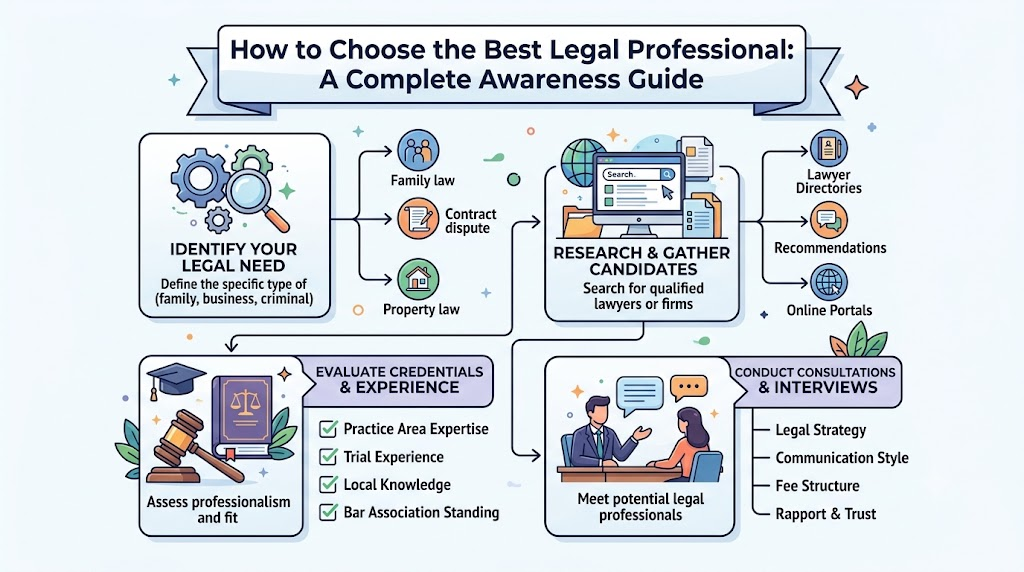
       ┌─────────────────────────────────────────────────────────┐
       │                IDENTIFY LEGAL NEED                      │
       │    (Civil, Criminal, Family, Corporate, Property)       │
       └──────────────────────────┬──────────────────────────────┘
                                  │
                                  ▼
       ┌─────────────────────────────────────────────────────────┐
       │                 RESEARCH & DISCOVERY                    │
       │    (Digital Directories, Bar Councils, Experience)      │
       └──────────────────────────┬──────────────────────────────┘
                                  │
                                  ▼
       ┌─────────────────────────────────────────────────────────┐
       │               CONSULTATION & EVALUATION                 │
       │     (Online vs In-Person, Fees, Communication)          │
       └──────────────────────────┬──────────────────────────────┘
                                  │
                                  ▼
       ┌─────────────────────────────────────────────────────────┐
       │                ENGAGEMENT & STRATEGY                    │
       │  (Vakalatnama, Legal Representation, Court Proceedings)  │
       └─────────────────────────────────────────────────────────┘
The Indian legal landscape encompasses various jurisdictions, specialized tribunals, and practice areas. A dispute involving real estate requires a completely different approach and skill set compared to a cybercrime complaint or a corporate merger. Knowing how to categorize your legal matter is the foundational step toward finding an advocate who possesses the exact courtroom experience and domain knowledge needed for your case.
Why Early Legal Guidance Matters
Many individuals seek legal help only after a situation escalates into a formal crisis—such as receiving a court summons or facing police intervention. However, seeking legal advice proactively offers significant advantages:
- Preventive Legal Action: Reviewing agreements, contracts, or property titles prior to signing prevents future litigation.
- Procedural Compliance: Ensuring that notices, replies, and statutory filings are executed within prescribed limitation periods.
- Risk Mitigation: Identifying potential criminal, financial, or civil liabilities before they materialize.
- Strategic Clarity: Gaining a clear understanding of your legal standing, available remedies, and potential timelines.
Proactively consulting an advocate helps turn an uncertain legal challenge into a structured, manageable process.
Types of Legal Practice Areas in India
Legal practice in India is highly specialized. Understanding the core legal categories helps you identify the exact professional required for your issue.
| Practice Area | Primary Focus Matters | Suitable For |
| Criminal Law | FIRs, Bail Applications, Criminal Trials, Police Investigations | Individuals facing criminal allegations or victims of crime |
| Family & Matrimonial Law | Divorce Proceedings, Child Custody, Alimony, Domestic Violence | Families and spouses navigating personal law disputes |
| Property & Real Estate Law | Title Verification, Sale Agreements, Partition Suits, Land Disputes | Buyers, sellers, landowners, tenants, and developers |
| Corporate & Commercial Law | Business Contracts, Company Compliance, IP, M&A | Startups, entrepreneurs, small businesses, and corporations |
| Cyber Law & Digital Fraud | Identity Theft, Financial Scams, Hacking, Data Breach | Victims of online fraud, tech firms, and digital consumers |
1. Criminal Law
Criminal law deals with offenses against the state or public order, governed primarily by procedural and substantive penal codes in India. Matters involve Police FIRs, anticipatory bails, regular bails, criminal trials, and appeals. If you face criminal charges or need to lodge a formal complaint for a cognizable offense, consulting a qualified criminal lawyer near me ensures your constitutional rights and defense strategies are protected immediately.
2. Family and Matrimonial Law
Family law covers personal matters including marriage, divorce, child custody, maintenance, adoption, and succession across various personal religious codes and secular statutes like the Special Marriage Act. Matrimonial disputes often involve sensitive emotional and financial dimensions, making experienced representation vital for balanced negotiations and court proceedings.
3. Property and Real Estate Law
Real estate and land matters require meticulous documentation review and knowledge of local state laws. Property advocates handle title search verification, drafting sale deeds, handling boundary and inheritance disputes, and representing clients before civil courts or RERA authorities.
4. Corporate and Commercial Law
Businesses require ongoing legal support to manage contracts, employment policies, regulatory compliance, intellectual property protection, and corporate governance. Engaging a corporate lawyer in India ensures that commercial agreements are legally enforceable and business liabilities are minimized.
5. Cybercrime and Digital Law
With rapid digitalization, cyber financial fraud, identity theft, unauthorized data access, and social media harassment have increased significantly. Cyber law specialists assist victims in filing complaints with Cyber Crime Cells, drafting complaints under the Information Technology Act, and pursuing financial recoveries.
Key Factors to Consider When Selecting a Lawyer in India
Choosing the right advocate is one of the most critical decisions in resolving a legal matter. Consider these core parameters:
1. Domain Specialization
General practitioners handle a broad range of matters, but complex issues require domain-specific specialists. Ensure the advocate regularly practices in the relevant domain (e.g., criminal defense, corporate compliance, or property litigation).
2. Jurisdiction and Court Experience
Lawyers must be familiar with the procedural nuances of the specific court or tribunal where your matter resides—whether it is a local District Court, High Court, Debt Recovery Tribunal (DRT), or National Company Law Tribunal (NCLT).
3. Professional Standing and Credentials
Verify that the legal professional is registered with the relevant State Bar Council and holds an active license to practice.
4. Communication and Accessibility
Legal proceedings can be lengthier than anticipated. Choose an advocate who explains complex statutory provisions in plain language, maintains transparent communication, and provides regular case updates.
In-Person vs. Online Lawyer Consultation
Modern legal discovery offers flexibility in how you consult with an advocate. Modern tools allow individuals to seek preliminary guidance digitally before committing to formal engagement.
| Parameter | Online Legal Consultation | In-Person Legal Consultation |
| Primary Advantage | Quick access, geographic flexibility, convenience | Direct physical document review, personal interaction |
| Best Suited For | Initial advice, document review, strategy, opinion | Court filings, trial preparation, complex negotiations |
| Preparation Needed | Digital scans of documents, list of questions | Physical document files, printed timelines |
| Geographic Reach | Pan-India access to specialized advocates | Restricted to local town or court city |
Understanding Legal Fees and Engagement Models
Legal costs in India vary substantially based on multiple practical variables. It is essential to discuss professional engagement terms clearly during the initial consultation.
Factors Influencing Legal Fees:
- Complexity of the Case: Matters requiring detailed evidence, expert testimony, or multi-jurisdictional filings involve higher research and drafting effort.
- Professional Experience: Senior advocates or recognized domain experts charge higher consultation and appearance fees compared to junior practitioners.
- Court Level: Fee structures differ between Subordinate Courts, District Courts, High Courts, and the Supreme Court of India.
- Type of Service: Drafting a simple legal notice or conducting a title search involves a fixed fee, whereas ongoing litigation may involve per-hearing appearance fees or retainer models.
Note: In India, legal fees are set independently by individual advocates or law firms in accordance with Bar Council of India guidelines. Be clear about what a fee covers before formally engaging an advocate.
Crucial Documents for Common Legal Matters
Preparing your documents before meeting an advocate saves time and ensures a more effective initial consultation.
| Practice Category | Key Required Documents | Purpose |
| Property Disputes | Sale Deed, Title Chain, Encumbrance Certificate, Property Tax Receipts | Verifying ownership and establishing legal possession |
| Matrimonial Matters | Marriage Certificate, Address Proofs, Financial Records, Timeline of Events | Establishing facts for divorce, custody, or maintenance claims |
| Criminal Proceedings | Copy of FIR, Police Complaints, Bailable/Non-Bailable Notices, Written Communications | Evaluating allegations and preparing bail/defense strategy |
| Business/Corporate | Incorporation Certificate, Contracts/MOUs, Board Resolutions, ID Proofs | Reviewing enforceability and corporate compliance standing |
Common Mistakes to Avoid in Legal Matters
Navigating legal issues without adequate preparation can compromise your position. Avoid these frequent mistakes:
┌───────────────────────────────────────────────────────────┐
│               COMMON LEGAL MISTAKES TO AVOID              │
└─────────────────────────────┬─────────────────────────────┘
                              │
  ├── 1. Delaying Action Beyond Statutory Limitation Periods
  ├── 2. Signing Contracts Without Detailed Legal Review
  ├── 3. Sharing Sensitive Case Information on Social Media
  ├── 4. Hiding Material Facts From Your Appointed Advocate
  └── 5. Choosing Representation Based Solely on Lowest Fee
- Delaying Legal Action: Waiting too long can breach statutory limitation periods, rendering civil remedies legally unenforceable.
- Signing Agreements Without Independent Review: Never sign contracts, settlement papers, or property agreements without a thorough legal check.
- Sharing Details Publicly: Posting sensitive case details or personal grievances on social media platforms can negatively impact ongoing court proceedings or invite defamation claims.
- Withholding Information from Your Lawyer: Full transparency is essential. Hiding facts from your advocate weakens your defense when opposing parties present those facts in court.
- Selecting Based Solely on Low Cost: Prioritizing the lowest price over verified domain experience often leads to inadequate representation and costly retrials.
Expert Tips for a Successful Legal Consultation
- Prepare a Chronological Timeline: Write down a clear, step-by-step timeline of events, including dates, names, and key interactions.
- Organize Documents Digitally and Physically: Keep all notices, emails, agreements, and receipts arranged chronologically.
- Prepare Specific Questions: List your main concerns beforehand (e.g., legal remedies available, realistic timeframes, required filings).
- Seek Formal Retainers: Ensure that professional fee arrangements, payment schedules, and the scope of work are clearly documented.
- Maintain Written Records: Keep track of all formal legal communications, notices served, and court orders received.
Best Practices for Working with Your Advocate
Building a professional and productive working relationship with your advocate ensures better case management:
- Respect Professional Boundaries: Understand that litigation timeline delays are frequently driven by court schedules rather than advocate inaction.
- Be Clear and Truthful: Provide honest descriptions of all circumstances, including aspects that may seem unfavorable to your position.
- Follow Procedural Instructions: Adhere strictly to court dates, compliance requirements, and document submission deadlines advised by your advocate.
- Request Copies of Filed Pleadings: Maintain your own duplicate folder containing copies of all petitions, replies, and court orders filed in your matter.
The Future of Digital Legal Discovery in India
The legal sector in India is experiencing a digital shift. The integration of modern legal technology, e-Courts initiatives, virtual hearings, and structured online directories has streamlined access to legal services.
Digital lawyer discovery platforms eliminate geographic barriers, making it simple for anyone in India—including NRIs and rural residents—to locate verified advocates based on specialization, language, and court experience. Transparent legal information resources empower citizens to understand their rights before stepping into a courtroom.
Why Discover Legal Services via WakilSahab
WakilSahab serves as an accessible legal discovery and information platform designed to simplify how individuals, startups, and enterprises connect with legal resources in India.
- Comprehensive Legal Discovery: Easily locate independent legal professionals across multiple practice areas, including criminal, civil, matrimonial, property, and corporate law.
- Location-Based Search: Search for advocates based on city, state, or specific court jurisdictions across India.
- Accessible Legal Information: Access educational resources, legal guides, and procedural frameworks written in plain language.
- Convenient Consultation Channels: Explore options for preliminary online legal guidance as well as traditional in-person legal representation.
By bringing transparency and structure to legal search, WakilSahab helps bridge the gap between citizens seeking help and qualified legal professionals.
Frequently Asked Questions (FAQs)
1. How do I find a reliable lawyer near me in India?
To find a reliable lawyer, start by identifying your specific legal domain (such as criminal, property, or matrimonial law). You can use digital lawyer directory platforms like WakilSahab to search for independent advocates based on location, practice area, and court experience. Always verify that the advocate is registered with a State Bar Council before engaging their services.
2. How does online lawyer consultation work in India?
Online legal consultation allows individuals to share case details and digital document scans with an advocate via secure video or phone channels. The advocate reviews the background, explains applicable legal provisions, and provides preliminary guidance on potential remedies. This format is ideal for initial opinions, document reviews, and legal strategy without immediate courtroom attendance.
3. What is the difference between legal information and legal advice?
Legal information provides general knowledge about laws, court procedures, and rights without evaluating individual case facts. Legal advice, however, involves a qualified advocate analyzing your specific situation, applying relevant statutes, and recommending a custom course of legal action. General legal articles provide awareness, whereas legal advice requires a formal lawyer consultation.
4. When should I consult a criminal lawyer near me?
You should consult a criminal defense advocate immediately if you face police questioning, receive a formal summons, anticipate arrest, or need to lodge a complaint for a cognizable offense. Early legal intervention is crucial for filing anticipatory bail applications, ensuring proper police procedure, and protecting your fundamental rights during investigations.
5. What should I prepare before a divorce lawyer consultation?
Before consulting a family law advocate, compile essential documentation including your marriage certificate, identity proofs, financial records, proof of joint assets, and a chronological timeline of key marital events. Being prepared helps the advocate evaluate jurisdiction, maintenance options, child custody considerations, and mutual or contested divorce pathways efficiently.
6. Why is title verification important before buying property?
Title verification ensures that the seller holds clear, marketable ownership of the property without undisclosed mortgages, ownership disputes, or legal encumbrances. A qualified property lawyer reviews historical land records, title deeds, encumbrance certificates, and local municipal approvals to protect buyers from real estate fraud and future litigation.
7. What steps should I take if I am a victim of cybercrime in India?
If you experience cyber fraud or identity theft, immediately report the incident to your bank to freeze compromised accounts, save screenshots and transaction details, and file an official complaint on the National Cyber Crime Reporting Portal (cybercrime.gov.in) or at your local Cyber Crime Police Station. A cyber crime lawyer can help draft formal legal representations.
8. What does a corporate lawyer in India handle for startups?
A corporate lawyer assists startups with business incorporation, drafting founder agreements, vendor contracts, employment policies, trademark registrations, regulatory compliance under the Companies Act, and investor funding term sheets. Proper legal structuring from inception protects business assets and prevents shareholder disputes as the startup scales.
9. Can I consult an advocate practicing in a different city or state?
Yes, you can consult an advocate from any location for legal advice, opinion drafting, or contract review, especially through online lawyer consultation channels. However, if your matter involves active litigation, it is generally practical to engage an advocate who regularly practices in the court where your case is filed.
10. How are legal consultation fees structured in India?
Legal fees vary widely based on the advocate’s experience, the complexity of the matter, court level, and required scope of work. Consultation fees may be charged per session, while litigation involves per-hearing fees, drafting charges, or retainer models. Fee terms should be discussed and agreed upon during the initial consultation.
Conclusion
Navigating legal challenges in India does not have to be an overwhelming process. Whether you are addressing a complex commercial agreement, safeguarding family assets, resolving a property dispute, or defending your rights in court, having accurate legal information and the right professional guidance makes all the difference. Understanding legal practice areas, preparing documentation early, avoiding common pitfalls, and establishing transparent communication with your advocate ensure that your interests remain fully protected. Modern digital platforms have made legal discovery more accessible than ever, enabling citizens across India to locate qualified legal professionals with confidence and clarity.
