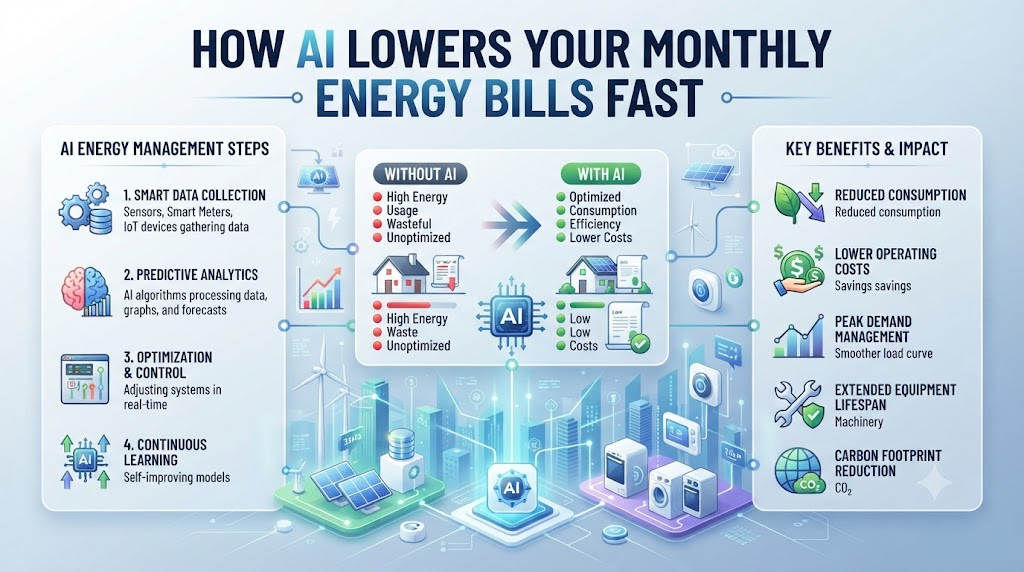
Paying high electricity bills hurts every single month. Traditional power systems are old and waste a lot of power. When you turn on your lights or run your heater, extra energy gets lost along the way. That is why smart technology is changing how we use electricity today.
Artificial intelligence helps us track and cut power waste easily. If you want to find more simple guides on this tech, visit AIUniverse.xyz to learn practical steps. Let us look at how everyday energy systems use smart tools to save you money.
Why Old Power Systems Waste Your Money
Old power grids were built many years ago. They send electricity in one direction only. Power travels from large plants straight to your wall socket.
When demand goes up, the system struggles to keep up. This inefficiency adds extra costs to your monthly bill. Smart software fixes this by balancing the flow in real time.
It matches power supply with local demand instantly. This cuts down energy loss and keeps power flowing smoothly to every home.
How Smart Homes Use Artificial Intelligence
Your home uses electricity around the clock. Refrigerators, lights, and heaters run constantly. Smart thermostats learn when you are home or away.
They adjust the temperature before you even notice. This cuts down your heating and cooling bills without extra effort. You do not have to touch the dial all day.
Smart plugs also turn off devices that sit on standby mode. These small changes add up to big savings on your yearly utility bills.
Solar Panels and Smart Batteries
Many homes now put solar panels on their roofs. Solar power is great, but the sun does not shine all night. Smart batteries store extra solar energy during the sunny afternoon.
AI software controls when to use stored power. It switches to battery power when regular electricity prices are high. This protects you from expensive peak rate charges.
You get clean energy around the clock while keeping your wallet happy.
Keeping Local Power Lines Safe
Bad weather can knock down power lines very quickly. Traditional repair crews wait for phone calls to find the break. Smart sensors find the damaged spot instantly.
The system reroutes power around the broken wire. This keeps your lights on while workers fix the issue. You avoid long hours sitting in the dark during a storm.
AI predicts weak spots in the lines before they break down. Crews fix them early to stop unexpected outages.
Small Business Energy Savings
Shops and offices waste a lot of power on empty floors. Smart lighting turns off when workers leave a room. Automated climate controls stop cooling empty offices at night.
These simple steps cut business utility bills by a large margin. Lower overhead costs help local shops stay open and competitive.
Smart software also monitors heavy shop refrigerators to prevent food spoilage. Business owners get peace of mind and lower monthly expenses.
Electric Cars and the Local Grid
More people now drive electric cars every day. Plugging in many cars at night can overload local transformers. Smart charging software checks the local grid load.
It charges your car slowly when power demand is low. This protects the neighborhood grid from crashing. You wake up with a full battery every single morning.
The system ensures clean energy charges your car at the best possible time.
Clean Energy and Weather Tracking
Wind and solar power depend on natural weather patterns. Clouds and calm days change power output fast. AI reads satellite maps to predict wind and sun levels.
Grid operators use these clear forecasts to keep power steady. They bring in backup power only when solar or wind drops. This stops sudden blackouts and keeps green energy flowing.
Better weather forecasting makes clean power reliable for everyone.
Real-World Stories About Energy AI Systems
- A small bakery in Ohio used smart thermostats to cut night heating waste, saving two hundred dollars a month.
- A family in California connected a smart battery to their solar panels, lowering their summer electricity bill to near zero.
- A local coffee shop installed motion sensor lights, stopping employees from leaving lights on overnight in storage rooms.
- A suburban neighborhood used smart grid sensors to avoid a transformer overload during a severe summer heat wave.
- An office building in Chicago used automated climate software, cutting its cooling electricity usage by twenty percent.
- A school district installed smart energy monitors, helping them find faulty water heaters and save on utility costs.
- A rural farm used automated pump schedules to water crops at night when electricity prices were lowest.
- A community solar project used smart software to share clean power fairly among fifty different local homes.
- A grocery store chain used AI monitoring on its freezer units, stopping food spoilage and cutting power waste.
- A homeowner association used smart charging stations for electric cars, stopping local parking lot power trips.
Comparative Analysis of Energy Habits
| Feature | Old Energy Habits | Smart AI Energy Habits |
| Bill Management | High surprise monthly costs | Predictable and lower bills |
| Thermostat Control | Manual dials and forgotten settings | Automatic learning schedules |
| Solar Usage | Wasted extra daytime power | Stored in smart home batteries |
| Outage Response | Waiting hours for repair crews | Instant rerouting and alerts |
| Appliance Care | Waiting until machines break | Catching tiny problems early |
Common Mistakes and Pitfalls in Energy Savings
- Leaving lights on in empty rooms: Wastes power all day long. Fix this by installing cheap motion sensor light switches.
- Setting thermostats too low in summer: Drives up cooling bills fast. Fix this by setting your thermostat one degree higher to save money.
- Ignoring old drafty windows: Lets cold air escape and makes heaters run longer. Fix this by sealing window gaps with weather stripping.
- Charging electric cars at peak hours: Costs the highest electricity rates. Fix this by setting your car to charge late at night.
- Never cleaning solar panels: Dust blocks sunlight and lowers clean energy output. Fix this by rinsing your roof panels twice a year.
- Running old appliances: Older refrigerators and washers pull too much power. Fix this by upgrading to energy-saving appliances when you can.
- Skipping smart power strips: Electronics use standby power even when turned off. Fix this by plugging devices into smart power strips.
- Forgetting to check utility plans: Missing out on cheaper night-time electricity rates. Fix this by calling your power company to change your rate plan.
- Not using ceiling fans: Running heavy air conditioning all day is expensive. Fix this by using ceiling fans to circulate cool air naturally.
- Delaying home insulation checks: Poor wall insulation lets heat escape in winter. Fix this by adding extra insulation to your attic.
Step-by-Step Implementation Roadmap
- Check your last three utility bills: Look at your monthly power usage to see which season costs you the most money.
- Install a smart thermostat: Replace your old wall dial with a device that learns your daily temperature habits.
- Switch to LED light bulbs: Replace every old incandescent light bulb in your house with modern LED bulbs.
- Seal doors and windows: Use weather stripping to stop cold or warm air from leaking outside.
- Use smart power strips: Plug your TV, computer, and game consoles into power strips that cut standby power.
- Add motion sensors: Put automatic motion sensors in hallways, closets, and bathrooms to stop wasted lights.
- Inspect your major appliances: Check your refrigerator seals and clean dust coils to keep them running efficiently.
- Optimize your laundry routine: Wash your clothes using cold water cycles to cut down water heating costs.
- Explore solar options: Talk to local solar providers to see if roof panels make sense for your home.
- Track your monthly savings: Compare your new utility bills with last year’s bills to see how much money you saved.
Frequently Asked Questions
1. How can I lower my monthly electricity bill easily?
You can lower your bill by switching to LED bulbs, using smart thermostats, and sealing drafty windows.
2. Do smart thermostats really save money?
Yes, they learn your daily routine and lower heating or cooling when you are away from home.
3. What is a smart power strip?
A smart power strip cuts off power to electronics that sit on standby mode, stopping hidden energy waste.
4. Are LED light bulbs worth the cost?
LED bulbs use far less electricity and last much longer than old incandescent bulbs, saving you money over time.
5. How do solar panels lower power bills?
Solar panels turn sunlight into free electricity for your home, reducing how much power you buy from the utility company.
6. Why should I wash clothes in cold water?
Heating water takes up most of the energy your washing machine uses, so cold water cycles save a lot of power.
7. How often should I clean my solar panels?
You should rinse your solar panels every six months to clear away dust and keep energy capture high.
8. What are peak electricity hours?
Peak hours are times when everyone uses power at once, which usually makes electricity prices much higher.
9. How do motion sensor lights help?
They turn off lights automatically when people leave a room, preventing wasted electricity in empty spaces.
10. Where should I start upgrading my home energy use?
Start by reviewing your recent utility bills and installing a smart thermostat or LED bulbs first.
Final Recommendation and Next Steps
Lowering your power bills does not have to be hard. Start by swapping your old light bulbs and setting up a smart thermostat this week.
Check your next monthly utility bill to see the early savings. Use those extra savings to fund your next home energy upgrade. Small daily changes lead to massive financial rewards over time.
