Introduction
The global education landscape is undergoing an unprecedented digital transformation. Traditional, one-size-fits-all instructional models are no longer sufficient to meet the diverse and rapidly changing needs of modern society. Today, technology-driven ecosystems are shifting the foundational structure of how knowledge is shared, consumed, and applied. Learner expectations have completely evolved. Modern students, raised in an on-demand digital ecosystem, expect high-quality learning experiences to be flexible, engaging, and precisely aligned with their unique goals. They require immediate, actionable feedback rather than waiting days for static evaluations. To learn more about this evolving landscape, explore comprehensive technology guides at AIUniverse.xyz. Artificial Intelligence in Education has emerged as the critical catalyst driving this global transition. Far from a mere trend, AI-powered learning systems are actively shifting educational models from rigid structures to highly fluid, student-centric environments.
What Is AI in Education?
AI in Education (AIEd): The strategic application of data-driven algorithmic models, machine learning, and natural language processing to automate administrative workflows, personalize content delivery, and provide real-time cognitive guidance tailored to individual human learning pathways.
The evolution of educational technology began with simple digitization—replacing physical textbooks with static PDF documents and moving chalkboard lectures onto simple video conferencing links. While helpful, these early systems remained completely non-adaptive, requiring every student to move forward at the exact same pace regardless of comprehension levels.
Modern artificial intelligence introduces dynamic cognitive systems into this mix. Instead of serving as a passive presentation tool, modern AI in classrooms functions as an interactive co-pilot that continually tracks student comprehension, diagnoses systemic conceptual misunderstandings, and changes the curriculum structure in real time.
Institutional adoption is accelerating rapidly because traditional models are facing severe constraints. With rising classroom sizes and increasing teacher burnout, educators cannot manually customize lesson plans for dozens of unique students simultaneously. AI provides the infrastructure needed to scale high-quality instruction safely and efficiently.
Why AI Is Transforming Learning Experiences
Traditional classrooms often force an artificial average pace—frequently moving too fast for struggling students while holding advanced learners back. AI addresses this imbalance by fundamentally altering the dynamics of information processing.
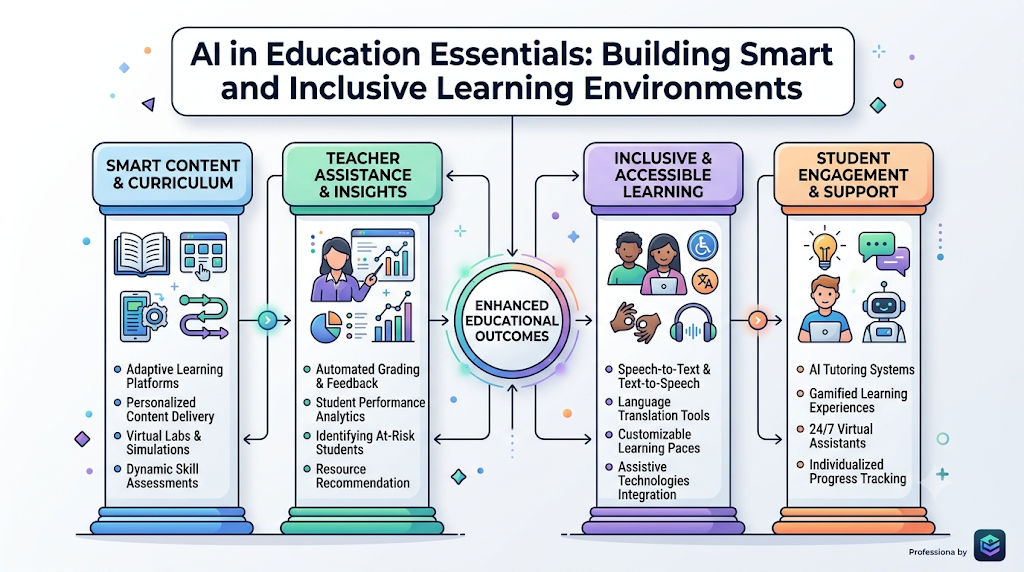
AI changes the core learning framework through five distinct pillars:
- Personalized Learning: Algorithmic platforms map an individual’s unique baseline knowledge, cognitive speed, and retention capabilities to design an optimal, customized learning roadmap.
- Adaptive Content Delivery: The system dynamically adjusts task difficulty based on real-time student performance, providing remedial guidance when a student struggles or advanced material when they excel.
- Improved Student Engagement: By delivering content through multimodal formats—including interactive simulations, targeted challenges, and real-time conversational responses—AI keeps motivation high.
- Data-Driven Educational Decisions: Learning analytics process thousands of micro-interactions, turning abstract student behavior into highly accurate predictive insights for school administrators.
- Better Accessibility: Real-time translation, text-to-speech tools, and automated captioning close critical equity gaps for neurodivergent individuals and language learners.
Core Technologies Behind AI in Education
The practical capabilities of modern AI learning tools depend on several foundational technical disciplines working together seamlessly:
Machine Learning (ML)
Machine learning forms the core engine of adaptive learning technology. These algorithms process historical performance patterns across thousands of past students to predict which content format will maximize long-term retention for a specific individual. For example, if a student struggles with algebraic fractions, the ML engine identifies the underlying conceptual gap and serves targeted prerequisite modules automatically.
Natural Language Processing (NLP)
NLP bridges the gap between human language and computer processing. This technology powers the conversational interfaces of intelligent tutoring systems. Instead of selecting answers from rigid multiple-choice blocks, a student can write out a complex paragraph explaining their logic, and the NLP engine can analyze their sentence structure, pinpoint logical fallacies, and provide immediate contextual guidance.
Computer Vision
Computer vision processes visual data to support student safety and optimize interface interaction. In proctored remote testing settings, computer vision systems verify student identity and flags irregular testing behaviors. In physically integrated environments, specialized models can evaluate student engagement trends during complex scientific lab procedures to determine if the instructions are clear.
Generative AI
Generative AI acts as an instant content engine for instructional design. It allows educators to input core academic standards and instantly generate custom reading materials, interactive case studies, multi-level quizzes, and rubrics tailored to varied reading proficiencies within a single classroom.
Learning Analytics
Learning analytics continuously tracks micro-level user interactions—such as the exact second a student pauses a video lecture, where they click during a complex quiz, or how long they spend on a reading passage. These data pipelines turn raw behavioral patterns into clear dashboards that show educators exactly who is hitting a wall before performance declines.
Key Applications of AI in Education
The intersection of these core technologies creates practical solutions that change the day-to-day workflow of modern education:
| AI Educational Application | Primary Technical Driver | Main Practical Benefit |
| Personalized Learning Platforms | Machine Learning | Tailors curriculum pathways to unique student baselines. |
| Intelligent Tutoring Systems | Natural Language Processing | Provides step-by-step Socratic guidance without giving answers. |
| Automated Assessments | Pattern Recognition Algorithms | Slashes grading times for quizzes, open text, and complex code. |
| AI Content Creation | Generative AI | Instantly builds multi-level text, slide decks, and micro-lessons. |
| Virtual Learning Assistants | Conversational Agents | Delivers 24/7 institutional support and workflow reminders. |
| Language Learning Solutions | Voice Analytics & NLP | Offers real-time accent training and conversational practice. |
Accessibility and Inclusive Education
AI serves as an equalizer for students with physical or cognitive learning differences. Automated systems can convert live spoken lectures into clean, structured text transcripts with embedded definitions for students with auditory processing challenges. For visually impaired learners, AI can instantly generate detailed, descriptive audio narratives of complex charts and diagrams.
AI in Classrooms: Practical Use Cases
K–12 Education
In primary and secondary schools, teachers use conversational math platforms to guide early learners through basic fractions using interactive storytelling. The AI flags students who are falling behind, giving the teacher clear groupings for small-group physical interventions during class time.
Higher Education
Universities utilize predictive data engines to screen historical enrollment trends and student platform usage. By running early warning systems, administrative departments can easily flag freshman students showing high risks of dropping out, allowing counselors to check in weeks before final examinations approach.
Online Learning Platforms
Massive open online courses embed automated systems to make large-scale education interactive. While a human professor cannot manually answer questions for 50,000 digital students, built-in conversational models can step in to unpack complex programming errors or clarify difficult concepts instantly.
Corporate Training & Professional Certification
Enterprise organizations deploy automated learning paths to close critical internal skills gaps. Corporate training engines test an employee’s existing competencies, bypass topics they have already mastered, and build short, focused micro-learning tracks that fit directly into busy work weeks.
Benefits of AI in Education
The systematic adoption of artificial intelligence in education delivers distinct advantages across every tier of academic infrastructure:
- Better Learning Outcomes: Studies confirm that targeted, Socratic feedback loops dramatically boost concept mastery and test scores compared to standard lectures.
- Reduced Administrative Work: Automating routine workflows like quiz generation and basic essay grading saves teachers significant amounts of time every week.
- Faster Feedback Loops: Students fix conceptual misunderstandings immediately while working through a problem, preventing bad habits from setting in.
- Enhanced Student Engagement: Tailored learning tracks align closely with personal interests, driving intrinsic motivation and course completion rates.
- Data-Driven Decision Making: Administrators can base budgeting, resource deployment, and curriculum choices on cold hard data rather than intuition.
AI for Teachers and Educators
The true goal of AI is not to replace human inspiration, but to remove mechanical overhead. By acting as a highly efficient administrative co-pilot, artificial intelligence returns valuable time to educators so they can focus on what matters most: direct student mentorship.
+-------------------------------------------------------------+
|               AI AS AN EDUCATOR'S WORKFLOW CO-PILOT         |
+-------------------------------------------------------------+
|                                                             |
|  [Curriculum Input] ---> [ Generative AI Engine ]           |
|                                 |                           |
|                                 v                           |
|          +---------------------------------------+          |
|          | • Multi-Level Lesson Plan Drafts       |          |
|          | • Structured Assessment Rubrics       |          |
|          | • Dynamic Learning Material Packages  |          |
|          +---------------------------------------+          |
|                                 |                           |
|                                 v                           |
|               [ Human Teacher Review & Refinement ]         |
|                                 |                           |
|                                 v                           |
|                 [ Highly Impactful Teaching ]               |
+-------------------------------------------------------------+
Educators leverage intelligent tools to optimize five core workflows:
- Lesson Planning Support: Generates structured lesson blueprints, complete with hands-on lab ideas, matching vocabulary checks, and extension tasks tailored to various learning needs within seconds.
- Assessment Automation: Quickly creates custom quizzes, builds robust grading rubrics, and handles initial evaluations for open-ended written assignments.
- Performance Tracking: Consolidates complex classroom grades into clear, scannable data summaries that reveal which specific concepts require whole-class review.
- Classroom Management Assistance: Sets up automated parent updates, coordinates student project timelines, and organizes everyday classroom logistics.
- Curriculum Optimization: Identifies outdated instructional blocks within existing course materials and recommends modern, engaging real-world examples.
AI for Students
For the modern student, artificial intelligence acts as an on-demand, non-judgmental study partner available at any hour of the day.
Students gain significant autonomy over their educational paths through these personalized vectors:
- Tailored Study Recommendations: Instead of reviewing an entire 300-page textbook, the platform identifies precisely which sub-topics require focus and serves targeted flashcards.
- 24/7 Socratic Tutoring: If a student gets stuck on a complex physics equation at midnight, an intelligent tutor can guide them through the mathematical logic step-by-step without simply handing over the answer.
- Advanced Learning Assistance: Complex scientific documents can be instantly broken down into simpler analogies, making deep research accessible for beginners.
- Targeted Skill Development: Real-time speech analysis tools allow language students to practice conversational skills fluently without fear of social judgment.
Challenges and Limitations of AI in Education
Despite its immense potential, implementing artificial intelligence across sensitive learning environments presents real technical and operational challenges:
- Data Privacy Concerns: Tracking student behavior generates massive quantities of highly sensitive personal data. Institutions must strictly comply with rigorous global protection frameworks to prevent unauthorized access.
- Ethical Considerations and Bias: Algorithmic systems are trained on historical human datasets. If those datasets contain implicit historical biases, the model can inadvertently perpetuate unfair tracking or grading patterns.
- Overreliance on Technology: If students use general chatbots to generate solutions uncritically without engaging their own analytical skills, foundational critical thinking can erode.
- Implementation Costs: Building out infrastructure, securing enterprise licensing, and maintaining data pipelines requires significant initial financial investments.
- Teacher Training Requirements: Simply buying advanced platforms is useless if educators lack the data literacy required to interpret analytical outputs or guide students in prompt engineering.
Common Misconceptions About AI in Education
AI will replace teachers
This is the most common fear, and it is fundamentally incorrect. AI excels at processing data, identifying patterns, and automating grading. However, it completely lacks emotional intelligence, empathy, and the ability to inspire a struggling child. AI shifts the teacher’s role from a simple information delivery mechanism to an indispensable mentor.
AI makes learning completely automated
Many assume that an AI classroom means students sit silently staring at isolated screens all day. In reality, effective deployment uses AI to handle mechanical prep work, freeing up significant school hours for rich, collaborative human projects and deep classroom debates.
AI works equally for every student
No technological tool is a magic wand. An algorithm’s success depends heavily on a student’s digital literacy, their access to stable internet connections, and the intentional pedagogical design of the underlying software.
AI removes human interaction
When deployed strategically, AI actually increases meaningful human connection. By removing hours of exhausting administrative paperwork, teachers gain the freedom to sit down face-to-face with individual students who need emotional and intellectual support.
Best Practices for Implementing AI in Learning Environments
To transition from ad-hoc tools to scalable institutional success, implementation teams should follow a structured approach:
1.Define Clear Pedagogical Objectives:Phase 1.
Identify specific instructional challenges—such as low engagement in remote courses or slow feedback cycles—before selecting a tool. Never buy platforms simply because they feature an AI label.
2.Establish a Robust Governance Foundation:Phase 2.
Draft explicit institutional charters governing data collection, privacy guardrails, and acceptable use policies for both educators and students.
3.Run Structured Pilot Programs:Phase 3.
Deploy selected AI learning tools across small, controlled focus groups. Gather qualitative feedback from teachers and track quantitative retention metrics over a set timeframe.
4.Execute Comprehensive Training Campaigns:Phase 4.
Provide educators with thorough professional development focusing on data interpretation, prompt engineering, and collaborative human-in-the-loop instructional design.
5.Monitor Effectiveness and Performance:Phase 5.
Continuously audit platform outputs for bias, track long-term academic outcomes, and refine parameters to keep tools fully aligned with core educational goals.
Future of AI in Education
As development moves past simple text interfaces, the next era of educational technology will bring deeply integrated cognitive environments:
- Hyper-Personalized Ecosystems: Future platforms will track an individual’s complete learning journey across decades, creating an un-siloed, lifelong learning portfolio that adapts across school, university, and career changes.
- Multimodal Generative Content: AI engines will instantly generate custom interactive learning environments—including bespoke historical simulations and interactive math visualizations—based on real-time text prompts.
- Immersive Virtual Classrooms: The fusion of conversational AI and spatial computing will allow students to walk through realistic virtual reconstructions of ancient civilizations or inspect complex molecular structures alongside autonomous digital guides.
- Intelligent Career Guidance: Predictive engines will analyze shifting global workforce demands in real time, compare them to a student’s verified skills portfolio, and suggest precise elective courses to optimize employability.
Career Opportunities in AI and Education
The rapid convergence of advanced computer science and learning science is forging a completely new professional landscape, creating high-demand roles for specialized experts:
- EdTech Specialist: Professionals who evaluate, install, and maintain advanced digital learning ecosystems across complex school districts and universities.
- Learning Experience Designer (LXD): Specialized instructional designers who combine behavioral psychology and user experience principles to build intuitive, AI-driven learning paths.
- AI Education Consultant: Strategic advisers who guide academic leadership teams through policy creation, platform selection, and ethical compliance audits.
- Instructional Designer: Modern content architects who specialize in structuring academic frameworks so they can be effectively processed and scaled by generative AI models.
- Learning Analytics Specialist: Data scientists dedicated to building, refining, and interpreting predictive student data pipelines to improve institutional retention.
- Educational Technology Manager: High-level administrators who oversee budgeting, vendor relationships, and long-term tech infrastructure roadmaps for schools.
Real-World Impact of AI on Modern Education
The measurable proof of AI’s transformative power is clear across modern academic environments. Institutional deployments show that when AI-powered instruction tools are utilized to address learning gaps early, student test scores can increase substantially.
On the administrative front, data reveals that automated evaluation tools cut routine teacher workloads significantly, providing educators with more hours every week to interact directly with their students. Furthermore, specialized early warning analytics platforms have successfully driven meaningful reductions in student dropout rates across major university networks by triggering proactive counselor interventions.
Ultimately, these platforms are helping ensure that as the modern workforce shifts toward a highly digital economy, students develop the practical, hands-on technical literacy required to excel in their future careers.
FAQ Section
- Does using AI in the classroom encourage student cheating?
Not if assessments are designed correctly. While basic multiple-choice quizzes can be easily automated, AI forces a healthy transition toward authentic assessments, oral presentations, and complex critical thinking projects where raw tool outputs cannot replace genuine understanding. - How does adaptive learning technology differ from traditional online courses?
Traditional online courses provide the exact same videos and text tracks to every user sequentially. Adaptive learning systems constantly analyze every response in real time, altering the layout, text difficulty, and practice exercises based on the user’s performance. - Can AI platforms accurately grade open-ended creative essays?
AI is excellent at evaluating structural components, grammar accuracy, core argument formatting, and stylistic conventions. However, final oversight for deeply nuanced grading, emotional resonance, and highly creative expressions should always remain with a human educator. - What are the basic internet requirements for running AI learning tools?
While basic text interfaces operate well on standard connections, complex real-time video generation and deep learning analytics require modern broadband infrastructure, highlighting the critical importance of closing the digital equity gap. - Will artificial intelligence eventually eliminate the teaching profession?
No. AI is an exceptional tool for optimization and administrative automation, but it possesses no capacity for empathy, emotional connection, or life-changing mentorship—the absolute core qualities of high-quality human teaching. - How can a school district verify that an educational tool is ethically safe?
Districts must require vendors to provide transparent data protection policies, verify full compliance with student privacy regulations, and offer clear audits proving how their algorithmic models minimize systemic demographic bias. - Are AI learning tools useful for preschool and early childhood education?
Yes, provided they focus heavily on speech interaction and playful exploration rather than prolonged screen isolation. Tools that evaluate pronunciation and guide early phonics through Socratic play offer great value. - What is the typical time investment needed to train teachers on AI platforms?
Basic onboarding takes just a few hours, but building true systemic mastery requires ongoing professional learning communities that meet regularly over several months to share practical prompt frameworks and data insights. - How does learning analytics help prevent student dropouts?
The software acts as an early warning engine, flagging subtle drops in platform activity, late assignment submissions, or slipping quiz scores weeks before those issues manifest as a failing final grade. - Can AI help bridge the educational gap in low-income or rural areas?
Yes, by delivering world-class tutoring support directly to any device with an internet connection, effectively giving under-resourced families access to personalized instruction that was historically restricted to wealthy environments.
Final Summary
The integration of artificial intelligence in education marks a profound shift in how humanity approaches knowledge acquisition. By scaling personalized learning paths, deploying responsive adaptive technology, and automating heavy administrative overhead, AI removes the constraints of traditional industrial-age classrooms. It transforms teaching from a uniform broadcast into a highly targeted, interactive conversation. However, realizing this potential requires a balanced approach. Technology must serve as an amplifier for human expertise, not a cheap replacement for it. True academic success requires intentional governance frameworks, rigorous data privacy protections, and continuous teacher training to ensure these advanced platforms remain focused entirely on improving student well-being and actual learning outcomes.
