Introduction
Model Risk Management (MRM) Software refers to systems that help organizations govern, validate, and monitor analytical and predictive models used in decision‑making. These models may inform credit risk scoring, pricing, fraud detection, forecasting, stress testing, or regulatory reporting. In plain English, MRM software ensures models are accurate, compliant, documented, and continuously monitored so that business leaders can trust their results and limits exposure to risks from bad models.
In , widespread digital transformation, AI/ML adoption, and regulatory scrutiny have made model risk governance a strategic priority. Models are no longer confined to risk teams — they power marketing personalization, supply chain decisions, and automated underwriting. Especially in regulated industries like finance, healthcare, and insurance, firms must demonstrate robust controls, audit readiness, and transparency for all models in production.
Real‑world use cases include:
- Banking Credit Models: Assessing loan performance, risk scoring, and credit approval decisions.
- Algorithmic Trading Validation: Ensuring trading models behave as expected under stress scenarios.
- Insurance Pricing & Reserving: Monitoring actuarial models for underwriting and claims forecasting.
- ML Model Monitoring: Detecting drift, bias, and performance degradation in AI models.
- Regulatory Compliance: Demonstrating model validation and documentation for exams and audits.
What buyers should evaluate:
- Centralized model inventory and lineage tracking
- Version control and change governance
- Validation workflows and challenge tracking
- Monitoring of model performance and drift
- Explainability and documentation modules
- Integration with data sources and modeling languages (Python, R, SAS)
- Regulatory reporting and audit readiness
- Security, role‑based access, and audit logs
- Scalability across many models and teams
- Support for AI/ML, statistical, and rule‑based models
Best for: Risk management teams, quantitative analysts, model validation units, compliance departments, and regulated enterprises.
Not ideal for: Organizations with minimal model usage or those with only simple spreadsheet calculations not subject to governance frameworks.
Key Trends in Model Risk Management Software
- AI/ML Model Governance: Dedicated modules for explainability, fairness checking, and bias detection.
- Model Inventory & Lineage Tracking: Automated discovery of models across environments and data pipelines.
- Continuous Monitoring & Drift Detection: Alerts for model decay, performance shifts, or data distribution changes.
- Explainable AI (XAI) Integration: Tools that produce interpretable outputs for black‑box models.
- Cloud‑Native Platforms: Scalable SaaS deployments supporting global teams and multi‑tenant environments.
- Regulatory Reporting Automation: Built‑in templates for Basel, SR 11‑7/OSFI/CECL/IFRS 9/ECB guidance.
- Collaboration & Workflow Automation: Task assignments, validation checklists, and approval routing.
- Open Model Framework Support: Integration with Python, R, MATLAB, SAS, and other modeling tools.
- Security & Access Control: Fine‑grained RBAC, audit logging, and secure data governance.
- Flexible Deployment Models: SaaS, on‑premises, hybrid, and container‑ready options.
How We Selected These Tools (Methodology)
- Evaluated market adoption and mindshare across financial services, insurance, and large enterprise R&D teams.
- Assessed feature completeness with inventory management, validation, monitoring, and governance.
- Reviewed reliability and performance signals, including scale, uptime, and real‑time monitoring.
- Analyzed security posture signals, such as authentication, encryption, audit logs, and RBAC.
- Considered integration ecosystem with modeling languages, CI/CD pipelines, and data platforms.
- Measured customer fit across segments, from mid‑market risk teams to enterprise quant groups.
- Included AI/ML explainability and automation as priority evaluation criteria.
- Assessed support, onboarding, community, and professional services.
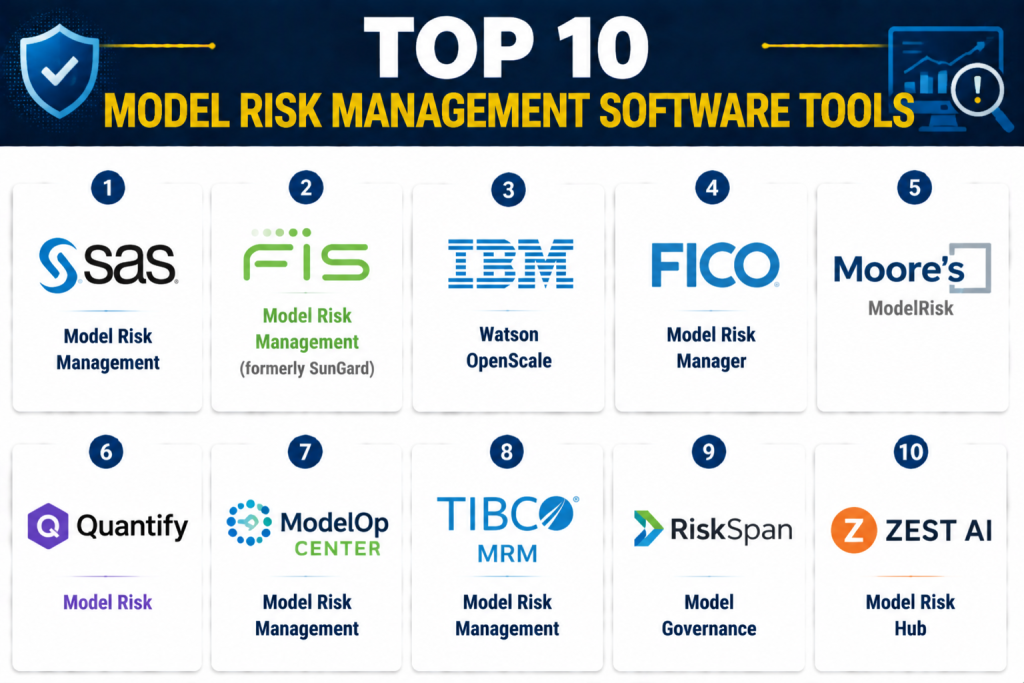
Top 10 Model Risk Management Software Tools
1 — SAS Model Risk Management
Short description: SAS MRM provides a comprehensive platform for managing the lifecycle of analytical models. It supports inventory management, validation, versioning, and monitoring — making it a staple in heavily regulated sectors like banking and insurance.
Key Features
- Centralized model inventory and lineage visualization
- Version control and change history
- Validation workflows with documentation templates
- Performance and drift monitoring
- Integration with SAS analytical tools
- Regulatory reporting and audit support
Pros
- Mature, enterprise‑grade platform trusted by large institutions
- Deep validation and governance capabilities
Cons
- Enterprise pricing may be prohibitive for smaller teams
- Complexity requires specialized training
Platforms / Deployment
- Web / Windows
- Cloud / Hybrid
Security & Compliance
- Not publicly stated
Integrations & Ecosystem
SAS MRM connects broadly across analytics and IT environments:
- Native integration with SAS analytics suite
- API support for Python/R integration
- Connectivity to databases and data warehouses
Support & Community
- Extensive documentation and certifications
- Professional services and training options
- Large enterprise user community
2 — FIS Model Risk Management (formerly SunGard)
Short description: FIS MRM is designed for financial institutions to govern and validate risk and pricing models, supporting audit trails, scenario testing, and compliance workflows.
Key Features
- Model inventory and classification
- Validation and challenge workflows
- Scenario and stress testing
- Audit trails and documentation
- Performance dashboards
- Regulatory reporting features
Pros
- Strong support for financial models
- Good audit and documentation tooling
Cons
- Financial focus may not suit non‑financial models
- Implementation can be lengthy
Platforms / Deployment
- Web / Cloud / Hybrid
Security & Compliance
- Not publicly stated
Integrations & Ecosystem
- Integration with core risk systems
- API access for custom workflows
- Data connectors for model inputs
Support & Community
- Vendor training and documentation
- Support tiers available
- Moderate enterprise user base
3 — IBM Watson OpenScale
Short description: IBM Watson OpenScale provides model observability, fairness, explainability, and continuous monitoring across AI and ML models — ideal for AI‑driven risk frameworks.
Key Features
- AI model explainability and bias detection
- Performance and drift monitoring
- Integration with hybrid cloud and data platforms
- Support for Python, R, and Watson models
- Dashboard visualizations
- Alerts and governance workflows
Pros
- Strong explainability and fairness tooling
- Hybrid cloud flexibility
Cons
- Less focus on traditional statistical models
- Best paired with IBM ecosystem
Platforms / Deployment
- Web / Cloud / Hybrid
Security & Compliance
- Not publicly stated
Integrations & Ecosystem
- Integration with IBM Cloud Pak and data systems
- APIs for Python/R model hooks
- Connectors to enterprise data platforms
Support & Community
- Extensive IBM documentation
- Support tiers and professional services
- Large global community
4 — FICO Model Risk Manager
Short description: FICO’s platform focuses on the governance and validation of models used for credit risk, scoring, and decisioning. It supports model inventory, documentation, validation, and monitoring.
Key Features
- Centralized model catalog
- Validation and scorecard tracking
- Monitoring and performance metrics
- Documentation repository
- Regulatory reporting features
- Integration with scoring engines
Pros
- Strong support for credit risk and scoring models
- Deep performance tracking
Cons
- Narrower focus than general MRM suites
- Cost can be high for smaller teams
Platforms / Deployment
- Web / Cloud
Security & Compliance
- Not publicly stated
Integrations & Ecosystem
- Connectors to scoring engines
- APIs for data feeds
- Integration with credit and decisioning platforms
Support & Community
- Vendor documentation and training
- Support tiers
- Moderate community
5 — Moore’s ModelRisk
Short description: ModelRisk from Vose (Moore) provides probabilistic risk analysis, simulation, and model documentation used for risk quantification in finance, energy, and engineering.
Key Features
- Probabilistic modeling and Monte Carlo simulation
- Sensitivity and scenario analysis
- Documentation and audit trails
- Integration with Excel and data sources
- Risk reports
- Model governance workflows
Pros
- Excellent for simulation models and probabilistic analysis
- Flexible documentation options
Cons
- Less focused on AI/ML governance
- Not a full enterprise MRM suite
Platforms / Deployment
- Windows / Web
- On‑premises / Cloud
Security & Compliance
- Not publicly stated
Integrations & Ecosystem
- Connects with Excel and data sources
- API for automation
- Reports for regulatory purposes
Support & Community
- Product documentation
- Vendor support tiers
- Small specialist community
6 — Quantify Model Risk
Short description: Quantify offers model inventory, validation, monitoring, and documentation with a focus on ease of use and rapid deployment for risk teams and model owners.
Key Features
- Centralized model registry
- Validation templates and workflows
- Monitoring dashboards
- Alerts and reporting
- Collaboration features
- Regulatory documentation support
Pros
- Balanced between capability and usability
- Faster onboarding
Cons
- Smaller ecosystem than legacy vendors
- Less specialized analytics
Platforms / Deployment
- Web / Cloud
Security & Compliance
- Not publicly stated
Integrations & Ecosystem
- API access
- Integration with version control
- Connectors for data sources
Support & Community
- Vendor documentation
- Support tiers
- Growing user community
7 — ModelOp Center
Short description: ModelOp Center emphasizes operational governance and lifecycle management for models deployed in production, including drift detection, scoring oversight, and policy enforcement.
Key Features
- Model deployment governance
- Performance and drift monitoring
- Access and change control
- Collaboration workflows
- Reporting and dashboards
- Integration with operational systems
Pros
- Strong operational governance
- Lifecycle management focus
Cons
- Enterprise complexity
- Requires skilled administration
Platforms / Deployment
- Web / Cloud / Hybrid
Security & Compliance
- Not publicly stated
Integrations & Ecosystem
- APIs for production systems
- Version control integrations
- Monitoring tools
Support & Community
- Documentation
- Professional services
- Moderate professional community
8 — Tibco MRM
Short description: Tibco Model Risk Management software provides model inventory, validation workflows, monitoring, and reporting as part of Tibco’s analytics ecosystem.
Key Features
- Centralized model registry
- Validation and challenge tracking
- Monitoring dashboards
- Reporting and audit support
- Integration with data analytics
- Alerts and notifications
Pros
- Works well within Tibco analytics ecosystem
- Good validation tooling
Cons
- Less widely deployed than legacy vendors
- Pricing may be unclear
Platforms / Deployment
- Web / Cloud / Hybrid
Security & Compliance
- Not publicly stated
Integrations & Ecosystem
- Connectors to analytics and data platforms
- API access
- Reporting systems
Support & Community
- Vendor docs and onboarding
- Support tiers
- Small community
9 — RiskSpan Model Governance
Short description: RiskSpan’s platform focuses on governance, documentation, monitoring, and risk reporting for models used in financial risk and analytics.
Key Features
- Model inventory and documentation
- Validation and governance workflows
- Performance and drift monitoring
- Compliance reports
- Integration support
- Alerts and dashboards
Pros
- Strong governance and documentation focus
- Financial risk emphasis
Cons
- Smaller set of advanced analytics
- May require customization
Platforms / Deployment
- Web / Cloud
Security & Compliance
- Not publicly stated
Integrations & Ecosystem
- API integration
- Reporting and dashboards
- Data connectivity
Support & Community
- Documentation
- Support tiers
- Small professional user base
10 — Zest AI Model Risk Hub
Short description: Zest AI’s offering focuses on AI/ML model governance, explainability, performance monitoring, and fairness checks to help organizations manage risk in modern predictive models.
Key Features
- Explainability and feature importance
- Bias detection and fairness checks
- Performance and drift monitoring
- Model inventory and documentation
- Alerts and dashboards
- Integration with ML pipelines
Pros
- Strong AI/ML focus and explainability
- Useful for modern predictive risk models
Cons
- Narrower than full MRM suites
- Best suited for AI/ML centric environments
Platforms / Deployment
- Web / Cloud
Security & Compliance
- Not publicly stated
Integrations & Ecosystem
- Connectors to ML pipelines
- APIs for monitoring
- Dashboards
Support & Community
- Vendor documentation
- Support tiers
- Growing AI/ML risk community
Comparison Table (Top 10)
| Tool Name | Best For | Platform(s) Supported | Deployment | Standout Feature | Public Rating |
|---|---|---|---|---|---|
| SAS Model Risk Management | Enterprise regulated industries | Web/Windows | Cloud/Hybrid | Comprehensive governance | N/A |
| FIS Model Risk Management | Financial institutions | Web/Cloud/Hybrid | Cloud/Hybrid | Audit & validation workflows | N/A |
| IBM Watson OpenScale | AI/ML model governance | Web/Cloud/Hybrid | Cloud/Hybrid | Explainability & fairness checks | N/A |
| FICO Model Risk Manager | Credit risk & scoring models | Web/Cloud | Cloud | Scoring governance | N/A |
| Moore’s ModelRisk | Probabilistic and simulation | Windows/Web | On‑prem/Cloud | Simulation and documentation | N/A |
| Quantify Model Risk | Mid‑market MRM | Web/Cloud | Cloud | Balanced usability | N/A |
| ModelOp Center | Operational governance | Web/Cloud/Hybrid | Hybrid | Lifecycle management | N/A |
| Tibco MRM | Analytics ecosystem users | Web/Cloud/Hybrid | Cloud/Hybrid | Validation tooling | N/A |
| RiskSpan Model Governance | Governance for financial models | Web/Cloud | Cloud | Documentation focus | N/A |
| Zest AI Model Risk Hub | AI/ML model governance | Web/Cloud | Cloud | Explainability & bias detection | N/A |
Evaluation & Scoring
| Tool Name | Core (25%) | Ease (15%) | Integrations (15%) | Security (10%) | Performance (10%) | Support (10%) | Value (15%) | Weighted Total |
|---|---|---|---|---|---|---|---|---|
| SAS Model Risk Management | 9 | 7 | 8 | 7 | 8 | 7 | 6 | 7.7 |
| FIS Model Risk Management | 8 | 7 | 7 | 7 | 8 | 7 | 6 | 7.4 |
| IBM Watson OpenScale | 9 | 7 | 8 | 7 | 8 | 7 | 6 | 7.7 |
| FICO Model Risk Manager | 8 | 7 | 7 | 7 | 7 | 6 | 6 | 7.1 |
| Moore’s ModelRisk | 7 | 7 | 6 | 6 | 7 | 6 | 7 | 6.6 |
| Quantify Model Risk | 8 | 8 | 7 | 6 | 7 | 6 | 7 | 7.0 |
| ModelOp Center | 8 | 7 | 7 | 7 | 8 | 6 | 6 | 7.1 |
| Tibco MRM | 7 | 7 | 6 | 6 | 7 | 6 | 6 | 6.6 |
| RiskSpan Model Governance | 7 | 7 | 6 | 6 | 7 | 6 | 6 | 6.6 |
| Zest AI Model Risk Hub | 9 | 7 | 8 | 7 | 8 | 7 | 6 | 7.7 |
Interpretation: Higher weighted totals indicate stronger alignment with modern Model Risk Management needs, including AI/ML support, continuous monitoring, explainability, and enterprise governance. Scores are comparative and reflective of general capabilities and alignment to the 2026+ context.
Which Model Risk Management Tool Is Right for You?
Solo / Freelancer
Smaller risk teams or model owners may benefit from Quantify Model Risk for usability and quick onboarding, or Moore’s ModelRisk for simulation‑centric tasks.
SMB
Mid‑market risk teams who need governance without deep enterprise complexity can leverage FICO Model Risk Manager or RiskSpan Model Governance.
Mid‑Market
Agencies and financial firms with more rigorous governance needs should consider FIS Model Risk Management or ModelOp Center for lifecycle oversight.
Enterprise
Regulated enterprises and large carriers should evaluate SAS Model Risk Management, IBM Watson OpenScale, or Zest AI Model Risk Hub for comprehensive governance, monitoring, and explainability across diverse models.
Budget vs Premium
Budget‑conscious teams will find Quantify Model Risk or Zest AI Model Risk Hub (for AI models) suitable, while premium enterprise libraries like SAS and IBM OpenScale offer deep control and compliance automation.
Feature Depth vs Ease of Use
Enterprise platforms provide deep analytics, regulatory templates, and lifecycle governance; mid‑market platforms prioritize quicker deployment and manageable complexity.
Integrations & Scalability
Organizations requiring tight integration with Python, R, SAS, and data platforms will benefit from SAS, IBM OpenScale, or ModelOp Center.
Security & Compliance Needs
Regulated industries must prioritize platforms with audit logs, RBAC, secure access controls, and compliance reporting.
Frequently Asked Questions (FAQs)
1- What pricing models exist for MRM software?
Common models include SaaS subscriptions, per‑license fees, enterprise bundles, and usage‑based pricing tied to the number of models governed.
2- How long does implementation take?
Small deployments may launch in weeks; enterprise rollouts with integrations and validations may take several months.
3- Do these tools integrate with modeling languages?
Yes. Top platforms provide APIs for Python, R, SAS, and other environments.
4- Are AI/ML models supported?
Modern platforms like IBM Watson OpenScale and Zest AI Model Risk Hub include explainability and bias checks for AI/ML.
5- Can we monitor models continuously?
Yes. Continuous monitoring and drift detection are core capabilities of most tools.
6- How does governance improve compliance?
By centralizing inventory, documentation, validation, and audit trails, risk teams can meet regulatory expectations for model oversight.
7- Is cloud deployment common?
Yes, cloud and hybrid models are typical, offering scalability and remote access.
8- Do these tools offer alerts?
Yes. Alerts for performance decay, drift, or threshold breaches are common.
9- Can MRM platforms track historical changes?
Yes. Version control and change history support audit and regulatory reviews.
10- Is explainability supported?
Explainability varies by vendor but is increasingly common, especially for AI/ML models.
Conclusion
Model Risk Management Software is essential for enterprises whose decisions depend on accurate, compliant models — especially in regulated industries like banking, insurance, and healthcare. Smaller teams can leverage Quantify Model Risk or Moore’s ModelRisk for focused tasks and simulation governance, while mid‑market organizations may benefit from FICO Model Risk Manager or ModelOp Center for lifecycle oversight. Enterprise firms with extensive model portfolios and regulatory requirements should consider SAS Model Risk Management, IBM Watson OpenScale, or Zest AI Model Risk Hub for deep governance, explainability, and monitoring across traditional and AI/ML models.
