Introduction
Nutrition tracking apps are digital platforms designed to help individuals monitor and manage their dietary intake, macronutrients, and overall nutritional goals. They provide features such as meal logging, barcode scanning, AI-based recommendations, and integration with wearable devices to track calories, macros, and micronutrients. In , with rising health awareness, chronic disease management, and lifestyle optimization, these apps are more relevant than ever. They empower users to make informed dietary choices and maintain accountability toward personal health goals.
Real-world use cases include:
- Individuals aiming for weight loss, muscle gain, or balanced nutrition.
- Fitness enthusiasts and athletes tracking macros and meal timing.
- Patients managing chronic conditions like diabetes, hypertension, or obesity.
- Dietitians and nutritionists providing remote dietary guidance to clients.
- Corporate wellness programs offering employees tools to monitor lifestyle habits.
Best for: Individuals focused on personal nutrition, fitness enthusiasts, healthcare practitioners, dietitians, and corporate wellness programs.
Not ideal for: Users who prefer in-person nutrition coaching only, highly specialized therapeutic diets, or offline-only dietary tracking.
Key Trends in Nutrition Tracking Apps
- AI-driven meal recommendations and portion adjustments based on user activity and goals
- Barcode scanning and image recognition for automatic food logging
- Integration with wearables for activity, sleep, and metabolic tracking
- Cloud-based cross-device syncing for continuous tracking
- Personalized dashboards and predictive nutrition insights
- Gamification and social features for habit formation and community engagement
- Compliance with HIPAA, GDPR, and other personal health data regulations
- Subscription-based, freemium, and enterprise wellness pricing models
- Partnerships with health insurers and corporate wellness programs
- Enhanced analytics for healthcare providers and dietitians
How We Selected These Tools (Methodology)
- Assessed market adoption, mindshare, and user base
- Evaluated feature completeness including AI recommendations, tracking, and goal-setting
- Considered reliability, performance, and offline functionality
- Reviewed security posture and privacy compliance
- Analyzed integrations with wearables, health apps, and fitness platforms
- Evaluated ease of use and interface design
- Examined suitability across individuals, SMBs, and enterprise segments
- Cross-referenced expert opinions, user feedback, and adoption trends
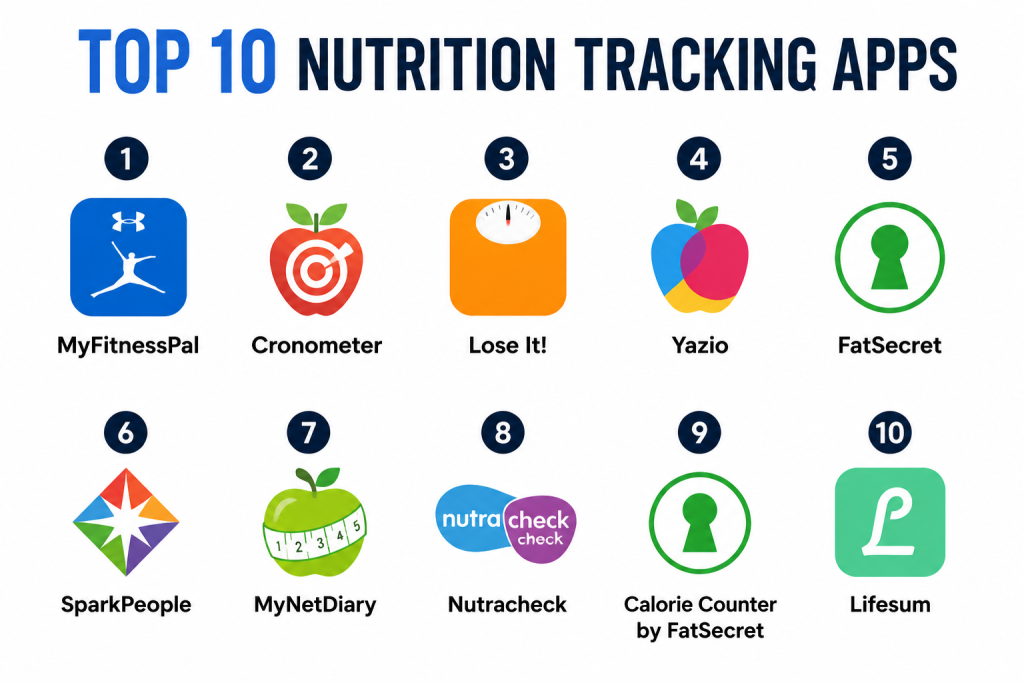
Top 10 Nutrition Tracking Apps
1- MyFitnessPal
Short description: MyFitnessPal is a comprehensive nutrition tracking app that allows users to log meals, track calories, monitor macronutrients, and sync with fitness devices. Suitable for individuals, athletes, and wellness-focused professionals.
Key Features
- Extensive food and recipe database
- Barcode scanning for packaged foods
- Personalized calorie and macro goals
- Activity tracking integration
- Recipe creation and meal planning
- Reports and progress analytics
Pros
- Large, frequently updated food database
- Easy logging and intuitive interface
Cons
- Premium subscription needed for advanced features
- Occasional inaccuracies in user-submitted food entries
Platforms / Deployment
- iOS, Android, Web / Cloud
Security & Compliance
- Not publicly stated
Integrations & Ecosystem
Supports integration with health and fitness tools:
- Wearables (Fitbit, Garmin)
- Apple Health / Google Fit
- Smart scales
- Fitness apps
Support & Community
- Tutorials, FAQs, and user community forums
- Premium email support
2- Cronometer
Short description: Cronometer provides precise nutrition tracking with a focus on micronutrients, ideal for health enthusiasts, dietitians, and medical nutrition therapy.
Key Features
- Detailed nutrient tracking (vitamins, minerals)
- Barcode scanning and recipe import
- Customizable diet plans
- Fasting and biometrics tracking
- Analytics dashboard and reports
Pros
- Comprehensive micronutrient tracking
- Scientific accuracy for professional use
Cons
- Free version limited
- Interface may feel complex for beginners
Platforms / Deployment
- iOS, Android, Web / Cloud
Security & Compliance
- Not publicly stated
Integrations & Ecosystem
- Wearable syncing (Fitbit, Apple Watch)
- API for custom integrations
- Health app synchronization
Support & Community
- Documentation and tutorials
- Professional dietitian community access
3- Lose It!
Short description: Lose It! is a user-friendly calorie and nutrition tracking app that supports weight management and healthy habit formation for individuals and groups.
Key Features
- Barcode scanning and food logging
- Customizable calorie and macro goals
- Photo meal recognition
- Challenges and social groups
- Progress reports and analytics
Pros
- Easy-to-use interface
- Supports community accountability
Cons
- Advanced features require subscription
- Database may have occasional inaccuracies
Platforms / Deployment
- iOS, Android, Web / Cloud
Security & Compliance
- Not publicly stated
Integrations & Ecosystem
- Apple Health / Google Fit
- Fitness trackers and smart scales
- Social and community integrations
Support & Community
- Online help center
- Active forums and in-app tutorials
4- Yazio
Short description: Yazio helps users manage daily nutrition, weight loss, and meal planning with a personalized approach and visual dashboards.
Key Features
- Calorie and macro tracking
- Meal planner and recipe suggestions
- Fasting timer and tracking
- Weight progress and analytics
- Integration with fitness trackers
Pros
- Personalized nutrition insights
- Simple and visual interface
Cons
- Premium needed for complete feature set
- Limited offline functionality
Platforms / Deployment
- iOS, Android / Cloud
Security & Compliance
- Not publicly stated
Integrations & Ecosystem
- Health apps and wearables
- Fitness tracking platforms
- Recipe import APIs
Support & Community
- Documentation and FAQ
- Email support for premium users
5- FatSecret
Short description: FatSecret offers calorie counting, nutrition tracking, and community features to support weight management and healthy eating habits.
Key Features
- Food diary and barcode scanning
- Recipe and meal database
- Exercise logging and calorie tracking
- Weight and progress monitoring
- Community forums
Pros
- Free version available with robust features
- Community support encourages engagement
Cons
- User interface less modern than competitors
- Ads in free version can be distracting
Platforms / Deployment
- iOS, Android, Web / Cloud
Security & Compliance
- Not publicly stated
Integrations & Ecosystem
- Fitness tracker integration
- Health app synchronization
- Recipe sharing
Support & Community
- Online forums and guides
- Email support
6- SparkPeople
Short description: SparkPeople combines nutrition tracking, meal planning, and fitness logging, ideal for individuals seeking holistic wellness management.
Key Features
- Calorie and macro tracking
- Meal planner and recipe database
- Fitness tracking and exercise logging
- Community challenges and groups
- Progress analytics
Pros
- Holistic wellness approach
- Strong community engagement
Cons
- Interface may feel dated
- Some features require subscription
Platforms / Deployment
- iOS, Android, Web / Cloud
Security & Compliance
- Not publicly stated
Integrations & Ecosystem
- Fitness apps and wearable integration
- Health tracking APIs
- Social and community features
Support & Community
- Guides and tutorials
- Active online community
7- MyNetDiary
Short description: MyNetDiary provides personalized meal tracking, nutrition insights, and weight management tools, suitable for health-conscious users and professionals.
Key Features
- Meal logging with barcode scanning
- AI-based recommendations
- Macro and micronutrient tracking
- Weight and activity tracking
- Recipe and meal planning
Pros
- AI-driven suggestions
- Comprehensive nutrient tracking
Cons
- Advanced features behind premium plan
- Limited offline access
Platforms / Deployment
- iOS, Android / Cloud
Security & Compliance
- Not publicly stated
Integrations & Ecosystem
- Health apps and wearables
- Fitness platforms
- Recipe import and export
Support & Community
- Tutorials and FAQs
- Email support
8- Nutracheck
Short description: Nutracheck focuses on calorie counting and diet tracking, with an emphasis on simple logging and food database accuracy.
Key Features
- Barcode scanning and food diary
- Nutrient and calorie tracking
- Weight management tools
- Recipe and meal planner
- Progress charts
Pros
- Simple, easy-to-use interface
- Accurate UK food database
Cons
- Limited features in free version
- Not global food database friendly
Platforms / Deployment
- iOS, Android, Web / Cloud
Security & Compliance
- Not publicly stated
Integrations & Ecosystem
- Wearable sync
- Health app integration
- Meal planning APIs
Support & Community
- Guides and email support
- Limited community features
9- Calorie Counter by FatSecret
Short description: A streamlined app for calorie and nutrient tracking with community forums, supporting users aiming for weight control and healthy eating habits.
Key Features
- Food diary and barcode scanner
- Nutritional analysis
- Exercise and activity tracking
- Community challenges
- Goal setting and progress tracking
Pros
- Free robust features
- Active community support
Cons
- UI is less modern
- Ads in free version
Platforms / Deployment
- iOS, Android / Cloud
Security & Compliance
- Not publicly stated
Integrations & Ecosystem
- Health apps
- Fitness trackers
- Recipe sharing
Support & Community
- Online forums and tutorials
- Email support
10- Lifesum
Short description: Lifesum combines nutrition tracking, meal planning, and health insights, offering personalized diet recommendations and lifestyle guidance.
Key Features
- Meal logging with barcode scanning
- AI-based personalized diet plans
- Macro and calorie tracking
- Hydration and exercise tracking
- Recipe suggestions and meal plans
Pros
- Personalization through AI
- Clean and modern interface
Cons
- Premium subscription required
- Offline access limited
Platforms / Deployment
- iOS, Android / Cloud
Security & Compliance
- Not publicly stated
Integrations & Ecosystem
- Health apps and wearables
- Fitness platforms
- Recipe import/export
Support & Community
- Tutorials, guides, and FAQs
- Email support
Comparison Table (Top 10)
| Tool Name | Best For | Platform(s) Supported | Deployment | Standout Feature | Public Rating |
|---|---|---|---|---|---|
| MyFitnessPal | Individuals / Athletes | iOS, Android, Web | Cloud | Extensive food database | N/A |
| Cronometer | Health professionals | iOS, Android, Web | Cloud | Micronutrient tracking | N/A |
| Lose It! | Weight management | iOS, Android, Web | Cloud | Photo meal recognition | N/A |
| Yazio | Personal nutrition | iOS, Android | Cloud | Fasting and meal planning | N/A |
| FatSecret | Community-driven | iOS, Android, Web | Cloud | Social engagement | N/A |
| SparkPeople | Holistic wellness | iOS, Android, Web | Cloud | Community challenges | N/A |
| MyNetDiary | Personalized diet | iOS, Android | Cloud | AI recommendations | N/A |
| Nutracheck | UK users | iOS, Android, Web | Cloud | Accurate UK food database | N/A |
| Calorie Counter | Weight tracking | iOS, Android | Cloud | Community forums | N/A |
| Lifesum | Personalized lifestyle | iOS, Android | Cloud | AI-based diet plans | N/A |
Evaluation & Scoring
| Tool Name | Core (25%) | Ease (15%) | Integrations (15%) | Security (10%) | Performance (10%) | Support (10%) | Value (15%) | Weighted Total |
|---|---|---|---|---|---|---|---|---|
| MyFitnessPal | 9 | 9 | 8 | 7 | 9 | 8 | 8 | 8.5 |
| Cronometer | 9 | 8 | 8 | 7 | 8 | 7 | 8 | 8.1 |
| Lose It! | 8 | 9 | 7 | 7 | 8 | 7 | 8 | 7.9 |
| Yazio | 8 | 8 | 7 | 7 | 8 | 7 | 7 | 7.6 |
| FatSecret | 7 | 8 | 7 | 7 | 7 | 7 | 8 | 7.4 |
| SparkPeople | 7 | 7 | 6 | 6 | 7 | 6 | 7 | 6.7 |
| MyNetDiary | 8 | 8 | 7 | 7 | 8 | 7 | 8 | 7.9 |
| Nutracheck | 7 | 7 | 6 | 6 | 7 | 6 | 7 | 6.7 |
| Calorie Counter | 7 | 7 | 6 | 6 | 7 | 6 | 7 | 6.7 |
| Lifesum | 8 | 8 | 7 | 7 | 8 | 7 | 8 | 7.9 |
Interpretation: Scores reflect a comparative view across features, usability, integrations, security, performance, support, and value. Higher scores indicate better overall alignment with user needs. Buyers should prioritize scores based on their specific use case and organizational context.
Which Nutrition Tracking Tool Is Right for You?
Solo / Freelancer
MyFitnessPal, Lose It!, and Lifesum offer flexible individual-focused nutrition tracking. Their mobile-first design and AI-based recommendations suit personal health goals.
SMB
Yazio, MyNetDiary, and Cronometer provide business-friendly features for small wellness programs and individual coaching use.
Mid-Market
SparkPeople and FatSecret are suitable for mid-sized organizations with wellness challenges and team engagement features.
Enterprise
Cronometer Enterprise and Lifesum for Work deliver analytics, employee health dashboards, and integration with corporate wellness programs.
Budget vs Premium
Freemium apps (FatSecret, Nutracheck) suit cost-conscious users. Premium apps (MyFitnessPal, Cronometer) offer advanced tracking, analytics, and professional features.
Feature Depth vs Ease of Use
Apps like Cronometer offer in-depth micronutrient tracking, while Lose It! and MyFitnessPal prioritize simplicity and fast logging. Balance depends on user goals.
Integrations & Scalability
Enterprise-focused apps integrate with HR, wellness, and fitness platforms. Individual apps integrate with health tracking apps and wearables for personal insights.
Security & Compliance Needs
Apps vary in data privacy and compliance reporting. Check encryption and privacy policy if sensitive health data is involved. Many vendors do not publicly disclose full compliance certifications.
Frequently Asked Questions (FAQs)
1- What pricing models do nutrition apps offer?
Most apps provide free basic versions and subscription-based premium plans. Enterprise plans are available for team or corporate wellness programs.
2- How easy is onboarding and setup?
Apps allow instant download and basic logging immediately. Advanced features may require registration or premium subscription.
3- Can these apps be used offline?
Some apps allow offline tracking for select features, but full functionality often requires internet access. Premium subscriptions often expand offline capabilities.
4- How accurate is nutritional tracking?
Apps rely on databases, barcode scanning, and user input. Accuracy varies, especially for homemade or non-standard foods.
5- Can these apps integrate with wearables?
Yes, most integrate with Apple Health, Google Fit, Fitbit, Garmin, and smart scales to track calories, macros, and activity.
6- Are these apps suitable for professional dietitians?
Cronometer and MyNetDiary provide precise tracking for professional use, including micronutrient analysis and client management.
7- What common mistakes should users avoid?
Skipping entries, neglecting portion sizes, and not updating personal goals can reduce effectiveness. Consistency is key.
8- How do AI features help?
AI can suggest meals, portion adjustments, and detect patterns in nutrition and activity, improving adherence and outcomes.
9- Are these apps globally relevant?
Some apps like Nutracheck have localized databases, while MyFitnessPal and Cronometer support a broad international food database.
10- What alternatives exist to digital apps?
Alternatives include manual food journals, dietitian consultations, and corporate wellness programs using in-person tracking or coaching.
Conclusion
Nutrition tracking apps have evolved into sophisticated platforms combining AI-driven personalization, extensive food databases, wearable integration, and community features. Individual users benefit from apps like MyFitnessPal, Lose It!, and Lifesum for personal health goals. Dietitians and healthcare providers may prefer Cronometer for its precision and micronutrient insights. Enterprise and mid-market wellness programs can leverage SparkPeople and FatSecret for team engagement. Buyers should shortlist , pilot them with target users, and validate integrations, AI personalization, and data security before scaling. Ultimately, consistent use and alignment with personal or organizational nutrition goals determine the value of these apps.
