Introduction
Shift Marketplace Platforms are digital systems that enable organizations to connect available workers with open shifts, tasks, or gigs in real time. These platforms optimize workforce supply and demand — particularly in industries where schedules fluctuate, labor is dynamic, and on‑demand staffing is critical. Rather than relying on static scheduling or traditional hiring, shift marketplaces dynamically present available work opportunities to qualified workers based on availability, skills, location, and preferences.
In , workforce dynamics continue shifting toward flexibility, gig work, and hybrid scheduling models. Many industries — including hospitality, healthcare, retail, logistics, call centers, and event staffing — benefit from platforms that help managers fill shifts quickly while giving workers autonomy in choosing when and where they work. Shift marketplaces are essential in enabling businesses to reduce gaps in coverage, lower labor costs, and improve responsiveness to fluctuating demand.
Real‑world use cases include:
- Hospitality & food service: Restaurants and bars filling last‑minute shifts due to call‑offs or peak demand.
- Healthcare & caregiving: Clinics and care homes scheduling nurses, aides, and specialists on short notice.
- Retail staffing: Stores filling weekend or seasonal shifts with qualified floor associates.
- Logistics & warehousing: Assigning pickers, packers, and drivers based on operational spikes.
- Event & promotional labor: Matching available staff to events, conferences, and field campaigns.
What buyers should evaluate:
- Shift matching and worker filtering logic
- Real‑time availability and notification features
- Worker qualification verification and credentialing
- Scheduling, time tracking, and attendance tools
- Payment and payout automation
- Integration with payroll and HR systems
- Compliance, labor law support, and classification workflows
- Mobile app usability for workers and managers
- Analytics and labor cost optimization insights
- Community, ratings, and reputation systems
Best for: Staffing agencies, enterprises with variable needs, businesses with shift‑based labor, gig platforms, and workforce operations teams.
Not ideal for: Organizations with fully scheduled full‑time workforces or fixed staffing requirements where on‑demand shift coverage is minimal.
Key Trends in Shift Marketplace Platforms
- AI‑powered shift matching based on skills, proximity, availability, and performance history.
- Real‑time mobile notifications for shift offers and acceptances.
- Automated shift reminders and attendance verifications through geofencing or QR check‑ins.
- Integrated payroll and payout systems with frictionless payments.
- Skills, certifications, and credential verification embedded in worker profiles.
- Compliance automation for classification, overtime, and local labor regulations.
- On‑demand workforce analytics for forecasting labor needs and costs.
- Community reputation and feedback loops influencing eligibility and pay rates.
- Cross‑platform APIs for deeper integration with HRIS, scheduling, and ERP systems.
- Flexible work preferences enabling workers to set priorities, locations, and rates.
How We Selected These Tools (Methodology)
- Breadth of industry adoption and real‑world usage
- Depth of shift matching and scheduling features
- Mobile experience for workers and managers
- Payment automation and integration capabilities
- Compliance, classification, and labor law support
- Analytics and reporting usefulness
- Ease of onboarding and user management
- Support resources and community engagement
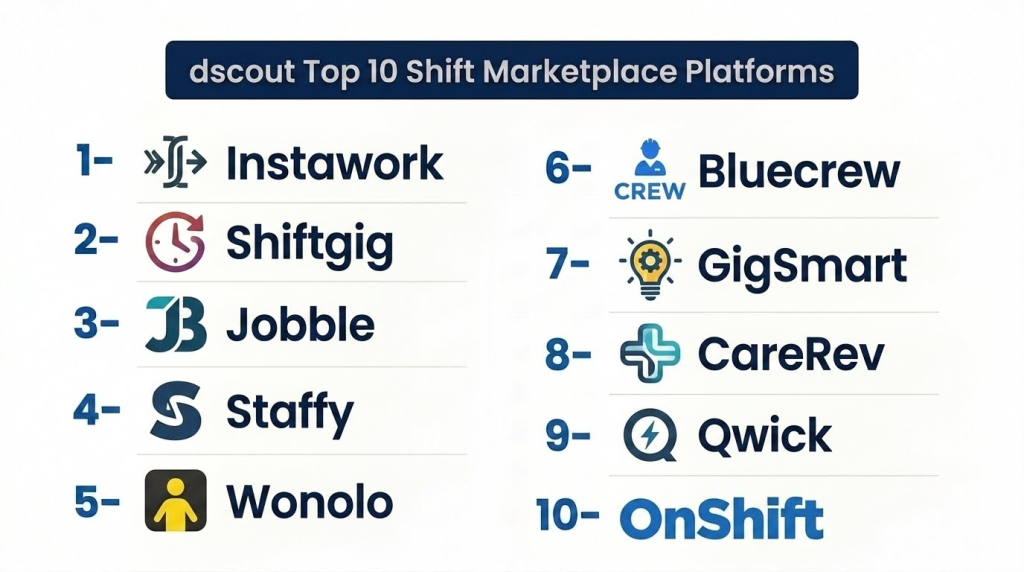
Top 10 Shift Marketplace Platforms
1 — Instawork
Short description: Instawork is a leading shift marketplace that connects hourly professionals with businesses needing on‑demand staffing, particularly in hospitality, warehousing, logistics, and event staffing.
Key Features
- Real‑time match of shifts to worker availability
- Worker profiles with skills and preferences
- Mobile app with push notifications
- Automated time tracking and shift confirmation
- Payment and payout solutions
- Ratings and reputation system
Pros
- Strong marketplace liquidity for hourly labor
- Simple mobile UX for workers and managers
Cons
- Focus on hourly, on‑demand labor (less suited for salaried roles)
- Marketplace fees add to labor cost
Platforms / Deployment
- Web / iOS / Android / Cloud
Security & Compliance
Not publicly stated
Integrations & Ecosystem
- Payroll and HRIS connectors
- Time and attendance systems
- Analytics dashboards
Support & Community
Support portal and community forums
2 — Shiftgig
Short description: Shiftgig offers on‑demand staffing solutions, helping businesses fill shifts quickly with pre‑vetted workers spanning hospitality, retail, and experiential staff.
Key Features
- Skills and compliance verification
- Shift bidding and acceptance workflows
- Worker reward and incentive tools
- Real‑time availability calendars
- Time tracking and reporting
- Payment processing
Pros
- Flexible worker sourcing
- Incentive mechanisms to improve shift fulfillment
Cons
- Coverage may vary by geography
- Advanced features behind enterprise plans
Platforms / Deployment
- Web / iOS / Android / Cloud
Security & Compliance
Not publicly stated
Integrations & Ecosystem
- Workforce management systems
- Payroll and scheduling tools
- HRIS connectors
Support & Community
Comprehensive support and documentation
3 — Jobble
Short description: Jobble focuses on connecting businesses with a distributed hourly workforce across multiple sectors, offering marketplace and workforce management features.
Key Features
- Candidate profiles and skill tagging
- Shift posting and worker matching
- Real‑time job alerts
- Time tracking and verification
- Integrated payment workflows
- Worker ratings
Pros
- Broad sector coverage
- Fast posting and worker notifications
Cons
- Less feature depth than enterprise FMS
- Worker quality varies by region
Platforms / Deployment
- Web / Mobile / Cloud
Security & Compliance
Not publicly stated
Integrations & Ecosystem
- Scheduling systems
- Payroll connectors
- Messaging tools
Support & Community
Online support and help center
4 — Staffy
Short description: Staffy is a workforce marketplace primarily used for flexible staffing in healthcare, logistics, and industrial settings, providing shift matching, compliance tracking, and payroll.
Key Features
- Compliance and credential verification
- Shift scheduling and matching
- Real‑time worker availability insights
- Payroll and invoice integration
- Workforce analytics
- Worker communication suite
Pros
- Strong compliance and credential tools
- Useful analytics for demand planning
Cons
- Less global coverage
- Specialized in particular verticals
Platforms / Deployment
- Web / Cloud / Mobile
Security & Compliance
Not publicly stated
Integrations & Ecosystem
- HRIS and payroll
- Shift scheduling
- Analytics dashboards
Support & Community
Documentation and customer support
5 — Wonolo
Short description: Wonolo matches workers to short‑term gigs and shifts across logistics, retail, event staff, and hospitality with a fast, mobile‑first experience.
Key Features
- Instant job discovery
- Worker profile ratings
- Shift communication tools
- Time and attendance tracking
- Payment processing
- Worker incentives
Pros
- Quick onboarding and job access
- Mobile‑focused UX
Cons
- Marketplace may lack scale in rural regions
- Limited advanced workforce governance
Platforms / Deployment
- Web / iOS / Android / Cloud
Security & Compliance
Not publicly stated
Integrations & Ecosystem
- Shift scheduling
- Payroll integrations
- Messaging and alerts
Support & Community
Support center and documentation
6 — Bluecrew
Short description: Bluecrew operates a shift marketplace with direct employer hiring, enabling hourly workers to accept shifts, get paid weekly, and receive benefits like full‑time employees.
Key Features
- Employer direct hiring and shift scheduling
- Weekly payment and benefits administration
- Worker matching via profiles and performance data
- Time tracking
- HR compliance support
Pros
- Combines marketplace with employment benefits
- Weekly pay boosts retention
Cons
- Industry focus narrower
- Pricing higher due to benefits maintenance
Platforms / Deployment
- Web / Cloud / Mobile
Security & Compliance
Not publicly stated
Integrations & Ecosystem
- Payroll systems
- HRIS
- Time and attendance
Support & Community
Worker support and employer success teams
7 — GigSmart
Short description: GigSmart helps companies find flexible labor for shifts and projects, with logistics, healthcare, and general labor marketplace support.
Key Features
- Shift posting and worker matching
- Real‑time worker notifications
- Time tracking and verification
- Payment and payout features
- Ratings and workforce history
Pros
- Flexible talent acquisition across categories
- Intuitive shift posting and acceptance
Cons
- Quality and coverage vary by market
- Limited compliance automation
Platforms / Deployment
- Web / iOS / Android / Cloud
Security & Compliance
Not publicly stated
Integrations & Ecosystem
- Scheduling tools
- Payroll systems
- Messaging
Support & Community
Documentation and help center
8 — CareRev
Short description: CareRev specializes in healthcare shift marketplace staffing, enabling hospitals and clinics to fill nursing and allied health shifts from a dynamic workforce.
Key Features
- Verified healthcare professional profiles
- License and credential tracking
- Shift bidding and scheduling
- Time tracking and attendance
- Integrated pay systems
Pros
- Healthcare‑specific workforce controls
- Credential verification ensures quality
Cons
- Niche market focus (healthcare)
- Less applicable outside healthcare staffing
Platforms / Deployment
- Web / Mobile / Cloud
Security & Compliance
Not publicly stated
Integrations & Ecosystem
- HRIS and payroll
- Credential verification systems
- Scheduling software
Support & Community
Support resources tailored for healthcare staffing
9 — Qwick
Short description: Qwick connects hospitality workers and businesses with flexible work shifts, offering on‑demand staffing for restaurants, bars, and events.
Key Features
- Real‑time shift posting
- Worker profile and skill tracking
- Payment and tipping features
- Attendance and check‑in
- Shift communication tools
Pros
- Strong hospitality marketplace
- Easy check‑in and pay processes
Cons
- Industry‑specific focus
- Limited advanced workforce governance
Platforms / Deployment
- Web / Mobile / Cloud
Security & Compliance
Not publicly stated
Integrations & Ecosystem
- Payroll
- Scheduling
- Messaging
Support & Community
Support portal and mobile assistance
10 — OnShift
Short description: OnShift combines workforce marketplace features with staff scheduling, HR integration, and compliance automation, particularly for healthcare and senior care sectors.
Key Features
- Dynamic shift marketplace
- Staff scheduling and labor analytics
- Compliance tracking
- Payroll integration
- Employee engagement tools
Pros
- End‑to‑end workforce management
- Strong analytics for labor costs
Cons
- More complex to deploy
- Best suited for healthcare and care facilities
Platforms / Deployment
- Web / Cloud / Mobile
Security & Compliance
Not publicly stated
Integrations & Ecosystem
- HRIS and payroll
- Analytics dashboards
- Scheduling systems
Support & Community
Training, professional services, and support
Comparison Table (Top 10)
| Tool Name | Best For | Platform(s) Supported | Deployment | Standout Feature | Public Rating |
|---|---|---|---|---|---|
| Instawork | Hourly & on‑demand labor | Web, iOS, Android | Cloud | Real‑time shift matching | N/A |
| Shiftgig | Hospitality & retail shifts | Web, iOS, Android | Cloud | Incentives and bidding | N/A |
| Jobble | General shift staffing | Web, Mobile | Cloud | Broad hour categories | N/A |
| Staffy | Healthcare & industrial | Web, Cloud, Mobile | Cloud | Compliance & analytics | N/A |
| Wonolo | Quick gigs & shifts | Web, iOS, Android | Cloud | Instant job discovery | N/A |
| Bluecrew | Workforce with benefits | Web, Mobile | Cloud | Benefits + weekly pay | N/A |
| GigSmart | Flexible workforce | Web, iOS, Android | Cloud | Simple shift posting | N/A |
| CareRev | Healthcare shifts | Web, Mobile | Cloud | Credential verification | N/A |
| Qwick | Hospitality staffing | Web, Mobile | Cloud | Easy pay & check‑in | N/A |
| OnShift | Workforce + scheduling | Web, Mobile | Cloud | Scheduling + compliance | N/A |
Evaluation & Scoring of Shift Marketplace Platforms
| Tool Name | Core (25%) | Ease (15%) | Integrations (15%) | Security (10%) | Performance (10%) | Support (10%) | Value (15%) | Weighted Total (0–10) |
|---|---|---|---|---|---|---|---|---|
| Instawork | 9 | 9 | 8 | 7 | 9 | 8 | 8 | 8.5 |
| Shiftgig | 8 | 8 | 8 | 7 | 8 | 8 | 8 | 8.1 |
| Jobble | 8 | 8 | 7 | 7 | 8 | 7 | 7 | 7.7 |
| Staffy | 8 | 8 | 8 | 8 | 8 | 7 | 7 | 7.9 |
| Wonolo | 8 | 9 | 7 | 7 | 8 | 7 | 7 | 7.8 |
| Bluecrew | 8 | 8 | 7 | 8 | 8 | 8 | 7 | 8.0 |
| GigSmart | 7 | 8 | 7 | 7 | 7 | 7 | 7 | 7.4 |
| CareRev | 9 | 8 | 8 | 8 | 9 | 8 | 8 | 8.5 |
| Qwick | 8 | 9 | 7 | 7 | 8 | 7 | 7 | 7.8 |
| OnShift | 8 | 7 | 8 | 8 | 8 | 7 | 7 | 7.8 |
Interpretation:
Weighted totals reflect strengths in core shift marketplace features, ease of use, integrations, performance, support, and value. Higher scores suggest stronger performance for real‑world shift-based workforce operations.
Which Shift Marketplace Platform Is Right for You?
Solo / Small Business
- Instawork, Wonolo, or Qwick for quick, mobile‑focused shift staffing.
- Ideal for restaurants, small retailers, and local service teams.
SMB / Mid‑Market
- Shiftgig, GigSmart, or Bluecrew for mid-sized shift needs with incentive features and pay flexibility.
Mid‑Market with Compliance Needs
- Staffy and CareRev provide credentialing and compliance support — valuable in healthcare and regulated environments.
Enterprise
- Instawork Enterprise, OnShift, or workforce orchestration via Staffy and Shiftgig for integrated scheduling, analytics, and compliance.
Budget vs Premium
- Wonolo and GigSmart are cost‑effective for straightforward shift fill.
- CareRev, Bluecrew, and OnShift provide premium support, analytics, and compliance for demanding workloads.
Feature Depth vs Ease of Use
- Instawork and Shiftgig balance features and simplicity.
- OnShift and Staffy are deeper platforms suited for complex workforce orchestration.
Integrations & Scalability
- Enterprises should adopt platforms offering robust HRIS, scheduling, and payroll connectors.
Security & Compliance Needs
- Platforms with credentialing, license tracking, and compliance workflows (e.g., CareRev, Staffy) reduce risk in regulated industries.
Frequently Asked Questions (FAQs)
1. What is a shift marketplace platform?
A shift marketplace platform connects open work shifts with available workers, matching based on availability, skills, and preferences.
2. How do workers get notified of shifts?
Most platforms use real‑time mobile notifications, alerts, and in‑app invitations.
3. Do these platforms handle payroll?
Yes — many provide integrated payment and payout solutions or sync with external payroll systems.
4. Are workers vetted?
Some platforms verify skills, licenses, and background checks depending on sector requirements.
5. Can I integrate with HR or scheduling tools?
Leading platforms offer APIs and connectors for HRIS, payroll, and enterprise scheduling systems.
6. Is global hiring supported?
Coverage varies; some platforms focus on local markets while others expand regionally or internationally.
7. How do ratings and reviews work?
Workers and employers often rate each other after shifts, which feeds into reputation and future matching.
8. Do these platforms support time tracking?
Yes — time and attendance tracking with mobile check‑ins, geolocation, or QR codes is common.
9. Are there compliance features?
Many platforms help with classification, labor law adherence, and credential management.
10. What’s the best way to choose?
Define your staffing needs — hourly volume, industry, compliance requirements — then evaluate platform features, coverage, and integration capabilities.
Conclusion
Shift Marketplace Platforms are essential tools for modern workforce operations where labor demand fluctuates and flexibility is key. Whether your organization needs instant coverage for restaurant shifts, credentialed healthcare staffing, or enterprise‑grade workforce governance, there is a platform tailored to your needs. Start by clarifying your industry, workforce size, compliance needs, and integration requirements. Then pilot 2–3 platforms to assess match quality, onboarding workflows, and analytics effectiveness. Effective shift marketplaces help businesses reduce labor gaps, improve workforce satisfaction, and optimize operational performance without unnecessary administrative burden.
