Introduction
Music distribution platforms are software solutions or services that allow artists, producers, and labels to distribute their music to streaming services, digital stores, and social media platforms. These platforms simplify the process of metadata management, royalty collection, playlist pitching, and analytics, enabling creators to reach global audiences efficiently.
In, the rise of digital streaming and social media integration has made music distribution platforms critical for monetization and audience growth. They empower independent artists to distribute music without traditional label support while providing labels tools to manage multiple releases, track royalties, and optimize campaigns.
Real-world use cases include:
- Independent artists distributing singles and albums to Spotify, Apple Music, Amazon Music, and TikTok.
- Record labels managing catalog releases and royalty reporting for multiple artists.
- Producers and DJs releasing remixes and electronic music to global platforms.
- Content creators sharing music across social media, gaming, and video platforms.
- Podcasters and audio creators monetizing content via streaming and premium channels.
What buyers should evaluate:
- Platform reach across streaming and social platforms
- Royalty collection, reporting, and transparency
- Metadata and ISRC/UPC management
- Playlist pitching and promotional tools
- Integration with marketing, analytics, and social platforms
- Multi-format support for audio, video, and visualizers
- Security, reliability, and uptime
- Pricing and revenue share models
- Ease of use and workflow automation
- Customer support and knowledge resources
Best for: Independent artists, labels, producers, and content creators seeking global distribution and revenue tracking tools.
Not ideal for: Casual creators or small projects that only need a single platform upload.
Key Trends in Music Distribution Platforms
- AI-powered royalty prediction and revenue analytics.
- Direct distribution to emerging social and short-form video platforms.
- Integration with fan engagement and marketing tools.
- Automated metadata validation to reduce publishing errors.
- Blockchain-based royalty tracking for transparency.
- Multi-format content support including audio, video, and visualizers.
- Subscription and revenue-sharing pricing models.
- Data-driven playlist pitching and promotion.
- Cloud-native infrastructure with global scalability.
- Compliance with copyright, licensing, and regional regulations.
How We Selected These Tools (Methodology)
- Evaluated market adoption among indie artists and labels.
- Assessed feature completeness for distribution, royalties, and analytics.
- Verified reliability, uptime, and streaming performance.
- Reviewed security measures for digital assets and data privacy.
- Checked integration with social media, analytics, and marketing tools.
- Considered scalability for individual artists, SMBs, and enterprise labels.
- Assessed usability, onboarding, and workflow simplicity.
- Evaluated support resources, documentation, and community engagement.
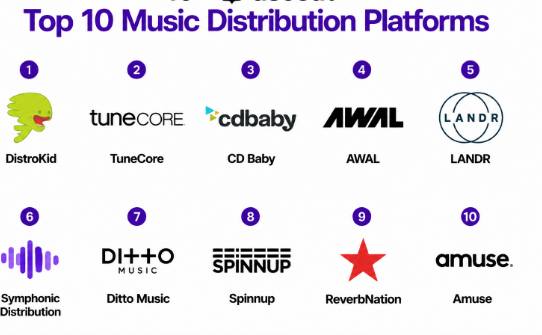
Top 10 Music Distribution Platforms
1- DistroKid
Short description: DistroKid enables independent artists to distribute unlimited music to streaming services worldwide, with royalty collection and automated revenue splits for collaborators.
Key Features
- Unlimited uploads for a flat annual fee
- Automated revenue splits among collaborators
- Distribution to Spotify, Apple Music, Amazon Music, TikTok, and more
- Pre-save campaigns and release scheduling
- Metadata management and ISRC code assignment
- Analytics dashboard for streams and earnings
Pros
- Fast, simple upload process
- Cost-effective for independent artists
- Revenue split support for multiple contributors
Cons
- Limited label-level features
- Marketing and promotion tools are basic
Platforms / Deployment
- Web / iOS / Android
- Cloud
Security & Compliance
- Not publicly stated
Integrations & Ecosystem
- Spotify for Artists
- Apple Music integration
- Social media promotion tools
Support & Community
- Email support
- Tutorials and knowledge base
- Artist community forums
2- TuneCore
Short description: TuneCore provides global music distribution with royalty collection, analytics, and marketing tools for independent artists and labels.
Key Features
- Distribution to major streaming services
- Automated revenue collection
- Analytics dashboards for streams and earnings
- ISRC and UPC management
- Release scheduling and pre-orders
- Playlist pitching tools
Pros
- Extensive platform reach
- Transparent royalty reporting
- Strong analytics and reporting features
Cons
- Annual fees per release
- Interface may be complex for new users
Platforms / Deployment
- Web / iOS / Android
- Cloud
Security & Compliance
- Not publicly stated
Integrations & Ecosystem
- Spotify, Apple Music, Amazon Music
- Social media and analytics tools
Support & Community
- Email and chat support
- Tutorials and webinars
- Artist community
3- CD Baby
Short description: CD Baby offers global digital distribution, royalty collection, sync licensing, and physical distribution for independent musicians.
Key Features
- Distribution to major streaming platforms
- Royalty collection and international payments
- Sync licensing for media use
- Physical CD and vinyl distribution
- Analytics for streams and downloads
- Marketing tools for playlist pitching
Pros
- Full-service platform
- Supports physical distribution and sync licensing
- Trusted by independent artists
Cons
- Higher fees for single releases
- User interface is dated
Platforms / Deployment
- Web / iOS / Android
- Cloud
Security & Compliance
- Not publicly stated
Integrations & Ecosystem
- Streaming services
- Social media integration
- Analytics dashboards
Support & Community
- Email and phone support
- Knowledge base and tutorials
- Artist forums
4- AWAL
Short description: AWAL provides music distribution, analytics, and playlist pitching, with label-quality support for independent artists and small labels.
Key Features
- Global digital distribution
- Playlist pitching and marketing support
- Detailed royalty and streaming analytics
- Custom release campaigns
- Rights management tools
- Audience growth insights
Pros
- Strong analytics and marketing support
- Suitable for professional indie artists
- Scalable for small labels
Cons
- Selective onboarding
- Premium pricing
Platforms / Deployment
- Web / Cloud
Security & Compliance
- Not publicly stated
Integrations & Ecosystem
- Streaming platform APIs
- Marketing and analytics tools
Support & Community
- Email support
- Tutorials and webinars
- Artist success teams
5- LANDR
Short description: LANDR offers AI-driven mastering alongside global music distribution and promotional tools for independent artists and producers.
Key Features
- Digital distribution to streaming services
- AI mastering and audio optimization
- Pre-save campaigns and release scheduling
- Royalty analytics
- Social media promotion tools
Pros
- AI-powered mastering
- Integrated distribution and promotion
- Affordable for indie artists
Cons
- Less robust analytics for labels
- Marketing tools are basic
Platforms / Deployment
- Web / iOS / Android
- Cloud
Security & Compliance
- Not publicly stated
Integrations & Ecosystem
- Spotify, Apple Music, Amazon Music
- Social media platforms
- Analytics dashboards
Support & Community
- Email and chat support
- Tutorials and guides
- Community support
6- Symphonic Distribution
Short description: Symphonic Distribution provides full-service solutions for labels and independent artists, including marketing, analytics, and royalty management.
Key Features
- Global streaming distribution
- Royalty and revenue reporting
- Playlist pitching and promotion
- Multi-format support (audio/video)
- Rights management
- Custom release strategies
Pros
- Enterprise-grade for small labels
- Marketing support and playlist pitching
- Comprehensive reporting
Cons
- Higher pricing
- Setup can be complex
Platforms / Deployment
- Web / Cloud
Security & Compliance
- Not publicly stated
Integrations & Ecosystem
- CRM and analytics platforms
- Streaming service APIs
- Marketing and social media tools
Support & Community
- Customer success teams
- Tutorials and webinars
- Knowledge base
7- Ditto Music
Short description: Ditto Music provides international distribution, label services, marketing, and royalty tracking for independent artists and small labels.
Key Features
- Global streaming distribution
- Royalty collection
- Marketing and playlist promotion
- Release scheduling
- Custom branding for labels
Pros
- Affordable pricing
- International platform reach
- Marketing and playlist support
Cons
- Limited advanced analytics
- Support varies by region
Platforms / Deployment
- Web / Cloud
Security & Compliance
- Not publicly stated
Integrations & Ecosystem
- Streaming APIs
- Email marketing and analytics tools
Support & Community
- Email and chat support
- Tutorials and guides
8- Spinnup
Short description: Spinnup enables independent artists to distribute music while offering opportunities for label discovery, with analytics and marketing support.
Key Features
- Global distribution
- Label discovery opportunities
- Royalty tracking and reporting
- Marketing insights
- Release management dashboard
Pros
- Backed by Universal Music
- Simple platform for indie artists
- Analytics for performance tracking
Cons
- Limited label-level features
- Artist acceptance required
Platforms / Deployment
- Web / Cloud
Security & Compliance
- Not publicly stated
Integrations & Ecosystem
- Streaming APIs
- Social media promotion
- Analytics tools
Support & Community
- Email support
- Tutorials
- Artist success resources
9- ReverbNation
Short description: ReverbNation combines music distribution with marketing and fan engagement tools for independent artists.
Key Features
- Streaming distribution
- Fan engagement tools
- Analytics dashboard
- Playlist pitching
- Digital sales integration
Pros
- Distribution + fan engagement
- Affordable for indie artists
- Analytics for audience insights
Cons
- Limited label-level automation
- Marketing features are basic
Platforms / Deployment
- Web / iOS / Android
- Cloud
Security & Compliance
- Not publicly stated
Integrations & Ecosystem
- Streaming APIs
- Email marketing and social media tools
Support & Community
- Email support
- Tutorials
- Artist forums
10- Amuse
Short description: Amuse offers free music distribution with optional pro features including analytics, royalty reporting, and marketing support.
Key Features
- Free distribution to major streaming services
- Analytics and royalty reporting
- Marketing tools and playlist pitching
- Release scheduling
- Pro tier for advanced features
Pros
- Free entry-level platform
- Easy interface
- Mobile app support
Cons
- Limited analytics in free plan
- Marketing tools basic
Platforms / Deployment
- Web / iOS / Android
- Cloud
Security & Compliance
- Not publicly stated
Integrations & Ecosystem
- Streaming APIs
- Analytics dashboards
- Social media channels
Support & Community
- Email support
- Tutorials
- Artist community
Comparison Table (Top 10)
| Tool Name | Best For | Platform(s) Supported | Deployment | Standout Feature | Public Rating |
|---|---|---|---|---|---|
| DistroKid | Indie artists | Web / iOS / Android | Cloud | Unlimited uploads for flat fee | N/A |
| TuneCore | Indie artists & labels | Web / iOS / Android | Cloud | Extensive platform reach | N/A |
| CD Baby | Indie artists & physical | Web / iOS / Android | Cloud | Sync licensing & physical distribution | N/A |
| AWAL | Professional indie artists | Web / Cloud | Cloud | Playlist pitching & analytics | N/A |
| LANDR | Producers & indie artists | Web / iOS / Android | Cloud | AI mastering & distribution | N/A |
| Symphonic Distribution | Labels & enterprises | Web / Cloud | Cloud | Full-service label distribution | N/A |
| Ditto Music | Indie artists & small labels | Web / Cloud | Cloud | International reach & marketing | N/A |
| Spinnup | Indie artists seeking labels | Web / Cloud | Cloud | Label discovery opportunity | N/A |
| ReverbNation | Indie artists | Web / iOS / Android | Cloud | Distribution + fan engagement | N/A |
| Amuse | Entry-level indie artists | Web / iOS / Android | Cloud | Free distribution option | N/A |
Evaluation & Scoring of Music Distribution Platforms
| Tool Name | Core (25%) | Ease (15%) | Integrations (15%) | Security (10%) | Performance (10%) | Support (10%) | Value (15%) | Weighted Total (0–10) |
|---|---|---|---|---|---|---|---|---|
| DistroKid | 9 | 9 | 8 | 7 | 9 | 8 | 8 | 8.5 |
| TuneCore | 9 | 8 | 8 | 7 | 8 | 8 | 7 | 8.0 |
| CD Baby | 8 | 8 | 8 | 7 | 8 | 7 | 7 | 7.7 |
| AWAL | 9 | 8 | 8 | 7 | 8 | 7 | 7 | 7.9 |
| LANDR | 8 | 9 | 7 | 7 | 8 | 7 | 7 | 7.8 |
| Symphonic Distribution | 9 | 8 | 8 | 7 | 8 | 8 | 7 | 8.0 |
| Ditto Music | 8 | 8 | 7 | 7 | 8 | 7 | 7 | 7.6 |
| Spinnup | 7 | 8 | 7 | 7 | 7 | 7 | 7 | 7.2 |
| ReverbNation | 7 | 8 | 7 | 7 | 7 | 7 | 7 | 7.2 |
| Amuse | 8 | 9 | 7 | 7 | 8 | 7 | 8 | 7.8 |
Interpretation: Scores are comparative across core features, ease of use, integrations, security, performance, support, and value. Independent artists may prioritize ease and value (DistroKid, Amuse), whereas labels may prioritize core features and integrations (AWAL, Symphonic Distribution).
Which Music Distribution Platform Is Right for You?
Solo / Freelancer
- DistroKid and Amuse provide simple, affordable options with easy upload, basic analytics, and unlimited singles or album distribution.
SMB / Indie Label
- TuneCore, CD Baby, and LANDR provide broader marketing and analytics features, enabling small labels to manage multiple releases and track revenue.
Mid-Market
- AWAL and Ditto Music offer playlist pitching, marketing support, and multi-channel analytics, ideal for small to mid-sized professional labels.
Enterprise / Large Label
- Symphonic Distribution and AWAL provide advanced reporting, portfolio management, and global royalty tracking for multiple artists at scale.
Budget vs Premium
- Amuse and DistroKid: low-cost, easy subscription or flat fees suitable for solo artists.
- AWAL and Symphonic Distribution: premium features for labels or creators seeking marketing, analytics, and advanced integration.
Feature Depth vs Ease of Use
- DistroKid and Amuse: simplicity, fast uploads, and beginner-friendly UI.
- AWAL, Symphonic, and LANDR: advanced features requiring onboarding but offering full-service analytics, marketing, and playlist management.
Integrations & Scalability
- Platforms support API access to analytics dashboards, CRM integration, and social media promotion.
- Enterprise-level tools scale across multiple releases, global stores, and teams, while indie-focused tools are lightweight and mobile-friendly.
Security & Compliance Needs
- Confirm payment processing, revenue reporting, and content integrity.
- Most platforms offer secure cloud-based storage and compliance with GDPR, copyright laws, and platform terms.
Frequently Asked Questions (FAQs)
1- How much does it cost to distribute music?
Pricing varies: platforms like DistroKid charge flat annual fees, Amuse offers free distribution, while TuneCore and CD Baby charge per release or annual subscriptions.
2- Do I retain my rights?
Yes, independent distribution platforms allow artists to retain copyright ownership while granting distribution rights.
3- Can I distribute globally?
Most platforms provide worldwide distribution to major streaming services, including Spotify, Apple Music, Amazon Music, YouTube, TikTok, and more.
4- How long does it take for music to appear on streaming services?
Typically, 1–7 days for most services, depending on platform verification and metadata approval.
5- Do platforms provide royalty reporting?
Yes, platforms provide detailed analytics for streams, downloads, and revenue, though enterprise platforms offer more advanced reporting.
6- Can I release singles, EPs, or albums?
Yes, all top platforms support single, EP, and album releases, with scheduling and pre-order features.
7- Do I need an ISRC or UPC code?
Platforms like DistroKid and TuneCore assign ISRC/UPC codes automatically, while labels may manage codes internally.
8- Can multiple collaborators split revenue?
Yes, DistroKid and similar platforms allow automated revenue splits for featured artists, producers, and collaborators.
9- Do platforms provide marketing support?
Some platforms, like AWAL, LANDR, and CD Baby, include playlist pitching, promotional tools, and social media integration.
10- Are mobile apps available?
Yes, most platforms offer mobile access for uploads, analytics, and management, with Amuse, DistroKid, and LANDR having dedicated apps.
Conclusion
Music distribution platforms empower creators, producers, and labels to reach global audiences while managing revenue, analytics, and promotional campaigns. Independent artists benefit from platforms like DistroKid and Amuse, which provide simplicity and affordability. Labels and professional creators benefit from AWAL, Symphonic Distribution, and LANDR, which offer advanced analytics, playlist pitching, and portfolio management.
