Introduction
Merchandise storefront platforms are digital solutions that help creators, brands, and businesses sell physical goods online without building a store from scratch. These platforms provide tools to manage product catalogs, process orders, automate fulfillment, integrate with print‑on‑demand services, and handle payment processing. In, merchandising has become a critical revenue stream for content creators, influencers, and small brands that want to monetize fan demand and expand their reach beyond digital content.
A merchandise storefront platform simplifies inventory management, shipping logistics, and customer interactions so creators can focus on design, marketing, and audience engagement. From custom T‑shirts and posters to limited‑edition accessories and fan bundles, these platforms empower creators to offer physical products tied to their personal brands.
Real‑world use cases include:
- YouTubers selling branded apparel and collectibles.
- Musicians offering limited‑edition vinyl and tour merchandise.
- Podcasters selling themed merch bundles to loyal listeners.
- Artists creating print‑on‑demand designs without inventory risk.
- Small businesses launching seasonal or campaign‑specific product lines.
What buyers should evaluate:
- Ease of store setup and customization
- Product catalog management and variations
- Payment processing flexibility and fees
- Integration with print‑on‑demand and fulfillment partners
- Order management and shipping automation
- Analytics and sales reporting
- Mobile responsiveness and buyer experience
- Brand and merchandising tools (discounts, bundles, variants)
- Community and marketing integrations
- Pricing, scalability, and support options
Best for: Independent creators, small brands, and businesses seeking to sell physical merchandise without the complexity of custom e‑commerce builds.
Not ideal for: Large enterprises with complex inventory and logistics needs that require custom warehousing and ERP integration.
Key Trends in Merchandise Storefront Platforms
- AI‑driven merchandising insights for product recommendations and pricing.
- Print‑on‑demand automation with global fulfillment centers.
- Seamless social commerce integration (e.g., Instagram, TikTok Shopping).
- Mobile‑first storefront designs to capture on‑the‑go buyers.
- Augmented reality (AR) previews for product visualization.
- Subscription merchandise models (monthly boxes and drops).
- Data‑driven inventory forecasting to reduce stockouts and oversupply.
- Flexible pricing and discounting tools for promotions and bundles.
- Cross‑platform analytics linking merch revenue to content performance.
- Localized pricing and multi‑currency support for global audiences.
How We Selected These Tools (Methodology)
- Market adoption & mindshare: Platforms widely used by creators and small businesses.
- Feature completeness: Support for storefront setup, product variants, fulfillment, and reporting.
- Reliability & performance: Consistent uptime and scalability for peak campaigns.
- Security posture: Secure checkout, encryption, and compliance with payment standards.
- Integrations & ecosystem: Compatibility with social, marketing, shipping, and fulfillment partners.
- Customer fit across segments: Tools suitable for solo creators, SMBs, and growing brands.
- Ease of use: Intuitive setup and minimal technical barrier.
- Support & community: Availability of help documentation, customer support, and active communities.
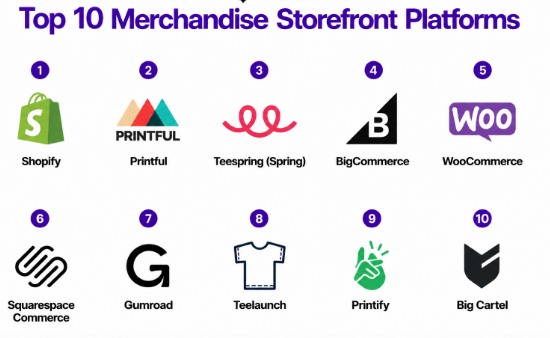
Top 10 Merchandise Storefront Platforms
1- Shopify
Short description: Shopify is a robust e‑commerce platform that enables creators and brands to build fully customizable merchandise storefronts with extensive integrations and scalable commerce tools.
Key Features
- Custom store design and theme library
- Powerful inventory and product variant management
- Integrated payment processing with Shopify Payments
- App ecosystem for print‑on‑demand, marketing, and shipping
- Global storefront support with local payment options
- Advanced analytics and sales reporting
Pros
- Scales from small creators to enterprise brands
- Massive app ecosystem for extended functionality
- Strong SEO and marketing tools
Cons
- Monthly subscription and transaction fees
- Can be overwhelming for beginners without templates
Platforms / Deployment
- Web / iOS / Android
- Cloud
Security & Compliance
- Not publicly stated
Integrations & Ecosystem
- Print‑on‑demand apps (print partners)
- Social commerce (Instagram, TikTok)
- Email marketing and CRM tools
- Shipping and fulfillment integrations
Support & Community
- 24/7 support
- Extensive documentation and tutorials
- Developer and merchant community
2- Printful
Short description: Printful is a popular print‑on‑demand fulfillment platform that integrates with storefronts to automate product creation, manufacturing, and shipping.
Key Features
- Wide range of print‑on‑demand products
- On‑demand order fulfillment and shipping
- Integrations with Shopify, WooCommerce, Etsy, and more
- Mockup generator and design tools
- Warehouses in multiple regions
- Order and shipping tracking
Pros
- No inventory risk
- Global fulfillment network
- Easy integration with multiple storefronts
Cons
- Higher per‑item costs
- Limited standalone store features (needs integration)
Platforms / Deployment
- Web / Cloud
Security & Compliance
- Not publicly stated
Integrations & Ecosystem
- Shopify, WooCommerce, Etsy
- Social commerce channels
- Shipping and tracking services
Support & Community
- Email and chat support
- Help center and tutorials
- Community forums
3- Teespring (Spring)
Short description: Teespring (now Spring) is a creator‑friendly merch platform that enables influencers and creators to design, sell, and fulfill custom merchandise without upfront inventory.
Key Features
- Print‑on‑demand merchandise creation
- Simple creator storefront setup
- Integration with social platforms for promotion
- Global fulfillment and shipping
- Design templates and mockups
- Sales and revenue analytics
Pros
- Designed for creators and influencers
- No upfront inventory costs
- Easy promotion via direct links
Cons
- Platform branding may appear on storefronts
- Pricing and product margins can vary
Platforms / Deployment
- Web / Cloud
Security & Compliance
- Not publicly stated
Integrations & Ecosystem
- Social media shop integrations
- Print‑on‑demand ecosystems
- Shipping and tracking tools
Support & Community
- Knowledge base
- Email support
- Creator community resources
4- BigCommerce
Short description: BigCommerce is an enterprise‑ready e‑commerce platform with strong merchandising tools, SEO features, and scalable options for brands of all sizes.
Key Features
- Advanced product management
- Multi‑channel selling (Amazon, eBay, social)
- Built‑in SEO and marketing tools
- Flexible tax and payment settings
- Developer APIs for custom integrations
- Reporting and analytics dashboards
Pros
- Robust platform for growing brands
- Multi‑channel selling capabilities
- Strong security and performance
Cons
- Higher cost tier for enterprise features
- Steeper learning curve
Platforms / Deployment
- Web / Cloud
Security & Compliance
- Not publicly stated
Integrations & Ecosystem
- Marketplaces (Amazon, eBay)
- Social commerce
- Fulfillment partners
- Analytics and CRM tools
Support & Community
- Email and phone support
- Documentation and developer resources
- Community forums
5- WooCommerce
Short description: WooCommerce is a customizable open‑source e‑commerce plugin for WordPress that enables creators to build fully tailored merchandise storefronts.
Key Features
- Open‑source and highly customizable
- Integration with WordPress themes and plugins
- Product catalog and variation management
- Multiple payment gateways
- Extensions for shipping, fulfillment, and marketing
- Analytics and reporting
Pros
- Deep customization via WordPress
- Wide range of extensions
- No subscription required (self‑hosted cost variable)
Cons
- Requires WordPress knowledge
- Hosting and maintenance overhead
Platforms / Deployment
- Web / Cloud / Self‑hosted
Security & Compliance
- Not publicly stated
Integrations & Ecosystem
- WordPress plugins (SEO, marketing, SEO)
- Payment processors
- Shipping and fulfillment extensions
Support & Community
- WordPress support forums
- Documentation
- Large developer ecosystem
6- Squarespace Commerce
Short description: Squarespace Commerce offers sleek storefront designs with built‑in merchandising, order management, and marketing features for creators.
Key Features
- Intuitive site builder with commerce support
- Product galleries and variants
- Inventory and order management
- Mobile‑optimized storefronts
- Built‑in marketing and SEO tools
- Payment processing
Pros
- Beautiful templates and design control
- All‑in‑one platform with hosting included
- Simplified store management
Cons
- Limited advanced commerce features
- Less flexible than some enterprise platforms
Platforms / Deployment
- Web / Cloud
Security & Compliance
- Not publicly stated
Integrations & Ecosystem
- Email marketing
- Social media integrations
- Analytics tools
Support & Community
- Email support
- Knowledge base
- Tutorials and guides
7- Gumroad
Short description: Gumroad is a creator‑centric commerce platform that supports selling subscriptions, digital products, and physical merchandise with minimal setup.
Key Features
- Easy product setup and publishing
- Subscription and one‑time product support
- Payment and tax handling
- Embedded carts and links
- Sales analytics
- Direct email marketing tools
Pros
- Very simple setup
- Combines digital and physical products
- Works well for minimal storefronts
Cons
- Limited storefront customization
- Basic inventory features
Platforms / Deployment
- Web / iOS / Android
- Cloud
Security & Compliance
- Not publicly stated
Integrations & Ecosystem
- Email marketing
- Analytics tools
- Payment processors
Support & Community
- Email support
- Help center
- Tutorials
8- Teelaunch
Short description: Teelaunch is a print‑on‑demand fulfillment service that integrates with online stores to offer merchandise like apparel, accessories, and drinkware with automated fulfillment.
Key Features
- Wide range of POD products
- Automated order fulfillment
- Custom branding options
- Design and mockup tools
- Shipping integrations
- Inventory and fulfillment tracking
Pros
- Automated fulfillment
- Custom branding options
- Low inventory risk
Cons
- Needs storefront integration (Shopify, WooCommerce)
- Per‑item costs higher than bulk printing
Platforms / Deployment
- Web / Cloud
Security & Compliance
- Not publicly stated
Integrations & Ecosystem
- Shopify, WooCommerce, eBay
- Social commerce
- Shipping tools
Support & Community
- Email support
- Tutorials
- Help documentation
9- Printify
Short description: Printify is another popular print‑on‑demand service with a global network of print providers, enabling creators to offer diverse merchandise without inventory.
Key Features
- Global manufacturing partners
- Wide merchandise catalog
- Mockup generator
- Automated order routing and fulfillment
- Pricing and product management tools
- Shipping calculations
Pros
- Extensive global network
- Diverse product offerings
- Easy online integration
Cons
- Product quality can vary by partner
- Fulfillment times vary by region
Platforms / Deployment
- Web / Cloud
Security & Compliance
- Not publicly stated
Integrations & Ecosystem
- Shopify, WooCommerce, Etsy
- Social selling platforms
10- Big Cartel
Short description: Big Cartel is a creator‑friendly e‑commerce platform designed for artists and makers to sell merchandise with straightforward pricing and simple store setup.
Key Features
- Simple store setup
- Product and variant management
- Promotional and discount tools
- Inventory and order tracking
- Mobile‑friendly dashboard
- Custom design themes
Pros
- Easy to use for creators
- Affordable plans
- Clean, simple setup
Cons
- Limited advanced features
- Less scalable for large catalogs
Platforms / Deployment
- Web / Cloud
Security & Compliance
- Not publicly stated
Integrations & Ecosystem
- Payment processors
- Social media promotion
- Analytics
Support & Community
- Email support
- Knowledge base
- Help guides
Comparison Table (Top 10)
| Tool Name | Best For | Platform(s) Supported | Deployment | Standout Feature | Public Rating |
|---|---|---|---|---|---|
| Shopify | All‑purpose creator storefront | Web / iOS / Android | Cloud | Custom scalable e‑commerce ecosystem | N/A |
| Printful | POD fulfillment for creators | Web / Cloud | Cloud | Automated POD fulfillment | N/A |
| Spring (Teespring) | Creator‑centric merchandise | Web / Cloud | Cloud | Easy social integration | N/A |
| BigCommerce | Scalable store for brands | Web / Cloud | Cloud | Enterprise commerce features | N/A |
| WooCommerce | Custom WordPress storefronts | Web / Cloud / Self‑hosted | Cloud / Self‑hosted | Deep WordPress customization | N/A |
| Squarespace Commerce | Design‑forward creator storefront | Web / Cloud | Cloud | Elegant storefront experience | N/A |
| Gumroad | Minimal storefronts + commerce | Web / iOS / Android | Cloud | Simple store for creators | N/A |
| Teelaunch | POD fulfillment integration | Web / Cloud | Cloud | Custom branding + fulfillment | N/A |
| Printify | Global POD fulfillment | Web / Cloud | Cloud | Global print partner network | N/A |
| Big Cartel | Artists & makers storefront | Web / Cloud | Cloud | Affordable simple store setup | N/A |
Evaluation & Scoring of Merchandise Storefront Platforms
| Tool Name | Core (25%) | Ease (15%) | Integrations (15%) | Security (10%) | Performance (10%) | Support (10%) | Value (15%) | Weighted Total (0–10) |
|---|---|---|---|---|---|---|---|---|
| Shopify | 9 | 8 | 9 | 7 | 9 | 8 | 8 | 8.5 |
| Printful | 8 | 9 | 8 | 7 | 8 | 8 | 8 | 8.1 |
| Spring (Teespring) | 8 | 9 | 7 | 7 | 7 | 7 | 7 | 7.6 |
| BigCommerce | 9 | 7 | 9 | 7 | 9 | 8 | 7 | 8.2 |
| WooCommerce | 9 | 7 | 8 | 7 | 8 | 7 | 7 | 7.8 |
| Squarespace Commerce | 8 | 9 | 7 | 7 | 8 | 7 | 7 | 7.7 |
| Gumroad | 7 | 9 | 7 | 7 | 8 | 7 | 8 | 7.8 |
| Teelaunch | 8 | 8 | 8 | 7 | 8 | 7 | 8 | 8.0 |
| Printify | 8 | 8 | 8 | 7 | 7 | 7 | 8 | 7.8 |
| Big Cartel | 7 | 9 | 7 | 7 | 7 | 7 | 8 | 7.7 |
Interpretation: These scores compare core functionality, ease of use, integration capability, security, performance, support quality, and overall value. Creators with simple store needs may prefer Gumroad or Big Cartel, while scalable brands might opt for Shopify or BigCommerce.
Which Merchandise Storefront Platform Is Right for You?
Solo / Freelancer
- Gumroad or Big Cartel: Simple setup, minimal overhead, affordable pricing.
SMB / Growing Creators
- Shopify or Squarespace Commerce: Balance of ease and scalability with design flexibility.
Mid-Market / Small Brands
- BigCommerce or WooCommerce: Enterprise‑level control and multi‑channel selling.
Enterprise / High Volume Merch
- Shopify + Printful/Printify: Scalable commerce with automated fulfillment and global reach.
Budget vs Premium
- Big Cartel, Gumroad, Liberapay: Low cost for creators starting out.
- Shopify, BigCommerce: Premium tools for brands with growing catalogs and international sales.
Feature Depth vs Ease of Use
- Shopify, BigCommerce: Rich feature sets but steeper learning curves.
- Gumroad, Spring, Squarespace: Easy onboarding with lower complexity.
Integrations & Scalability
- Enterprise platforms connect with global fulfillment, social commerce, CRM, and analytics systems.
- Smaller tools focus on simplicity and quick setup.
Security & Compliance Needs
- Verify PCI compliance for payment handling, encrypted data storage, and user privacy protections based on local regulations.
Frequently Asked Questions (FAQs)
1- What pricing models do these storefront platforms use?
Most operate on subscription plans, with optional transaction fees or revenue sharing for certain tools. Print‑on‑demand services often charge per item.
2- Do I need inventory for merchandise?
Many platforms integrate with print‑on‑demand services so you don’t need inventory; orders are produced and shipped as they come.
3- Can I sell internationally?
Yes, most modern platforms support global selling, multiple currencies, and localized payment options.
4- Do these platforms handle shipping?
Yes, platforms like Shopify, BigCommerce, and print‑on‑demand integrations handle shipping automation and tracking.
5- Are mobile storefronts supported?
Yes, most platforms provide mobile‑friendly checkout and store management apps.
6- Can I offer discounts and promotions?
Yes, discount codes, bundles, and promotional pricing are supported on most platforms.
7- How do taxes work?
Platforms either automate tax calculations or integrate with tax‑automation tools to handle regional tax laws.
8- Can I integrate social commerce?
Yes, tools like Shopify and Squarespace connect directly to Instagram, TikTok, and Facebook commerce.
9- Are analytics included?
Yes, dashboards provide insights into sales, products, audience behaviors, and revenue trends.
10- What alternatives exist to these platforms?
Alternatives include marketplaces like Etsy, manual e‑commerce builds (custom web apps), or direct social media sales via shoppable posts.
Conclusion
Merchandise storefront platforms enable creators and brands to monetize physical products with minimal technical complexity. For creators starting out, Gumroad or Big Cartel provide easy entry points, while platforms like Shopify and BigCommerce offer robust, scalable commerce ecosystems for growing brands. Print‑on‑demand services such as Printful and Printify automate fulfillment and reduce inventory risk.
