Introduction
Product feed management tools help online retailers, brands, and agencies optimize and distribute structured product data across digital marketing channels and e‑commerce platforms. They automate and enhance feeds for Google Shopping, Meta (Facebook/Instagram) ads, marketplaces (Amazon, eBay, Walmart), comparison shopping engines, and affiliate networks. By improving feed quality, error handling, data transformation, and channel compliance, these tools directly impact performance, visibility, and ad efficiency.
With increasing channel complexity and strict feed specifications, managing feeds manually is error‑prone and inefficient. Feed tools save time, reduce data mismatches, and unlock marketing opportunities by keeping product attributes accurate, enriched, and optimized for each destination. That leads to higher conversion rates, better ad relevance, and stronger ROI from paid campaigns and organic channel listings.
Real‑world use cases include:
- Automated Channel Optimization: Transforming raw inventory into compliant feeds for Google Shopping, Meta, Bing, and marketplace platforms.
- Attribute Enrichment: Adding category, size, color, brand, and SEO‑optimized titles and descriptions to improve discovery and conversions.
- Error Detection & Fixing: Identifying missing or invalid attributes and automatically correcting or flagging issues.
- Multi‑Region & Multi‑Currency Support: Tailoring feeds for localized markets with region‑specific taxonomy and pricing.
- Performance Monitoring: Tracking channel status, feed acceptance, impressions, clicks, and revenue from feed sources.
Best for: E‑commerce merchants, multi‑channel retailers, marketing teams, paid media specialists, and agencies managing product feeds at scale.
Not ideal for: Very small catalog sellers with limited channels where manual updates suffice, or stores that don’t run paid campaigns across multiple platforms.
Key Trends in Product Feed Management
- AI‑Powered Feed Optimization: Automatized recommendations for titles, descriptions, and attributes.
- Real‑Time Feed Sync: Continuous updates from inventory systems to channels.
- Channel‑Specific Rule Engines: Custom mapping and business rules per platform.
- Data Quality Dashboards & Alerts: Real‑time error insights and compliance reports.
- Centralized Feed Control: Single source of truth across all marketing and sales platforms.
- Cross‑Channel Attribution: Understanding which feed changes affect conversions.
- Bulk Editing & Transformation: Scalable operations on thousands of SKUs.
- Integration with PIM, ERP, CMS & DMP: Unified ecosystem for product information.
- Localization & Personalization: Market and language‑specific feed variations.
- Automation & Workflow Management: Scheduled updates, approval workflows, and iterative optimization.
How We Selected These Tools (Methodology)
We evaluated product feed tools across:
- Feed Transformation Capabilities: Mapping, enrichment, normalization, and validation.
- Channel Compatibility: Range and depth of supported channels and destination platforms.
- Automation & Rule Engine: Ability to automate repetitive transformations and fixes.
- Performance Monitoring: Dashboards, alerts, analytics and reporting.
- Integration Ecosystem: PIM, CMS, e‑commerce platforms, ad platforms, and marketplaces.
- Scalability & Reliability: Handling large catalogs and real‑time updates.
- Ease of Use & Support: Onboarding, documentation, and customer service readiness.
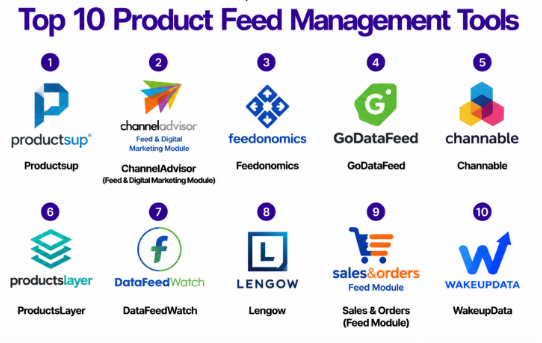
Top 10 Product Feed Management Tools
1- Productsup
Short description: Productsup is an enterprise‑grade feed management and syndication platform that transforms product data into optimized feeds for a broad range of marketing and commerce channels.
Key Features
- Advanced feed transformation and mapping rules.
- Channel templates for Google, Meta, Walmart, Amazon, and more.
- Real‑time validation and error alerts.
- Bulk feed enrichment and automation workflows.
- Analytics and performance visibility.
Pros
- Very comprehensive channel coverage.
- Strong automation and rule system.
- Powerful data transformation knobs.
Cons
- Higher cost and learning curve for small businesses.
- Setup and onboarding can be complex.
Platforms / Deployment
- Web / Cloud
2- ChannelAdvisor (Feed & Digital Marketing Module)
Short description: ChannelAdvisor extends beyond marketplace management into feed creation, optimization, and distribution for advertising and shopping channels.
Key Features
- Unified feed management across paid and organic channels.
- Integrations with Google, Meta, Microsoft, marketplaces, and more.
- Centralized rule builder and schedule automation.
- Reporting across channels.
Pros
- Enterprise‑ready with strong multi‑channel logic.
- Integrated with broader commerce operations.
Cons
- Can be expensive for small catalogs.
- May require expertise to unlock full potential.
Platforms / Deployment
- Web / Cloud
3- Feedonomics
Short description: Feedonomics is a leading feed management platform focused on optimization, automation, and distribution to a wide range of commerce and advertising channels.
Key Features
- Exceptional channel support including shopping ads, marketplaces, affiliate networks, and social commerce.
- Rule builder for advanced transformations.
- Real‑time inventory sync.
- Data quality monitoring with alerts.
- API‑based integrations.
Pros
- Extremely robust and flexible.
- Trusted by enterprise brands with large catalogs.
- Excellent support and onboarding services.
Cons
- Pricing scales with catalog size and channels.
- Interface may be intimidating for new users.
Platforms / Deployment
- Web / Cloud
4- GoDataFeed
Short description: GoDataFeed simplifies feed generation and optimization, making it easier for merchants to send accurate product data to advertising and marketplace channels.
Key Features
- Automatic feed creation templates.
- Channel‑specific optimization.
- Rule engine to fix and transform attributes.
- Performance analytics dashboard.
- Scheduled feeds and updates.
Pros
- Affordable for SMBs.
- Easy setup and maintenance.
- Good coverage for popular channels.
Cons
- Less robust than enterprise‑focused tools.
- Advanced scripting and transformations limited.
Platforms / Deployment
- Web / Cloud
5- Channable
Short description: Channable helps retailers and agencies build and optimize product feeds and automated PPC campaigns from a single interface.
Key Features
- Feed management with channel templates.
- Rules and filters to enhance data quality.
- Integration with PPC and shopping ads.
- API connectors to e‑commerce platforms.
- Bulk editing and automation.
Pros
- Strong rule engine and filtering logic.
- Combines PPC automation with feed management.
- Good network of channel templates.
Cons
- Mid‑range tool — not as enterprise heavy as some.
- Custom channel support requires setup.
Platforms / Deployment
- Web / Cloud
6- ProductsLayer
Short description: ProductsLayer brings product feed creation, enrichment, and channel distribution together with PIM‑like features for data quality and workflow management.
Key Features
- Feed transformation and multi‑destination exports.
- Enrichment and categorization.
- Integration with marketplaces and shopping channels.
- Multi‑language and multi‑currency support.
Pros
- Combines basic PIM features with feed tooling.
- Useful for mid‑sized catalogs and regional expansions.
Cons
- Smaller footprint compared to larger platforms.
- Feature set may be lighter than others.
Platforms / Deployment
- Web / Cloud
7- DataFeedWatch
Short description: DataFeedWatch optimizes product feeds with powerful rules and templates and helps improve visibility on shopping and marketplace platforms.
Key Features
- Intuitive rule builder and feed mapping.
- Channel‑specific templates.
- Real‑time updates and scheduling.
- Multi‑store and multi‑currency support.
Pros
- Very user‑friendly for marketers.
- Pricing friendly for SMBs.
- Strong support and easy onboarding.
Cons
- Limited enterprise analytics.
- Advanced automation tools are less deep.
Platforms / Deployment
- Web / Cloud
8- Lengow
Short description: Lengow offers feed management and channel distribution tools geared toward brands and retailers looking to expand internationally.
Key Features
- Feed optimization and enrichment.
- Channel activation for 100+ global destinations.
- Multi‑currency, multi‑region support.
- Performance tracking and analytics.
- API connections to PIM, ERP, and e‑commerce platforms.
Pros
- Exceptional global channel support.
- Localization tools built in.
Cons
- Pricing and setup tailored toward larger merchants.
- Complexity may be high for small teams.
Platforms / Deployment
- Web / Cloud
9- Sales & Orders (Feed Module)
Short description: Sales & Orders provides feed management alongside analytics, reporting, and automation for merchants and agencies.
Key Features
- Feed creation with optimization rules.
- Channel monitoring and performance reports.
- Integration with shopping and marketplace channels.
- Alerts for errors and disapprovals.
Pros
- Unified commerce and feed analytics.
- Affordable for mid‑market.
Cons
- Smaller channel ecosystem than larger tools.
- Limited advanced rule engine features.
Platforms / Deployment
- Web / Cloud
10- WakeupData
Short description: WakeupData centralizes product data, optimizes feeds, and distributes them across marketing channels with a strong focus on quality and compliance.
Key Features
- Feed pipelines with advanced transformation.
- Channel compliance checks and alerts.
- Bulk enrichment and templates.
- Multi‑platform exports.
Pros
- Detailed data pipelines improve accuracy.
- Good error handling visibility and alerts.
Cons
- Interface can feel technical.
- Less widespread channel template library than some.
Platforms / Deployment
- Web / Cloud
Comparison Table (Top 10)
| Tool Name | Best For | Channel Coverage | Rule Automation | Analytics & Reporting | Integration Ecosystem |
|---|---|---|---|---|---|
| Productsup | Enterprise global merchants | Very High | Advanced | Yes | Broad |
| ChannelAdvisor | Enterprise multi‑op commerce | High | Advanced | Yes | Very Broad |
| Feedonomics | Large catalogs & agencies | Very High | Very Advanced | Yes | Very Broad |
| GoDataFeed | SMB sellers | Medium | Basic‑Mid | Yes | Good |
| Channable | Mid‑market e‑commerce & PPC | High | Advanced | Yes | Good |
| ProductsLayer | Mid‑sized catalogs & regions | Medium | Mid | Yes | Medium |
| DataFeedWatch | SMB & mid‑market marketers | Medium | Mid | Yes | Good |
| Lengow | Global brands & retailers | High | Mid‑High | Yes | Broad |
| Sales & Orders | Mid‑market analytics & feeds | Medium | Basic‑Mid | Yes | Medium |
| WakeupData | Data‑quality‑focused sellers | Medium | Mid | Yes | Medium |
Weighted Evaluation & Scoring Table
| Criteria | Weight | Score (0–10) | Weighted Total |
|---|---|---|---|
| Core Features | 25% | 9 | 2.25 |
| Ease of Use | 15% | 8 | 1.2 |
| Integrations | 15% | 8 | 1.2 |
| Channel Coverage | 10% | 9 | 0.9 |
| Analytics & Reporting | 10% | 8 | 0.8 |
| Support | 10% | 8 | 0.8 |
| Value | 15% | 8 | 1.2 |
| Total | 100% | — | 8.35 / 10 |
Interpretation: Feedonomics, Productsup, and ChannelAdvisor excel across advanced transformations and broad delivery channels. DataFeedWatch and GoDataFeed lead for SMBs with user‑friendly interfaces, while Channable blends feed and PPC automation.
Which Product Feed Management Tool Is Right for You?
- Large enterprise or global brands: Productsup, Feedonomics, ChannelAdvisor.
- Mid‑market merchants with regional expansion needs: Lengow, Channable, ProductsLayer.
- SMBs focusing on ease of use: DataFeedWatch, GoDataFeed.
- Performance & analytics emphasis: Sales & Orders, WakeupData.
- If PPC automation matters: Channable stands out by blending feed and campaign rules.
Consider catalog size, destination channels, required automation complexity, and existing integrations (PIM, CMS, ERP) when choosing.
Common Mistakes to Avoid
- Ignoring channel‑specific attribute requirements.
- Not validating feed after automated transformations.
- Selecting tools without considering scale and future expansions.
- Overlooking error monitoring and alerting workflows.
- Assuming one feed works for all channels without customization.
FAQs
- What is a product feed management tool?
A platform that prepares, optimizes, and distributes product data to multiple marketing and commerce channels in formats those channels require. - Do these tools automatically fix feed errors?
Many provide validation and automation rules that correct or highlight issues before distribution. - Which channels are typically supported?
Google Shopping, Meta product catalogs, Microsoft/Bing, marketplaces (Amazon, Walmart), price comparison engines, and affiliate networks. - Can feed tools handle multi‑region or multi‑currency feeds?
Yes, most modern tools support localized versions of feeds with regional attributes, translations, and pricing. - Do they integrate with e‑commerce platforms?
Yes; common integrations include Shopify, Magento, BigCommerce, Shopify Plus, and custom APIs. - Are these tools suitable for agencies?
Yes, especially enterprise tools that offer multi‑client dashboards and scalable automation. - Is AI used in feed optimization?
Many platforms now include AI or smart suggestions for attribute enrichment, title optimization, and error resolution. - Can they help with paid campaigns?
Yes — tools often include performance insights and automated optimization for shopping ads. - How frequently should feeds be updated?
Ideally in real time or scheduled frequently (hourly/daily) to reflect inventory and pricing changes. - How do pricing models work?
Pricing may be subscription‑based, tiered by catalog size and number of channels, or customized for enterprises.
Conclusion
Product feed management tools are essential for merchants and brands aiming to compete across digital shopping and advertising channels. Tools like Feedonomics, Productsup, and ChannelAdvisor dominate for enterprise requirements, while others like DataFeedWatch, GoDataFeed, and Channable serve SMBs and mid‑market needs with lower complexity and cost. Selecting the right solution depends on catalog size, channel ambitions, automation needs, and integration ecosystem maturity. Evaluate trial options, prioritize platforms that align with your growth strategy, and build workflows that ensure your product data drives discoverability and conversion across all channels.
