Introduction
SaaS License Optimization Tools help organizations track, analyze, and optimize their software subscriptions and licensing usage across cloud applications, enterprise software, and SaaS platforms. In simple terms, these tools ensure companies are not overpaying for unused licenses or underutilizing purchased software capacity.
With SaaS adoption increasing across departments, organizations often struggle with “software sprawl,” where multiple tools are purchased without centralized control. This leads to wasted spend, compliance risks, and poor visibility into actual usage.
Common real-world use cases include:
- Identifying unused or underutilized SaaS licenses
- Reducing shadow IT across departments
- Optimizing enterprise software renewals
- Tracking SaaS subscription costs across business units
- Improving vendor negotiation leverage
Buyers should evaluate usage analytics, integration coverage, cost optimization accuracy, automation features, reporting depth, security controls, scalability, and ease of deployment.
Best for: IT asset management teams, FinOps teams, procurement departments, CIO offices, enterprise SaaS-heavy organizations, and mid-to-large businesses.
Not ideal for: Very small companies with limited SaaS usage or organizations with only a few software subscriptions.
Key Trends in SaaS License Optimization Tools
- AI-driven license usage forecasting and optimization suggestions
- Automated SaaS discovery across shadow IT environments
- FinOps integration for unified cloud and SaaS cost management
- Real-time usage tracking instead of periodic audits
- Vendor consolidation recommendations powered by analytics
- API-first architecture for integration with IT ecosystems
- Increased focus on security and compliance visibility
- Subscription lifecycle automation (renewals, alerts, cancellations)
- SaaS entitlement management for hybrid workforces
- Expansion into full IT asset + SaaS + cloud cost platforms
How We Selected These Tools (Methodology)
- Market adoption across ITAM and FinOps ecosystems
- Depth of SaaS discovery and usage analytics
- Accuracy of license optimization insights
- Integration coverage with SaaS and IT systems
- Automation capabilities for cost control
- Reporting and visualization strength
- Enterprise scalability and governance features
- Security posture and compliance readiness
- Support for multi-cloud and hybrid SaaS environments
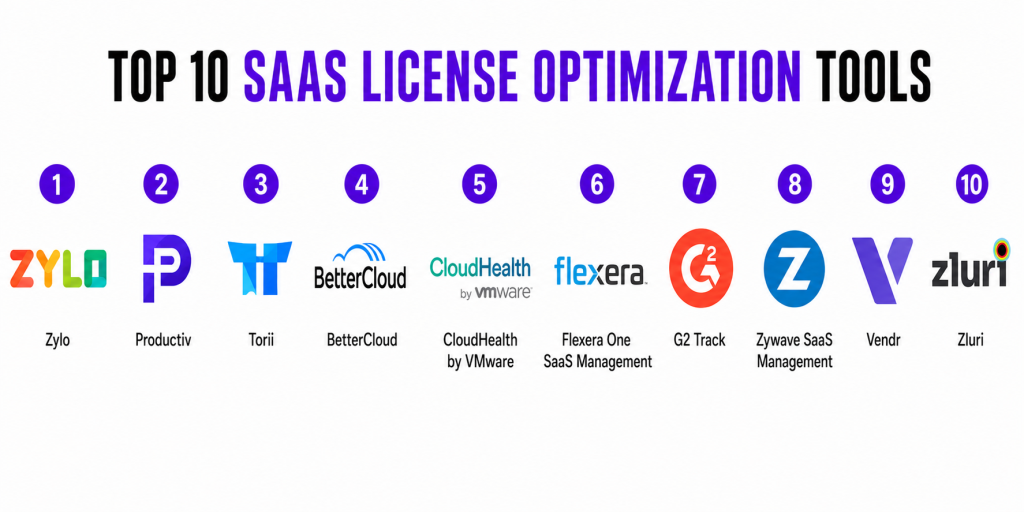
Top 10 SaaS License Optimization Tools
1 — Zylo
Short description:
Zylo is a SaaS management platform focused on discovering, managing, and optimizing SaaS licenses across large organizations. It provides deep visibility into SaaS usage, spending, and contract data. The platform is widely used by enterprise IT and procurement teams. Zylo helps organizations identify unused licenses and reduce software waste. It supports SaaS governance and renewal optimization workflows. It is suitable for enterprises with large SaaS ecosystems and complex procurement processes.
Key Features
- SaaS discovery and inventory management
- License usage tracking and optimization
- Renewal and contract management
- Spend analysis and reporting
- Shadow IT detection
- Vendor consolidation insights
- Workflow automation for SaaS governance
Pros
- Strong enterprise SaaS visibility
- Detailed usage analytics
- Good for cost optimization programs
Cons
- Enterprise-focused complexity
- Requires setup effort for integrations
- Pricing may be higher for smaller teams
Platforms / Deployment
- Web
- Cloud
Security & Compliance
Supports SSO, MFA, RBAC, audit logs, and encryption. Additional compliance certifications are not publicly stated.
Integrations & Ecosystem
Zylo integrates with SaaS applications, finance systems, and IT management tools.
- HR systems
- ERP tools
- SaaS applications
- ITSM platforms
- APIs for automation
Support & Community
Enterprise onboarding support, documentation, and customer success programs.
2 — Productiv
Short description:
Productiv is a SaaS management platform that helps organizations optimize software usage and spending. It provides visibility into application usage patterns and helps identify optimization opportunities. The platform is designed for IT, procurement, and finance teams. It supports SaaS governance and lifecycle management. Productiv is commonly used in mid-market and enterprise environments. It helps improve SaaS decision-making through data-driven insights.
Key Features
- SaaS usage analytics
- License optimization insights
- Application portfolio management
- Spend tracking and forecasting
- Shadow IT discovery
- Renewal management
- Workflow automation
Pros
- Strong usage analytics
- Easy-to-understand dashboards
- Good SaaS governance support
Cons
- Requires integration setup
- Advanced features may need training
- Not lightweight for small teams
Platforms / Deployment
- Web
- Cloud
Security & Compliance
Supports SSO, MFA, RBAC, audit logs, and encryption.
Integrations & Ecosystem
- SaaS platforms
- Finance tools
- HR systems
- ITSM tools
- APIs
Support & Community
Structured onboarding and enterprise support.
3 — Torii
Short description:
Torii is a SaaS management platform focused on discovery, automation, and license optimization. It provides visibility into SaaS usage and helps eliminate wasted software spending. The platform is known for automation-first workflows. It is widely used by IT operations and FinOps teams. Torii helps organizations manage SaaS lifecycle events such as onboarding and offboarding. It is suitable for growing SaaS-heavy companies.
Key Features
- SaaS discovery engine
- License optimization workflows
- Shadow IT detection
- Automated SaaS onboarding/offboarding
- Usage analytics
- Renewal tracking
- Workflow automation
Pros
- Strong automation capabilities
- Good SaaS lifecycle management
- Easy SaaS visibility
Cons
- Limited deep enterprise governance
- Requires configuration for full value
- Reporting depth varies
Platforms / Deployment
- Web
- Cloud
Security & Compliance
Supports SSO, MFA, RBAC, and encryption. Compliance certifications not publicly stated.
Integrations & Ecosystem
- SaaS applications
- HR systems
- ITSM platforms
- Finance tools
- APIs
Support & Community
Good documentation and onboarding support.
4 — BetterCloud
Short description:
BetterCloud is a SaaS operations and automation platform that helps organizations manage application usage, security, and compliance. It provides strong workflow automation for SaaS environments. The platform is widely used for IT operations and SaaS governance. It supports application lifecycle management and policy enforcement. BetterCloud is suitable for organizations that need automation across SaaS tools. It helps reduce manual IT workload and improve security posture.
Key Features
- SaaS operations automation
- License management
- Security policy enforcement
- User lifecycle automation
- Shadow IT detection
- Workflow orchestration
- Application governance
Pros
- Strong automation engine
- Good security controls
- Centralized SaaS management
Cons
- Requires learning curve
- Best suited for structured IT teams
- Can be complex for small organizations
Platforms / Deployment
- Web
- Cloud
Security & Compliance
Supports MFA, RBAC, encryption, and audit logging.
Integrations & Ecosystem
- Google Workspace
- Microsoft 365
- Slack
- SaaS applications
- APIs
Support & Community
Strong enterprise support and onboarding assistance.
5 — CloudHealth by VMware
Short description:
CloudHealth is a cloud and SaaS cost management platform that helps organizations optimize software and cloud spending. It provides analytics and governance tools for IT finance teams. The platform is widely used in enterprise environments. It helps track SaaS usage and identify cost-saving opportunities. CloudHealth supports financial accountability across IT systems. It is suitable for organizations with hybrid cloud and SaaS environments.
Key Features
- SaaS cost analytics
- License optimization insights
- Budget tracking
- Usage reporting
- Policy governance
- Cost allocation
- Forecasting tools
Pros
- Strong financial analytics
- Good enterprise scalability
- Unified cost management
Cons
- Complex configuration
- Primarily finance-focused
- Requires integration effort
Platforms / Deployment
- Web
- Cloud
Security & Compliance
Supports RBAC, encryption, and audit logs.
Integrations & Ecosystem
- Cloud platforms
- SaaS tools
- Finance systems
- APIs
- ITSM tools
Support & Community
Enterprise support and documentation available.
6 — Flexera One SaaS Management
Short description:
Flexera One provides SaaS management and optimization capabilities focused on software asset management. It helps organizations track SaaS usage and reduce unnecessary licensing costs. The platform is widely used in enterprise IT environments. It provides visibility across SaaS and software assets. Flexera supports governance and compliance needs. It is suitable for organizations with large software portfolios.
Key Features
- SaaS discovery and inventory
- License optimization
- Software asset management
- Spend analysis
- Shadow IT detection
- Contract tracking
- Governance dashboards
Pros
- Strong enterprise asset management
- Good compliance support
- Broad software visibility
Cons
- Complex deployment
- Enterprise-focused structure
- Requires skilled configuration
Platforms / Deployment
- Web
- Cloud
Security & Compliance
Supports RBAC, MFA, encryption, and audit logs.
Integrations & Ecosystem
- ITSM tools
- SaaS applications
- ERP systems
- Finance platforms
- APIs
Support & Community
Enterprise-grade support and implementation services.
7 — G2 Track
Short description:
G2 Track is a SaaS management platform that helps organizations monitor software usage and optimize licensing costs. It provides visibility into SaaS applications and spending. The platform is designed for IT and finance teams. It helps identify unused subscriptions and reduce SaaS waste. G2 Track is suitable for companies managing multiple SaaS tools. It supports SaaS governance and budgeting workflows.
Key Features
- SaaS usage tracking
- License optimization
- Spend monitoring
- Shadow IT discovery
- Renewal tracking
- Vendor management
- Reporting dashboards
Pros
- Simple SaaS visibility
- Good cost tracking features
- Easy onboarding
Cons
- Limited enterprise depth
- Less advanced automation
- Smaller ecosystem
Platforms / Deployment
- Web
- Cloud
Security & Compliance
Supports RBAC, encryption, and audit logs.
Integrations & Ecosystem
- SaaS applications
- Finance tools
- IT systems
- APIs
Support & Community
Standard support and documentation.
8 — Zywave SaaS Management
Short description:
Zywave provides SaaS management capabilities focused on software visibility and optimization. It helps organizations track SaaS usage and reduce redundant subscriptions. The platform is used in IT asset management environments. It supports license optimization and SaaS governance workflows. Zywave is suitable for organizations managing growing SaaS portfolios. It helps improve software spending efficiency.
Key Features
- SaaS tracking
- License optimization
- Usage monitoring
- Cost analysis
- Shadow IT detection
- Reporting tools
- SaaS governance
Pros
- Useful SaaS visibility
- Cost optimization insights
- Simple management tools
Cons
- Limited advanced features
- Smaller ecosystem
- Not highly customizable
Platforms / Deployment
- Web
- Cloud
Security & Compliance
Not publicly stated
Integrations & Ecosystem
- SaaS tools
- IT systems
- APIs
Support & Community
Moderate support and documentation.
9 — Vendr
Short description:
Vendr is a SaaS procurement and license optimization platform focused on helping organizations manage SaaS spending. It provides negotiation insights and subscription optimization tools. The platform is widely used by finance and procurement teams. It helps reduce SaaS costs through data-driven insights. Vendr supports contract lifecycle optimization. It is suitable for companies looking to control SaaS procurement costs.
Key Features
- SaaS procurement optimization
- License usage insights
- Vendor negotiation support
- Spend tracking
- Renewal management
- Contract insights
- Cost optimization analytics
Pros
- Strong procurement focus
- Good cost savings insights
- Useful renewal management
Cons
- Less technical depth
- Focused on procurement more than IT
- Limited SaaS governance features
Platforms / Deployment
- Web
- Cloud
Security & Compliance
Supports RBAC and encryption.
Integrations & Ecosystem
- Finance tools
- SaaS platforms
- Procurement systems
- APIs
Support & Community
Strong procurement support and advisory services.
10 — Zluri
Short description:
Zluri is a SaaS management platform that helps organizations discover, manage, and optimize SaaS applications. It provides visibility into software usage and license efficiency. The platform supports IT, finance, and procurement teams. It helps reduce SaaS spending and eliminate unused licenses. Zluri is suitable for mid-market and enterprise organizations. It focuses on SaaS lifecycle management and optimization.
Key Features
- SaaS discovery
- License optimization
- Usage analytics
- Shadow IT detection
- Renewal tracking
- Workflow automation
- SaaS governance
Pros
- Good SaaS visibility
- Strong optimization features
- Easy workflow automation
Cons
- Requires integration setup
- Some features still evolving
- Limited advanced enterprise depth
Platforms / Deployment
- Web
- Cloud
Security & Compliance
Supports SSO, MFA, RBAC, encryption, and audit logs.
Integrations & Ecosystem
- SaaS applications
- HR systems
- ITSM tools
- Finance platforms
- APIs
Support & Community
Good onboarding and growing customer support.
Comparison Table
| Tool Name | Best For | Platforms | Deployment | Standout Feature | Public Rating |
|---|---|---|---|---|---|
| Zylo | Enterprise SaaS optimization | Web | Cloud | Deep SaaS visibility | N/A |
| Productiv | SaaS analytics | Web | Cloud | Usage insights | N/A |
| Torii | SaaS automation | Web | Cloud | Workflow automation | N/A |
| BetterCloud | SaaS operations | Web | Cloud | Automation engine | N/A |
| CloudHealth | Cost management | Web | Cloud | Financial analytics | N/A |
| Flexera One | Asset management | Web | Cloud | Software governance | N/A |
| G2 Track | SMB SaaS tracking | Web | Cloud | Simple visibility | N/A |
| Zywave | SaaS tracking | Web | Cloud | Cost insights | N/A |
| Vendr | Procurement optimization | Web | Cloud | Negotiation support | N/A |
| Zluri | SaaS lifecycle mgmt | Web | Cloud | SaaS governance | N/A |
Evaluation & Scoring of SaaS License Optimization Tools
| Tool Name | Core (25%) | Ease (15%) | Integrations (15%) | Security (10%) | Performance (10%) | Support (10%) | Value (15%) | Total |
|---|---|---|---|---|---|---|---|---|
| Zylo | 9.5 | 8.5 | 9.3 | 9.0 | 9.2 | 9.0 | 8.6 | 9.0 |
| Productiv | 9.2 | 8.8 | 9.0 | 9.0 | 9.0 | 8.8 | 8.7 | 8.9 |
| Torii | 9.0 | 9.0 | 8.8 | 8.8 | 8.7 | 8.7 | 9.0 | 8.9 |
| BetterCloud | 9.1 | 8.2 | 9.0 | 9.0 | 8.8 | 9.0 | 8.5 | 8.8 |
| CloudHealth | 9.3 | 8.0 | 9.2 | 9.0 | 9.0 | 8.8 | 8.3 | 8.8 |
| Flexera One | 9.4 | 7.8 | 9.2 | 9.2 | 9.0 | 8.9 | 8.2 | 8.7 |
| G2 Track | 8.2 | 9.0 | 8.0 | 8.5 | 8.3 | 8.2 | 9.0 | 8.4 |
| Zywave | 8.0 | 8.5 | 7.8 | 8.2 | 8.0 | 8.0 | 8.3 | 8.1 |
| Vendr | 8.8 | 8.6 | 8.5 | 8.7 | 8.6 | 8.7 | 9.1 | 8.7 |
| Zluri | 9.0 | 8.8 | 8.9 | 9.0 | 8.8 | 8.7 | 8.8 | 8.9 |
Interpretation: Higher scores indicate stronger capability in SaaS license optimization, governance, and cost visibility. Enterprises should prioritize integration depth and governance, while SMBs should prioritize ease of use and cost savings.
Which SaaS License Optimization Tool Is Right for You?
Solo / Freelancer
Most tools are enterprise-focused, but G2 Track offers simpler visibility if needed.
SMB
Zluri, G2 Track, and Vendr are easier to adopt and manage.
Mid-Market
Productiv, Torii, and BetterCloud offer strong balance of automation and visibility.
Enterprise
Zylo, Flexera One, and CloudHealth are strong enterprise-grade platforms.
Budget vs Premium
- Budget: G2 Track, Zywave
- Mid-range: Zluri, Vendr
- Premium: Zylo, Flexera One
Feature Depth vs Ease of Use
- Deep governance: Flexera One, Zylo
- Easy adoption: G2 Track, Zluri
- Balanced: Torii, Productiv
Integrations & Scalability
Zylo, Flexera One, and CloudHealth are strongest for large-scale ecosystems.
Security & Compliance Needs
Flexera One and Zylo are best for governance-heavy enterprise environments.
Frequently Asked Questions
1. What are SaaS license optimization tools?
They are platforms that help organizations track and optimize SaaS usage.
They identify unused or underused licenses.
They help reduce software waste.
They improve cost efficiency.
2. Why are these tools important?
Companies often overspend on unused SaaS licenses.
These tools help reduce unnecessary costs.
They improve visibility into software usage.
They support better procurement decisions.
3. How do these tools detect unused licenses?
They analyze user login activity and usage data.
They compare active vs inactive users.
They detect low engagement applications.
They recommend optimization actions.
4. Are these tools suitable for small businesses?
Some are suitable, but most are enterprise-focused.
SMBs should choose simpler platforms like Zluri or G2 Track.
Advanced tools may be too complex.
Cost-benefit should be carefully evaluated.
5. Do these tools integrate with SaaS applications?
Yes, integration is a core capability.
They connect with SaaS apps, HR systems, and finance tools.
They use APIs and connectors for data collection.
Integration depth varies by vendor.
6. What is shadow IT?
Shadow IT refers to unauthorized SaaS applications used by employees.
These tools help detect such applications.
They improve security and governance.
They reduce compliance risks.
7. How long does implementation take?
It depends on SaaS complexity and integrations.
Small setups may take days or weeks.
Enterprise setups may take months.
Data integration is the main factor.
8. What are common mistakes when using these tools?
Ignoring integration setup leads to incomplete visibility.
Not reviewing usage data reduces effectiveness.
Failing to act on insights wastes potential savings.
Poor governance limits ROI.
9. Can these tools reduce SaaS costs?
Yes, they help identify unused licenses.
They support contract optimization.
They improve renewal negotiations.
They reduce software waste.
10. What alternatives exist?
Alternatives include manual audits and spreadsheets.
Finance teams may also use ERP systems.
However, automation tools are more accurate.
Hybrid approaches are also common.
Conclusion
SaaS License Optimization Tools are essential for organizations managing multiple cloud applications and subscription-based software. They provide visibility into usage, reduce wasted spending, and improve governance across IT and finance teams.The best tool depends on organization size, SaaS maturity, integration needs, and governance requirements. Enterprises benefit from platforms like Zylo and Flexera One, while mid-market and SMB organizations often prefer Zluri, Torii, or G2 Track.
