Introduction
Most travelers passing through Coastal Andhra treat Amaravati as a quick tick off a checklist—a rapid morning drive from Vijayawada, a glance at a colossal statue, and a brisk circuit around ancient stones before speeding back. Doing that misses the town’s genuine charm. Amaravati is best absorbed at an unhurried, human pace: listening to morning chants echo across the Krishna River, tracing 2,000-year-old chisel marks in weathered limestone, and taking time to share a cup of strong filter coffee with local shopkeepers. Approaching this town as a mindful, slow traveler reveals how classical history and contemporary daily routines peacefully coexist. Rather than rushing through standard tourist stops, this alternative Amaravati travel guide walks you through the town through the eyes of someone who lingers to understand its art, spiritual rhythms, and community gatherings. To explore upcoming artisan showcases, temple celebrations, or local walking programs, spend a few minutes browsing AmaravatiOrbit.com as you sketch your itinerary.
The Rhythm of Amaravati: Listening to a River Town
Step out into Amaravati just after dawn, and the town feels suspended between eras. Long before regional master plans and modern administrative zones surfaced, this fertile plain was Dhanyakataka—the vibrant maritime and intellectual capital of the Satavahanas. Monks from across the Asian continent walked these river shores, merchants funded great art with their trading wealth, and sculptors shaped a visual style that defined early Indian artistic expression.
When you wander these lanes today, that historical depth is not trapped behind velvet ropes or sterile museum barriers; it is embedded in the daily life of a living village. Fishermen untangle river nets alongside bathing steps, priests prepare temple lamps while schoolchildren bicycle along the tree-lined avenues, and ancient stone slabs sit quietly under banyan shade. Embracing Amaravati through slow travel means paying attention to these everyday textures rather than hurrying through a monument checklist.
Experiencing the Heritage: A Closer Look at the Landmarks
Rather than rushing from one monument to the next, spend deliberate time engaging with the craftsmanship and stories of each key site.
The Great Mahachaitya: Tracing Stone, Faith, and Memory
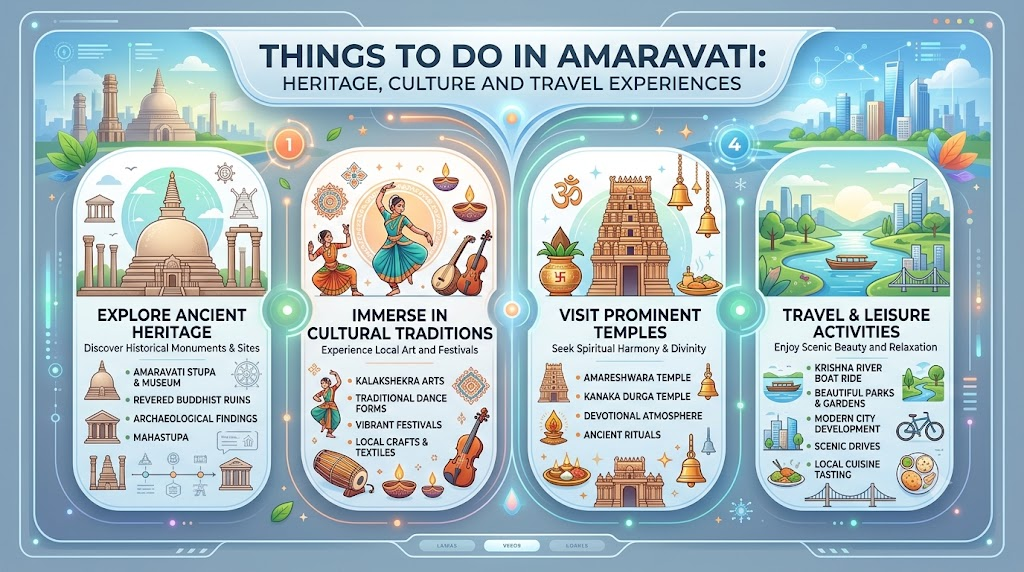
Visiting the remains of the Amaravati Stupa requires patience and imagination. Unlike restored, pristine monuments, the Mahachaitya stands as a serene, evocative excavation site. At its height, this was a magnificent white mound wrapped in intricate marble-like limestone carvings, crowned with royal parasols, and encircled by an ornate stone railing.
Take your time pacing the pradakshina (circumambulation) path. Look closely at the surviving base slabs. You can still make out the delicate carvings of dharmachakras (wheels of law), dynamic galloping horses, and representations of everyday merchant life. Arrive here early in the morning when the site is silent, birds call from the surrounding neem trees, and the low sun highlights the relief work carved twenty centuries ago.
The Amaravati Archaeological Museum: Stories in Limestone
A visit to the stupa remains incomplete without stepping into the nearby Archaeological Museum. This is not a venue for skimming display cases; it is a repository of subtle artistic genius. The Amaravati School of Art was renowned for its dynamism—figures are depicted in natural, energetic poses rather than stiff, formal postures.
Notice how Satavahana sculptors captured human emotion: court dancers gracefully bending their torsos, devotees kneeling in quiet reverence, and detailed jewelry that mirrors the ornaments still worn across rural Andhra today. The museum galleries provide a cool, calm environment where you can step out of the midday heat, sit quietly, and sketch or take in the historic stone panels in peace.
The Dhyana Buddha: A Modern Beacon on the Horizon
Soaring 125 feet into the open blue sky along the riverbank, the seated Dhyana Buddha statue acts as a contemporary tribute to the valley’s ancient Buddhist legacy. While the stupa represents antiquity, the Dhyana Buddha provides a modern community space for mindfulness.
The expansive tiered pedestal beneath the statue contains exhibition galleries that explore Buddhist philosophy and regional art. The surrounding manicured lawns are broad, quiet, and offer sweeping views of the river currents. Visit in the late afternoon when the heat breaks, and watch local families, visiting monks, and travelers sit together on the grass while the evening sky turns amber.
Sri Amareswara Swamy Temple: Living Shaivite Devotion
Just upstream from the Buddhist sites sits the Sri Amareswara Swamy Temple, dedicated to Lord Shiva. Stepping into this temple complex transitions you instantly from silent archaeological ruins into the vibrant rhythm of living Hindu traditions. The shrine is one of the five venerated Pancharama temples of Andhra Pradesh, centered around a towering white marble lingam.
The atmosphere inside is hypnotic: stone flagstones cool beneath your bare feet, the scent of camphor and fresh jasmine blossoms fills the pillared mandapas, and priests chant ancient verses. The temple steps lead directly down to the Krishna River, creating an architectural link between the sacred shrine and the flowing water.
Beyond the Guidebooks: Hidden Walks and Everyday Corners
The true personality of Amaravati often emerges outside designated monument gates. Giving yourself room to wander without a rigid timetable yields unexpected encounters.
The Riverside Pathways
Take an unstructured walk along the river edges near the main bathing ghats. Early morning reveals a community waking up along the water: washermen working with rhythmic precision, early bathers offering prayers to the rising sun, and small wooden rowboats drifting along the mist. The air off the river is cool and refreshing, providing one of the most grounding experiences in the region.
The Artisan and Brassware Lanes
The narrow lanes stretching away from the Amareswara Temple are lined with small traditional shops and open-front family workshops. The smell of burning wood and polished brass drifts from small foundries where artisans produce bells, brass lamps, and miniature statues for regional shrines. Engaging with the artisans offers a glimpse into family traditions that have survived across generations.
Street-Level Food and Rural Hospitality
Slow travel is incomplete without tasting local culinary traditions. Avoid standard highway diners and step into a small town mess or roadside tiffin stall. Breakfast in Amaravati is an experience of its own: paper-thin pesarattu (green gram crepes) served with fiery ginger chutney, fresh idlis drenched in spicy pappu charu, and sweet local tea brewed with fresh milk. Meals are served with warmth and genuine pride in local flavors.
Amaravati as a Community Hub: Gatherings and Events
Amaravati is not merely a static open-air museum; it is a developing cultural center where communities come together for sacred observances, athletic gatherings, and seasonal cultural programs.
| Gathering Style | Key Characteristic | Ideal Season or Time | Practical Consideration |
|---|---|---|---|
| Temple Celebrations | Elaborate river rituals, festive market stalls | Winter & Late Autumn | Large crowds; visit early morning |
| Riverfront Evenings | Sunset strolls, quiet family picnics | Year-round (late afternoon) | Carry mosquito repellent |
| Art & Heritage Meets | Research workshops, photography walks | Winter months | Confirm participation in advance |
| Folk & Community Fairs | Local sweets, toys, traditional music | Regional festival dates | Keep cash on hand for small vendors |
Riverfront Festivals and Sacred Nights
When festivals like Maha Shivaratri or the sacred month of Kartika Masam arrive, the entire town shifts its focus to the riverbanks. The ghats are illuminated by thousands of small earthen oil lamps (deepams), and the water mirrors points of flame stretching into the dark. If your trip coincides with these sacred windows, you will witness community celebration in its purest regional form.
Cultural Programs and Contemporary Meetups
As universities and creative organizations settle into the broader capital region, modern cultural gatherings have found a natural home here. Weekend heritage walks, bicycle tours along the river levee roads, birdwatching outings along nearby wetlands, and student seminars periodically bring diverse visitors together.
To take part in these modern community activities, make it a habit to check regional event listings and local digital boards like AmaravatiOrbit before finalizing your travel dates. This ensures you know about seasonal fairs or special museum lectures ahead of time.
Mindful Travel: One-Day and Weekend Outlines
Traveling mindfully means resisting the urge to pack too much into a single day. These suggested flows focus on presence and comfort rather than speed.
+-------------------------------------------------------------+
|              THE MINDFUL TRAVELER'S DAY                     |
|                                                             |
|  07:00 AM - 08:30 AM : Dawn on the Krishna River Ghats      |
|  08:30 AM - 09:30 AM : Leisurely Village Tiffin Breakfast   |
|  09:30 AM - 11:30 AM : Quiet Study at the Great Stupa       |
|  11:30 AM - 01:00 PM : Shaded Walk through Village Lanes    |
|  01:00 PM - 02:30 PM : Authentic Banana-Leaf Andhra Lunch   |
|  02:30 PM - 04:00 PM : Contemplation at the Museum          |
|  04:30 PM - 06:00 PM : Sunset at the Dhyana Buddha Lawns    |
+-------------------------------------------------------------+
The Unhurried Day Trip
- Morning Tranquility (7:00 AM – 9:30 AM): Arrive early, heading straight to the river ghats while the air is crisp. Spend an hour sitting by the water, watching the boatmen and listening to temple bells. Follow this with a quiet breakfast at a traditional local tiffin stall near the temple entrance.
- Quiet Exploration (9:30 AM – 1:00 PM): Move on to the Great Amaravati Stupa before the midday sun warms the stone paths. Take time to sit under the trees and imagine the monumental structure that once stood there. Wander slowly through the neighboring village lanes, observing daily life.
- Midday Pause (1:00 PM – 4:00 PM): Enjoy a traditional vegetarian Andhra thali served on a fresh banana leaf. Once refreshed, spend the warmest hours inside the quiet galleries of the Archaeological Museum, admiring the delicate Satavahana relief work away from the heat.
- Sunset Reflection (4:30 PM – 6:30 PM): Conclude your day on the grassy lawns of the Dhyana Buddha complex. Watch the setting sun paint the river gold, take in the cool evening breeze, and depart feeling restored rather than exhausted.
Extending the Journey: The Two-Day Immersion
For those choosing to spend an entire weekend in the region, Amaravati pairs seamlessly with nearby cultural pockets.
- Day 1: Amaravati’s Living Heritage. Immerse yourself in the traditional town using the unhurried schedule outlined above. Spend the night in nearby Vijayawada or Guntur, where comfortable accommodations and local culinary options are plentiful.
- Day 2: Ancient Caves and Village Crafts. Spend your second morning at the Undavalli Caves, marvelling at the multi-tiered 7th-century rock-cut architecture carved into the sandstone hill. In the afternoon, head toward Kondapalli, a village renowned for its centuries-old tradition of crafting lightweight softwood toys using natural vegetable dyes. Finish your weekend watching the river traffic from Bhavani Island.
Mindful Logistics: Seasons, Transit, and Cultural Respect
Practicing conscious, enjoyable travel requires understanding local weather patterns and community expectations.
Weather and Seasons
- The Gentle Months (November to February): The winter season brings mild temperatures between 20°C and 30°C. Morning fog often blankets the river, and afternoons are pleasant enough for extended walking and outdoor photography.
- The Green Season (July to October): Monsoon rains fill the Krishna River to its banks and drape the surrounding fields in vivid green. While rain can alter walking plans, overcast skies keep the midday heat low. Carry sturdy umbrellas and water-resistant bags.
- The Scorching Months (March to June): Summer temperatures frequently cross 40°C. If visiting during these months, conduct all outdoor exploration before 9:00 AM, spending the remainder of the day indoors.
Getting Around Mindfully
Rather than rushing with private transport between every stop, take advantage of the town’s compact layout:
- Walking: The historical cluster—the stupa, museum, and Dhyana Buddha—is easily walkable. Walking lets you notice small architectural carvings on residential houses, smell regional cooking, and interact with the town at a human pace.
- Local Autos: For longer stretches, friendly local auto-rickshaw drivers are stationed near the bus stand. Agree on fares respectfully before boarding.
- Regional Links: Regular buses run from Guntur (32 km) and Vijayawada (38 km). Taking an early morning bus with daily commuters offers an authentic slice of everyday life in Andhra Pradesh.
Responsible Travel Etiquette
Traveling thoughtfully means leaving a positive, respectful footprint wherever you go:
- Respect Sacred Traditions: When entering the Sri Amareswara Swamy Temple, dress modestly. Ensure clothing covers your shoulders and knees. Remove footwear where indicated, and ask for permission before taking photographs near the inner sanctums.
- Protect the Heritage Sites: The ancient limestone sculptures are irreplaceable historical treasures. Never touch, sit on, or climb upon excavated brick foundations or carved stone slabs at the Mahachaitya.
- Support Local Craftsmen Directly: If you purchase regional brassware, stone mementos, or traditional sweets, buy directly from neighborhood workshops rather than distant commercial outlets. Small purchases support local families directly.
- Hydrate and Pack Sustainably: Carry a reusable water bottle to reduce single-use plastic waste around monuments and riverbanks. Protect your skin with hats and cotton scarves rather than relying solely on chemical sunscreens.
Practical Tips
- Embrace the Morning Hours: The quiet hours between 6:30 AM and 9:00 AM offer the most atmospheric lighting, cooler temperatures, and intimate glimpses of riverside life.
- Prioritize Slow Observation: Rather than rushing through multiple stops, choose two or three locations and spend substantial time observing the details and artistic nuances.
- Protect Your Soles: Stone pathways heat up rapidly after 10:00 AM. Carry a pair of thick socks in your pocket so you can comfortably navigate unshaded temple floors.
- Connect with the Community: Take time to speak with local shop owners, boatmen, and artisans; their stories provide invaluable context that signboards cannot convey.
- Stay Informed on Events: Keep an eye on regional cultural schedules on platforms such as AmaravatiOrbit to catch local temple festivals, exhibitions, or walking tours during your visit.
FAQs
What makes a slow travel approach ideal for exploring Amaravati?
A slow approach allows you to appreciate the intricate details of ancient Buddhist stone carvings, absorb the serene spiritual atmosphere of the Krishna River, and engage with welcoming local communities without feeling rushed by a rigid sightseeing agenda.
How far is Amaravati from Vijayawada, and what is the best way to travel?
Amaravati is located roughly 35 to 40 kilometers from Vijayawada. The drive along the river corridor takes about an hour by private taxi, personal vehicle, or state-run APSRTC bus, making it an accessible journey for day travelers.
Can I walk between the main attractions in Amaravati?
Yes, the core historical sites—including the Amaravati Stupa, the Archaeological Museum, and the Dhyana Buddha statue—are situated within a manageable radius of two to three kilometers, making walking an enjoyable option during cooler morning hours.
What should I know about visiting the Great Amaravati Stupa?
The stupa site consists of excavated circular foundational mounds and preserved limestone panels rather than a standing monument. Visiting early in the day gives you the quiet space needed to study the 2,000-year-old relief carvings at your own pace.
Are there good traditional dining options available in Amaravati?
Yes, the town features small family-run eateries, canteens, and messes serving authentic vegetarian Andhra meals on banana leaves, alongside morning tiffins like pesarattu, idli, and hot filter coffee.
What is the significance of the Dhyana Buddha statue?
Standing 125 feet tall near the river, the Dhyana Buddha honors the region’s ancient Buddhist heritage. It houses museum galleries within its base and is surrounded by open lawns that provide a peaceful setting for rest and contemplation.
What festivals bring the most community energy to Amaravati?
Maha Shivaratri and the month of Kartika Masam bring vibrant celebrations to the Amareswara Temple and river ghats, featuring evening oil-lamp ceremonies, devotional singing, and colorful local markets along the streets.
How can I find out about local events in Amaravati during my trip?
You can stay informed about upcoming cultural programs, heritage walks, and religious festivals by consulting regional event guides and community platforms such as AmaravatiOrbit before you travel.
Is Amaravati suitable for solo travelers and cultural photographers?
Yes, Amaravati is a safe, peaceful, and welcoming destination for solo explorers and photographers who appreciate architectural details, rural street life, archaeological ruins, and natural riverside landscapes.
What is the best way to combine Amaravati with nearby destinations?
A well-rounded two-day plan pairs Amaravati’s historical monuments on the first day with visits to the rock-cut Undavalli Caves, the wooden toy-making workshops of Kondapalli, and the relaxing riverfront of Bhavani Island on the second day.
Conclusion
Amaravati rewards the traveler who takes the time to slow down, look closely, and listen. From the ancient chisel marks of Satavahana sculptors at the Great Stupa to the timeless rhythm of river waters lapping against the temple ghats, this historic town bridges millennia with grace. By moving beyond a hurried tourist itinerary and embracing thoughtful exploration, you connect directly with the living heart of Andhra Pradesh’s ancient capital. As you plan your journey, remember to consult community directories like AmaravatiOrbit for the latest event updates, pack an open curiosity, and let the gentle pace of Amaravati guide your travels.
