Trying to grow your family through fertility care can feel like a lot. One moment you feel hopeful. The next, you feel lost in numbers and medical terms. Every clinic seems to promise something different. Prices are often unclear. Success stories sound amazing, but real data feels hard to find. You are not alone in this. Thousands of hopeful parents face this exact confusion every day. That is exactly why IVFHospitalsNow.com exists. It works as a calm, independent guide. It does not push you toward one clinic. It simply helps you understand your choices better. This article breaks things down step by step. By the end, you will feel calmer and more ready.
What is IVFHospitalsNow.com
Let’s be clear about one thing first. IVFHospitalsNow.com is not a hospital. It does not perform any treatments. Instead, it acts like a knowledge hub. It gathers useful information in one place. This includes cost details, treatment basics, and provider comparisons. There is no pressure to pick anyone specific. The platform simply hands you the facts. You then make your own choice with your doctor. This kind of neutral support is rare in fertility care. Most patients only find sales pitches. Here, the focus stays on learning first.
Understanding Your Treatment Pathways
No two fertility journeys look exactly alike. That’s why doctors offer several fertility treatment options. Some are gentle first steps. Others involve more advanced lab work. Your specific path depends on things like age, health history, and test results. Some couples start with simple hormone tracking. Some move quickly into lab-based procedures. There isn’t a “one size fits all” answer here. Learning about each option early makes a real difference. It helps you feel less rushed later. It also helps you talk to your doctor with more confidence.
Comparing Key Lab Techniques
You will likely hear two terms often: IVF and ICSI. With IVF, doctors place eggs and sperm together in a dish. They let fertilization happen on its own. ICSI works differently. A specialist picks one healthy sperm. Then, they inject it straight into one egg. This method is often used when sperm health is a concern. So, the real ICSI vs IVF decision comes down to your test results. Neither approach is “better” overall. Each one simply fits a different situation. Knowing this helps you understand your doctor’s recommendation clearly.
Preserving Fertility for the Future
Maybe you’re just not ready for parenthood yet. That’s completely fine. Egg freezing gives you a way to pause the clock. Doctors retrieve your eggs and freeze them safely. Later, you can use them whenever you feel ready. Timing plays a big role here. Egg quality tends to shift as years pass. So many people choose to freeze eggs sooner rather than later. Now, about money. The egg freezing cost usually covers the retrieval process and lab work. But there’s also a yearly storage charge most people forget about. Always ask for that number upfront. It saves you stress down the road.
Finding Care Close to Home
Here’s something people often underestimate: how often you’ll need to visit the clinic. Fertility treatment involves regular checkups, blood work, and scans. If your clinic is far away, this becomes tiring fast. That’s why so many people search for IVF clinics near me. Staying local makes those repeat visits much easier. That said, don’t stop your research at “closest option.” Even nearby IVF clinics should be checked carefully. Look into their lab quality and doctor experience. Convenience matters, but it should never replace proper vetting.
Table 1: Fertility Treatment & Planning Factors
| Treatment Type | Primary Purpose | Key Stage | Practical Tip |
|---|---|---|---|
| IVF | Combine egg and sperm outside the body | Retrieval and lab fertilization | Ask about the clinic’s lab success record |
| ICSI | Support male-factor fertility issues | Direct injection of sperm into egg | Confirm if your results point to this option |
| Egg Freezing | Save eggs for future use | Retrieval and freezing process | Don’t forget yearly storage charges |
| IUI | Place sperm inside the uterus directly | A simpler, less invasive step | Often the first option doctors suggest |
| Donor-Assisted Treatment | Use donor eggs or sperm | Screening and careful matching | Always confirm donor screening standards |
Breaking Down Treatment Expenses
Let’s talk honestly about money. The IVF treatment cost is rarely just one flat number. It’s made up of several smaller pieces. Medication alone can add up quickly. Then come monitoring visits, lab fees, and testing charges. If you choose to freeze embryos, that’s usually billed separately too. Some clinics only quote the basic procedure fee upfront. This can make the price look smaller than it really is. So always request a complete, written cost breakdown. Ask exactly what’s included and what isn’t. This one habit can save you from painful surprises later.
Evaluating Cross-Border Care
Some patients look outside their own country for treatment. Choosing IVF treatment abroad can mean lower prices. It can also open doors to specific donor programs not available at home. But it’s not a simple decision. You’ll need to think about travel, visas, and even language barriers. Interestingly, the IVF cost by country can differ a lot. This happens because of different regulations, staff wages, and lab standards worldwide. A lower price doesn’t automatically mean lower quality. It also doesn’t guarantee better care either. Careful, honest research matters more than location alone.
Understanding Clinic Results Without the Hype
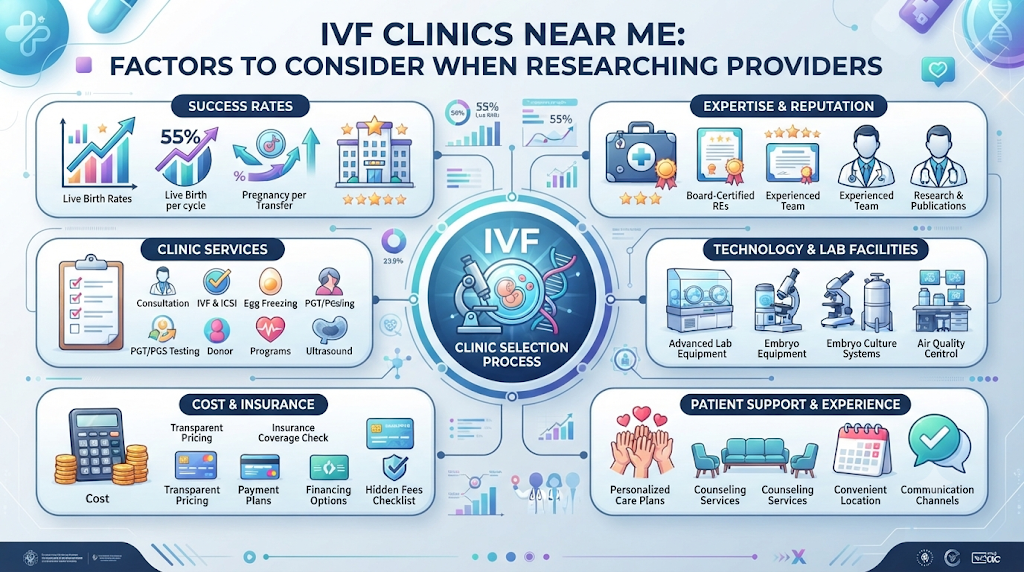
Numbers can be tricky, especially with IVF success rates. A clinic might show one big, impressive percentage. But that number often hides important details. Age plays a massive role in outcomes. A woman in her late 20s and a woman in her early 40s will likely see very different results. So, always ask for live birth rates broken down by age. This is far more useful than a general pregnancy rate. Remember, a pregnancy test result isn’t the same as a healthy delivery. Clinics that share detailed data honestly deserve more trust.
How to Objectively Compare Centers
Wondering how to compare IVF clinics the right way? Start with accreditation and licensing. This confirms the clinic meets recognized medical standards. Next, look into their lab equipment and staff training. Ask how many treatment cycles they handle each year. Don’t settle for a single headline price either. Request a full, itemized cost sheet. Ask directly about extra charges, like storage fees or repeat tests. Whenever possible, read honest patient feedback. A trustworthy clinic will never dodge your detailed questions.
Table 2: Clinic Comparison Checklist
| Evaluation Factor | What to Check | Why It Protects the Patient |
|---|---|---|
| Accreditation | Proper medical licensing and certification | Confirms basic safety and legal standards |
| Lab Quality | Equipment condition and lab track record | Directly affects fertilization outcomes |
| Reported Success Rates | Live birth data sorted by age group | Avoids misleading overall averages |
| Complete Cost Sheet | Every fee listed individually | Prevents unexpected billing later |
| Doctor’s Background | Years of hands-on fertility experience | Impacts overall treatment planning |
| Storage Terms | Rules for freezing renewal each year | Stops surprise long-term charges |
Real-Life Scenarios
- A couple visits three different clinics before booking, mainly to compare honest pricing.
- A woman sets aside extra savings, expecting she might need a second treatment cycle.
- Someone freezes their eggs nearby, then later explores IVF treatment abroad for the transfer stage.
- A patient waits several anxious weeks for lab results, learning that such delays are completely normal.
Common Mistakes to Avoid in Fertility Research
- Believing a starting quote that leaves out medication charges.
- Judging success percentages without checking the patient’s age group.
- Forgetting about ongoing yearly storage fees for frozen eggs.
- Skipping important donor screening and legal checks.
- Picking a clinic purely because it’s the closest option.
- Overlooking small lab or monitoring fees hidden in the fine print.
- Assuming every clinic reports its data the exact same way.
- Never asking how many cycles most patients actually need.
- Ignoring visa and travel planning for international treatment.
- Skipping a second medical opinion before finalizing a decision.
How IVFHospitalsNow.com Can Help
Doing this research alone can feel exhausting. That’s where IVFHospitalsNow.com steps in. It offers clear, honest cost breakdowns you can actually understand. It also provides educational directories to help compare providers fairly. On top of that, it offers guided question lists for your first appointments. It will never replace your doctor’s medical advice. But it can turn a confusing search into a much calmer process.
A Simple 7-Step Research Roadmap
- Goal: Get clear on what you truly want from treatment.
- Search: Explore both local and international choices.
- Shortlist: Narrow things down to three or five strong options.
- Compare: Weigh costs, technology, and honest outcomes together.
- Ask: Prepare sharp, direct questions for each consultation.
- Verify: Double-check accreditation and pricing in writing.
- Decide: Move forward calmly, backed by solid information.
Frequently Asked Questions
Question 1: How much does IVF treatment usually cost?
The IVF treatment cost changes based on the clinic and location. It typically covers medication, monitoring visits, egg retrieval, and lab fertilization. Some places also charge separately for embryo freezing. Prices can differ a lot between providers. Always request a full written quote before you begin. This small step helps you plan your budget without unpleasant surprises later.
Question 2: What really separates ICSI from regular IVF?
Regular IVF lets eggs and sperm combine naturally inside a lab dish. ICSI works differently, using a direct sperm injection into a single egg. Doctors usually suggest ICSI when male fertility issues are involved. The ICSI vs IVF choice depends heavily on lab test results. Your fertility specialist will guide you toward the safer, more effective option for your situation.
Question 3: What impacts IVF success rates the most?
Age is one of the strongest factors behind IVF success rates. Egg quality naturally changes as time passes. Other things, like the root cause of infertility, also matter. Clinic experience and lab technology play a role too. Always ask for results broken down by age group. This paints a much clearer, more honest picture than one single average number.
Question 4: How do I choose good IVF clinics near me?
Searching IVF clinics near me is a smart first step. But don’t stop there. Look closely at accreditation, staff experience, and genuine patient reviews. Staying local definitely makes frequent monitoring visits easier to manage. Still, quality should always come before convenience. Treat nearby options as a starting point, not your final decision.
Question 5: Is it actually safe to pursue IVF treatment abroad?
Yes, IVF treatment abroad can be safe when you research properly. Many international clinics follow strict, recognized medical guidelines. Still, always confirm their accreditation before committing. Check the lab’s technology and how they report success rates. Ask about language support and follow-up care options. Planning travel logistics early also helps everything run more smoothly overall.
Question 6: Why does IVF pricing change from country to country?
The IVF cost by country depends on several shifting factors. Local wages, medical regulations, and lab standards all play a part. Some countries naturally have lower operating costs than others. This often leads to more affordable pricing. That said, always weigh care quality and transparency too. Price alone should never be your only deciding factor.
Question 7: What’s included in the yearly egg freezing cost?
The egg freezing cost generally involves two separate charges. First, there’s the retrieval and freezing procedure itself. Second, there’s an ongoing yearly storage fee many people don’t expect. This second cost quietly adds up over several years. Always request a long-term price breakdown from any clinic. It helps you commit with full financial clarity.
Question 8: What matters most when I compare IVF clinics?
When you compare IVF clinics, look beyond the advertised starting price. Check accreditation, lab quality, and how experienced the doctors are. Request live birth rates sorted by age group specifically. Ask for a fully itemized cost sheet in writing. Read genuine patient experiences whenever they’re available. These steps lead to a far more confident final decision.
Question 9: Besides IVF, what other fertility treatment options exist?
There are several fertility treatment options worth knowing about. These include simple ovulation tracking, medication-based support, and IUI. IUI places sperm directly inside the uterus. Some patients try these gentler steps first. Others move straight into IVF, depending on their diagnosis. Your doctor will recommend the path that best fits your specific health needs.
Question 10: How many treatment cycles do most patients typically need?
This number really varies from person to person. Some patients see success on their very first attempt. Others may need two or even three cycles before success. Age and underlying diagnosis both influence this outcome. Budgeting for more than a single cycle is a wise, realistic approach for most people starting this journey.
Question 11: Do IVF success rates stay the same across all ages?
No, IVF success rates shift quite a bit with age. Younger patients tend to see noticeably higher success numbers. Rates generally start declining after the mid-thirties. This mostly relates to natural changes in egg quality over time. Always request age-specific data from any clinic. It offers a much more accurate picture than one broad average.
Question 12: What hidden fees should I watch out for before starting?
Ask carefully about medication costs, since these can vary widely. Also ask about monitoring visits and separate lab charges. Don’t forget to ask about storage renewal fees for eggs or embryos. Check whether genetic testing is bundled in or billed separately. Hidden fees catch many patients off guard. A complete written estimate helps you avoid unwanted financial surprises later.
Conclusion
Fertility research doesn’t have to feel this heavy. Begin by learning your fertility treatment options honestly and clearly. Double-check every extra cost before signing anything. Look past flashy headline statistics to the full, real picture. Always speak with a qualified doctor before making a final choice. Walk into every consultation with sharp, prepared questions. These small habits protect both your emotional wellbeing and your finances. IVFHospitalsNow.com stands ready to support this journey with honest, independent guidance. With the right information, you can move forward feeling calmer, stronger, and genuinely more confident.
