Introduction
In the modern digital environment, producing high-quality written articles, videos, or tutorials is only half the battle. If your message remains tucked away on an unvisited webpage, its potential value goes unrealized. Expanding your digital footprint requires getting your ideas in front of engaged readers, active communities, and indexing search engines. Content distribution has become just as crucial as content creation itself for writers, founders, software developers, and content marketers aiming to build organic authority. Organized directories simplify this process by curating, categorizing, and vetting platforms based on domain trustworthiness, audience intent, and niche relevance. Utilizing a structured resource like FreePostFinder allows creators to skip manual research and immediately locate reliable sites aligned with their specific content format. In this guide, you will learn how free content publishing platforms work, how to match your content with the right communities, best practices for online distribution, and common pitfalls to avoid.
What Are Free Content Publishing Platforms?
Free content publishing platforms are web-based spaces, digital directories, content sharing networks, and community forums that allow individuals and businesses to share articles, blogs, news releases, videos, and business profiles without paying upfront placement fees. These platforms range from open-access publishing portals and social blogging hubs to industry-specific knowledge bases and interactive Q&A communities.
These sites host user-generated or contributed content on hosted infrastructures with established search authority and reader communities. When you post an article or business profile on these channels, the host platform renders the page, handles server bandwidth, and presents your post to its existing user base and search engine crawlers.
For individual creators, these platforms offer immediate access to audiences without the technical overhead of running a custom web server. For organizations, websites to post content for free serve as cost-effective channels to share product announcements, educational tutorials, market insights, and company milestones. By diversifying distribution across structured open platforms, you build brand visibility, earn referral traffic, and establish authority across multiple digital touchpoints.
Why Choosing the Right Platform is Important
Publishing your work on an ill-fitted platform can lead to low engagement, ignored posts, or sudden content removal due to strict community rules. Conversely, selecting an aligned distribution channel amplifies your voice and maximizes the long-term value of your work.
- Better Audience Reach: Publishing where your target demographic already hangs out ensures your content reaches interested readers right away.
- Improved Search Visibility: Reputable publishing venues rank well on major search engines, giving your written pieces higher visibility for targeted search queries.
- Higher Community Engagement: Platforms with active user discussions generate comments, shares, and feedback, transforming static text into two-way conversations.
- Stronger Online Presence: Establishing a consistent presence across diverse, high-trust platforms strengthens your brand identity and search entity authority.
- Valuable SEO Opportunities: Strategic publishing across respected external sites generates natural referral paths and indexable brand mentions.
- Long-Term Content Value: Well-optimized articles on established channels continue attracting passive organic traffic for years after publication.
Consider a software developer who writes a technical guide on database migration. Publishing that guide on a general lifestyle directory will yield negligible reader interest. However, placing that same article on a developer-focused publishing network ensures it reaches active software engineers who will read, bookmark, and share the material.
Types of Free Posting Sites
Digital publishing spaces come in distinct formats, each tailored to specific content styles, user goals, and audience expectations. Understanding these nuances helps you allocate your writing efforts effectively.
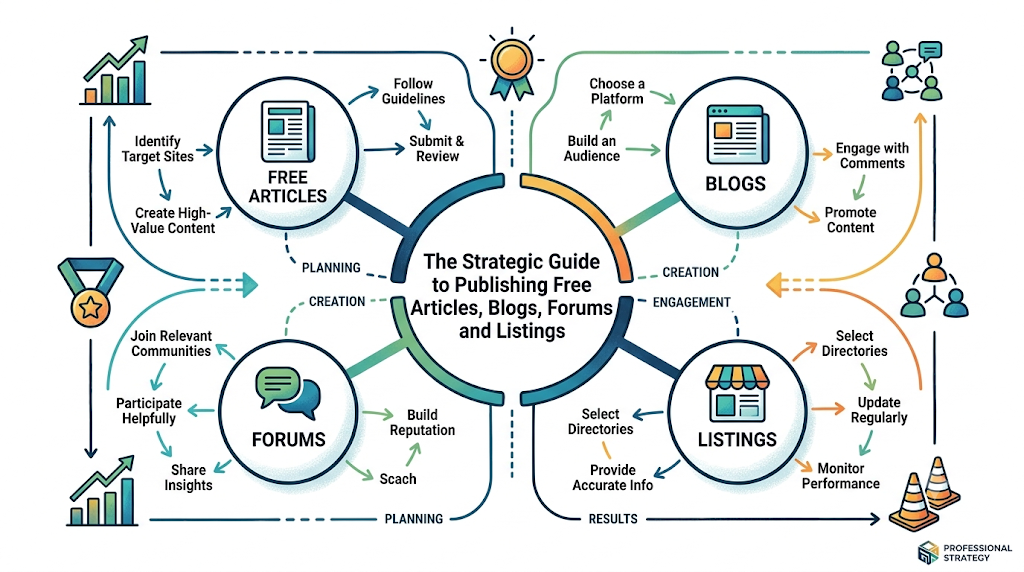
Free Article Posting Sites
Article submission platforms focus on long-form, educational, and instructional writing. These sites typically feature broad categorization structures ranging from technology and finance to health and personal development. They work best for detailed informational guides, opinion pieces, and thought leadership articles designed to demonstrate topic expertise.
Free Blog Posting Sites
Blogging platforms allow users to establish personal or business channels to post ongoing updates, stories, and editorial pieces. Unlike basic article submitters, free blog networks offer custom author profile pages, RSS feeds, reader subscription features, and visual customization options. They are ideal for writers looking to nurture a consistent readership over time.
Free Forum Posting Sites
Forums and discussion boards focus on topic-driven, conversational exchanges. Users post questions, share insights, start threads, and reply to community queries. Forums demand an authentic, value-first approach; direct promotional spam is quickly flagged. When used correctly, technical and niche forums offer unmatched opportunities to build trust directly within specialized communities.
Free Business Listing Sites
Online business directories and local listing hubs allow companies to publish official business profiles, location details, service offerings, and website links. Maintaining accurate information across reputable business listing venues improves local discovery, enhances trust for potential clients, and reinforces regional search presence.
Free Video Posting Sites
Video sharing networks allow content creators and businesses to host visual content, video tutorials, product walkthroughs, and webinars. Because video content commands high viewer engagement, utilizing free video posting platforms helps reach audiences who prefer watching visual demonstrations over reading text documentation.
Community Publishing Platforms
Community-driven channels blend social media dynamics with long-form writing. Readers can upvote, share, tag, and comment on articles. Content that resonates with community members on these platforms can quickly gain viral traction, driving substantial referral visits back to the author’s primary hub.
Directory Submission Platforms
Directory platforms organize digital assets, websites, tools, and organizations into curated taxonomic trees. Submitting accurate entries to specialized web directories helps categorized businesses be discovered by buyers, researchers, and industry analysts seeking vetted resources.
Knowledge Sharing Platforms
Q&A sites and collective knowledge bases focus on answering specific user questions. Publishing well-researched, thorough answers on these portals position you as an industry authority while addressing real user queries that searchers ask every day.
How to Choose the Best Platform for Your Content
Selecting the optimal channel for your material requires looking beyond superficial metrics like total site traffic. Evaluate these foundational criteria before submitting your work:
+-----------------------------------------------------------------------+
|                       PLATFORM SELECTION FRAMEWORK                     |
+-----------------------------------------------------------------------+
|  1. Content Alignment    --> Does the site support your media format? |
|  2. Audience Intent     --> Are readers seeking your specific topic?  |
|  3. Editorial Rules     --> Can you meet all formatting guidelines?   |
|  4. Domain Trust        --> Is the platform indexed & spam-free?      |
|  5. Moderation Speed    --> Is review automated or human-vetted?      |
|  6. Engagement Level    --> Do existing posts receive real comments?  |
+-----------------------------------------------------------------------+
- Content Type Alignment: Match text length, tone, and media elements with the native layout of the destination site.
- Target Audience Intent: Ensure the platform’s active audience actively consumes your industry’s topic matter.
- Publishing Guidelines: Review formatting rules, word count minimums, and outbound link policies to prevent unexpected rejections.
- Moderation Policies: Determine whether submissions undergo manual editorial review or auto-publishing, as this affects publication timelines.
- Domain Authority & Indexing: Verify that the platform’s published pages are regularly indexed by search engines.
- Community Engagement Rate: Look for active comment sections and social sharing activity, which indicate a live, attentive reader base.
FreePostFinder as a Content Publishing Platform Finder
Finding quality publishing platforms manually often requires hours of tedious web searches, filtering through broken links, and evaluating shady sites. FreePostFinder operates as a specialized content publishing platform finder designed to streamline this research process.
Instead of guessing where to publish your latest article, business update, or technical video, FreePostFinder provides a searchable directory organized by publishing formats, niche categories, target industries, and domain authority indicators.
The platform offers clear category tags, allowing users to instantly filter for article submitters, community forums, business directories, or blogging channels. Each platform listing includes breakdown information regarding submission guidelines, review models, allowed content types, and moderation rules. By centralizing distribution research into a single curated platform, creators make data-driven decisions on where to share their work for maximum impact.
Best Practices for Publishing Content Online
Publishing across external platforms requires maintaining high editorial standards to protect your brand reputation and ensure long-term indexation.
- Create Original, High-Value Content: Always draft fresh, unique insights tailored specifically to the destination platform’s readership rather than copy-pasting existing posts.
- Strictly Follow Platform Rules: Adhere precisely to word counts, image formatting standards, disclosure policies, and promotional boundaries.
- Avoid Duplicate Content Submissions: Posting identical text across dozens of open directories dilutes search value and risks algorithmic penalty filters.
- Write Audience-Focused Headlines: Draft clear, intriguing, and accurate titles that describe the value readers will gain from your post.
- Incorporate Visual Media: Enrich long-term written articles with original diagrams, data charts, and screenshots to improve readability.
- Update Outdated Information: Periodically revisit and refresh timeless evergreen guides on external channels to maintain accuracy and reader value.
- Build Long-Term Community Trust: Engage politely with readers in the comment section and contribute helpful answers without immediately pitching services.
Common Mistakes to Avoid
Even experienced marketers make tactical errors that limit their publishing success on open platforms. Avoid these frequent pitfalls:
- Posting Low-Quality or AI-Spam Content: Flooding open platforms with spun or low-effort filler text leads to swift account suspension and removal.
- Ignoring Platform Guidelines: Submitting promotional sales pitches to strict informational or community platforms guarantees submission rejection.
- Over-Promoting Products or Services: Treating editorial content as an overt advertisement turns readers off and damages your brand credibility.
- Keyword Stuffing: Forcing awkward search keywords into titles and subheadings makes articles unreadable and signals poor quality to search crawlers.
- Spamming Community Forums: Dropping links across message boards without adding genuine conversational value gets accounts banned quickly.
- Neglecting Post Formatting: Unformatted walls of plain text discourage readers. Use headers, bullet points, and short paragraphs to maintain visual structure.
Comparison of Platform Categories
Understanding how different platform types operate helps you select the correct venue for each piece of content in your distribution strategy.
| Platform Category | Best For | Typical Content Type | Primary Audience | Key Strategic Benefits |
| Article Posting Sites | Educational guides & thought leadership | Long-form articles (1,000+ words) | General researchers & industry peers | Strong search indexation & domain authority |
| Blog Posting Networks | Ongoing brand storytelling | Serialized posts, news, & tutorials | Returning subscribers & enthusiasts | Profile customization & reader subscriptions |
| Forum Posting Sites | Direct discussion & technical Q&A | Thread replies, questions, & code tips | Niche specialists & developers | Highly targeted feedback & direct engagement |
| Business Directory Listings | Local discovery & company trust | NAP details, service lists, & company bio | Local shoppers & B2B buyers | Improved local search presence & brand trust |
| Video Posting Platforms | Visual demos & visual tutorials | Videos, webinars, & visual guides | Visual learners & video searchers | High engagement rates & multi-channel reach |
| Knowledge Sharing Hubs | Answering direct user questions | Detailed answers & explainer guides | Active searchers with specific intent | Fast indexing & high topical authority |
Who Can Benefit from Free Content Publishing?
Open distribution platforms deliver distinct advantages tailored to various professional roles across the digital landscape.
Bloggers
Independent bloggers expand their reach beyond their personal domain by syndicate-publishing unique expansion posts on high-traffic article networks, driving interested readers back to their main blog.
Writers
Aspiring authors and freelance journalists use open publishing portals to build accessible online portfolios, prove subject mastery, and catch the eye of potential editors and client publications.
Businesses
Companies publish educational industry updates, case studies, and business directory profiles to reinforce market authority, increase digital touchpoints, and attract organic B2B leads.
Startups
Early-stage founders leverage free distribution hubs to launch announcements, detail product builds, explain technological breakthroughs, and attract early adopters without heavy ad spend.
Content Marketers
Marketing strategists use multi-channel publishing strategies to distribute whitepaper summaries, research reports, and strategic guides across niche-aligned channels.
Developers
Software engineers and technical architects share open-source documentation, code snippets, and troubleshooting tutorials on developer-centric community platforms to build professional recognition.
Educators & Students
Academic practitioners and researchers share educational summaries, research highlights, and learning modules on open knowledge portals to encourage peer learning and collaboration.
Agencies & Freelancers
Digital consultants publish client success frameworks and tactical playbooks to demonstrate practical capabilities and win consulting engagements.
Influencers & Creators
Digital creators post supplementary commentary, video outlines, and behind-the-scenes notes across social article channels to build cross-platform subscriber loyalty.
Future of Digital Publishing
The digital publishing landscape continues to evolve, shaped by changing reader habits, search engine algorithms, and creator tools.
The growth of the independent creator economy has elevated personal branding; readers increasingly trust individual domain experts over faceless corporate sites. Independent publishing through open platforms allows creators to own their voice while tapping into centralized distribution networks.
Community-driven moderation and curation are replacing unmoderated open comment sections. Platforms that enforce clear content standards, reward genuine utility, and suppress automated spam continue to grow in search engine trust and user retention.
Simultaneously, multi-channel distribution has become essential. Modern digital publishing requires repurposing core ideas into structured written articles, visual video summaries, and interactive forum threads. Platforms that offer smooth reading experiences across desktop and mobile devices remain central to global content discovery.
How FreePostFinder Helps Users Publish Smarter
Navigating the vast ecosystem of free posting sites requires clarity and structure. FreePostFinder acts as a comprehensive research hub that replaces guesswork with organized platform data.
- Streamlined Discovery: Quickly locate platform types suited to your specific publication format.
- Detailed Platform Metrics: Access clear information regarding submission guidelines, content policies, and review procedures before writing.
- Categorized Navigation: Browse platforms by niche, industry, content type, and geographic focus.
- Resource Awareness: Understand moderation standards to tailor your drafts for higher approval rates.
- Efficient Workflow: Save time on manual search routines and focus energy on crafting valuable content.
By utilizing structured platform discovery, creators build sustainable publishing routines that deliver consistent audience growth over time.
Frequently Asked Questions (FAQ)
What are free posting sites?
Free posting sites are online platforms, web directories, blogs, forums, and content sharing networks that allow individuals and businesses to publish articles, news, videos, or business listings at no upfront cost.
These platforms provide the technical hosting infrastructure and an existing audience base, making it easy for writers, marketers, and organizations to share information, build brand authority, and reach new readers across the web.
Where can I post content for free?
You can post content for free across a wide range of platforms depending on your content type. Options include open blogging platforms, article directories, industry-specific forums, video sharing networks, and business listing directories.
Tools like FreePostFinder help you locate and compare these venues, ensuring you select platforms that match your specific niche, target audience, and publishing goals.
What are free article posting sites?
Free article posting sites are hosted web portals that accept written informational and educational articles from independent contributors.
These sites organize submissions into distinct categories such as technology, business, lifestyle, and education, offering authors an opportunity to share long-form expertise with search engines and broad web readerships.
Which free blog posting sites are best for beginners?
The best beginner-friendly blog posting sites feature simple content editors, clear navigation, built-in audience streams, and zero server setup requirements.
Platforms that handle technical maintenance automatically allow new writers to focus entirely on drafting quality content without worrying about web hosting, security patches, or complex software installation.
How do free business listing sites help SEO?
Free business listing sites improve search engine optimization by providing verified business information—such as name, address, phone number, and website URL—across trusted online directories.
This consistent data reinforces local search signals, improves geographic visibility, helps search engines verify your business legitimacy, and creates direct referral paths for potential customers searching for regional services.
What are free forum posting sites?
Free forum posting sites are online discussion communities centered around specific interests, hobbies, industries, or technical topics where members start discussion threads and reply to questions.
Participating in forums allows subject matter experts to answer direct user queries, offer practical technical advice, build trust within specialized communities, and drive highly targeted traffic back to their primary resources.
Which free video posting sites are worth using?
Free video posting sites that offer reliable video hosting, smooth mobile playback, search engine indexing, and active user recommendation systems are worth incorporating into your strategy.
Utilizing video distribution networks allows creators to reach audiences who prefer visual tutorials, webinars, and product demonstrations over traditional long-form written guides.
How do I choose the right publishing platform?
Choosing the right publishing platform requires evaluating your target audience, content format, platform editorial rules, moderation standards, and domain trust metrics.
Select platforms where active users actively discuss your niche topic, and ensure your proposed content aligns with the site’s community guidelines to maximize approval rates and reader engagement.
Is FreePostFinder suitable for businesses and creators?
Yes, FreePostFinder is designed for both individual creators—such as bloggers, freelancers, and developers—and commercial entities like startups, agencies, and small businesses.
Its curated directory structure allows users across all industries to discover appropriate distribution channels tailored to their specific promotional, educational, or brand-building goals.
How can I avoid content rejection on publishing platforms?
To avoid content rejection, always read and adhere to each platform’s specific submission guidelines before drafting your post.
Focus on writing original, high-quality, and informative content that provides real value to the reader. Avoid heavy sales pitches, don’t stuff keywords, use proper paragraph formatting, and ensure all embedded media meets platform requirements.
Conclusion
Building a successful digital presence requires combining high-quality content creation with strategic, organized distribution. While creating exceptional articles, guides, and videos remains essential, placing that work on reputable free content publishing platforms ensures your message reaches the audience it deserves. Diversifying your publishing footprint across high-trust article networks, niche forums, specialized business directories, and video hubs creates a sustainable foundation for long-term digital growth. Selecting the appropriate platform is critical. Taking time to understand community expectations, formatting rules, and moderation guidelines protects your brand reputation and maximizes organic search visibility.
