Introduction
Smart City IoT Platforms are software solutions designed to integrate and manage a wide range of connected devices across urban environments. These platforms enable cities to optimize resources, improve citizen services, and ensure secure, real-time monitoring of city infrastructure.
With the growing adoption of IoT devices in urban settings, these platforms are essential for managing traffic, energy, waste, environmental monitoring, and public safety. Smart City IoT Platforms help municipalities analyze data, automate processes, and improve operational efficiency while maintaining security and compliance.
Real-world use cases include:
- Smart traffic and transportation management
- Intelligent energy grid monitoring and control
- Environmental monitoring for air and water quality
- Public safety and emergency response systems
- Waste management optimization
Evaluation criteria for buyers include:
- Device onboarding and lifecycle management
- Integration with sensors, cameras, and IoT devices
- Real-time monitoring and alerting
- Data analytics and visualization capabilities
- Security and certificate management
- Scalability for city-wide deployments
- Compliance with local and international regulations
- Automation and AI-driven decision-making
- Dashboard customization and reporting
- Vendor support and community strength
Best for: City administrators, municipal IT teams, utility providers, and transportation authorities.
Not ideal for: Small-scale deployments or private networks without integrated city-wide infrastructure.
Key Trends in Smart City IoT Platforms
- AI-driven analytics for traffic, energy, and environmental data
- Automation of city operations and services
- Cloud-native and hybrid deployment options
- Edge computing for low-latency decision-making
- Integration with public safety and emergency systems
- Interoperability with legacy municipal systems
- Real-time dashboards for multiple city departments
- Subscription-based and flexible pricing models
- Robust security and certificate management for IoT devices
- Advanced monitoring for sustainability and smart infrastructure
How We Selected These Tools
- Evaluated market adoption and city-scale deployments
- Assessed feature completeness for device and sensor management
- Reviewed reliability and performance signals across large IoT networks
- Analyzed security posture and compliance readiness
- Considered integrations with municipal, cloud, and IoT ecosystems
- Evaluated customer fit across small, mid-size, and large cities
- Reviewed scalability and ability to manage heterogeneous devices
- Assessed vendor support, documentation, and community engagement
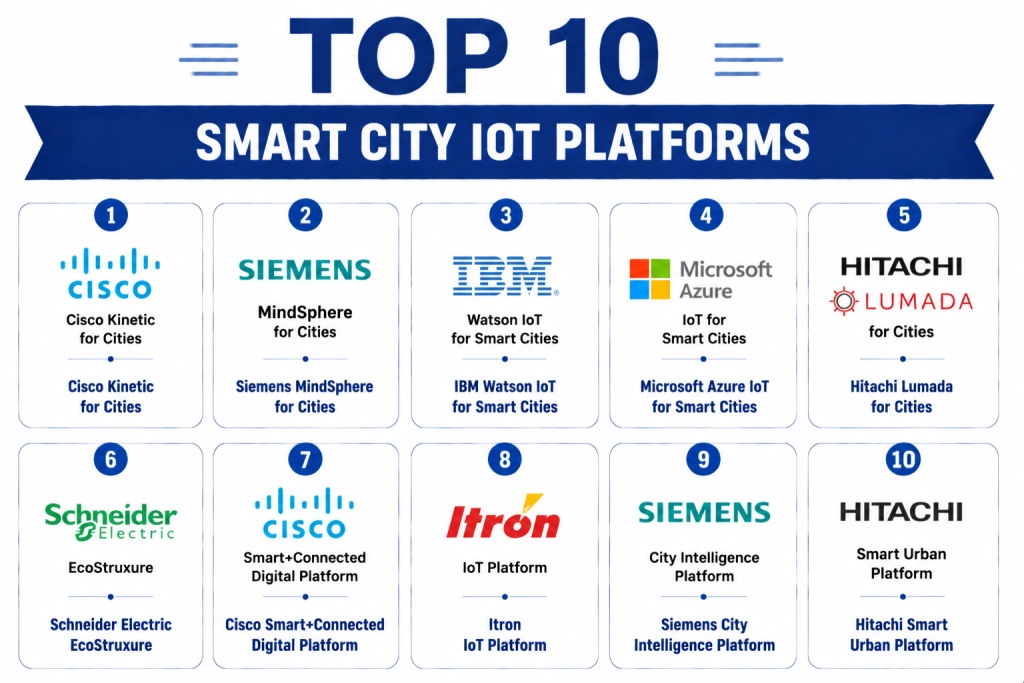
Top 10 Smart City IoT Platforms
1- Cisco Kinetic for Cities
Short description: Cisco Kinetic for Cities provides an end-to-end platform to manage IoT devices, data flows, and security policies across urban infrastructure.
Key Features
- Device provisioning and lifecycle management
- Data collection and analytics
- Network management and edge computing
- Integration with municipal IT systems
- Policy-based security enforcement
Pros
- Enterprise-grade security
- Scales for city-wide deployments
Cons
- Complexity may require specialized IT staff
- Premium pricing
Platforms / Deployment
- Linux / Windows / macOS / iOS / Android
- Cloud / Hybrid
Security & Compliance
- Encryption, RBAC, SSO
- ISO 27001, SOC 2
Integrations & Ecosystem
- Integration with traffic, energy, and utility systems
- APIs for custom analytics
- Cloud data services
Support & Community
- Cisco enterprise support
- Developer community
2- Siemens MindSphere for Cities
Short description: Cloud-based IoT platform for smart cities to manage sensors, energy systems, and urban analytics with predictive insights.
Key Features
- Device onboarding and monitoring
- Predictive analytics for city operations
- Energy and traffic system integration
- Cloud and edge computing support
- Compliance and reporting dashboards
Pros
- Strong analytics for city data
- Reliable and scalable
Cons
- Learning curve for non-technical users
- Costs can be high for smaller cities
Platforms / Deployment
- Linux / Windows / macOS
- Cloud / Hybrid
Security & Compliance
- Encryption and certificate management
- ISO 27001
Integrations & Ecosystem
- ERP and municipal systems
- APIs for IoT devices
- AI/ML analytics pipelines
Support & Community
- Siemens enterprise support
- Documentation and forums
3- IBM Watson IoT for Smart Cities
Short description: Provides analytics, device management, and AI-driven insights to optimize city operations and infrastructure performance.
Key Features
- Secure device provisioning and management
- AI-driven predictive analytics
- Real-time monitoring dashboards
- Edge and cloud deployment
- Integration with utility and public safety systems
Pros
- Powerful analytics capabilities
- Scales for large metropolitan areas
Cons
- Complex setup
- Enterprise pricing
Platforms / Deployment
- Linux / Windows / macOS
- Cloud / Hybrid
Security & Compliance
- Encryption, RBAC, audit logs
- SOC 2, ISO 27001
Integrations & Ecosystem
- IBM Cloud services
- APIs for municipal systems
- IoT device SDKs
Support & Community
- IBM enterprise support
- Active community and documentation
4- Microsoft Azure IoT for Smart Cities
Short description: Enables city planners to deploy, monitor, and analyze IoT devices across transportation, energy, and public safety networks.
Key Features
- Device provisioning and certificate management
- OTA updates for city sensors
- Real-time monitoring and analytics
- AI-assisted automation
- Integration with Azure cloud services
Pros
- Cloud-native and scalable
- Strong analytics and AI integration
Cons
- Azure-centric platform
- Premium features require subscription
Platforms / Deployment
- Linux / Windows
- Cloud / Hybrid
Security & Compliance
- Encryption, SSO, MFA
- ISO 27001, SOC 2
Integrations & Ecosystem
- Azure AI and analytics
- IoT Edge integration
- APIs for city infrastructure
Support & Community
- Microsoft enterprise support
- Developer community
5- Hitachi Lumada for Cities
Short description: Edge-to-cloud IoT platform designed for urban operations, energy management, and predictive city analytics.
Key Features
- Device onboarding and lifecycle
- Edge computing for low-latency decisions
- Predictive maintenance for city infrastructure
- Analytics dashboards
- Policy-based security enforcement
Pros
- Edge analytics capability
- Supports industrial and urban deployments
Cons
- Requires trained operators
- Enterprise pricing
Platforms / Deployment
- Linux / Windows / macOS
- Cloud / Hybrid
Security & Compliance
- Encryption, RBAC
- Not publicly stated
Integrations & Ecosystem
- IoT sensors, utility networks
- APIs for integration
- Cloud analytics
Support & Community
- Vendor enterprise support
- Documentation
6- Schneider Electric EcoStruxure
Short description: IoT platform for smart energy, building management, and urban operations with real-time monitoring and automation.
Key Features
- Device provisioning and management
- Energy and building monitoring
- Predictive maintenance analytics
- Edge and cloud deployment
- Integration with IoT sensors
Pros
- Strong industrial IoT support
- Scalable for city-wide deployments
Cons
- Focused on energy and building management
- Cost may be high for smaller cities
Platforms / Deployment
- Linux / Windows / macOS
- Cloud / Hybrid
Security & Compliance
- Encryption, RBAC
- ISO 27001
Integrations & Ecosystem
- Building management systems
- IoT sensors
- APIs
Support & Community
- Enterprise support
- Forums and documentation
7- Cisco Smart+Connected Digital Platform
Short description: Provides integrated IoT management for smart transportation, public safety, and city analytics.
Key Features
- Device provisioning and monitoring
- Analytics dashboards
- Edge computing support
- Security and policy management
- Integration with municipal infrastructure
Pros
- Strong integration with Cisco networking
- Real-time analytics
Cons
- Complexity for non-Cisco environments
- Premium pricing
Platforms / Deployment
- Linux / Windows / macOS / iOS / Android
- Cloud / Hybrid
Security & Compliance
- Encryption, audit logs, RBAC
- SOC 2
Integrations & Ecosystem
- IoT sensors and cameras
- Cloud analytics
- APIs for automation
Support & Community
- Cisco enterprise support
- Developer community
8- Itron IoT Platform
Short description: Platform for utility management and smart city IoT, including energy, water, and connected device monitoring.
Key Features
- Device provisioning and certificate management
- Real-time telemetry
- Analytics for utilities and energy
- OTA updates for devices
- Security policy enforcement
Pros
- Strong utility management focus
- Scales for large networks
Cons
- Limited outside energy and utilities
- Requires technical expertise
Platforms / Deployment
- Linux / Windows / macOS
- Cloud / Hybrid
Security & Compliance
- Encryption, access control
- Not publicly stated
Integrations & Ecosystem
- Utility systems and sensors
- APIs and SDKs
- Cloud analytics
Support & Community
- Vendor support
- Documentation
9- Siemens City Intelligence Platform
Short description: Provides analytics, device management, and IoT integration for urban mobility, energy, and city planning.
Key Features
- Device and sensor provisioning
- Real-time monitoring and dashboards
- Predictive analytics for infrastructure
- Integration with city operations systems
- Edge and cloud deployment
Pros
- Strong analytics and visualization
- Scales for large city deployments
Cons
- Complexity may require specialized staff
- Enterprise pricing
Platforms / Deployment
- Linux / Windows / macOS
- Cloud / Hybrid
Security & Compliance
- Encryption, RBAC
- ISO 27001
Integrations & Ecosystem
- Transportation and energy systems
- APIs and IoT platforms
- Cloud analytics
Support & Community
- Siemens enterprise support
- Documentation and forums
10- Hitachi Smart Urban Platform
Short description: End-to-end IoT solution for smart cities including traffic, energy, environmental monitoring, and urban analytics.
Key Features
- Device onboarding and lifecycle
- Edge and cloud analytics
- Real-time monitoring and dashboards
- Predictive maintenance
- Security and compliance enforcement
Pros
- Comprehensive smart city support
- Edge and cloud integration
Cons
- High complexity
- Enterprise pricing
Platforms / Deployment
- Linux / Windows / macOS
- Cloud / Hybrid
Security & Compliance
- Encryption and RBAC
- Not publicly stated
Integrations & Ecosystem
- IoT sensors and public infrastructure
- APIs and analytics pipelines
- Edge computing integration
Support & Community
- Vendor support
- Documentation
Comparison Table (Top 10 Smart City IoT Platforms)
| Tool Name | Best For | Platform(s) Supported | Deployment | Standout Feature | Public Rating |
|---|---|---|---|---|---|
| Cisco Kinetic for Cities | Enterprise & Municipal | Linux / Windows / macOS / iOS / Android | Cloud / Hybrid | End-to-end IoT management | N/A |
| Siemens MindSphere for Cities | Industrial & Municipal | Linux / Windows / macOS | Cloud / Hybrid | Predictive city analytics | N/A |
| IBM Watson IoT for Smart Cities | Enterprise IoT | Linux / Windows / macOS | Cloud / Hybrid | AI-driven urban analytics | N/A |
| Microsoft Azure IoT for Smart Cities | City planners & utilities | Linux / Windows | Cloud / Hybrid | AI and automation integration | N/A |
| Hitachi Lumada for Cities | Industrial & Smart Cities | Linux / Windows / macOS | Cloud / Hybrid | Edge-to-cloud IoT analytics | N/A |
| Schneider Electric EcoStruxure | Energy & Building Mgmt | Linux / Windows / macOS | Cloud / Hybrid | Energy and building management | N/A |
| Cisco Smart+Connected Digital | Transportation & Public Safety | Linux / Windows / macOS / iOS / Android | Cloud / Hybrid | Real-time IoT monitoring | N/A |
| Itron IoT Platform | Utilities & Energy | Linux / Windows / macOS | Cloud / Hybrid | Utility-focused analytics | N/A |
| Siemens City Intelligence | Urban Planning & Mobility | Linux / Windows / macOS | Cloud / Hybrid | Predictive analytics dashboards | N/A |
| Hitachi Smart Urban Platform | Comprehensive Smart City | Linux / Windows / macOS | Cloud / Hybrid | End-to-end urban IoT management | N/A |
Evaluation & Scoring of Smart City IoT Platforms
| Tool Name | Core (25%) | Ease (15%) | Integrations (15%) | Security (10%) | Performance (10%) | Support (10%) | Value (15%) | Weighted Total (0–10) |
|---|---|---|---|---|---|---|---|---|
| Cisco Kinetic for Cities | 9 | 7 | 8 | 9 | 9 | 8 | 7 | 8.3 |
| Siemens MindSphere for Cities | 8 | 7 | 7 | 8 | 8 | 7 | 7 | 7.6 |
| IBM Watson IoT for Smart Cities | 8 | 7 | 8 | 8 | 8 | 7 | 7 | 7.8 |
| Microsoft Azure IoT for Smart Cities | 8 | 7 | 8 | 8 | 8 | 7 | 7 | 7.8 |
| Hitachi Lumada for Cities | 8 | 7 | 7 | 7 | 8 | 7 | 7 | 7.4 |
| Schneider Electric EcoStruxure | 8 | 7 | 7 | 7 | 8 | 7 | 7 | 7.4 |
| Cisco Smart+Connected Digital | 8 | 7 | 7 | 8 | 8 | 7 | 7 | 7.6 |
| Itron IoT Platform | 7 | 7 | 6 | 7 | 7 | 7 | 7 | 7.0 |
| Siemens City Intelligence | 8 | 7 | 7 | 7 | 8 | 7 | 7 | 7.4 |
| Hitachi Smart Urban Platform | 8 | 7 | 7 | 7 | 8 | 7 | 7 | 7.4 |
Interpretation: Weighted totals provide a comparative evaluation of core IoT capabilities, integration flexibility, security, and value for city-scale deployments.
Which Smart City IoT Platform Is Right for You?
Solo / Freelancer
Open-source or small-scale cloud solutions are suitable for pilots or localized projects.
SMB
Mid-scale deployments can leverage Schneider EcoStruxure or Itron IoT Platform for limited city operations.
Mid-Market
Platforms like Siemens MindSphere or Cisco Smart+Connected Digital offer scalable monitoring and analytics.
Enterprise
IBM Watson IoT, Cisco Kinetic, and Hitachi Lumada provide end-to-end management for city-wide IoT initiatives.
Budget vs Premium
Open-source or lighter cloud platforms for budget-conscious teams. Premium enterprise platforms deliver full analytics and scale.
Feature Depth vs Ease of Use
Complex urban deployments benefit from IBM, Cisco, or Siemens platforms. Smaller pilots work well with lighter platforms.
Integrations & Scalability
Enterprise deployments require integration with municipal, utility, and transportation systems.
Security & Compliance Needs
High-security, city-wide networks should prioritize encryption, certificate management, RBAC, and regulatory compliance.
Frequently Asked Questions (FAQs)
1- What is a Smart City IoT Platform?
It is a software solution for managing devices, sensors, and data across urban environments for analytics and operational efficiency.
2- Can these platforms scale to city-wide deployments?
Yes, enterprise platforms like Cisco Kinetic and IBM Watson IoT are designed for city-scale operations.
3- Do these platforms support real-time monitoring?
Yes, dashboards, telemetry, and alerts allow immediate insights into urban infrastructure and IoT devices.
4- Are AI and predictive analytics included?
Most enterprise platforms provide AI-driven insights for traffic, energy, and public safety optimization.
5- Can these tools integrate with existing municipal systems?
Yes, they support integration with utilities, transportation, public safety, and cloud analytics.
6- How secure are these platforms?
Enterprise solutions include encryption, RBAC, audit logs, SSO, and compliance with SOC 2 or ISO standards.
7- Are open-source options available?
Some platforms provide SDKs or modular solutions, but most city-scale deployments rely on enterprise tools.
8- Can small cities or pilots use these platforms?
Yes, lighter or cloud-native deployments allow smaller municipalities to deploy IoT projects efficiently.
9- Do they provide OTA updates for devices?
Yes, enterprise solutions offer secure over-the-air updates for city IoT devices.
10- What are common challenges?
Integration complexity, device heterogeneity, network reliability, and security management are typical challenges.
Conclusion
Smart City IoT Platforms enable municipalities to manage sensors, devices, and data effectively, improving city services, operational efficiency, and security. Smaller cities may deploy lightweight or cloud-native solutions, while large metropolises require enterprise-scale, AI-driven, and fully integrated platforms. Shortlist platforms, run pilot projects, and validate security and integrations before scaling to full deployments.
