Introduction
Legacy Modernization & Replatforming Tools help organizations update, transform, and migrate older software applications to modern, scalable, and cloud-ready architectures. These tools allow enterprises to rehost, replatform, refactor, containerize, and adopt microservices without disrupting business operations. By modernizing legacy systems, businesses can enhance performance, improve maintainability, reduce technical debt, and unlock new capabilities.
In and beyond, legacy modernization is critical as enterprises face pressure to adopt cloud infrastructures, implement DevOps, improve customer experiences, and maintain regulatory compliance. Modern platforms increasingly incorporate AI-assisted analysis, automated dependency mapping, and integrated security monitoring, making modernization faster and less risky.
Real-World Use Cases
- Migrating legacy ERP, CRM, and financial applications to cloud platforms
- Refactoring monolithic applications into microservices
- Containerizing applications for Kubernetes and Docker deployments
- Modernizing applications for DevOps and CI/CD pipelines
- Reducing technical debt while improving performance and scalability
Evaluation Criteria for Buyers
Organizations evaluating legacy modernization tools should consider:
- Support for rehosting, replatforming, refactoring, and containerization
- Cloud and hybrid deployment compatibility
- Automation and AI-assisted recommendations
- Application dependency mapping and assessment
- Security and compliance monitoring
- Integration with DevOps pipelines
- Scalability and performance optimization
- Monitoring, reporting, and analytics capabilities
- Total cost of ownership
- Vendor support and ecosystem maturity
Best for: Enterprises, mid-market organizations, IT teams, DevOps engineers, software architects, financial services, healthcare providers, and businesses with legacy applications needing modernization.
Not ideal for: Organizations that have fully modernized their software stack, small IT environments with minimal complexity, or applications that are already cloud-native.
Key Trends in Legacy Modernization & Replatforming Tools
- AI-assisted code analysis and refactoring recommendations
- Automated discovery and dependency mapping of legacy systems
- Containerization and microservices adoption across applications
- CI/CD integration for modern development workflows
- Multi-cloud modernization support
- Security and compliance validation automation
- Low-code and no-code modernization tools emerging
- Automated performance and scalability assessment
- Cost optimization and cloud resource forecasting
- Integration with observability and monitoring platforms
How We Selected These Tools
Our evaluation methodology for the top 10 tools included:
- Market adoption and industry mindshare
- Feature completeness for rehosting, refactoring, and containerization
- Reliability and performance signals during modernization projects
- Security and compliance capabilities
- Integration ecosystem with CI/CD and cloud platforms
- Scalability across enterprise and mid-market workloads
- AI/automation capabilities for modernization
- Documentation quality, onboarding support, and community strength
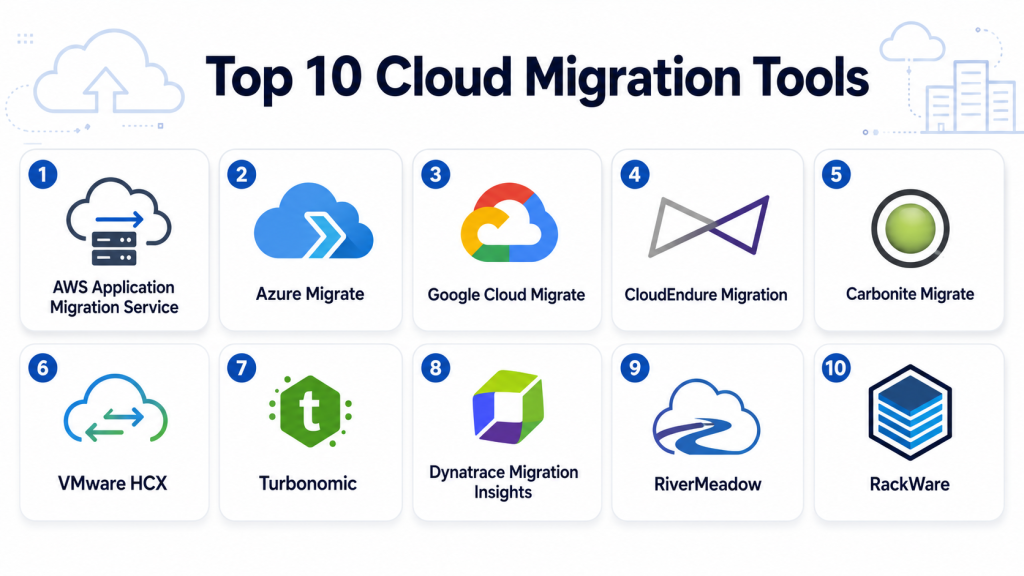
Top 10 Legacy Modernization & Replatforming Tools
1- AWS Application Modernization Hub
Short description: AWS Application Modernization Hub enables enterprises to discover, assess, and modernize legacy applications for cloud deployment. It supports rehosting, replatforming, and refactoring, providing automation and insights to reduce migration risk. Enterprises rely on it to adopt microservices, containers, and DevOps practices while maintaining operational continuity and performance.
Key Features
- Application discovery and assessment
- Rehosting, replatforming, and refactoring support
- Containerization guidance
- Continuous monitoring and reporting
- AI-assisted modernization recommendations
- Integration with AWS DevOps tools
- Security and compliance automation
Pros
- Deep AWS ecosystem integration
- Scalable for enterprise workloads
- Automation reduces manual effort
Cons
- AWS-centric; limited multi-cloud support
- Advanced features require AWS expertise
Platforms / Deployment
- Cloud
Security & Compliance
- Encryption
- IAM integration
- Audit logging
- SOC 2, ISO 27001
Integrations & Ecosystem
Integrates with AWS services like:
- Amazon EC2
- AWS Lambda
- CloudFormation
- ECS/EKS
- CodePipeline
Support & Community
Enterprise support, AWS partner ecosystem, and extensive documentation.
2- Azure App Service Migration Assistant
Short description: Azure App Service Migration Assistant simplifies modernization of .NET, Java, and PHP applications to Azure. It automates assessments, dependency mapping, and cloud provisioning, helping organizations modernize efficiently. It integrates closely with Azure DevOps and cloud-native services to accelerate application modernization and CI/CD adoption.
Key Features
- Automated dependency mapping
- Compatibility and modernization assessment
- Rehosting and refactoring workflows
- Cloud provisioning and deployment
- CI/CD pipeline integration
- Monitoring and diagnostics
- Cost optimization recommendations
Pros
- Simplified modernization workflow
- Deep Azure integration
- Efficient cloud resource utilization
Cons
- Azure-centric
- Limited cross-cloud capabilities
Platforms / Deployment
- Cloud
Security & Compliance
- RBAC
- Encryption
- Audit logging
Integrations & Ecosystem
- Azure DevOps
- Visual Studio
- Azure Monitor
- Azure Kubernetes Service
- Azure Active Directory
Support & Community
Comprehensive Microsoft enterprise support and documentation.
3- Google Cloud Migrate for Anthos
Short description: Google Cloud Migrate for Anthos helps organizations modernize legacy workloads into containerized microservices on Kubernetes. It automates analysis, refactoring, and orchestration while providing insights into cloud-native deployment strategies. Enterprises seeking GCP modernization and microservices adoption benefit from this tool’s automation and AI-assisted recommendations.
Key Features
- Containerization automation
- Kubernetes deployment support
- Application dependency mapping
- Continuous assessment and monitoring
- Cost and performance optimization
- Multi-cloud migration support
- AI-assisted modernization guidance
Pros
- Cloud-native and container-ready
- Kubernetes integration
- AI insights for modernization
Cons
- Google Cloud-centric
- Requires Kubernetes expertise
Platforms / Deployment
- Cloud
Security & Compliance
- IAM integration
- Encryption
- Audit logging
Integrations & Ecosystem
- GKE (Google Kubernetes Engine)
- Cloud Build
- Cloud Run
- Stackdriver
- CI/CD tools
Support & Community
Enterprise-level support with GCP best practices.
4- VMware Tanzu Application Platform
Short description: VMware Tanzu enables enterprises to modernize applications with Kubernetes, containers, and microservices. It provides automation for building, deploying, and managing modern applications while supporting governance, observability, and DevOps workflows. Enterprises use it for large-scale modernization projects requiring full-stack cloud-native capabilities.
Key Features
- Kubernetes-native modernization
- CI/CD pipeline integration
- Microservices orchestration
- Dependency and vulnerability scanning
- Automated buildpacks
- Application governance
- Observability and monitoring
Pros
- Enterprise-ready for large organizations
- Comprehensive modernization lifecycle support
- Kubernetes-focused
Cons
- Complexity for smaller teams
- Requires VMware expertise
Platforms / Deployment
- Cloud / Hybrid
Security & Compliance
- RBAC
- Encryption
- Audit logging
Integrations & Ecosystem
- VMware vSphere
- Kubernetes ecosystem
- DevOps pipelines
- Observability tools
Support & Community
Strong VMware ecosystem and enterprise documentation.
5- Red Hat OpenShift Migration Toolkit
Short description: OpenShift Migration Toolkit assists in rehosting and containerizing applications for OpenShift environments. It automates assessments, dependency mapping, and orchestration, enabling enterprises to modernize workloads for cloud-native deployment with minimal disruption.
Key Features
- Automated containerization
- Migration orchestration
- Dependency mapping
- CI/CD integration
- Cloud-native deployment support
- Monitoring and observability
- Risk assessment
Pros
- OpenShift-native
- Automated modernization workflows
- Scalable for enterprise workloads
Cons
- OpenShift-focused
- Requires container and Kubernetes knowledge
Platforms / Deployment
- Cloud / Hybrid
Security & Compliance
- RBAC
- Encryption
- Audit logging
Integrations & Ecosystem
- OpenShift
- Red Hat Enterprise Linux
- CI/CD pipelines
- Kubernetes platforms
Support & Community
Enterprise support and OpenShift community.
6- AppDynamics Cloud Modernization Suite
Short description: AppDynamics Cloud Modernization Suite provides observability, dependency analysis, and modernization recommendations for enterprise applications. It helps teams assess workloads, identify refactoring opportunities, and optimize applications for cloud deployment.
Key Features
- Performance monitoring
- Application dependency mapping
- Modernization readiness assessment
- Automated refactoring recommendations
- Cloud deployment guidance
- AI-driven insights
- Cost and resource optimization
Pros
- Strong monitoring and observability
- AI-assisted modernization insights
- Multi-cloud support
Cons
- Not a full migration automation tool
- Requires integration with other platforms
Platforms / Deployment
- Cloud / Hybrid
Security & Compliance
- RBAC
- Encryption
- Audit logging
Integrations & Ecosystem
- AWS, Azure, GCP
- Kubernetes
- CI/CD pipelines
- Monitoring and logging platforms
Support & Community
Enterprise-grade support and documentation.
7- Turbonomic App Modernization
Short description: Turbonomic provides AI-driven recommendations for workload modernization, including replatforming, refactoring, and containerization. It helps enterprises plan modernization strategies while optimizing performance and cost.
Key Features
- AI-powered workload assessment
- Replatforming recommendations
- Containerization insights
- Performance optimization
- Cost and resource planning
- Cloud-native guidance
- Dependency mapping
Pros
- Intelligent insights for modernization
- Supports multi-cloud
- Optimizes performance and cost
Cons
- Not a full migration engine
- Requires complementary platforms
Platforms / Deployment
- Cloud / Hybrid
Security & Compliance
- Encryption
- Access controls
Integrations & Ecosystem
- Cloud platforms
- CI/CD pipelines
- Monitoring tools
- Kubernetes
Support & Community
Enterprise support with consulting services.
8- CloudEndure Modernization Suite
Short description: CloudEndure automates refactoring and rehosting of legacy applications for cloud deployment. It provides continuous replication, risk mitigation, and orchestration, reducing downtime during modernization projects.
Key Features
- Continuous replication
- Automated refactoring
- Migration orchestration
- Risk assessment
- Multi-cloud support
- Performance monitoring
- Disaster recovery integration
Pros
- Near-zero downtime
- Enterprise-grade automation
- Scalable for large workloads
Cons
- AWS-focused
- Limited multi-cloud functionality
Platforms / Deployment
- Cloud
Security & Compliance
- Encryption
- IAM integration
Integrations & Ecosystem
- AWS services
- CI/CD pipelines
- Monitoring and observability
Support & Community
Enterprise support and documentation.
9- RiverMeadow Modernization Platform
Short description: RiverMeadow provides automation for legacy modernization and replatforming across cloud and hybrid environments. It supports rehosting, refactoring, and containerization while minimizing risk and operational disruption.
Key Features
- Automated modernization workflows
- Multi-cloud support
- Dependency mapping
- Migration orchestration
- Performance optimization
- Reporting and dashboards
- Risk assessment
Pros
- Multi-cloud flexibility
- Automation-focused workflows
- Scalable for enterprise workloads
Cons
- Smaller ecosystem
- Limited adoption compared to hyperscalers
Platforms / Deployment
- Cloud / Hybrid
Security & Compliance
- Encryption
- Access controls
Integrations & Ecosystem
- AWS, Azure, GCP
- VMware
- CI/CD pipelines
- Monitoring platforms
Support & Community
Enterprise-focused support.
10- RackWare Application Modernization
Short description: RackWare supports legacy modernization, workload mobility, and disaster recovery integration. It enables replatforming and refactoring of applications while maintaining operational continuity and minimizing downtime.
Key Features
- Workload refactoring
- Migration orchestration
- Multi-cloud support
- Disaster recovery integration
- Dependency mapping
- Automation workflows
- Performance optimization
Pros
- Broad deployment options
- DR integration
- Automation for modernization
Cons
- Smaller market presence
- Limited community adoption
Platforms / Deployment
- Cloud / Hybrid
Security & Compliance
- Encryption
- Access controls
Integrations & Ecosystem
- AWS, Azure, GCP
- VMware
- CI/CD pipelines
- Monitoring tools
Support & Community
Enterprise-focused support.
Comparison Table
| Tool Name | Best For | Platform(s) Supported | Deployment | Standout Feature | Public Rating |
|---|---|---|---|---|---|
| AWS Application Modernization Hub | AWS workloads | Cloud | Cloud | Automation and insights | N/A |
| Azure App Service Migration Assistant | Microsoft apps | Cloud | Cloud | Dependency analysis | N/A |
| Google Cloud Migrate for Anthos | Kubernetes modernization | Cloud | Cloud | Containerization integration | N/A |
| VMware Tanzu Application Platform | Enterprise Kubernetes | Cloud/Hybrid | Hybrid | Microservices lifecycle support | N/A |
| Red Hat OpenShift Migration Toolkit | OpenShift modernization | Cloud/Hybrid | Hybrid | Automated containerization | N/A |
| AppDynamics Cloud Modernization Suite | Observability-driven modernization | Cloud/Hybrid | Hybrid | AI-assisted insights | N/A |
| Turbonomic App Modernization | AI-driven recommendations | Cloud/Hybrid | Hybrid | Intelligent workload optimization | N/A |
| CloudEndure Modernization Suite | Enterprise refactoring | Cloud | Cloud | Continuous replication | N/A |
| RiverMeadow Modernization Platform | Multi-cloud modernization | Cloud/Hybrid | Hybrid | Automation workflows | N/A |
| RackWare Application Modernization | DR + modernization | Cloud/Hybrid | Hybrid | Workload mobility + DR | N/A |
Evaluation & Scoring of Legacy Modernization Tools
| Tool Name | Core | Ease | Integrations | Security | Performance | Support | Value | Weighted Total |
| AWS Application Modernization Hub | 10 | 8 | 10 | 9 | 9 | 9 | 8 | 9.0 |
| Azure App Service Migration Assistant | 9 | 9 | 9 | 9 | 9 | 9 | 8 | 8.9 |
| Google Cloud Migrate for Anthos | 9 | 8 | 8 | 9 | 9 | 8 | 8 | 8.5 |
| VMware Tanzu Application Platform | 9 | 7 | 9 | 8 | 9 | 8 | 7 | 8.3 |
| Red Hat OpenShift Migration Toolkit | 8 | 8 | 8 | 8 | 8 | 8 | 7 | 7.9 |
| AppDynamics Cloud Modernization Suite | 8 | 8 | 8 | 8 | 8 | 8 | 8 | 8.0 |
| Turbonomic App Modernization | 8 | 8 | 8 | 8 | 8 | 8 | 8 | 8.0 |
| CloudEndure Modernization Suite | 9 | 7 | 8 | 8 | 9 | 8 | 7 | 8.1 |
| RiverMeadow Modernization Platform | 8 | 7 | 8 | 8 | 8 | 7 | 8 | 7.8 |
| RackWare Application Modernization | 8 | 7 | 8 | 8 | 8 | 7 | 8 | 7.8 |
Scores provide comparative guidance; enterprises should prioritize automation, scalability, and cloud-native support, while SMBs may value ease of use and affordability.
Which Legacy Modernization Tool Is Right for You?
Solo / Freelancer
Lightweight modernization tools or cloud provider services are sufficient for small projects.
SMB
Azure App Service Migration Assistant, AWS Application Modernization Hub, and Google Cloud Migrate provide simplified modernization workflows.
Mid-Market
Red Hat OpenShift, VMware Tanzu, and Turbonomic offer scalability, automation, and multi-cloud modernization capabilities.
Enterprise
AWS Application Modernization Hub, VMware Tanzu, CloudEndure, and RiverMeadow suit complex, large-scale modernization projects.
Budget vs Premium
Cloud-native migration tools offer cost efficiency, while enterprise suites provide deeper functionality for larger workloads.
Feature Depth vs Ease of Use
Azure and AWS tools emphasize simplicity, Turbonomic and VMware Tanzu offer advanced capabilities.
Integrations & Scalability
Large organizations should prioritize tools with multi-cloud, container, and DevOps integration.
Security & Compliance Needs
Organizations in regulated industries should focus on tools with built-in compliance, encryption, and auditing.
Frequently Asked Questions
1- What is a legacy modernization tool?
It enables rehosting, replatforming, refactoring, or containerizing legacy applications for improved scalability, maintainability, and cloud readiness.
2- Why modernize legacy applications?
Modernization improves performance, security, scalability, DevOps readiness, and enables cloud adoption.
3- What types of modernization approaches exist?
Rehosting, replatforming, refactoring, containerization, and microservices adoption.
4- Can these tools minimize downtime?
Yes, tools offer automation and orchestration to reduce migration or modernization downtime.
5- Do they integrate with CI/CD pipelines?
Most tools integrate with DevOps workflows and CI/CD pipelines for cloud-native deployment.
6- How do AI features help?
AI assists in code analysis, dependency mapping, workload assessment, and recommending modernization approaches.
7- Are cloud migrations required?
Not always; hybrid or on-premises modernization is possible with several platforms.
8- What security features are included?
Encryption, access controls, compliance monitoring, and audit logging are commonly included.
9- Can these tools support multi-cloud modernization?
Yes, most enterprise-grade platforms support AWS, Azure, GCP, and hybrid environments.
10- How should organizations choose a platform?
Evaluate automation, cloud compatibility, security, integrations, support, scalability, and cost.
Conclusion
Legacy modernization and replatforming tools are essential for transforming legacy applications into modern, scalable, and cloud-ready architectures. Enterprises often leverage AWS Application Modernization Hub, Azure App Service Migration Assistant, VMware Tanzu, and CloudEndure for large-scale modernization with automation and AI-assisted insights. Mid-market organizations benefit from Red Hat OpenShift, Turbonomic, and RiverMeadow for containerization and multi-cloud workflows. Smaller teams or cloud-native adopters may find Azure or AWS services sufficient. Selecting the right tool depends on organizational size, modernization strategy, existing infrastructure, and regulatory requirements. Start by shortlisting two to three platforms, pilot a modernization project, validate integrations and security compliance, and then scale the solution that best aligns with your long-term modernization roadmap.
