Introduction
Chatbot builder platforms are specialized software tools that allow businesses to design, deploy, and manage AI-powered conversational agents without deep technical expertise. They enable companies to provide instant support, automate repetitive queries, drive engagement, and collect user insights through interactive chat interfaces. In , as AI and automation become central to customer experience, these platforms are essential for brands seeking efficiency, personalization, and omnichannel engagement.
Why it matters now: With rising customer expectations for 24/7 support and personalized interactions, chatbot builders help companies reduce operational costs, enhance user satisfaction, and streamline communication. AI-powered natural language processing (NLP) and no-code workflows have made these tools accessible to SMBs and enterprises alike.
Real-World Use Cases:
- Customer support automation: Resolving FAQs and basic inquiries instantly.
- Lead generation and qualification: Capturing and scoring prospects in real-time.
- E-commerce recommendations: Guiding users through products and upselling options.
- Survey and feedback collection: Gathering insights without interrupting workflow.
- Appointment scheduling and reminders: Automating booking processes.
Best for: Customer success teams, marketing teams, and enterprises or SMBs seeking scalable automated engagement and support solutions.
Not ideal for: Businesses with low interaction volume, static informational sites, or where live human support suffices.
Key Trends in Chatbot Builder Platforms
- AI-driven conversational intelligence for natural, human-like interactions
- Omnichannel deployment across web, mobile apps, and social media platforms
- No-code and low-code builders for faster implementation by non-technical teams
- Real-time analytics and dashboards measuring engagement, conversion, and sentiment
- Automated workflows for lead routing, ticket creation, and follow-ups
- Stronger compliance and security features including GDPR, SOC 2, and ISO 27001
- Dynamic personalization using behavioral data and predictive analytics
- Integration with CRM, marketing automation, and support platforms
- Pricing models that scale with active users and message volume
- Embedded multilingual capabilities for global customer bases
How We Selected These Tools (Methodology)
- Evaluated market adoption and mindshare among SMBs and enterprises
- Assessed feature completeness, including AI, NLP, and automation capabilities
- Considered reliability and performance signals, uptime, and responsiveness
- Reviewed security posture, including encryption, SSO, and regulatory compliance
- Analyzed integrations and ecosystem, including API accessibility and third-party apps
- Examined customer fit across segments, from freelancers to enterprise users
- Considered ease of onboarding and user experience for non-technical teams
- Factored innovation potential and roadmap for AI enhancements
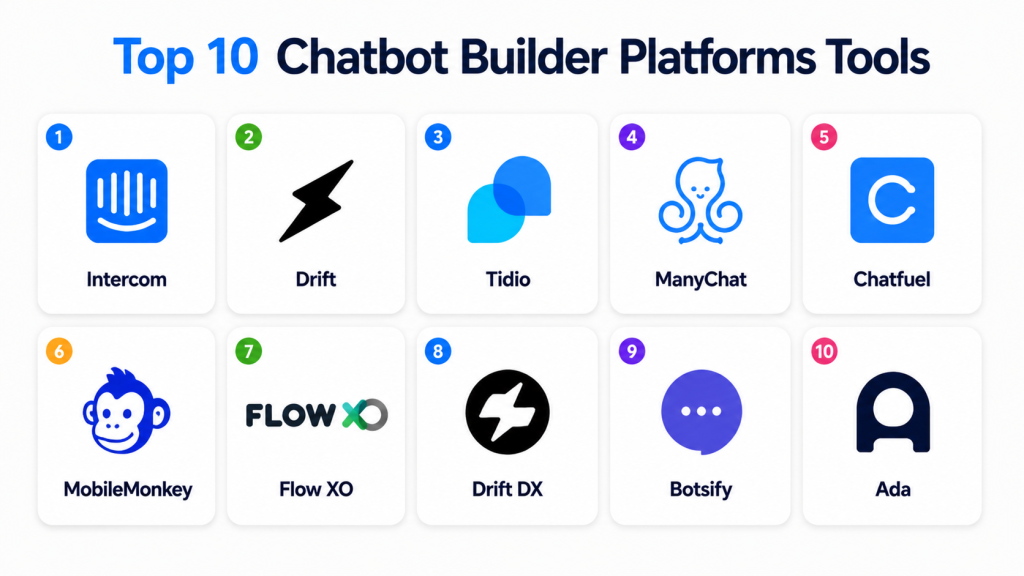
Top 10 Chatbot Builder Platforms Tools
1- Intercom
Short description: Intercom is a leading chatbot builder and customer messaging platform designed for SaaS and digital products. It combines AI-driven chatbots with live messaging to engage users, capture leads, and deliver support efficiently.
Key Features
- AI-powered chatbots and live chat
- Automated onboarding and product tours
- Behavioral targeting and segmentation
- Analytics and engagement dashboards
- Multichannel messaging (web, mobile, email)
- Integration with CRM and marketing tools
- No-code workflow builder
Pros
- Robust automation and personalization
- Scales well for SMBs to large enterprises
- Wide integration ecosystem
Cons
- Can be expensive for small teams
- Requires setup for advanced automation
- Learning curve for non-technical users
Platforms / Deployment
- Web / iOS / Android
- Cloud
Security & Compliance
- SOC 2, GDPR, SSO, MFA, encryption
Integrations & Ecosystem
Intercom connects to major CRMs, analytics, and marketing platforms.
- Salesforce, HubSpot
- Slack
- Zapier
- Segment
- Jira
Support & Community
- Extensive documentation, tutorials, and webinars
- Tiered support plans
- Active community forums
2- Drift
Short description: Drift is a conversational marketing and chatbot platform that helps companies engage users in real-time. Its AI-driven chatbots capture leads, qualify prospects, and route them efficiently to sales or support teams.
Key Features
- AI chatbots for lead capture
- Conversational landing pages
- In-product messaging campaigns
- Behavioral targeting
- Integration with CRM and marketing automation tools
- Real-time analytics and reporting
Pros
- Enhances real-time user engagement
- Automates lead capture and qualification
- Flexible messaging templates
Cons
- May be overkill for small businesses
- Learning curve for marketing teams
- Some integrations require premium plans
Platforms / Deployment
- Web / iOS / Android
- Cloud
Security & Compliance
- SOC 2, GDPR, encryption, SSO
Integrations & Ecosystem
- Salesforce, HubSpot, Marketo
- Slack, Zoom
- Zapier
Support & Community
- Knowledge base, tutorials
- Enterprise support tiers
- Active user forums
3- Tidio
Short description: Tidio provides chatbots and live chat for SMBs, with easy setup and AI-driven automation. It is particularly popular for e-commerce businesses looking to engage visitors, provide support, and increase conversions.
Key Features
- AI chatbot with prebuilt templates
- Live chat functionality
- Email and Messenger integration
- Visitor tracking and segmentation
- Automation workflows
- Analytics dashboards
Pros
- Quick setup for small businesses
- Affordable pricing tiers
- Multichannel support
Cons
- Limited advanced automation for large enterprises
- Fewer integrations than larger competitors
- Basic analytics features
Platforms / Deployment
- Web / iOS / Android
- Cloud
Security & Compliance
- Not publicly stated
Integrations & Ecosystem
- Shopify, WordPress
- Zapier
- Mailchimp
Support & Community
- Email support and documentation
- Community forums limited
4- ManyChat
Short description: ManyChat focuses on social media and Messenger-based chatbots. It helps marketers automate communication, run campaigns, and capture leads, especially for SMBs and e-commerce brands.
Key Features
- Messenger and Instagram chatbot
- SMS marketing automation
- Campaign builder with templates
- Segmentation and targeting
- Analytics dashboards
Pros
- Strong focus on social engagement
- No-code campaign building
- Affordable for small businesses
Cons
- Limited web in-app messaging
- Fewer enterprise features
- Integration options narrower
Platforms / Deployment
- Web
- Cloud
Security & Compliance
- Not publicly stated
Integrations & Ecosystem
- Shopify, Mailchimp, Zapier
- Facebook Ads integration
Support & Community
- Tutorials, email support
- Active social community
5- Chatfuel
Short description: Chatfuel provides a no-code chatbot builder for Facebook Messenger and Instagram. It targets marketers and SMBs who want automated social media engagement without programming knowledge.
Key Features
- AI chatbot builder
- Prebuilt templates for campaigns
- Audience segmentation
- Analytics and reporting
- Automated messaging flows
Pros
- Simple, intuitive interface
- Quick deployment on social platforms
- Prebuilt templates save time
Cons
- Limited omnichannel messaging
- Not ideal for enterprise-level automation
- Advanced AI features limited
Platforms / Deployment
- Web
- Cloud
Security & Compliance
- Not publicly stated
Integrations & Ecosystem
- Shopify, Zapier, Google Sheets
Support & Community
- Documentation and tutorials
- Email support
- Community limited
6- MobileMonkey
Short description: MobileMonkey offers AI chatbots for websites, Messenger, and SMS marketing. It helps businesses capture leads, engage users, and deliver automated customer support across multiple channels.
Key Features
- Multichannel chatbot deployment
- AI-driven conversation automation
- Lead capture forms and surveys
- Segmentation and targeting
- Analytics dashboards
Pros
- Versatile multi-platform messaging
- Marketing automation features
- Affordable for SMBs
Cons
- Complexity for non-marketing teams
- Limited enterprise-grade analytics
- Some advanced features require higher plans
Platforms / Deployment
- Web / iOS / Android
- Cloud
Security & Compliance
- Not publicly stated
Integrations & Ecosystem
- CRM integrations
- Email marketing platforms
- Zapier
Support & Community
- Email and chat support
- Tutorials and knowledge base
7- Flow XO
Short description: Flow XO is a cloud-based chatbot platform that supports multiple messaging channels and provides workflow automation. It is suitable for SMBs and digital agencies.
Key Features
- Multi-platform chatbots (web, Messenger, Slack)
- Workflow automation
- Analytics and reporting
- Integration with over 100 services
- Prebuilt templates
Pros
- Flexible for multiple messaging channels
- Automation workflows simplify tasks
- Affordable pricing
Cons
- UI can feel dated
- Limited advanced AI features
- Learning curve for complex flows
Platforms / Deployment
- Web / iOS / Android
- Cloud
Security & Compliance
- Not publicly stated
Integrations & Ecosystem
- Slack, Zapier, Google Sheets
- CRM integrations
Support & Community
- Email support, documentation
- Community forums small
8- Drift DX
Short description: Drift DX focuses on conversational AI for sales and marketing teams, combining live chat and AI chatbots to qualify leads and drive conversions.
Key Features
- Conversational AI and live chat
- Lead routing and scoring
- Automated meeting scheduling
- Behavior-based targeting
- Analytics dashboards
Pros
- Advanced AI for lead qualification
- Seamless CRM integrations
- Real-time engagement
Cons
- Pricing suited for enterprise
- Setup may require technical expertise
- Limited multi-language support
Platforms / Deployment
- Web / iOS / Android
- Cloud
Security & Compliance
- SOC 2, GDPR, encryption
Integrations & Ecosystem
- Salesforce, HubSpot, Slack
- Zapier
Support & Community
- Enterprise support tiers
- Documentation and tutorials
9- Botsify
Short description: Botsify provides a chatbot platform for customer support, lead generation, and automation. Its drag-and-drop builder enables non-technical users to create chatbots quickly.
Key Features
- Drag-and-drop chatbot builder
- Multi-platform deployment
- AI-based conversation flows
- Analytics and reporting
- Integration with CRM and email tools
Pros
- Easy for non-technical teams
- Supports multiple platforms
- Prebuilt templates speed deployment
Cons
- Limited enterprise-level analytics
- Advanced AI features less robust
- Scaling can be challenging for large volumes
Platforms / Deployment
- Web / iOS / Android
- Cloud
Security & Compliance
- Not publicly stated
Integrations & Ecosystem
- Slack, Zapier, Shopify
- Google Sheets
Support & Community
- Email support and tutorials
- Community forums limited
10- Ada
Short description: Ada is an AI-powered chatbot platform focused on enterprise support automation. It enables brands to automate customer interactions at scale with advanced NLP and analytics.
Key Features
- AI-driven conversation automation
- Multichannel deployment (web, mobile, social)
- Analytics dashboards and reporting
- Personalization and segmentation
- Integration with CRM and support systems
Pros
- Scales effectively for enterprise support
- Strong AI and NLP capabilities
- Multichannel coverage
Cons
- Premium pricing
- Learning curve for teams
- Implementation may require technical support
Platforms / Deployment
- Web / iOS / Android
- Cloud
Security & Compliance
- SOC 2, GDPR, encryption, SSO
Integrations & Ecosystem
- Salesforce, Zendesk, Slack
- APIs for custom workflows
Support & Community
- Enterprise support plans
- Tutorials and onboarding
- Active enterprise community
Comparison Table (Top 10)
| Tool Name | Best For | Platform(s) Supported | Deployment | Standout Feature | Public Rating |
|---|---|---|---|---|---|
| Intercom | SaaS & customer messaging | Web/iOS/Android | Cloud | AI chatbots & automation | N/A |
| Drift | Conversational marketing | Web/iOS/Android | Cloud | AI chatbots & lead qualification | N/A |
| Tidio | SMB & e-commerce | Web/iOS/Android | Cloud | Quick AI setup for support | N/A |
| ManyChat | Social media engagement | Web | Cloud | Messenger & Instagram automation | N/A |
| Chatfuel | Social chatbot campaigns | Web | Cloud | No-code Messenger bots | N/A |
| MobileMonkey | Multi-platform marketing | Web/iOS/Android | Cloud | Omnichannel messaging | N/A |
| Flow XO | SMB & agencies | Web/iOS/Android | Cloud | Workflow automation | N/A |
| Drift DX | Sales & lead qualification | Web/iOS/Android | Cloud | Conversational AI | N/A |
| Botsify | Customer support automation | Web/iOS/Android | Cloud | Drag-and-drop builder | N/A |
| Ada | Enterprise support | Web/iOS/Android | Cloud | AI-driven NLP automation | N/A |
Evaluation & Scoring
| Tool Name | Core (25%) | Ease (15%) | Integrations (15%) | Security (10%) | Performance (10%) | Support (10%) | Value (15%) | Weighted Total (0–10) |
|---|---|---|---|---|---|---|---|---|
| Intercom | 9 | 8 | 9 | 8 | 9 | 8 | 7 | 8.5 |
| Drift | 8 | 7 | 7 | 8 | 8 | 7 | 7 | 7.6 |
| Tidio | 7 | 9 | 6 | 7 | 7 | 7 | 8 | 7.5 |
| ManyChat | 7 | 9 | 6 | 7 | 7 | 7 | 8 | 7.3 |
| Chatfuel | 7 | 9 | 6 | 7 | 7 | 6 | 8 | 7.2 |
| MobileMonkey | 8 | 8 | 7 | 7 | 8 | 7 | 7 | 7.5 |
| Flow XO | 7 | 8 | 7 | 7 | 7 | 7 | 7 | 7.2 |
| Drift DX | 8 | 7 | 7 | 8 | 8 | 7 | 7 | 7.5 |
| Botsify | 7 | 8 | 6 | 7 | 7 | 7 | 7 | 7.0 |
| Ada | 9 | 7 | 8 | 9 | 8 | 8 | 6 | 7.9 |
Interpretation: Scores are comparative. Higher weighted totals indicate stronger overall capability across core features, integrations, usability, and enterprise readiness. Buyer priorities may shift scores depending on deployment scale and automation needs.
Which Chatbot Builder Platform Tool Is Right for You?
Solo / Freelancer
Use lightweight tools like Tidio, ManyChat, or Chatfuel for quick deployment and social media engagement without coding.
SMB
Intercom and MobileMonkey balance automation, multi-channel support, and lead capture for growing teams.
Mid-Market
Drift, Flow XO, or Botsify offer more robust AI automation, workflows, and integrations for product and marketing teams.
Enterprise
Intercom, Ada, and Drift DX provide advanced NLP, compliance, analytics, and multichannel capabilities suitable for large-scale operations.
Budget vs Premium
Small businesses benefit from no-code, cost-effective options like Tidio or ManyChat. Enterprises may invest in Ada or Intercom for AI, analytics, and scalability.
Feature Depth vs Ease of Use
No-code builders like Chatfuel and Tidio favor usability. Enterprise solutions like Ada offer deep functionality but require onboarding and training.
Integrations & Scalability
Enterprise-grade platforms like Intercom, Drift DX, and Ada provide API access, CRM, and analytics integrations, ensuring growth without replatforming.
Security & Compliance Needs
Platforms such as Intercom, Ada, and Drift DX comply with SOC 2 and GDPR, suitable for regulated industries and enterprise deployments.
Frequently Asked Questions (FAQs)
1- What pricing models do chatbot builders offer?
Most platforms use subscription pricing based on active users, messages, or features. Some offer free tiers for small businesses with limited functionality.
2- How long does it take to implement a chatbot?
Simple bots can be deployed in hours using templates. Enterprise-grade chatbots with complex workflows may take several weeks.
3- Can these chatbots support multiple platforms?
Yes, leading platforms support web, mobile, Messenger, WhatsApp, Instagram, and SMS channels to reach users everywhere.
4- Are AI capabilities necessary?
AI improves natural conversations and lead qualification, but simple rule-based bots may suffice for FAQs or basic support.
5- How do I measure chatbot effectiveness?
Track engagement, resolution rates, lead capture, conversion, and customer satisfaction metrics to evaluate ROI.
6- Can chatbots integrate with CRM or marketing tools?
Yes, most platforms offer integrations with CRMs, email platforms, analytics, and helpdesk systems for workflow automation.
7- What security features are important?
Look for SSO, encryption, audit logs, RBAC, and compliance with SOC 2, GDPR, or ISO standards, especially for enterprise usage.
8- Can I migrate between chatbot platforms?
Migration is possible but requires exporting conversation flows, data, and integrations. Evaluate export features before selecting a tool.
9- Do these tools support multilingual bots?
Many platforms now provide multilingual NLP capabilities, enabling global engagement and localization.
10- What common mistakes should I avoid?
- Overcomplicating flows without testing
- Ignoring user segmentation and personalization
- Failing to track analytics
- Not planning for multi-channel deployment
- Overestimating AI without training data
Conclusion
Chatbot builder platforms are essential for modern customer engagement, lead generation, and support automation. The “best” platform depends on team size, user base, budget, and required AI sophistication. Small teams and SMBs can leverage Tidio, ManyChat, or Chatfuel for cost-effective, rapid deployment, while mid-market and enterprise organizations benefit from Intercom, Ada, or Drift DX for advanced AI, analytics, and compliance. Buyers should shortlist , run a pilot to validate integrations, automation performance, and security, then scale deployment strategically.
