Introduction
Outbound email sequencing tools are specialized software platforms that automate the process of sending a series of personalized emails to prospects over time. Instead of manual outreach, these platforms allow sales and marketing teams to schedule multi-step campaigns, track engagement, and trigger follow-ups based on recipient behavior. By automating sequences, teams can increase prospect engagement, improve response rates, and focus on high-value conversations rather than repetitive tasks.
In , outbound email remains a critical channel for B2B sales. Prospects receive hundreds of emails daily, making intelligent sequencing and personalization essential. Modern sequencing tools leverage AI to optimize send times, personalize messages at scale, integrate with CRM and engagement platforms, and provide detailed analytics to refine outreach strategies.
Real-World Use Cases:
- Prospect engagement: Structured multi-step sequences that gradually nurture cold leads.
- Follow-up automation: Automatic reminders and follow-ups triggered by opens, clicks, or replies.
- Sales cadences: Consistent outreach patterns for SDRs and BDRs to engage target accounts.
- Lead qualification: Scoring and prioritization of responses to focus efforts on high-potential leads.
- Integration with CRM: Seamless syncing of sequences, responses, and engagement data into sales systems.
What Buyers Should Evaluate:
- Multi-step sequence flexibility and branching logic
- AI-driven personalization and send-time optimization
- Engagement tracking (opens, clicks, replies)
- CRM and tool integrations
- Scalability for team size and volume
- Ease of use and template management
- Reporting and analytics depth
- Compliance and opt-out management
- Security, encryption, and access controls
Best for: SDRs, BDRs, revenue operations, and sales teams in SMB, mid-market, and enterprise environments seeking to automate outreach at scale.
Not ideal for: Teams that only handle inbound leads or rely on manual, highly personalized email outreach, or organizations without a CRM infrastructure.
Key Trends in Outbound Email Sequencing Tools
- AI-driven personalization: Platforms use AI to recommend messaging, optimize send times, and adjust sequences automatically.
- Behavior-triggered workflows: Sequences adapt based on opens, clicks, replies, and website visits.
- Multi-channel cadences: Integration with SMS, LinkedIn, and call tasks alongside email.
- CRM and engagement system integration: Tight syncing ensures accurate tracking and analytics.
- Predictive analytics and scoring: Machine learning models prioritize leads based on engagement likelihood.
- Privacy-first design: Compliance with GDPR, CCPA, and consent-based outreach.
- Template optimization: A/B testing, dynamic tokens, and content recommendations.
- Real-time notifications: Alerts for replies, bounces, and sequence progress.
- Scalable sequencing for teams: Ability to manage hundreds or thousands of sequences simultaneously.
- Automation of repetitive tasks: Minimizes manual follow-ups, reminders, and scheduling.
How We Selected These Tools (Methodology)
- Assessed market adoption and overall mindshare across sales teams.
- Evaluated feature completeness: sequence flexibility, personalization, analytics, AI capabilities.
- Reviewed CRM and platform integrations for seamless workflows.
- Considered automation and scalability, including multi-user and multi-sequence support.
- Analyzed security and compliance features, including encryption, access control, and consent management.
- Evaluated ease of use: template creation, onboarding, and campaign management.
- Looked at support and community strength, including documentation, customer service, and user forums.
- Prioritized 2026 relevance: AI enhancements, privacy compliance, and advanced analytics.
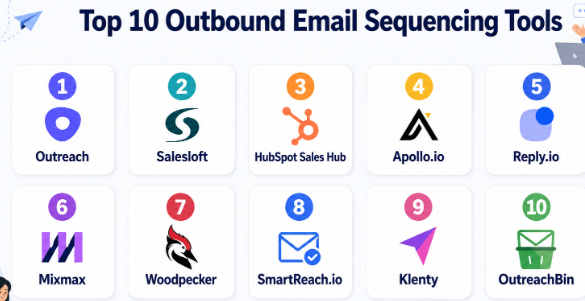
Top 10 Outbound Email Sequencing Tools
#1 — Outreach
Short description: Outreach is a leading sales engagement platform that automates outbound sequences across email, calls, and multi-touch cadences. Its strength lies in predictive analytics, engagement tracking, and workflow automation for SDR and BDR teams. Outreach is ideal for enterprise and mid-market organizations seeking structured outreach at scale.
Key Features
- Multi-channel sequences: email, calls, SMS
- Predictive engagement analytics
- AI-recommended messaging
- Real-time activity dashboards
- CRM syncing (Salesforce, HubSpot)
- Automated follow-ups and reminders
Pros
- Scales to hundreds of sequences
- Rich analytics for pipeline optimization
Cons
- Steep learning curve for advanced workflows
- Premium pricing for smaller teams
Platforms / Deployment
- Web / iOS / Android
- Cloud
Security & Compliance
- SSO/SAML, encryption, RBAC
- Not publicly stated for certifications
Integrations & Ecosystem
Outreach integrates with major CRMs, dialers, and analytics platforms.
- Salesforce
- HubSpot
- Microsoft Dynamics
- Email clients and calendars
Support & Community
Tiered support, documentation, and an active user community for best practices.
#2 — Salesloft
Short description: Salesloft provides multi-touch email sequencing, cadence management, and analytics for outbound prospecting. It is particularly popular among SDR teams and mid-market enterprises seeking advanced automation with AI-based insights.
Key Features
- Sequencing across email, voice, and social
- AI personalization recommendations
- Engagement tracking and dashboards
- CRM synchronization
- Automated follow-ups
- A/B testing for templates
Pros
- Flexible, multi-channel cadences
- Strong reporting and analytics
Cons
- Requires configuration for optimal personalization
- Advanced analytics require enterprise tiers
Platforms / Deployment
- Web / iOS / Android
- Cloud
Security & Compliance
- Encryption and role-based access controls
- Not publicly stated for certifications
Integrations & Ecosystem
Salesloft integrates with CRM, marketing, and engagement platforms.
- Salesforce
- HubSpot
- Outreach and engagement tools
Support & Community
Documentation, onboarding, and active customer support.
#3 — HubSpot Sales Hub
Short description: HubSpot Sales Hub enables sequence automation for SMB and mid-market teams. Integrated with HubSpot CRM, it simplifies outreach management, contact enrichment, and analytics for inbound and outbound campaigns.
Key Features
- Email sequencing and automation
- CRM-native contact and company enrichment
- Task queues and reminders
- Analytics dashboards
- Meeting scheduling automation
- Personalization tokens
Pros
- Easy adoption for HubSpot users
- Unified marketing and sales workflows
Cons
- Advanced features require higher-tier plans
- Less sophisticated AI personalization than specialized tools
Platforms / Deployment
- Web / iOS / Android
- Cloud
Security & Compliance
- Role permissions and encryption
- Not publicly stated for certifications
Integrations & Ecosystem
Deep integration with HubSpot CRM, marketing automation, and analytics.
- HubSpot CRM
- Marketing automation tools
- Chat tools
Support & Community
Documentation, academy training, and forums.
#4 — Apollo.io
Short description: Apollo.io combines lead discovery with automated outbound email sequences. Teams can enrich leads, create sequences, and track engagement within a unified platform. It is ideal for small to mid-market sales teams seeking both data and automation in one solution.
Key Features
- Contact discovery and enrichment
- Email and call sequence automation
- Engagement analytics and dashboards
- CRM sync and workflow automation
- Predictive alerts for engagement
Pros
- Unified discovery and sequencing platform
- Affordable and fast to deploy
Cons
- Depth of advanced analytics may be limited
- Data accuracy varies by region
Platforms / Deployment
- Web / iOS / Android
- Cloud
Security & Compliance
- Encryption and API key protections
- Not publicly stated for certifications
Integrations & Ecosystem
CRM integration and automation workflows supported.
- Salesforce
- HubSpot
- Outreach tools
Support & Community
Onboarding resources and support teams available.
#5 — Reply.io
Short description: Reply.io automates multi-channel sequences including email, voice, SMS, and LinkedIn outreach. It is used for structured SDR cadences, personalization, and engagement tracking.
Key Features
- Multi-channel outreach
- Sequence scheduling and automation
- Template and personalization engine
- Analytics and reporting
- CRM sync
Pros
- Flexible sequencing
- Real-time engagement tracking
Cons
- Requires setup for multi-channel
- Voice integration less mature
Platforms / Deployment
- Web / iOS / Android
- Cloud
Security & Compliance
- Encryption and access control
- Not publicly stated
Integrations & Ecosystem
Works with CRM, analytics, and automation platforms.
Support & Community
Documentation, onboarding, and tiered support.
#6 — Mixmax
Short description: Mixmax focuses on inbox-centric outbound sequencing, with email automation, real-time notifications, and engagement tracking. It is ideal for small teams relying heavily on email.
Key Features
- Email sequences and automation
- Calendar scheduling
- Real-time notifications
- Template management
- CRM integration
Pros
- Easy for email-centric workflows
- Quick adoption
Cons
- Limited multi-channel capabilities
- Less suited for enterprise sequencing
Platforms / Deployment
- Web / iOS / Android
- Cloud
Security & Compliance
- Encryption and role permissions
- Not publicly stated
Integrations & Ecosystem
CRM and email integrations.
- Gmail, Outlook
- Salesforce
- HubSpot
Support & Community
Documentation and onboarding resources.
#7 — Woodpecker
Short description: Woodpecker automates cold email sequences and follow-ups. It’s aimed at SMBs and startups seeking simple yet effective outbound automation.
Key Features
- Email sequences
- Follow-up automation
- Personalization tokens
- Analytics
- CRM integration
Pros
- Focused on email deliverability
- Easy to configure
Cons
- Email-only workflow
- Limited analytics
Platforms / Deployment
- Web
- Cloud
Security & Compliance
- Encryption and API key access
- Not publicly stated
Integrations & Ecosystem
Integrates with CRM and email platforms.
Support & Community
Documentation and support channels.
#8 — SmartReach.io
Short description: SmartReach.io provides multi-channel outbound sequencing across email, calls, and SMS, with deliverability optimization and engagement analytics. Suitable for mid-market teams needing affordable automation.
Key Features
- Multi-channel sequencing
- Open/reply tracking
- CRM sync
- Domain warm-up tools
- Analytics dashboards
Pros
- Affordable multi-channel solution
- Deliverability-focused
Cons
- Less enterprise analytics depth
- Smaller support community
Platforms / Deployment
- Web
- Cloud
Security & Compliance
- Encryption and role controls
- Not publicly stated
Integrations & Ecosystem
Syncs with CRM and email systems.
Support & Community
Documentation and support provided.
#9 — Klenty
Short description: Klenty offers multi-touch email and call sequencing for SMB and mid-market teams, with CRM sync, analytics, and task automation.
Key Features
- Email and call sequences
- Engagement tracking
- CRM sync
- Templates and personalization
- Analytics dashboards
Pros
- Balanced feature set for growing teams
- Easy automation setup
Cons
- Advanced enterprise features limited
- Analytics depth varies
Platforms / Deployment
- Web / iOS / Android
- Cloud
Security & Compliance
- Encryption and access control
- Not publicly stated
Integrations & Ecosystem
CRM and workflow integrations available.
Support & Community
Documentation and support tiers provided.
#10 — OutreachBin
Short description: OutreachBin is a lightweight, email-focused sequencing tool ideal for startups and small teams, automating follow-ups and tracking engagement.
Key Features
- Email sequence automation
- Follow-ups and retry logic
- Open/reply tracking
- Analytics dashboards
Pros
- Simple and easy to deploy
- Affordable for small teams
Cons
- Limited multi-channel support
- Minimal integrations
Platforms / Deployment
- Web
- Cloud
Security & Compliance
- Standard encryption
- Not publicly stated
Integrations & Ecosystem
Basic CRM and email integrations.
Support & Community
Documentation and email support.
Comparison Table (Top 10)
| Tool Name | Best For | Platform(s) Supported | Deployment | Standout Feature | Public Rating |
|---|---|---|---|---|---|
| Outreach | Enterprise outbound automation | Web, iOS, Android | Cloud | Predictive analytics | N/A |
| Salesloft | SDR teams | Web, iOS, Android | Cloud | Multi-channel sequences | N/A |
| HubSpot Sales Hub | CRM-native sequences | Web, iOS, Android | Cloud | Integrated CRM workflows | N/A |
| Apollo.io | Discovery + sequences | Web, iOS, Android | Cloud | Combined discovery & outreach | N/A |
| Reply.io | Multi-channel sequencing | Web, iOS, Android | Cloud | Flexible sequences | N/A |
| Mixmax | Inbox-centric automation | Web, iOS, Android | Cloud | Email-centric sequencing | N/A |
| Woodpecker | SMB email automation | Web | Cloud | Deliverability focus | N/A |
| SmartReach.io | Affordable multi-channel | Web | Cloud | Domain warmup & tracking | N/A |
| Klenty | SMB/Mid-market outreach | Web, iOS, Android | Cloud | Task automation & sequences | N/A |
| OutreachBin | Small team email sequences | Web | Cloud | Lightweight & simple | N/A |
Evaluation & Scoring
| Tool Name | Core Features | Ease | Integrations | Security | Performance | Support | Value | Weighted Total |
|---|---|---|---|---|---|---|---|---|
| Outreach | 9 | 7 | 8 | 8 | 9 | 8 | 7 | 8.2 |
| Salesloft | 8 | 8 | 8 | 7 | 8 | 7 | 7 | 7.8 |
| HubSpot Sales Hub | 8 | 9 | 9 | 8 | 8 | 8 | 8 | 8.4 |
| Apollo.io | 8 | 8 | 8 | 7 | 8 | 7 | 7 | 7.8 |
| Reply.io | 8 | 8 | 8 | 7 | 8 | 7 | 7 | 7.8 |
| Mixmax | 7 | 9 | 7 | 7 | 7 | 8 | 8 | 7.8 |
| Woodpecker | 6 | 9 | 7 | 7 | 7 | 8 | 8 | 7.6 |
| SmartReach.io | 7 | 8 | 8 | 7 | 8 | 7 | 8 | 7.9 |
| Klenty | 8 | 8 | 8 | 7 | 8 | 7 | 7 | 7.9 |
| OutreachBin | 6 | 9 | 7 | 7 | 7 | 7 | 8 | 7.5 |
Which Outbound Email Sequencing Tool Is Right for You?
Solo / Freelancer
- Mixmax, Woodpecker, or OutreachBin provide lightweight, easy-to-use email automation without complex setup.
SMB
- SmartReach.io, Reply.io, or Klenty balance multi-channel sequencing with ease of adoption.
Mid-Market
- Salesloft, Apollo.io, and HubSpot Sales Hub provide deeper analytics, multi-touch sequences, and CRM synchronization.
Enterprise
- Outreach offers large-scale orchestration, predictive analytics, and workflow governance for enterprise teams.
Budget vs Premium
- Budget: Mixmax, Woodpecker, OutreachBin.
- Premium: Outreach, Salesloft, HubSpot Sales Hub.
Feature Depth vs Ease of Use
- Depth: Outreach, Salesloft, Apollo.io
- Ease: Mixmax, HubSpot Sales Hub, Woodpecker
Integrations & Scalability
- Enterprise teams should prioritize tools with strong CRM, engagement, and analytics integrations like Outreach, Salesloft, HubSpot Sales Hub.
Security & Compliance Needs
- Verify encryption, access control, audit logs, and privacy compliance for regulated industries.
Frequently Asked Questions (FAQs)
1– How do pricing models work?
Subscription tiers are typically based on users, sequences, engagement volume, and feature access.
2– How long is onboarding?
Basic email sequences can be set up in days; complex multi-channel workflows may take weeks.
3– Are multi-channel sequences supported?
Yes — many tools support email, calls, SMS, and social messaging, but coverage varies.
4– How secure are these platforms?
Most offer encryption, access control, and role-based permissions. Verify compliance for regulated industries.
5– What integrations are essential?
CRM, email, calendar, engagement, and analytics integrations are critical for automated sequences.
6– Can AI personalize outreach?
Yes — AI can recommend send times, templates, and follow-up triggers.
7– How is sequence performance measured?
Metrics include opens, clicks, replies, conversions, and overall pipeline influence.
8– Do these tools help with lead scoring?
They can feed engagement signals into CRM or scoring models for prioritization.
9– Can I use without a CRM?
Yes, some tools function standalone, but CRM integration enhances tracking and ROI measurement.
10– Can I run large-scale campaigns?
Enterprise tools like Outreach and Salesloft scale sequences across hundreds of reps and thousands of prospects.
Conclusion
Outbound email sequencing tools allow teams to automate repetitive outreach, prioritize high-value prospects, and increase engagement efficiency. HubSpot Sales Hub, Mixmax, and Woodpecker provide ease-of-use for small teams, while Salesloft, Apollo.io, and Reply.io deliver strong mid-market functionality. Enterprises gain maximum impact with Outreach, offering predictive analytics and advanced workflows. To choose the right tool, shortlist 2–3 platforms aligned with your workflow, test sequences, validate integrations and compliance, and scale the solution once performance metrics demonstrate efficiency and ROI.
