Introduction
Freelance Marketplace Platforms are digital platforms that connect independent professionals with clients seeking project‑based, contract, or gig work. These marketplaces have become crucial components of the modern workforce, empowering freelancers to showcase skills, find work opportunities, and manage payments, while enabling companies to source talent flexibly without committing to full‑time hires.
In , freelance platforms are more central than ever as remote and hybrid work models proliferate across industries, economic unpredictability drives talent diversification, and organizations seek specialized skills on demand. These platforms are no longer simple job boards; modern systems include built‑in collaboration tools, escrow payments, skill assessments, AI‑driven matching, dispute resolution, and integrated work tracking.
Real‑world use cases include:
- Small business support: Hiring graphic designers, web developers, and content creators for short‑term projects.
- Tech teams augmentation: Sourcing specialized developers, data scientists, or DevOps experts for defined sprints.
- Creative agencies: Engaging writers, videographers, and animators for campaign needs.
- Enterprise consulting: Securing legal, financial, or regulatory specialists for project review.
- Global gig economy participation: Freelancers worldwide accessing work without location constraints.
What buyers should evaluate:
- Breadth and quality of talent pool
- Fee structures and pricing transparency
- Payment security and escrow services
- Skill verification and rating systems
- Project management and collaboration tools
- Dispute resolution mechanisms
- Integration with invoicing and accounting systems
- Mobile accessibility and real‑time notifications
- AI‑enhanced matching and recommendation engines
- Analytics for spend, performance, and work history
Best for: Startups, SMBs, enterprise teams needing flexible resources, creative agencies, solopreneurs, and freelance professionals seeking clients.
Not ideal for: Organizations requiring long‑term, in‑house team building or deeply integrated human resource systems without standalone freelance workflows.
Key Trends in Freelance Marketplace Platforms
- AI‑driven talent matching that considers skills, ratings, and project context.
- Skills certification and vetting to improve trust and reduce hiring risk.
- Integrated workrooms and collaboration tools for documentation, coding, and creative projects.
- Instant payouts and blockchain‑enabled finance options for secure, rapid payments.
- Niche and industry‑specific marketplaces catering to specialized sectors (e.g., legal, medical writing).
- Subscription and retainer options for ongoing engagements.
- Embedded portfolio and reputation systems with social proof features.
- Mobile‑first platforms and real‑time communication.
- Global tax and compliance automation for international freelancers and clients.
- Data‑driven insights on spend, talent pipelines, and project outcomes.
How We Selected These Tools (Methodology)
- Market adoption and global reach
- Quality and diversity of active freelance talent
- Feature completeness (hiring workflows, payments, collaboration)
- Security and payment protections (escrow, dispute management)
- AI or data enhancements for matching and recommendations
- Integrations with business software (invoicing, PM, HR tools)
- User experience for both clients and freelancers
- Support services and community engagement
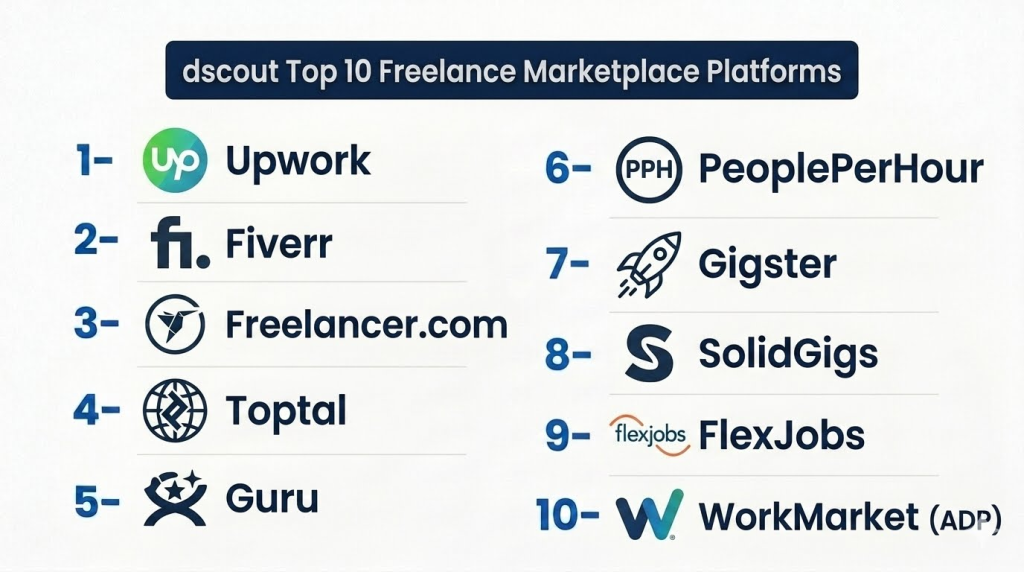
Top 10 Freelance Marketplace Platforms
1- Upwork
Short description: Upwork is one of the largest and most recognized freelance marketplaces, connecting businesses of all sizes with independent professionals across technology, design, writing, marketing, and more.
Key Features
- Broad talent categories from entry to expert level
- AI‑assisted job and talent recommendations
- Escrow and secure payment processing
- Time tracking and work diaries
- Ratings, reviews, portfolio displays
- Contract and milestone management
Pros
- Massive talent pool and global reach
- Robust work tracking & payment security
Cons
- Service fees can be high for frequent users
- Competitive bidding pressure may affect pricing
Platforms / Deployment
- Web / iOS / Android / Cloud
Security & Compliance
Not publicly stated
Integrations & Ecosystem
- Project management tools
- Invoicing systems
- Calendar and notifications
- Reporting dashboards
Support & Community
24/7 support portal, help guides, and community forums
2- Fiverr
Short description: Fiverr specializes in “gig” style freelancing where freelancers offer defined services (“gigs”) at set prices, suitable for quick deliverables like logos, voiceovers, copywriting, and small digital tasks.
Key Features
- Gig marketplace with clear pricing tiers
- Seller level badges for quality signaling
- Buyer protection with milestone releases
- Optional gig extras and upsells
- Custom offer creation
- Messaging and project files exchange
Pros
- Easy to browse and purchase services
- Great for quick, well‑scoped tasks
Cons
- Quality varies due to open marketplace model
- Less suitable for long‑term engagements
Platforms / Deployment
- Web / iOS / Android / Cloud
Security & Compliance
Not publicly stated
Integrations & Ecosystem
- Messaging tools
- Order tracking
- PDF and document attachments
- Rating and revision tools
Support & Community
Support tickets, help library, and seller community
3- Freelancer.com
Short description: Freelancer.com is a global marketplace offering both contest‑based and project‑based hiring models across tech, marketing, design, and more.
Key Features
- Project hiring and contests
- Milestone payments and escrow
- Advanced search filters
- Skill tests and certificates
- Bid management
- Communication tracking
Pros
- Multiple engagement formats (contest + project)
- Extensive global reach
Cons
- Fee structure can be complex
- Mixed quality control
Platforms / Deployment
- Web / iOS / Android / Cloud
Security & Compliance
Not publicly stated
Integrations & Ecosystem
- Payment processors
- Messaging suite
- Project tracking
Support & Community
Help center, dispute assistance, and active forums
4- Toptal
Short description: Toptal is a curated talent marketplace focusing on elite freelance developers, designers, finance experts, and project managers for high‑impact projects.
Key Features
- Rigorous talent vetting
- Dedicated client success support
- Long‑term and project‑based engagement
- Time and deliverables tracking
- High‑quality talent profiles
- Priority matching
Pros
- Top‑tier talent with verified expertise
- Personalized matching support
Cons
- Higher rate structure
- Best suited for mid to large budget projects
Platforms / Deployment
- Web / Cloud
Security & Compliance
Not publicly stated
Integrations & Ecosystem
- Project tracking
- Workflow integration points
- Client success dashboard
Support & Community
Premium support, onboarding, and talent engagement
5- Guru
Short description: Guru connects businesses and freelancers with workspace features, secure payments, and collaboration tools focused on ongoing professional relationships.
Key Features
- Workrooms for project collaboration
- SafePay escrow service
- Flexible payment methods (hourly, task, recurring)
- Freelancer portfolios
- Team dashboards
- Communication and doc sharing
Pros
- Flexible project and payment structures
- Built‑in collaboration features
Cons
- Smaller talent pool vs bigger marketplaces
- Search interface can feel outdated
Platforms / Deployment
- Web / Cloud
Security & Compliance
Not publicly stated
Integrations & Ecosystem
- Messaging
- File sharing
- Payment gateways
Support & Community
Help desk, user guides, and community resources
6- PeoplePerHour
Short description: PeoplePerHour focuses on project and hourly hiring with a strong presence in design, development, and marketing gigs.
Key Features
- Hourlies and project proposals
- Escrow payments
- Talent profiles and work samples
- Recommendation engine
- Client dashboard and reporting
Pros
- Clear hourly pricing support
- Quality profiling system
Cons
- Smaller global scale than major marketplaces
- Some category coverage limits
Platforms / Deployment
- Web / iOS / Android / Cloud
Security & Compliance
Not publicly stated
Integrations & Ecosystem
- Messaging tools
- Notifications
- Payment handling
Support & Community
Support portal, tutorials, and freelancer community
7- Gigster
Short description: Gigster specializes in building engineered software solutions by teaming top freelance developers, designers, and product managers into curated teams.
Key Features
- Team assembly for complex projects
- Project managers and delivery oversight
- Fixed‑price and milestone payments
- Quality assurance workflows
- Client success support
Pros
- Built for end‑to‑end software delivery
- Managed teams reduce coordination burden
Cons
- Premium pricing
- Less agility for small tasks
Platforms / Deployment
- Web / Cloud
Security & Compliance
Not publicly stated
Integrations & Ecosystem
- Project tracking
- Communication tools
- Quality dashboards
Support & Community
Dedicated delivery and support teams
8- SolidGigs
Short description: SolidGigs curates freelance job leads and delivers them to subscribers, focusing on lead discovery rather than hosting a full marketplace.
Key Features
- Daily freelance lead curation
- Job filtering by category and rate
- Email and dashboard alerts
- Resource guides and pitch templates
Pros
- Saves time on job discovery
- Curated opportunities for freelancers
Cons
- Not a traditional marketplace
- Subscription only
Platforms / Deployment
- Web / Cloud / Email alerts
Security & Compliance
Not publicly stated
Integrations & Ecosystem
- Email alerts
- Dashboard summaries
- Category filters
Support & Community
Support resources and subscriber FAQs
9- FlexJobs
Short description: FlexJobs focuses on vetted remote, part‑time, freelance, and flexible jobs, offering quality assurance and scam‑free listings.
Key Features
- Curated, vetted job postings
- Remote and flexible work emphasis
- Skill category filtering
- Career coaching resources
- Resume review services
Pros
- High trust and quality control
- Focus on remote work trends
Cons
- Subscription required
- Not a direct bid‑style marketplace
Platforms / Deployment
- Web / Cloud
Security & Compliance
Not publicly stated
Integrations & Ecosystem
- Job alerts
- Career tools
- Filtering dashboards
Support & Community
Career support and job search resources
10- WorkMarket (ADP)
Short description: WorkMarket by ADP is an enterprise‑grade freelance management platform that supports large‑scale contingent workforce programs, compliance automation, and payments.
Key Features
- Enterprise talent management
- Compliance and risk tools
- Billing and payment automation
- Talent pools and onboarding
- Reporting and analytics
- Integration with HR systems
Pros
- Built for large enterprise contingent work
- Strong compliance and automation tools
Cons
- Enterprise price point
- Requires HR/IT integration effort
Platforms / Deployment
- Web / Cloud / Enterprise
Security & Compliance
Not publicly stated
Integrations & Ecosystem
- HRIS and payroll
- Analytics and reporting stacks
- Workflow systems
Support & Community
Enterprise support and professional services
Comparison Table (Top 10)
| Tool Name | Best For | Platform(s) Supported | Deployment | Standout Feature | Public Rating |
|---|---|---|---|---|---|
| Upwork | Broad freelance hiring | Web, iOS, Android | Cloud | Large talent pool | N/A |
| Fiverr | Gig‑based quick tasks | Web, iOS, Android | Cloud | Gig pricing tiers | N/A |
| Freelancer.com | Contests + projects | Web, iOS, Android | Cloud | Contest options | N/A |
| Toptal | Elite expert freelance | Web, Cloud | Cloud | Curated top talent | N/A |
| Guru | Ongoing collab & workrooms | Web, Cloud | Cloud | Flexible payment types | N/A |
| PeoplePerHour | Hourly/project hiring | Web, iOS, Android | Cloud | Hourly pricing focus | N/A |
| Gigster | Managed software teams | Web, Cloud | Cloud | Managed delivery | N/A |
| SolidGigs | Lead curation | Web, Cloud | Cloud | Curated leads | N/A |
| FlexJobs | Vetted remote/flex jobs | Web, Cloud | Cloud | Scam‑free vetted jobs | N/A |
| WorkMarket | Enterprise workforce | Web, Cloud | Cloud | Compliance & automation | N/A |
Evaluation & Scoring of Freelance Marketplace Platforms
| Tool Name | Core (25%) | Ease (15%) | Integrations (15%) | Security (10%) | Performance (10%) | Support (10%) | Value (15%) | Weighted Total (0–10) |
|---|---|---|---|---|---|---|---|---|
| Upwork | 9 | 8 | 8 | 7 | 9 | 8 | 8 | 8.4 |
| Fiverr | 8 | 9 | 7 | 7 | 8 | 7 | 8 | 8.0 |
| Freelancer.com | 8 | 8 | 8 | 7 | 8 | 7 | 7 | 7.8 |
| Toptal | 9 | 7 | 7 | 7 | 9 | 8 | 7 | 8.0 |
| Guru | 8 | 7 | 7 | 7 | 8 | 7 | 7 | 7.6 |
| PeoplePerHour | 8 | 8 | 7 | 7 | 8 | 7 | 7 | 7.7 |
| Gigster | 9 | 7 | 7 | 7 | 9 | 8 | 7 | 8.0 |
| SolidGigs | 7 | 9 | 6 | 7 | 7 | 7 | 7 | 7.3 |
| FlexJobs | 8 | 8 | 7 | 8 | 8 | 8 | 7 | 7.9 |
| WorkMarket | 9 | 7 | 9 | 8 | 9 | 8 | 7 | 8.4 |
Interpretation:
- Weighted Score: Higher totals indicate strong balance across core features, ease of use, integration potential, performance, support, and value.
- Skill Match: Enterprise platforms like WorkMarket and Upwork score highly due to comprehensive tools and broad adoption.
- Gig Focus: Fiverr and SolidGigs perform well where quick tasks and lead discovery are priority.
Which Freelance Marketplace Platform Is Right for You?
Solo Freelancer
- Fiverr, SolidGigs, and Upwork are ideal for early career or niche service providers.
- SolidGigs excels at lead discovery for proactive freelancers.
SMB / Small Business
- Upwork, PeoplePerHour, and Freelancer.com offer flexible budgets and talent ranges.
- Project type and budget can guide platform choice.
Mid‑Market
- Toptal and Gigster provide curated talent-quality balance with strong project outcomes.
- FlexJobs is excellent for vetted remote roles.
Enterprise
- WorkMarket and Upwork Enterprise support compliance, automation, and HR integrations for large contingent workforces.
Budget vs Premium
- Budget users benefit from Fiverr and PeoplePerHour for smaller tasks.
- Premium teams or high‑impact project owners leverage Toptal, Gigster, or WorkMarket.
Feature Depth vs Ease of Use
- Upwork and WorkMarket offer the deepest features.
- Fiverr and SolidGigs prioritize usability and speed.
Integrations & Scalability
- Platforms like WorkMarket, Upwork Enterprise, and Toptal integrate best with corporate workflows.
Security & Compliance Needs
- Enterprises should prioritize platforms with strong dispute resolution, secure payments, and compliance tooling.
Frequently Asked Questions (FAQs)
1. How do freelance marketplaces handle payments?
Most platforms use escrow and secure payment systems where funds are held until work milestones are approved.
2. Are freelancers vetted?
Quality varies; platforms like Toptal and FlexJobs use vetting processes, while open marketplaces rely on ratings and reviews.
3. Can clients post long-term projects?
Yes—Upwork, WorkMarket, and Guru support ongoing or retainer engagements beyond one‑off gigs.
4. How do ratings affect hiring?
Ratings and reviews improve trust and visibility for freelancers and help clients evaluate talent quality.
5. Are there dispute resolution options?
Many platforms offer mediation and refund protections if work agreements are not met.
6. Do platforms handle international compliance?
Advanced ones handle tax documentation, payment compliance, and global payouts.
7. How are fees structured?
Platforms often charge service fees to freelancers, clients, or both, varying by project size and subscription tier.
8. Can I see freelancer portfolios?
Yes—profiles typically include past work, certifications, portfolio links, and ratings.
9. Are mobile apps available?
Most major platforms offer mobile access for work tracking and communication.
10. What’s the best way to find quality freelancers?
Define project scopes clearly, use portfolio reviews, and leverage platform filters and skill tests.
Conclusion
Freelance Marketplace Platforms have reshaped how work gets done, offering flexibility, global reach, and on‑demand skills. The right platform depends on project size, budget, required expertise level, and workflow integration needs. For broad freelance sourcing and flexibility, Upwork and Fiverr are excellent starting points. For high‑stakes or premium talent, Toptal, Gigster, or WorkMarket deliver curated expertise and enterprise readiness. Evaluate platform capabilities, vetting processes, cost structures, and integration potential to ensure optimal outcomes. Piloting multiple platforms with test projects can help refine your freelance sourcing strategy and deliver consistent, high‑quality output.
