Introduction
AI Sales Email Personalization Tools use artificial intelligence to help sales teams create more relevant, targeted, and personalized email communication. These platforms analyze prospect information, customer behavior, company details, engagement patterns, and sales context to generate better outreach messages and improve response rates.
Traditional sales email writing often requires representatives to manually research prospects, understand their business needs, and create personalized messages. This process can consume significant time, especially for teams managing large prospect lists. AI-powered personalization tools reduce this workload by helping sales professionals generate customized emails, improve messaging quality, and maintain consistent communication.
Modern AI sales email personalization platforms combine natural language processing, machine learning, automation, and customer intelligence to help businesses create more meaningful conversations. They support sales representatives by suggesting messaging approaches, improving email tone, adapting content for different audiences, and optimizing outreach strategies.
Organizations use these tools to increase sales productivity, improve engagement, reduce repetitive writing tasks, and create scalable personalization workflows. However, successful adoption requires balancing AI automation with human review to ensure messages remain accurate, relevant, and aligned with brand communication standards.
Real-world use cases:
- Sales development representatives creating personalized cold outreach emails.
- B2B companies tailoring messages for different industries and buyer personas.
- SaaS businesses improving trial conversion and customer engagement emails.
- Enterprise sales teams customizing communication for high-value accounts.
- Marketing and sales teams optimizing email sequences using AI insights.
- Account executives preparing personalized follow-up messages after sales conversations.
Evaluation Criteria for Buyers:
Organizations selecting AI Sales Email Personalization Tools should evaluate:
- Quality of AI-generated email personalization.
- Ability to understand prospect context and business information.
- Support for different sales communication styles.
- Integration with CRM and sales engagement platforms.
- Email workflow automation capabilities.
- AI model flexibility and customization options.
- Data privacy and security controls.
- Human review and approval workflows.
- Brand voice management.
- Analytics and performance tracking.
- Support for multiple sales channels.
- Scalability for growing sales teams.
Best for: Sales development teams, B2B organizations, SaaS companies, account executives, marketing teams, and enterprises that need to create personalized sales communication at scale.
Not ideal for: Businesses sending only a small number of highly customized emails manually, organizations without clear sales messaging strategies, or teams that do not have sufficient prospect information for AI personalization.
What’s Changed in AI Sales Email Personalization Tools
AI Sales Email Personalization Tools are evolving from simple writing assistants into intelligent sales communication platforms. Modern solutions combine generative AI, prospect intelligence, workflow automation, and performance analytics.
Key changes include:
- Generative AI-powered email creation: AI systems can create personalized drafts based on prospect information, industry context, and sales objectives.
- Advanced personalization: Modern tools go beyond inserting names and companies by analyzing deeper business context and customer signals.
- Sales workflow automation: AI assistants increasingly connect with CRM systems and sales engagement platforms to support complete outreach workflows.
- AI sales agents: Some platforms are moving toward autonomous assistance for research, email drafting, follow-ups, and sales recommendations.
- Context-aware messaging: AI models are improving their ability to adapt tone, industry language, and communication style.
- Multi-channel personalization: Tools are expanding beyond email to support broader sales communication workflows.
- Brand voice controls: Businesses increasingly need AI-generated messages to follow specific communication standards.
- AI quality evaluation: Organizations are focusing on measuring personalization quality, engagement impact, and message accuracy.
- Privacy-focused AI usage: Companies are prioritizing responsible handling of prospect data and communication information.
- Human-in-the-loop workflows: Enterprises are combining AI-generated content with human approval before customer communication.
Quick Buyer Checklist
Use this checklist when evaluating AI Sales Email Personalization Tools:
AI Writing Capabilities
- Does the tool generate personalized sales emails?
- Can it understand prospect context?
- Does it create natural business communication?
Personalization Quality
- Can it use company and industry information?
- Does it support buyer persona targeting?
- Can teams customize messaging style?
CRM & Sales Integration
- Can it connect with CRM platforms?
- Does it sync prospect information?
- Can sales teams manage workflows from existing systems?
AI Safety & Governance
- Can users review AI-generated emails?
- Are privacy controls available?
- Does it prevent inaccurate or misleading messaging?
Performance Tracking
- Does it measure email engagement?
- Can teams analyze response rates?
- Are optimization recommendations available?
Workflow Automation
- Does it support email sequences?
- Can it automate repetitive tasks?
- Does it improve sales productivity?
Scalability
- Can it support multiple sales users?
- Does pricing scale with usage?
- Can it handle large prospect databases?
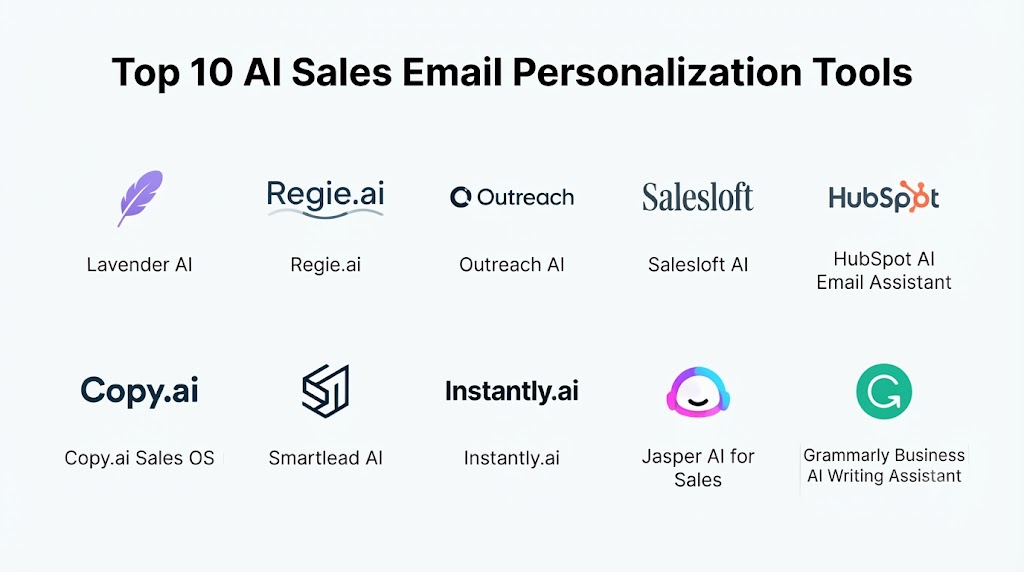
Top 10 AI Sales Email Personalization Tools
1 — Lavender AI
One-line verdict: Best for sales teams improving email quality, personalization, and communication effectiveness.
Short description:
Lavender AI is a sales email optimization platform that helps representatives improve outreach messages using artificial intelligence. It analyzes email content and provides recommendations to make sales communication clearer, more personalized, and more effective.
Standout Capabilities
- AI-powered email coaching.
- Email quality analysis.
- Personalization recommendations.
- Sales writing improvement.
- Communication optimization.
- Outreach message scoring.
- Real-time writing feedback.
- Sales productivity assistance.
AI-Specific Depth
- Model support: Uses AI-based writing analysis capabilities; specific model flexibility varies.
- RAG / knowledge integration: Business context integration varies depending on configuration.
- Evaluation: Provides email quality analysis and engagement improvement insights.
- Guardrails: Writing recommendations and communication guidelines vary.
- Observability: Email performance insights and analytics available.
Pros
- Improves sales email quality.
- Easy for sales representatives to adopt.
- Helps create more personalized communication.
Cons
- Primarily focused on email improvement.
- Does not replace complete sales engagement platforms.
- Results depend on available prospect information.
Security & Compliance
Security features depend on configuration and organizational requirements. Specific certifications and compliance details are not publicly stated.
Deployment & Platforms
- Deployment: Cloud-based.
- Platforms: Web-based.
- Self-hosted: Not publicly stated.
Integrations & Ecosystem
Lavender AI connects with sales communication workflows.
Common integrations include:
- Email platforms.
- Sales engagement tools.
- CRM systems.
- Sales productivity applications.
- Communication workflows.
Pricing Model
Pricing depends on users, features, and business requirements. Exact pricing is not publicly stated.
Best-Fit Scenarios
- Sales representatives improving email outreach.
- B2B teams optimizing communication quality.
- Organizations building better sales messaging.
2 — Regie.ai
One-line verdict: Best for sales teams using generative AI to create personalized outreach content.
Short description:
Regie.ai is an AI sales engagement platform designed to help organizations create personalized sales emails, manage outreach campaigns, and improve sales productivity. It combines generative AI with sales workflows to help teams scale communication.
Standout Capabilities
- AI-generated sales emails.
- Personalized outreach creation.
- Sales sequence support.
- Content recommendations.
- Campaign assistance.
- Messaging optimization.
- Sales workflow automation.
- Team collaboration features.
AI-Specific Depth
- Model support: Uses generative AI capabilities; specific model flexibility varies.
- RAG / knowledge integration: Business context integration varies by implementation.
- Evaluation: Outreach performance measurement available.
- Guardrails: Brand messaging controls vary.
- Observability: Campaign analytics and engagement tracking available.
Pros
- Helps scale personalized outreach.
- Reduces manual writing effort.
- Supports sales content creation.
Cons
- AI-generated content requires human review.
- Personalization quality depends on available data.
- Advanced workflows may require training.
Security & Compliance
Security controls depend on configuration. Specific certifications and compliance details should be verified before deployment.
Deployment & Platforms
- Deployment: Cloud-based.
- Platforms: Web-based.
- Self-hosted: Not publicly stated.
Integrations & Ecosystem
Regie.ai integrates with sales and revenue technology environments.
Common integrations include:
- CRM platforms.
- Sales engagement tools.
- Email systems.
- Marketing platforms.
- Productivity applications.
Pricing Model
Pricing varies based on users, features, and business requirements. Exact pricing is not publicly stated.
Best-Fit Scenarios
- B2B sales organizations.
- Sales development teams.
- Companies scaling outbound campaigns.
3 — Outreach AI
One-line verdict: Best for sales teams combining AI personalization with structured sales engagement workflows.
Short description:
Outreach AI is a sales engagement platform that helps organizations create, manage, and optimize sales communication. It supports personalized email creation, outreach automation, prospect engagement tracking, and sales workflow management.
Standout Capabilities
- AI-assisted email personalization.
- Sales sequence automation.
- Prospect engagement tracking.
- Outreach workflow management.
- Sales productivity improvements.
- Message recommendations.
- Campaign analytics.
- Team collaboration features.
AI-Specific Depth
- Model support: Uses AI capabilities for sales workflows; specific model flexibility varies.
- RAG / knowledge integration: Business data integration varies depending on configuration.
- Evaluation: Tracks outreach performance and engagement metrics.
- Guardrails: Workflow controls and user permissions vary.
- Observability: Sales activity analytics and reporting available.
Pros
- Strong sales engagement workflows.
- Helps teams manage personalized outreach at scale.
- Integrates sales activities with performance insights.
Cons
- Requires proper sales process setup.
- Advanced features may require training.
- May be complex for smaller teams.
Security & Compliance
Security features depend on configuration and enterprise requirements. Specific certifications and compliance details should be verified based on organizational needs.
Deployment & Platforms
- Deployment: Cloud-based.
- Platforms: Web-based.
- Self-hosted: Not publicly stated.
Integrations & Ecosystem
Outreach AI connects with sales and marketing technology ecosystems.
Common integrations include:
- CRM platforms.
- Email systems.
- Sales engagement tools.
- Analytics platforms.
- Productivity applications.
Pricing Model
Pricing depends on users, features, and business requirements. Exact pricing is not publicly stated.
Best-Fit Scenarios
- Sales development teams.
- Enterprise outbound sales organizations.
- Businesses managing structured email campaigns.
4 — Salesloft AI
One-line verdict: Best for revenue teams improving sales email personalization through AI-powered engagement workflows.
Short description:
Salesloft AI helps sales organizations manage customer communication, automate outreach activities, and improve sales productivity. It combines sales engagement workflows with AI-assisted recommendations for better prospect interactions.
Standout Capabilities
- AI-assisted email creation.
- Sales engagement automation.
- Prospect communication tracking.
- Outreach sequence management.
- Conversation insights.
- Sales productivity support.
- Customer engagement analytics.
- Workflow automation.
AI-Specific Depth
- Model support: Uses AI capabilities within sales workflows; flexibility varies.
- RAG / knowledge integration: Data integration depends on configuration.
- Evaluation: Measures engagement performance and outreach outcomes.
- Guardrails: Sales workflow controls vary.
- Observability: Activity tracking and analytics available.
Pros
- Strong enterprise sales workflows.
- Helps maintain consistent communication.
- Supports large sales teams.
Cons
- Requires sales process maturity.
- Can be complex for smaller organizations.
- Advanced features may require implementation effort.
Security & Compliance
Security capabilities depend on configuration. Specific compliance details should be verified according to organizational requirements.
Deployment & Platforms
- Deployment: Cloud-based.
- Platforms: Web-based.
- Self-hosted: Not publicly stated.
Integrations & Ecosystem
Salesloft AI connects with sales technology environments.
Common integrations include:
- CRM platforms.
- Email tools.
- Sales analytics platforms.
- Marketing automation systems.
- Communication applications.
Pricing Model
Pricing varies based on users, features, and business requirements. Exact pricing is not publicly stated.
Best-Fit Scenarios
- Enterprise sales teams.
- Revenue operations teams.
- Companies managing large outreach programs.
5 — HubSpot AI Email Assistant
One-line verdict: Best for businesses needing AI-assisted email personalization inside CRM and marketing workflows.
Short description:
HubSpot AI Email Assistant helps sales and marketing teams create, improve, and personalize email communication. It works with HubSpot workflows to support customer engagement, sales outreach, and marketing automation.
Standout Capabilities
- AI email drafting.
- Message rewriting.
- Personalization assistance.
- CRM-connected communication.
- Marketing email support.
- Sales follow-up assistance.
- Workflow automation.
- Content optimization.
AI-Specific Depth
- Model support: Uses HubSpot AI capabilities; model flexibility varies.
- RAG / knowledge integration: Business information connections depend on configuration.
- Evaluation: Email engagement tracking available.
- Guardrails: User permissions and content controls available.
- Observability: Marketing and CRM analytics available.
Pros
- Easy adoption for business users.
- Strong CRM integration.
- Useful for sales and marketing teams.
Cons
- Advanced personalization may require additional tools.
- AI output requires review.
- Best experience depends on HubSpot ecosystem usage.
Security & Compliance
Security features depend on subscription and configuration. Specific certifications and compliance information should be verified.
Deployment & Platforms
- Deployment: Cloud-based.
- Platforms: Web-based.
- Self-hosted: Not publicly stated.
Integrations & Ecosystem
HubSpot AI Email Assistant connects with business communication workflows.
Common integrations include:
- CRM systems.
- Marketing automation tools.
- Sales pipelines.
- Analytics platforms.
- Customer engagement applications.
Pricing Model
Pricing depends on HubSpot products, users, and selected features. Exact pricing is not publicly stated.
Best-Fit Scenarios
- SMB sales teams.
- Marketing teams using CRM automation.
- Businesses improving email productivity.
6 — Copy.ai Sales OS
One-line verdict: Best for teams using generative AI to create sales messaging and personalized outreach content.
Short description:
Copy.ai Sales OS is an AI-powered sales content platform that helps teams generate sales emails, prospecting messages, and customer communication materials. It focuses on improving sales productivity through AI-assisted content creation.
Standout Capabilities
- AI-generated sales emails.
- Personalized messaging.
- Sales content creation.
- Workflow automation.
- Prospect communication support.
- Brand voice customization.
- Sales copy improvement.
- Content collaboration.
AI-Specific Depth
- Model support: Uses generative AI models; specific model options vary.
- RAG / knowledge integration: Supports business context connections depending on configuration.
- Evaluation: Content performance evaluation varies.
- Guardrails: Brand controls and workflow settings available.
- Observability: Usage analytics and workflow monitoring vary.
Pros
- Strong AI content generation.
- Helps sales teams create messaging faster.
- Supports multiple sales content formats.
Cons
- Requires human review for accuracy.
- Not a complete CRM replacement.
- Quality depends on provided context.
Security & Compliance
Security controls depend on configuration and plan. Specific certifications should be verified based on business requirements.
Deployment & Platforms
- Deployment: Cloud-based.
- Platforms: Web-based.
- Self-hosted: Not publicly stated.
Integrations & Ecosystem
Copy.ai integrates with sales and business workflows.
Common integrations include:
- CRM platforms.
- Sales applications.
- Marketing tools.
- Productivity systems.
- Business data sources.
Pricing Model
Pricing varies based on users, features, and usage. Exact pricing is not publicly stated.
Best-Fit Scenarios
- Sales teams creating large amounts of content.
- Businesses scaling outbound messaging.
- Organizations adopting generative AI workflows.
7 — Smartlead AI
One-line verdict: Best for teams running AI-assisted cold email campaigns and automated outreach sequences.
Short description:
Smartlead AI is an email outreach platform designed to help businesses manage cold email campaigns, automate follow-ups, and improve sender performance. It combines automation features with AI assistance for scalable sales communication.
Standout Capabilities
- AI-assisted email campaigns.
- Automated follow-up sequences.
- Email personalization.
- Campaign management.
- Deliverability optimization.
- Lead outreach automation.
- Performance tracking.
- Multi-account management.
AI-Specific Depth
- Model support: Uses AI capabilities for outreach assistance; specific model flexibility varies.
- RAG / knowledge integration: Prospect data integration varies.
- Evaluation: Campaign metrics and engagement tracking available.
- Guardrails: Email workflow controls vary.
- Observability: Campaign analytics and performance monitoring available.
Pros
- Useful for outbound email automation.
- Helps manage large outreach campaigns.
- Supports scalable follow-up workflows.
Cons
- Primarily focused on email outreach.
- Requires careful email compliance management.
- Personalization quality depends on input data.
Security & Compliance
Security features depend on configuration. Organizations should verify privacy, data handling, and communication compliance requirements.
Deployment & Platforms
- Deployment: Cloud-based.
- Platforms: Web-based.
- Self-hosted: Not publicly stated.
Integrations & Ecosystem
Smartlead AI connects with sales and outreach ecosystems.
Common integrations include:
- CRM platforms.
- Email providers.
- Lead management tools.
- Sales automation systems.
- Analytics platforms.
Pricing Model
Pricing depends on users, campaigns, accounts, and features. Exact pricing is not publicly stated.
Best-Fit Scenarios
- Outbound sales teams.
- Agencies running outreach campaigns.
- Businesses scaling cold email workflows.
8 — Instantly.ai
One-line verdict: Best for businesses scaling personalized cold email campaigns with AI-assisted automation.
Short description:
Instantly.ai is an email outreach platform designed to help businesses manage large-scale cold email campaigns, automate follow-ups, and improve outreach efficiency. It combines campaign automation, personalization features, and email management workflows.
Standout Capabilities
- AI-assisted email personalization.
- Automated outreach sequences.
- Cold email campaign management.
- Follow-up automation.
- Multiple email account management.
- Campaign analytics.
- Lead engagement tracking.
- Outreach workflow optimization.
AI-Specific Depth
- Model support: Uses AI capabilities for email assistance; specific model flexibility varies.
- RAG / knowledge integration: Prospect data integration varies depending on workflow setup.
- Evaluation: Campaign performance tracking and engagement analysis available.
- Guardrails: Email workflow controls vary by configuration.
- Observability: Campaign analytics and deliverability monitoring available.
Pros
- Helps scale outbound email campaigns.
- Reduces manual follow-up work.
- Suitable for high-volume outreach workflows.
Cons
- Mainly focused on email-based outreach.
- Requires careful campaign management.
- AI personalization quality depends on prospect data.
Security & Compliance
Security features depend on configuration and usage practices. Organizations should verify data handling and communication compliance requirements.
Deployment & Platforms
- Deployment: Cloud-based.
- Platforms: Web-based.
- Self-hosted: Not publicly stated.
Integrations & Ecosystem
Instantly.ai connects with sales and email outreach workflows.
Common integrations include:
- CRM platforms.
- Email providers.
- Lead management tools.
- Sales automation systems.
- Analytics platforms.
Pricing Model
Pricing varies based on users, email accounts, features, and usage requirements. Exact pricing is not publicly stated.
Best-Fit Scenarios
- Startups running outbound campaigns.
- Sales teams scaling email outreach.
- Agencies managing multiple client campaigns.
9 — Jasper AI for Sales
One-line verdict: Best for sales teams creating consistent AI-generated messaging aligned with brand communication.
Short description:
Jasper AI helps organizations create marketing and sales content using artificial intelligence. Sales teams can use it for email drafts, outreach messaging, campaign content, and communication templates.
Standout Capabilities
- AI-generated sales content.
- Email copy creation.
- Brand voice customization.
- Messaging templates.
- Content improvement.
- Sales communication assistance.
- Collaboration workflows.
- Content optimization.
AI-Specific Depth
- Model support: Uses generative AI capabilities; specific model flexibility varies.
- RAG / knowledge integration: Supports business context and knowledge features depending on configuration.
- Evaluation: Content performance measurement varies.
- Guardrails: Brand voice controls and content guidelines available.
- Observability: Usage analytics and workflow tracking vary.
Pros
- Strong AI writing capabilities.
- Helps maintain consistent messaging.
- Useful for multiple business communication needs.
Cons
- Not specifically built only for sales email workflows.
- Requires sales context for effective personalization.
- AI-generated content needs review.
Security & Compliance
Security features depend on configuration and organizational requirements. Specific certifications should be verified before enterprise use.
Deployment & Platforms
- Deployment: Cloud-based.
- Platforms: Web-based.
- Self-hosted: Not publicly stated.
Integrations & Ecosystem
Jasper AI integrates with business content and productivity environments.
Common integrations include:
- Marketing platforms.
- Content systems.
- Collaboration tools.
- Business applications.
- Workflow tools.
Pricing Model
Pricing depends on users, features, and business requirements. Exact pricing is not publicly stated.
Best-Fit Scenarios
- Sales teams creating messaging templates.
- Marketing teams supporting sales communication.
- Organizations managing brand consistency.
10 — Grammarly Business AI Writing Assistant
One-line verdict: Best for teams improving sales email clarity, tone, and professional communication quality.
Short description:
Grammarly Business AI Writing Assistant helps professionals improve written communication using AI-based suggestions. Sales teams use it to refine email tone, improve clarity, and create more effective business messages.
Standout Capabilities
- AI writing assistance.
- Tone improvement.
- Grammar and clarity suggestions.
- Professional communication support.
- Message rewriting.
- Writing consistency.
- Team communication standards.
- Productivity improvements.
AI-Specific Depth
- Model support: Uses AI writing models; specific model flexibility varies.
- RAG / knowledge integration: Business context features vary by configuration.
- Evaluation: Writing quality evaluation available.
- Guardrails: Brand tone and communication controls available.
- Observability: Usage insights and writing analytics vary.
Pros
- Easy adoption across teams.
- Improves communication quality.
- Useful across different business functions.
Cons
- Not a complete sales outreach platform.
- Limited prospect intelligence features.
- Requires additional sales tools for automation.
Security & Compliance
Security features depend on business configuration. Specific certifications and compliance information should be verified.
Deployment & Platforms
- Deployment: Cloud-based.
- Platforms: Web browsers, desktop applications, and supported integrations.
- Self-hosted: Not publicly stated.
Integrations & Ecosystem
Grammarly Business integrates with workplace communication environments.
Common integrations include:
- Email applications.
- Productivity tools.
- Document platforms.
- Collaboration systems.
- Business applications.
Pricing Model
Pricing depends on users, features, and business requirements. Exact pricing is not publicly stated.
Best-Fit Scenarios
- Sales teams improving email quality.
- Organizations standardizing communication.
- Businesses requiring writing assistance.
Comparison Table: Top 10 AI Sales Email Personalization Tools
| Tool Name | Best For | Deployment | Model Flexibility | Strength | Watch-Out | Public Rating |
|---|---|---|---|---|---|---|
| Lavender AI | Email optimization | Cloud | AI-assisted | Sales email improvement | Limited automation | N/A |
| Regie.ai | AI sales messaging | Cloud | Generative AI | Personalized outreach content | Requires review | N/A |
| Outreach AI | Sales engagement teams | Cloud | AI-assisted | Outreach automation | Complex workflows | N/A |
| Salesloft AI | Enterprise sales teams | Cloud | AI-assisted | Sales communication management | Learning curve | N/A |
| HubSpot AI Email Assistant | CRM users | Cloud | Hosted AI | Easy CRM integration | Ecosystem dependent | N/A |
| Copy.ai Sales OS | AI sales content creation | Cloud | Generative AI | Content generation | Needs context | N/A |
| Smartlead AI | Cold email campaigns | Cloud | AI-assisted | Outreach automation | Email focused | N/A |
| Instantly.ai | High-volume outreach | Cloud | AI-assisted | Campaign scaling | Requires management | N/A |
| Jasper AI for Sales | Sales content creation | Cloud | Generative AI | Brand messaging | Not sales-specific | N/A |
| Grammarly Business AI | Communication improvement | Cloud | AI writing models | Writing quality | Limited prospecting | N/A |
Scoring & Evaluation: Transparent Rubric
The scoring below compares AI Sales Email Personalization Tools using important factors for sales organizations. Scores are comparative and should be adjusted based on company requirements, sales workflows, data availability, and communication goals.
Evaluation weights:
- Core features – 20%
- AI reliability & evaluation – 15%
- Guardrails & safety – 10%
- Integrations & ecosystem – 15%
- Ease of use – 10%
- Performance & cost controls – 15%
- Security & admin – 10%
- Support & community – 5%
| Tool | Core | Reliability/Eval | Guardrails | Integrations | Ease | Perf/Cost | Security/Admin | Support | Weighted Total |
|---|---|---|---|---|---|---|---|---|---|
| Lavender AI | 8 | 8 | 8 | 8 | 10 | 8 | 8 | 8 | 8.2 |
| Regie.ai | 9 | 8 | 8 | 8 | 8 | 8 | 8 | 8 | 8.1 |
| Outreach AI | 9 | 8 | 8 | 10 | 7 | 8 | 9 | 8 | 8.5 |
| Salesloft AI | 9 | 8 | 8 | 9 | 8 | 8 | 8 | 8 | 8.3 |
| HubSpot AI Email Assistant | 8 | 8 | 8 | 9 | 9 | 8 | 8 | 9 | 8.4 |
| Copy.ai Sales OS | 8 | 8 | 7 | 8 | 9 | 8 | 7 | 8 | 7.9 |
| Smartlead AI | 8 | 8 | 7 | 8 | 9 | 8 | 7 | 8 | 7.9 |
| Instantly.ai | 8 | 7 | 7 | 8 | 9 | 8 | 7 | 8 | 7.8 |
| Jasper AI for Sales | 8 | 8 | 8 | 8 | 9 | 8 | 8 | 8 | 8.0 |
| Grammarly Business AI | 7 | 8 | 8 | 8 | 10 | 9 | 8 | 9 | 8.3 |
Top 3 for Enterprise
- Outreach AI
- Salesloft AI
- HubSpot AI Email Assistant
Top 3 for SMB
- HubSpot AI Email Assistant
- Lavender AI
- Smartlead AI
Which AI Sales Email Personalization Tool Is Right for You?
Choosing the right AI Sales Email Personalization Tool depends on business size, sales workflow complexity, outreach goals, available prospect data, and the level of automation required. Different organizations need different capabilities. Some teams need simple AI writing assistance, while others require complete sales engagement workflows with analytics, automation, and CRM integration.
Solo / Freelancer
Individual sales professionals and consultants usually need lightweight AI tools that improve email quality and reduce manual writing effort.
Recommended options:
- Lavender AI: Suitable for improving email quality, tone, and personalization.
- Grammarly Business AI Writing Assistant: Useful for improving professional communication.
- Jasper AI for Sales: Helpful for creating sales messaging templates.
Important selection factors:
- Easy setup.
- Simple user experience.
- Affordable pricing.
- Quick email improvement.
- Minimal technical requirements.
Solo professionals should avoid complex enterprise sales engagement platforms unless they manage large outreach campaigns.
SMB
Small and medium businesses need AI email personalization tools that improve sales productivity without requiring large sales operations teams.
Recommended options:
- HubSpot AI Email Assistant: Good for businesses already using CRM and marketing workflows.
- Lavender AI: Useful for sales representatives improving outreach quality.
- Smartlead AI: Suitable for teams running outbound email campaigns.
Important selection factors:
- CRM integration.
- Email automation.
- Personalization quality.
- Simple analytics.
- Team collaboration.
SMBs should focus on tools that improve sales communication while keeping workflows easy to manage.
Mid-Market
Mid-market companies usually need stronger automation, structured outreach workflows, and better sales communication management.
Recommended options:
- Regie.ai: Useful for AI-generated sales messaging and scalable outreach.
- Salesloft AI: Suitable for structured sales engagement.
- Outreach AI: Helpful for managing larger outreach programs.
Important selection factors:
- Multi-user support.
- Sales sequence management.
- AI content customization.
- Performance tracking.
- CRM connectivity.
Mid-market organizations should prioritize platforms that combine personalization with sales process automation.
Enterprise
Large organizations require advanced AI email personalization, security controls, governance, and integration with enterprise sales systems.
Recommended options:
- Outreach AI: Strong option for enterprise sales engagement workflows.
- Salesloft AI: Suitable for large revenue teams.
- HubSpot AI Email Assistant: Useful for organizations using HubSpot ecosystems.
Important selection factors:
- Enterprise security.
- Role-based access controls.
- Brand voice management.
- AI governance.
- CRM integration.
- Large-scale automation.
Enterprise buyers should evaluate how well the platform supports human review, compliance requirements, and existing sales processes.
Regulated Industries (Finance, Healthcare, Public Sector)
Organizations in regulated industries need careful control over AI-generated communication and prospect information.
Important considerations:
- Protect customer and prospect information.
- Review how AI processes communication data.
- Maintain human approval before sending important messages.
- Create responsible AI usage guidelines.
- Control access to sensitive sales information.
- Monitor AI-generated content quality.
Recommended approach:
- Select platforms with strong privacy and administrative controls.
- Verify data handling practices before deployment.
- Maintain clear communication approval workflows.
- Avoid sharing unnecessary sensitive information with AI systems.
Budget vs Premium
Budget-Friendly Approach
Suitable for startups, freelancers, and smaller sales teams.
Recommended options:
- Lavender AI.
- Grammarly Business AI Writing Assistant.
- HubSpot AI Email Assistant.
Benefits:
- Lower implementation effort.
- Faster adoption.
- Simple personalization workflows.
- Improved writing quality.
Premium Enterprise Approach
Suitable for large sales organizations.
Recommended options:
- Outreach AI.
- Salesloft AI.
- Regie.ai.
Benefits:
- Advanced sales workflows.
- Better automation.
- Team collaboration.
- Enterprise scalability.
Build vs Buy: When to DIY
Building a custom AI sales email personalization system may make sense when organizations have:
- Strong internal AI engineering teams.
- Proprietary sales data.
- Unique communication requirements.
- Existing AI infrastructure.
- Need for complete control over models and workflows.
Buying a commercial platform is usually better when organizations need:
- Faster implementation.
- Pre-built sales integrations.
- Managed AI capabilities.
- Lower maintenance effort.
- Ready-to-use workflows.
A hybrid approach is also possible where businesses use commercial tools while developing custom AI workflows for specific sales processes.
Success metrics:
- Reduced email creation time.
- Improved message quality.
- Better personalization.
- Increased sales team productivity.
Important focus areas:
- Message relevance.
- Brand consistency.
- Sales adoption.
- Data accuracy.
Long-term goals:
- Faster sales communication.
- Higher-quality prospect engagement.
- Improved response rates.
- Scalable personalized outreach.
Common Mistakes & How to Avoid Them
Organizations often struggle with AI Sales Email Personalization Tools because they automate communication without maintaining quality and strategy.
Common mistakes include:
- Sending generic AI-generated emails: Personalization requires real prospect context.
- Ignoring human review: AI-generated messages should be reviewed before important outreach.
- Using incomplete prospect data: Poor information reduces personalization quality.
- Over-automating communication: Too much automation can make messages feel unnatural.
- Ignoring brand voice: AI messaging should match company communication standards.
- Not measuring results: Track response rates, engagement, and conversions.
- Poor CRM integration: Disconnected systems reduce workflow efficiency.
- Ignoring privacy requirements: Handle prospect information responsibly.
- No messaging guidelines: Create clear communication standards.
- Using AI without sales strategy: Tools should support sales goals, not replace strategy.
- Not improving AI workflows: Regular optimization improves output quality.
- Ignoring compliance requirements: Follow appropriate communication regulations.
- No team training: Users need to understand AI capabilities and limitations.
- Vendor dependency without flexibility: Maintain control over data and workflows.
FAQs
What are AI Sales Email Personalization Tools?
AI Sales Email Personalization Tools use artificial intelligence to create, improve, and customize sales emails based on prospect information, customer context, and communication goals.
How does AI personalize sales emails?
AI analyzes available information such as prospect details, company information, industry context, and previous interactions to create more relevant messages.
Can AI tools write complete sales emails?
Yes. Many tools can generate email drafts, suggest improvements, and create personalized outreach content. Human review remains important.
Are AI sales email tools useful for small businesses?
Yes. Small businesses can use these tools to improve email quality, save time, and create more professional outreach.
Do AI email personalization tools replace sales representatives?
No. They assist sales teams by reducing repetitive writing tasks. Human relationship-building and sales strategy remain essential.
What data do AI email personalization tools use?
Depending on the platform, they may use CRM data, prospect information, customer interactions, and business context.
Are AI-generated sales emails accurate?
Accuracy depends on data quality, AI capabilities, and human review. Organizations should evaluate messages before sending.
Can AI personalization tools integrate with CRM systems?
Many tools support CRM integrations to use prospect data and improve sales workflows.
Are AI sales email tools secure?
Security depends on the platform and configuration. Businesses should review privacy controls and data handling practices.
How much do AI Sales Email Personalization Tools cost?
Pricing varies based on users, features, usage, and enterprise requirements. Exact pricing depends on the selected platform.
Can companies customize AI email writing style?
Many tools support customization through templates, brand guidelines, tone settings, and workflow controls.
Should companies build their own AI email personalization system?
Building internally may work for organizations with strong technical resources and unique requirements. Most businesses prefer commercial tools for faster deployment.
Conclusion
AI Sales Email Personalization Tools are becoming valuable solutions for sales teams that want to improve communication quality, increase productivity, and create personalized outreach at scale. These platforms help organizations reduce manual writing effort while supporting more relevant and effective customer conversations.The best tool depends on business size, sales process complexity, CRM environment, budget, and personalization requirements. Smaller teams may benefit from AI writing assistants, while larger organizations may need complete sales engagement platforms with automation and .
