Introduction
AI Workforce Planning Platforms use artificial intelligence, machine learning, predictive analytics, and workforce intelligence to help organizations forecast talent needs, optimize workforce allocation, identify skill gaps, and plan future hiring strategies. These platforms analyze employee data, business goals, market trends, and organizational requirements to provide data-driven workforce insights.
Traditional workforce planning often depends on spreadsheets, manual analysis, and historical data, making it difficult to respond quickly to changing business conditions. AI-powered workforce planning solutions help organizations predict future workforce requirements, improve resource allocation, support talent development, and align workforce strategies with business objectives.
These tools support HR leaders, workforce planners, talent teams, and executives by improving decision-making, reducing talent risks, and creating more agile workforce strategies.
Real-world use cases:
- Workforce demand forecasting
- Employee capacity planning
- Skill gap identification
- Future hiring prediction
- Workforce cost optimization
- Talent supply analysis
- Succession planning support
- Internal mobility planning
- Scenario modeling
- Workforce analytics
Evaluation Criteria for Buyers:
- AI forecasting accuracy
- Workforce analytics capabilities
- Skills intelligence support
- Scenario planning features
- HR system integrations
- Data visualization capabilities
- Scalability
- Security and governance controls
Best for
Large enterprises, HR departments, workforce strategy teams, staffing organizations, and businesses managing complex workforce requirements.
Not ideal for
Small businesses without structured employee data or organizations that do not require workforce forecasting.
Key Trends
- AI-powered workforce forecasting
- Skills-based workforce planning
- Predictive talent analytics
- Workforce scenario modeling
- AI-driven resource optimization
- Internal talent marketplace integration
- Automated workforce insights
- Real-time workforce analytics
- Strategic talent planning
- Generative AI HR assistants
Methodology
- Selected platforms based on AI workforce planning capabilities
- Evaluated forecasting, analytics, integrations, automation, and scalability
- Considered solutions for enterprises and HR strategy teams
- Prioritized platforms supporting modern workforce management
- Reviewed security, governance, and usability features
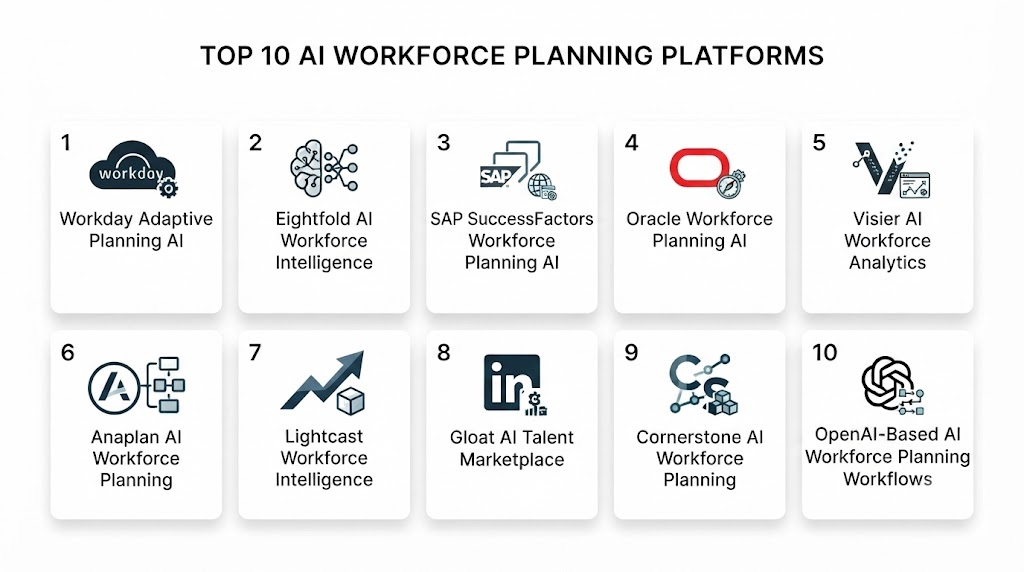
Top 10 AI Workforce Planning Platforms
1. Workday Adaptive Planning AI
Verdict: Enterprise workforce planning platform with advanced AI-powered planning capabilities.
Short Description: Workday Adaptive Planning AI helps organizations forecast workforce requirements, analyze costs, and align employee strategies with business objectives.
Key Features:
- Workforce forecasting
- Scenario planning
- Employee analytics
- Budget planning
- Workforce modeling
Pros:
- Strong enterprise HR ecosystem
- Advanced planning capabilities
Cons:
- Complex implementation
- Enterprise-focused pricing
Deployment: Cloud-based
Security & Compliance: Enterprise security controls
Integrations & Ecosystem: HR systems and enterprise applications
Support & Community: Enterprise support
Pricing Model: Subscription-based
Best-Fit Scenarios: Large organizations
2. Eightfold AI Workforce Intelligence
Verdict: AI talent intelligence platform for workforce planning and skills-based strategies.
Short Description: Eightfold AI helps organizations analyze workforce capabilities, predict talent needs, and plan future workforce requirements.
Key Features:
- Workforce analytics
- Skill intelligence
- Talent forecasting
- Career pathway analysis
- Workforce optimization
Pros:
- Advanced AI capabilities
- Strong skills intelligence
Cons:
- Requires implementation planning
- Enterprise-focused
Deployment: Cloud-based
Security & Compliance: Enterprise security controls
Integrations & Ecosystem: HR platforms and enterprise systems
Support & Community: Enterprise support
Pricing Model: Subscription-based
Best-Fit Scenarios: Enterprise workforce teams
3. SAP SuccessFactors Workforce Planning AI
Verdict: AI-enabled workforce planning solution integrated with enterprise HR management.
Short Description: SAP SuccessFactors Workforce Planning AI helps organizations forecast workforce needs, analyze skills, and optimize talent strategies.
Key Features:
- Workforce forecasting
- Talent analytics
- Capacity planning
- Skills analysis
- Workforce reporting
Pros:
- Strong enterprise HR integration
- Global workforce support
Cons:
- Complex setup
- Requires SAP expertise
Deployment: Cloud-based
Security & Compliance: Enterprise security standards
Integrations & Ecosystem: SAP ecosystem and business applications
Support & Community: Enterprise support
Pricing Model: Subscription-based
Best-Fit Scenarios: SAP-based enterprises
4. Oracle Workforce Planning AI
Verdict: Enterprise workforce planning platform with predictive analytics capabilities.
Short Description: Oracle Workforce Planning AI helps organizations analyze workforce trends, forecast staffing needs, and improve resource planning.
Key Features:
- Workforce forecasting
- Predictive analytics
- Cost planning
- Scenario modeling
- Workforce dashboards
Pros:
- Strong enterprise analytics
- Integrated business planning
Cons:
- Complex deployment
- Requires Oracle expertise
Deployment: Cloud-based
Security & Compliance: Enterprise security controls
Integrations & Ecosystem: Oracle applications and HR systems
Support & Community: Enterprise support
Pricing Model: Subscription-based
Best-Fit Scenarios: Large enterprises
5. Visier AI Workforce Analytics
Verdict: AI-powered workforce analytics platform focused on people intelligence.
Short Description: Visier AI helps organizations analyze workforce data, predict trends, and improve strategic workforce decisions.
Key Features:
- Workforce analytics
- Predictive insights
- Employee trends
- Talent intelligence
- Workforce dashboards
Pros:
- Strong people analytics
- User-friendly insights
Cons:
- Requires quality workforce data
- Advanced features need expertise
Deployment: Cloud-based
Security & Compliance: Enterprise security controls
Integrations & Ecosystem: HR systems and business platforms
Support & Community: Customer support
Pricing Model: Subscription-based
Best-Fit Scenarios: HR analytics teams
6. Anaplan AI Workforce Planning
Verdict: AI-enhanced connected planning platform for workforce strategy.
Short Description: Anaplan AI helps organizations connect workforce planning with finance, operations, and business strategy.
Key Features:
- Workforce modeling
- Scenario planning
- Resource forecasting
- Business planning
- Collaboration tools
Pros:
- Strong connected planning
- Flexible modeling capabilities
Cons:
- Requires planning expertise
- Complex configuration
Deployment: Cloud-based
Security & Compliance: Enterprise security options
Integrations & Ecosystem: Business planning and enterprise systems
Support & Community: Enterprise support
Pricing Model: Subscription-based
Best-Fit Scenarios: Strategic planning teams
7. Lightcast Workforce Intelligence
Verdict: AI-powered workforce intelligence platform for labor market and skills planning.
Short Description: Lightcast Workforce Intelligence helps organizations analyze skills trends, labor markets, and future workforce requirements.
Key Features:
- Skills analytics
- Labor market insights
- Workforce forecasting
- Talent intelligence
- Skill gap analysis
Pros:
- Strong workforce data
- Excellent skills insights
Cons:
- Enterprise-focused
- Requires data interpretation
Deployment: Cloud-based
Security & Compliance: Enterprise controls
Integrations & Ecosystem: HR and workforce platforms
Support & Community: Enterprise support
Pricing Model: Subscription-based
Best-Fit Scenarios: Workforce strategy teams
8. Gloat AI Talent Marketplace
Verdict: AI workforce platform focused on internal mobility and talent optimization.
Short Description: Gloat AI helps organizations understand employee skills, match talent with opportunities, and improve workforce utilization.
Key Features:
- Internal talent marketplace
- Skill matching
- Employee profiles
- Opportunity recommendations
- Workforce insights
Pros:
- Strong internal mobility focus
- Improves talent utilization
Cons:
- Requires employee data
- Focused mainly on internal workforce
Deployment: Cloud-based
Security & Compliance: Enterprise security controls
Integrations & Ecosystem: HR and learning platforms
Support & Community: Enterprise support
Pricing Model: Subscription-based
Best-Fit Scenarios: Large organizations
9. Cornerstone AI Workforce Planning
Verdict: AI-enabled workforce development and planning platform.
Short Description: Cornerstone AI helps organizations connect workforce skills, learning programs, and future talent requirements.
Key Features:
- Skills analysis
- Workforce insights
- Learning alignment
- Career planning
- Talent development
Pros:
- Strong learning ecosystem
- Good employee development support
Cons:
- Best within Cornerstone ecosystem
- Requires HR data integration
Deployment: Cloud-based
Security & Compliance: Enterprise security standards
Integrations & Ecosystem: Learning and HR platforms
Support & Community: Enterprise support
Pricing Model: Subscription-based
Best-Fit Scenarios: Learning-focused organizations
10. OpenAI-Based AI Workforce Planning Workflows
Verdict: Custom AI approach for building workforce planning and forecasting systems.
Short Description: AI-powered workflows can analyze employee data, business goals, skills information, and workforce trends to create custom planning insights.
Key Features:
- Workforce forecasting
- Skill analysis
- Scenario modeling
- Talent insights
- Custom planning workflows
Pros:
- Highly customizable
- Supports unique workforce strategies
Cons:
- Requires implementation effort
- Needs governance controls
Deployment: API and custom environments
Security & Compliance: Depends on implementation
Integrations & Ecosystem: HR systems, analytics platforms, APIs
Support & Community: Developer ecosystem
Pricing Model: Usage-based
Best-Fit Scenarios: Custom enterprise solutions
Comparison Table
| Platform | AI Forecasting | Workforce Analytics | Skills Intelligence | Integrations | Best Use |
|---|---|---|---|---|---|
| Workday Adaptive Planning AI | Excellent | Excellent | High | Excellent | Enterprise planning |
| Eightfold AI | Excellent | Excellent | Excellent | Excellent | Talent intelligence |
| SAP SuccessFactors AI | Very High | High | High | Excellent | SAP enterprises |
| Oracle Workforce Planning AI | Excellent | Excellent | High | Excellent | Enterprise strategy |
| Visier AI | High | Excellent | High | High | People analytics |
| Anaplan AI | High | High | Medium | Excellent | Connected planning |
| Lightcast Intelligence | Excellent | High | Excellent | High | Skills planning |
| Gloat AI | High | High | Excellent | High | Internal mobility |
| Cornerstone AI | High | High | High | High | Workforce development |
| OpenAI Workflows | Excellent | Custom | Custom | Custom | Custom solutions |
Evaluation & Scoring Table
| Platform | AI Accuracy 25% | Forecasting 15% | Analytics 15% | Integrations 15% | Security 10% | Ease 10% | Value 10% | Total |
|---|---|---|---|---|---|---|---|---|
| Workday Adaptive Planning AI | 25 | 15 | 15 | 15 | 10 | 8 | 8 | 96 |
| Eightfold AI | 25 | 15 | 15 | 15 | 10 | 8 | 8 | 96 |
| SAP SuccessFactors AI | 24 | 14 | 14 | 15 | 10 | 8 | 8 | 93 |
| Oracle Workforce Planning AI | 24 | 15 | 15 | 15 | 10 | 8 | 8 | 95 |
| Visier AI | 23 | 14 | 15 | 14 | 10 | 9 | 9 | 94 |
| Anaplan AI | 23 | 14 | 14 | 15 | 10 | 8 | 9 | 93 |
| Lightcast Intelligence | 24 | 15 | 14 | 13 | 9 | 8 | 8 | 91 |
| Gloat AI | 22 | 13 | 13 | 14 | 9 | 10 | 9 | 90 |
| Cornerstone AI | 22 | 13 | 14 | 14 | 10 | 9 | 9 | 91 |
| OpenAI Workflows | 25 | 15 | 15 | 12 | 8 | 8 | 9 | 92 |
Which AI Workforce Planning Platform Is Right for You?
Common Mistakes
- Planning without accurate workforce data
- Ignoring future skill requirements
- Using AI predictions without validation
- Not aligning workforce plans with business goals
- Failing to update workforce models
Frequently Asked Questions
What are AI workforce planning platforms?
They are AI-powered systems that help organizations forecast workforce needs and optimize talent strategies.
How do AI workforce planning tools work?
They analyze workforce data, business goals, and trends to generate planning insights.
Can AI predict future hiring needs?
Yes. AI can identify workforce demand patterns and support hiring decisions.
Do workforce planning platforms identify skill gaps?
Many tools analyze current capabilities and future skill requirements.
Can AI improve workforce allocation?
Yes. These platforms help organizations optimize employee resources.
Do these tools integrate with HR systems?
Most support HR platforms and enterprise data systems.
Are AI workforce predictions accurate?
Accuracy depends on data quality, business conditions, and AI models.
Can small businesses use workforce planning tools?
Yes, although enterprise organizations commonly use advanced solutions.
Do these platforms replace HR teams?
No. They support HR leaders with better workforce insights.
Can AI support succession planning?
Yes. Some platforms analyze talent readiness and career paths.
How do workforce planning tools support business strategy?
They align workforce capabilities with future organizational goals.
How should companies implement AI workforce planning platforms?
Start with data preparation, define goals, test models, and improve planning workflows.
Conclusion
AI Workforce Planning Platforms are helping organizations build smarter workforce strategies by predicting talent needs, identifying skill gaps, and improving resource planning. Platforms such as Workday Adaptive Planning AI, Eightfold AI, Oracle Workforce Planning AI, and Visier AI provide advanced capabilities for workforce forecasting and strategic decision-makingOrganizations should choose solutions based on workforce complexity, data maturity, planning requirements, and HR ecosystem compatibility. Combining AI-driven workforce insights with human expertise helps businesses improve talent strategies, optimize resources, and prepare for future workforce challenges.
