Introduction
AI Exposure Management Analytics Platforms use artificial intelligence, machine learning, threat intelligence, and risk analytics to help organizations identify, assess, and prioritize exposure across IT infrastructure, applications, cloud environments, and digital assets. These platforms provide insight into attack surfaces, vulnerability exposure, configuration risks, identity risks, and real‑world threat context so security teams can reduce their risk footprint and strengthen defenses.
Traditional exposure management often relies on manual asset inventories, basic vulnerability scanning, and siloed tooling. AI‑powered exposure analytics enhances these processes by automating discovery, correlating risk signals, scoring threat exposure based on context, and recommending remediation actions.
These platforms are widely used by enterprise security teams, cloud security teams, SOCs, vulnerability management programs, and risk governance organizations to improve visibility, risk prioritization, and cyber resilience.
Real‑world use cases:
- IT and cloud asset discovery
- Attack surface mapping
- Exposure scoring and analytics
- Vulnerability and configuration risk correlation
- Threat intelligence enrichment
- Risk prioritization dashboards
- Identity‑based risk insights
- Automated remediation recommendations
- Executive exposure reporting
- Cross‑environment risk visibility
Evaluation Criteria for Buyers:
- AI‑driven exposure scoring accuracy
- Asset discovery and classification
- Threat intelligence integration
- Real‑time exposure analytics
- Automation and remediation guidance
- Integration with security tools
- Reporting and visualization capabilities
- Scalability for enterprise environments
Best for
Enterprise security teams, cloud security operations, threat and risk analysts, vulnerability management teams, and organizations managing large infrastructure footprints.
Not ideal for
Small organizations with limited assets and low security monitoring requirements.
Key Trends
- AI‑driven attack surface and exposure analytics
- Real‑time enterprise risk scoring
- Cloud‑native exposure platforms
- Threat‑informed security insights
- Automated remediation guidance
- Identity‑centric exposure analytics
- Attack path modeling
- Security automation and orchestration
- Risk dashboards and executive reporting
- Integration with SIEM, SOAR, and ticketing
Methodology
- Selected platforms based on AI exposure management analytics
- Evaluated discovery, risk scoring, threat correlation, and automation
- Considered enterprise cybersecurity requirements
- Prioritized platforms supporting cloud, dev, and hybrid environments
- Reviewed reporting, integrations, and ease of use
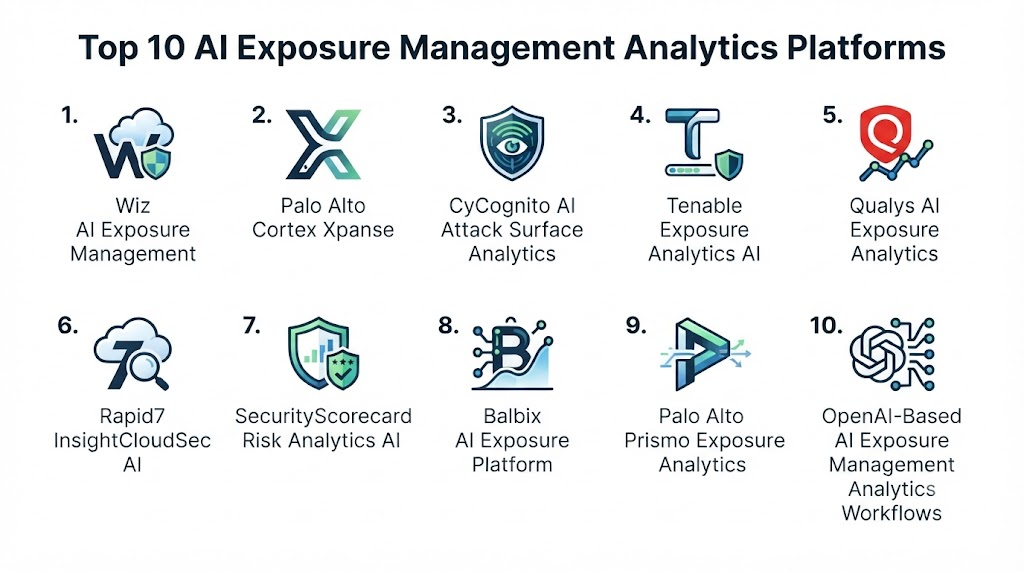
Top 10 AI Exposure Management Analytics Platforms
1. Wiz AI Exposure Management
Verdict: Leading cloud exposure risk analytics platform with AI‑driven discovery and prioritization.
Short Description: Wiz AI analyzes cloud assets, configuration risks, identity exposure, and attack paths to help organizations reduce risk and secure hybrid environments.
Key Features:
- Cloud asset discovery
- Exposure risk scoring
- Attack path analysis
- Threat intelligence enrichment
- Remediation recommendations
Pros:
- Strong cloud visibility
- Comprehensive risk analytics
Cons:
- Cloud‑centric focus
- Requires cloud expertise
Deployment: Cloud‑based
Security & Compliance: Enterprise controls
Integrations & Ecosystem: Cloud platforms, SIEM, ticketing
Support & Community: Enterprise support
Pricing Model: Subscription
Best‑Fit Scenarios: Cloud security teams
2. Palo Alto Cortex Xpanse
Verdict: AI‑enhanced exposure analytics platform for managing global attack surface.
Short Description: Cortex Xpanse continuously discovers assets, maps exposure, and prioritizes risk using machine learning and threat context.
Key Features:
- Asset discovery
- Risk analytics
- External exposure mapping
- Threat scoring
- Continuous monitoring
Pros:
- Excellent external asset visibility
- Strong risk context
Cons:
- Enterprise implementation
- Requires configuration
Deployment: Cloud‑based
Security & Compliance: Enterprise security controls
Integrations & Ecosystem: Security platforms
Support & Community: Enterprise support
Pricing Model: Subscription
Best‑Fit Scenarios: Enterprise exposure analysis
3. CyCognito AI Attack Surface Analytics
Verdict: AI‑driven exposure platform for external and internal attack surface management.
Short Description: CyCognito combines automated discovery and risk analytics to map enterprise attack surfaces and prioritize exposures.
Key Features:
- Discovery of internet‑reachable assets
- Risk scoring
- Attack vectors mapping
- Threat intelligence correlation
- Remediation insights
Pros:
- Strong attack surface visibility
- AI‑driven risk insights
Cons:
- Focused on external exposure
- Requires experienced analysts
Deployment: Cloud‑based
Security & Compliance: Enterprise security controls
Integrations & Ecosystem: SIEM, ticketing, security tools
Support & Community: Customer support
Pricing Model: Subscription
Best‑Fit Scenarios: Security operations teams
4. Tenable Exposure Analytics AI
Verdict: AI‑enhanced exposure and vulnerability analytics tied to risk and asset criticality.
Short Description: Tenable leverages machine learning and risk context to help teams understand exposure and prioritize remediation.
Key Features:
- Exposure scoring
- Asset risk analysis
- Vulnerability and configuration correlation
- Threat prioritization
- Remediation guidance
Pros:
- Strong vulnerability‑centric view
- Good enterprise support
Cons:
- Enterprise‑oriented
- Requires configuration
Deployment: Cloud & on‑prem environments
Security & Compliance: Enterprise security controls
Integrations & Ecosystem: SIEM, ITSM, security tools
Support & Community: Enterprise support
Pricing Model: Subscription
Best‑Fit Scenarios: Vulnerability and risk teams
5. Qualys AI Exposure Analytics
Verdict: Comprehensive exposure analytics with asset discovery and risk prioritization.
Short Description: Qualys uses AI to analyze asset exposure, vulnerability context, threat signals, and risk to help security teams focus on the most critical issues.
Key Features:
- Automated discovery
- Exposure scoring
- Threat intelligence enrichment
- Asset classification
- Remediation tracking
Pros:
- Broad security coverage
- Cloud and hybrid support
Cons:
- Platform complexity
- Requires security maturity
Deployment: Cloud‑based
Security & Compliance: Enterprise security controls
Integrations & Ecosystem: SIEM, ticketing
Support & Community: Enterprise support
Pricing Model: Subscription
Best‑Fit Scenarios: Large security programs
6. Rapid7 InsightCloudSec AI
Verdict: Cloud exposure and compliance analytics platform with AI insights.
Short Description: Rapid7 InsightCloudSec helps organizations analyze cloud risk, insecure configurations, and exposure using machine learning.
Key Features:
- Cloud risk analysis
- Exposure scoring
- Compliance checks
- Threat context
- Remediation guidance
Pros:
- Strong cloud compliance
- Good exposure analytics
Cons:
- Cloud focus
- Requires cloud security expertise
Deployment: Cloud‑based
Security & Compliance: Enterprise cloud controls
Integrations & Ecosystem: Cloud platforms, SIEM
Support & Community: Enterprise support
Pricing Model: Subscription
Best‑Fit Scenarios: Cloud security teams
7. SecurityScorecard Risk Analytics AI
Verdict: External risk and exposure analytics with AI‑powered ratings and insights.
Short Description: SecurityScorecard provides AI‑based exposure and risk scoring, external threat insights, and executive risk dashboards.
Key Features:
- Security ratings
- External exposure analysis
- Risk scoring
- Threat context
- Reporting
Pros:
- Strong executive reporting
- Easy to interpret scores
Cons:
- External risk focus
- Less internal asset detail
Deployment: Cloud‑based
Security & Compliance: Security controls available
Integrations & Ecosystem: Risk management tools
Support & Community: Customer support
Pricing Model: Subscription
Best‑Fit Scenarios: Risk, compliance teams
8. Balbix AI Exposure Platform
Verdict: AI‑driven exposure analytics platform with risk prediction and remediation guidance.
Short Description: Balbix uses machine learning, threat intelligence, and risk modeling to help organizations quantify exposure and prioritize remediation.
Key Features:
- Exposure risk scoring
- Predictive risk models
- Threat intelligence
- Asset inventory
- Remediation recommendations
Pros:
- Predictive analytics
- Enterprise risk modeling
Cons:
- Complex deployment
- Requires security maturity
Deployment: Cloud‑based
Security & Compliance: Enterprise security controls
Integrations & Ecosystem: SIEM, ITSM
Support & Community: Enterprise support
Pricing Model: Subscription
Best‑Fit Scenarios: Large security teams
9. Palo Alto Prismo Exposure Analytics
Verdict: Exposure analytics platform focused on risk context and prioritization.
Short Description: Palo Alto Prismo uses AI to correlate asset data, threat indicators, and exposure information to help teams prioritize risks.
Key Features:
- Asset correlation
- Risk scoring
- Exposure analytics
- Threat intelligence
- Remediation insights
Pros:
- Strong threat context
- Good prioritization tools
Cons:
- Best with Palo Alto ecosystem
- Requires configuration
Deployment: Cloud‑based
Security & Compliance: Enterprise security controls
Integrations & Ecosystem: Security platforms
Support & Community: Enterprise support
Pricing Model: Subscription
Best‑Fit Scenarios: Enterprise cyber risk programs
10. OpenAI‑Based AI Exposure Management Analytics Workflows
Verdict: Custom AI approach for building organization‑specific exposure analytics and prioritization systems.
Short Description: AI workflows can integrate asset inventories, vulnerability feeds, threat signals, risk models, and business context to deliver exposure insights and recommended actions.
Key Features:
- Asset and exposure analysis
- Custom risk modeling
- Threat intelligence enrichment
- Risk scoring
- Tailored analytics workflows
Pros:
- Highly customizable
- Supports unique environments
Cons:
- Requires cybersecurity expertise
- Needs governance and validation
Deployment: API and custom environments
Security & Compliance: Depends on implementation
Integrations & Ecosystem: SIEM, cloud, ITSM, threat feeds
Support & Community: Developer ecosystem
Pricing Model: Usage‑based
Best‑Fit Scenarios: Custom security analytics solutions
Comparison Table
| Platform | Exposure Scoring | Asset Discovery | Threat Intelligence | Automation | Best Use |
|---|---|---|---|---|---|
| Wiz AI | Excellent | Excellent | Excellent | High | Cloud security teams |
| Palo Alto Xpanse | Excellent | Excellent | High | High | Enterprise exposure |
| CyCognito AI | High | Excellent | High | High | Attack surface teams |
| Tenable Exposure AI | Excellent | High | High | High | Vulnerability teams |
| Qualys AI | Excellent | Excellent | High | High | Enterprise security |
| Rapid7 InsightCloudSec | High | Excellent | High | High | Cloud security |
| SecurityScorecard AI | High | Medium | High | High | Risk analytics |
| Balbix AI | Excellent | High | High | High | Enterprise risk teams |
| Palo Alto Prismo | High | High | High | High | Enterprise programs |
| OpenAI Workflows | Excellent | Custom | Custom | Custom | Custom analytics |
Evaluation & Scoring Table
| Platform | AI Accuracy 25% | Risk Analytics 15% | Asset Discovery 15% | Integrations 15% | Security 10% | Ease 10% | Value 10% | Total |
|---|---|---|---|---|---|---|---|---|
| Wiz AI | 25 | 15 | 15 | 14 | 10 | 9 | 9 | 97 |
| Palo Alto Xpanse | 24 | 15 | 15 | 14 | 10 | 8 | 9 | 95 |
| CyCognito AI | 23 | 14 | 15 | 14 | 10 | 9 | 8 | 93 |
| Tenable Exposure AI | 24 | 14 | 14 | 14 | 10 | 8 | 9 | 93 |
| Qualys AI | 24 | 15 | 15 | 14 | 10 | 8 | 8 | 94 |
| Rapid7 InsightCloudSec | 23 | 14 | 15 | 14 | 10 | 9 | 8 | 93 |
| SecurityScorecard AI | 22 | 13 | 12 | 14 | 9 | 9 | 8 | 87 |
| Balbix AI | 24 | 14 | 14 | 14 | 10 | 8 | 9 | 93 |
| Palo Alto Prismo | 23 | 14 | 14 | 14 | 10 | 8 | 8 | 91 |
| OpenAI Workflows | 25 | 15 | 15 | 12 | 8 | 8 | 9 | 92 |
Which AI Exposure Management Analytics Platform Is Right for You?
- Cloud Security and Exposure Teams: Wiz AI, Rapid7 InsightCloudSec AI
- Enterprise Exposure Programs: Palo Alto Cortex Xpanse, Qualys AI
- Attack Surface Management: CyCognito AI
- Vulnerability‑Centric Exposure: Tenable Exposure AI
- Risk and Compliance Dashboards: SecurityScorecard AI
- Enterprise Risk Modeling: Balbix AI, Palo Alto Prismo
- Custom Exposure Analytics: OpenAI‑based workflows
Implementation Playbook
30 Days
- Inventory assets across IT and cloud
- Define exposure risk goals
- Integrate discovery tools
60 Days
- Configure exposure scoring models
- Connect threat intelligence feeds
- Validate risk insights
90 Days
- Automate exposure monitoring
- Track remediation progress
- Refine risk models
Common Mistakes
- Relying on incomplete asset data
- Overlooking cloud exposures
- Ignoring threat context
- Not integrating remediation workflows
- Delaying risk prioritization
Frequently Asked Questions
What are AI exposure management analytics platforms?
They are AI‑powered systems that help organizations discover assets, analyze exposure, and prioritize security risks.
How Does AI Improve Exposure Analytics?
AI correlates threat intelligence, asset context, behavior, and vulnerability data to generate risk‑based insights.
Can These Tools Help With Cloud Risks?
Many platforms provide deep visibility into cloud environments and misconfigurations.
Do Exposure Analytics Platforms Integrate With SIEM and SOAR?
Yes, most enterprise solutions integrate with security ecosystems.
Can AI Predict Exploitable Exposure?
AI models can evaluate threat likelihood and exposure risk.
Are Exposure Analytics Tools Secure?
Enterprise platforms include strong security and governance controls.
Can Small Teams Use These Tools?
Cloud‑based solutions can be suitable for smaller security teams.
Do These Tools Support Executive Reporting?
Yes. Many offer dashboards and scorecards for stakeholders.
Are Exposure Analytics Platforms Cloud‑Native?
Many modern tools are cloud‑native but also support hybrid environments.
Can AI Help Prioritize Security Remediation?
Yes. AI exposure analytics helps teams focus on risks with the greatest impact.
What Types of Assets Do These Tools Cover?
They cover cloud workloads, on‑prem infrastructure, networks, identities, and applications.
How Should Organizations Implement Exposure Analytics?
Start with asset discovery, integrate threat feeds, validate scoring, and automate monitoring.
Conclusion
AI Exposure Management Analytics Platforms are essential for modern cybersecurity strategies, helping organizations uncover hidden attack surface risks, prioritize exposure based on real‑world threats, and guide remediation efforts. Platforms such as Wiz AI, Palo Alto Cortex Xpanse, and CyCognito AI offer sophisticated exposure insights for enterprise security teams.Selecting the right platform depends on infrastructure complexity, cloud adoption, threat landscape, and operational goals. Combining AI‑driven exposure analytics with human expertise helps organizations improve visibility, reduce attack surface risk, and strengthen overall security posture.
