Introduction
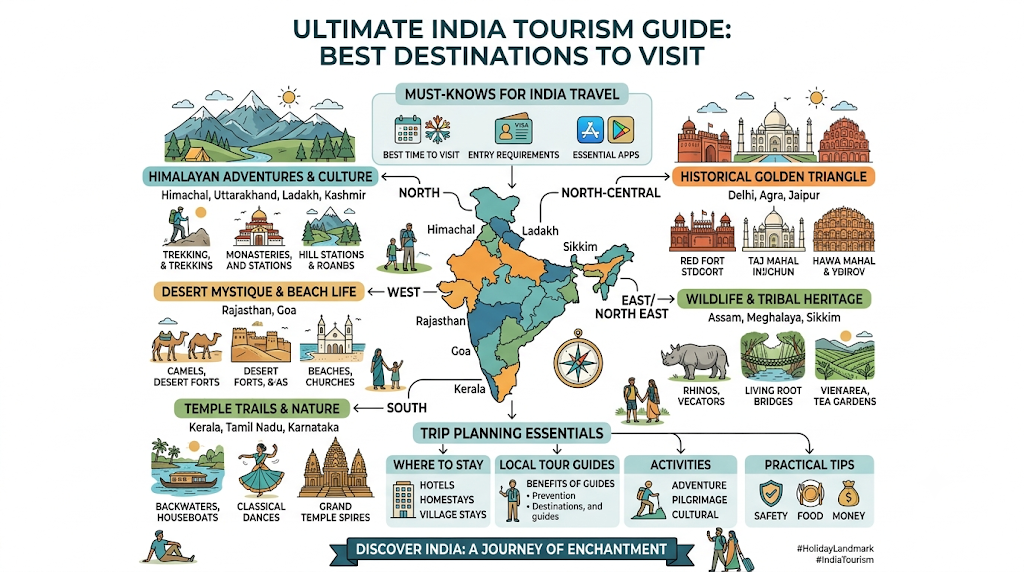
India is less of a country and more of a vibrant, sensory-flooded continent. From the snow-capped fortresses of the Himalayas to the tropical, sun-drenched coastlines of the south, navigating this vast land requires a blend of curiosity and careful preparation. Planning your journey ensures you don’t miss out on the incredible architectural wonders, diverse ecosystems, and deep spiritual heritage that define the sub-continent. To truly understand India, you must look beyond standard tourist brochures. Engaging with local tour guides, stepping into rural communities, and choosing authentic regional accommodations completely transforms your journey from simple sightseeing into immersive storytelling. Platforms like HolidayLandmark help travelers bridge this gap, offering a curation of local insights, curated itineraries, and community-driven travel opportunities. Whether you are seeking a fast-paced golden triangle tour or a slow, reflective journey through hidden valleys, this comprehensive guide will give you the blueprints for an unforgettable voyage.
Why This Destination Matters
The cultural and historical significance of India cannot be overstated. As the birthplace of four major world religions—Hinduism, Buddhism, Jainism, and Sikhism—it holds unparalleled spiritual importance. Thousands of years of dynastic history, from the ancient Maurya and Gupta Empires to the Mughals and the British Raj, have left behind an astonishing architectural legacy of forts, palaces, and UNESCO World Heritage sites.
For the modern traveler, India offers immense tourism value because it defies monotony. You can experience world-class luxury in a converted 18th-century palace one day, and find yourself sleeping under a canopy of stars in the Thar desert the next. Its unique appeal lies in its living traditions; ancient rituals are practiced daily alongside rapidly growing, high-tech mega-cities.
Destination Overview
Geographically, India is bounded by the towering Himalayan mountain range in the north, the Arabian Sea to the west, the Indian Ocean to the south, and the Bay of Bengal to the east. This vast topography creates a wide spectrum of microclimates. While the northern plains experience scorching summers and chilly winters, the southern peninsula enjoys a tropical climate year-round.
Local culture is deeply fragmented yet beautifully unified, expressed through dozens of official languages, distinct regional cuisines, and vibrant traditional clothing. Major attractions are scattered across every state, making India a perennially relevant destination for every style of traveler, from budget backpackers to eco-tourists.
Top Attractions
The Taj Mahal (Agra)
An undeniable icon of India tourism, this white marble mausoleum built by Emperor Shah Jahan is a masterclass in Mughal architecture. Standing before it at sunrise offers a surreal visual experience as the marble shifts from soft pink to brilliant gold.
Jaipur and Udaipur (Rajasthan)
Known as the Pink and White cities respectively, these urban centers host towering forts like Amer Fort and floating lake palaces like Jag Niwas. They are quintessential stops for anyone seeking royal heritage and historic monuments.
The Backwaters of Alleppey (Kerala)
A labyrinthine network of interconnected canals, rivers, and lakes. Cruising these waters on a traditional thatched houseboat provides a peaceful glimpse into rural coastal life, surrounded by endless coconut groves.
Varanasi (Uttar Pradesh)
One of the oldest continuously inhabited cities in the world. The sacred ghats along the Ganges River host evening Ganga Aarti ceremonies, making it the focal point for spiritual exploration and cultural tourism.
Leh-Ladakh (Jammu & Kashmir/Ladakh)
A high-altitude desert framed by jagged, stark mountains and pristine alpine lakes like Pangong Tso. It is a premier destination for adventure activities like high-altitude trekking and road trips.
Hampi (Karnataka)
The mesmerizing ruins of the ancient Vijayanagara Empire lie scattered across a boulder-strewn landscape. It is an open-air museum and a dream for history buffs and travel photography enthusiasts.
Mandatory Comparison Table #1: Top Attractions
| Attraction | Famous For | Ideal Duration | Best Season |
|---|---|---|---|
| Taj Mahal | Mughal Architecture & Romance | 3 – 4 Hours | October to March |
| Jaipur Palaces | Royal Forts & Vibrant Bazaars | 2 – 3 Days | November to February |
| Kerala Backwaters | Houseboat Cruises & Serenity | 1 – 2 Days | September to March |
| Varanasi Ghats | Spiritual Rituals & Ancient History | 2 Days | October to March |
| Leh-Ladakh | Trekking, Monasteries & Landscapes | 5 – 7 Days | June to September |
| Hampi Ruins | Vijayanagara Architecture & Boulders | 2 – 3 Days | November to February |
Things to Do
There is an endless array of things to do in India that cater to every passion. Sightseeing is just the surface; true exploration involves diving into the local markets of Old Delhi, Jaipur, or Mumbai, where you can haggle for textiles, brassware, and intricate handicrafts.
For food lovers, exploring regional cuisines through guided street food walks is mandatory. Taste smoky kebabs in Lucknow, spicy chaat in Varanasi, or rich coconut curries in Goa. Photography enthusiasts will find endless inspiration in the colorful attire of locals, the architectural geometries, and the dynamic street scenes. If your timing aligns, participating in major festivals like Diwali (the festival of lights) or Holi (the festival of colors) will give you a profound, joyful connection to Indian community life.
Best Time to Visit
The best time to visit India largely depends on the region you plan to explore, but generally speaking, the cooler months yield the most comfortable travel conditions.
Winter (October to March)
This is the peak tourist season across the plains of North India, Rajasthan, and the beaches of the South. Temperatures are pleasant, making long days of walking and sightseeing highly enjoyable. The downside is increased crowd sizes at major monuments and higher peak-season prices for accommodations.
Summer (April to June)
Temperatures can soar past 40∘C (104∘F) in the central plains and deserts. Sightseeing during mid-day becomes exhausting. However, this is the prime window to visit hill stations like Shimla, Manali, Ooty, and the high-altitude terrains of Ladakh and Himachal Pradesh, where the weather remains crisp and clear.
Monsoon (July to September)
Heavy rains breathe new life into India’s landscapes, turning the Western Ghats, Kerala, and parts of Madhya Pradesh into lush, green sanctuaries. It is the perfect time for Ayurvedic wellness retreats. The disadvantage is the risk of flight delays, localized flooding, and limited outdoor trekking options.
Mandatory Comparison Table #2: Seasonal Travel Overview
| Season | Weather | Crowd Level | Travel Experience |
|---|---|---|---|
| Winter (Oct-Mar) | Cool, pleasant across most of the country | High | Perfect for sightseeing, festivals, and beach holidays. |
| Summer (Apr-Jun) | Scorching in plains; cool in the mountains | Low to Medium | Excellent for Himalayan escapes and wildlife safaris. |
| Monsoon (Jul-Sep) | Heavy rain, humid but beautifully lush | Low | Ideal for budget travel, green landscapes, and wellness. |
How to Reach
- By Air: Major international gateways include Delhi (DEL) and Mumbai (BOM), which offer direct connections to continents worldwide. Regional hubs like Bengaluru, Chennai, Kochi, and Kolkata easily service flights throughout Asia and Europe.
- By Train: The Indian Railways network is one of the largest in the world. It connects almost every town and city. For longer journeys, booking multi-tier air-conditioned sleeper coaches (1AC, 2AC, or 3AC) offers a comfortable, classic Indian travel experience.
- By Road: Long-distance buses, both government-run and private luxury sleepers, ply major intercity routes. For regional travel or weekend getaways, renting a private car with a professional driver remains an affordable and highly flexible option.
- Local Transportation: Within cities, auto-rickshaws are perfect for short hops. App-based ride-hailing services like Uber and Ola operate extensively in major metropolitan areas, providing transparent pricing and reliable rides.
Suggested India Travel Itinerary
2-Day Itinerary: The Express Golden Triangle
- Day 1: Arrive in Delhi. Explore the historical monuments of Old Delhi (Red Fort, Jama Masjid) in the morning, and drive to Agra via the Yamuna Expressway in the evening.
- Day 2: Catch the sunrise at the Taj Mahal. Visit the historic Agra Fort, and head back to Delhi for your departure flight.
5-Day Itinerary: Royal Rajasthan Heritage
- Day 1-2 (Jaipur): Visit Amer Fort, Hawa Mahal, and the City Palace. Spend your evenings shopping for traditional handicrafts and textiles in the old walled city bazaars.
- Day 3 (Pushkar): Drive to the holy town of Pushkar. Walk around the sacred lake and visit the rare Brahma Temple.
- Day 4-5 (Udaipur): Travel to the City of Lakes. Enjoy a sunset boat cruise on Lake Pichola and tour the grand Udaipur City Palace complex.
7-Day Itinerary: Southern Soul & Serenity
- Day 1-2 (Kochi): Explore the historic neighborhood of Fort Kochi, see the iconic Chinese Fishing Nets, and attend a traditional Kathakali dance performance.
- Day 3-4 (Munnar): Travel into the hills to explore sprawling tea plantations, mist-covered valleys, and enjoy light trekking.
- Day 5-6 (Alleppey): Board a private luxury houseboat for an overnight cruise through the scenic Keralan backwaters.
- Day 7 (Marari/Kochi): Unwind on the quiet beaches of Marari before heading back to Kochi airport.
Where to Stay
Choosing where to stay dramatically shapes your travel experience in India. The options are incredibly diverse, catering to all types of budgets and personal preferences.
- Best Homestays in India: Staying with a local family gives you a window into everyday Indian life. These properties offer home-cooked regional meals, local insider advice, and an authentic cultural connection you won’t find in a standard hotel chain.
- Heritage Hotels & Resorts: Mainly found throughout Rajasthan and Gujarat, these are historic forts and palaces converted into luxury accommodations. They let you live like royalty, complete with traditional hospitality and stunning period architecture.
- Eco-Lodges and Nature Resorts: Located near national parks or hidden deep in the Western Ghats, these stays focus heavily on sustainable tourism and minimizing your environmental footprint.
- Hostels and Budget Stays: Backpacking India has never been easier thanks to boutique hostel chains like Zostel, which provide clean, safe, social spaces for solo travelers and budget seekers.
Local Food to Try
Indian cuisine is incredibly regional, complex, and deeply tied to history and geography.
In the north, meals are often centered around wheat-based flatbreads (naan, roti), rich lentil gravies (dal makhani), and aromatic, slow-cooked tandoori meats or biryanis. In sharp contrast, southern Indian food relies heavily on rice, coconuts, and souring agents like tamarind. Do not leave the country without trying a traditional South Indian Thali—a round platter serving small bowls of sambar, rasam, various vegetable preparations, and curries, all accompanied by a mountain of rice.
Street food is the true heartbeat of urban India. From the crispy, spiced-water-filled Pani Puri found on Mumbai’s beaches to the sweet, syrup-dripping Jalebis of Old Delhi, street food is a celebration of contrasting textures and intense flavors.
Local Tour Guides in India
Hiring local tour guides in India can completely transform your travel experience. While it’s easy enough to read a guidebook while standing in front of a monument, a local guide brings the stone and mortar to life with forgotten folklore, architectural secrets, and historical context.
Beyond the major tourist sites, a trusted guide helps you navigate busy local markets, bridges language barriers in rural areas, and introduces you to authentic eateries that hidden-gem hunters love. Utilizing platforms like HolidayLandmark to connect with certified, knowledgeable guides gives you peace of mind and leads to highly personalized, educational experiences.
Cultural Experiences
To truly appreciate India, you must engage directly with its living cultural traditions. Plan your visits around regional festivals to see communities come alive with music, dance, and elaborate rituals.
- Traditional Arts: Watch a classical dance performance like Kathakali in Kerala or Bharatanatyam in Tamil Nadu, where stories from ancient epics are told through precise facial expressions and hand gestures.
- Handicrafts and Weaving: Visit a traditional block-printing workshop in Rajasthan or watch master silk weavers create fine Banarasi saris in Varanasi. Supporting these artisan families keeps ancient skills alive.
Adventure Activities in India
For thrill-seekers, India’s diverse terrain offers an incredible playground of outdoor activities.
- Trekking: From the accessible weekend treks of the Western Ghats to grueling, multi-day Himalayan expeditions like the Chadar Frozen River Trek or Roopkund Trek, India is a world-class trekking destination.
- White-Water Rafting: The Ganges River near Rishikesh offers thrilling Class III and IV rapids, set against a beautiful backdrop of forested hills.
- Wildlife Safaris: Head to Ranthambore, Jim Corbett, or Kanha National Park for a chance to spot the elusive Bengal tiger in its natural habitat, or visit Kaziranga to see the endangered one-horned rhinoceros.
Village Tourism in India
If you want to step away from the chaotic tourist tracks, village tourism in India offers a slow-paced, deeply rewarding escape. Rural initiatives across states like Rajasthan, Madhya Pradesh, and Nagaland allow you to stay in traditional mud-and-thatch cottages, participate in local farming practices, and enjoy simple, organic farm-to-table meals.
By choosing rural tourism, your travel dollars go directly to the host communities, discouraging urban migration and helping preserve local customs, crafts, and natural habitats.
Pilgrimage Tours & Spiritual Experiences
India has always been a premier global destination for spiritual seekers. Pilgrimage tours in India offer a profound look into the country’s foundational spiritual practices.
You can visit ancient temple towns like Madurai, featuring the towering Dravidian gopurams of the Meenakshi Temple, or spend a week learning meditation and yoga in the ashrams of Rishikesh. Exploring the tranquil Buddhist monasteries of Dharamshala or the stunning Golden Temple in Amritsar highlights the deep, peaceful co-existence of different spiritual paths across the sub-continent.
Budget & Travel Costs
| Expense | Budget (INR / USD) | Mid-Range (INR / USD) | Premium (INR / USD) |
|---|---|---|---|
| Accommodation | ₹800 – ₹1,500 ($10-$18) | ₹3,000 – ₹6,000 ($35-$72) | ₹15,000+ ($180+) |
| Food (Per Day) | ₹400 – ₹800 ($5-$10) | ₹1,200 – ₹2,500 ($15-$30) | ₹5,000+ ($60+) |
| Transportation | ₹300 – ₹600 ($4-$7) | ₹1,500 – ₹3,500 ($18-$42) | ₹6,000+ ($72+) |
| Activities / Entries | ₹200 – ₹500 ($2-$6) | ₹1,000 – ₹2,500 ($12-$30) | ₹5,000+ ($60+) |
Safety & Travel Tips
- Dress Moderately: Respect local customs by covering your shoulders and knees, especially when visiting temples, mosques, and rural areas. Always remove your shoes before entering a place of worship.
- Stay Hydrated and Safe: Drink only bottled or purified water. Eat at busy street stalls where the food is cooked fresh in front of you to prevent stomach issues.
- Solo Traveler Advice: India is generally safe for solo travelers, but it’s best to avoid walking alone in poorly lit or unfamiliar areas late at night. Use pre-paid taxis or tracked rides via Uber and Ola for late-night transit.
Responsible & Sustainable Tourism
Travel responsibly by minimizing your single-use plastic consumption; carry a refillable water filter bottle wherever possible. Support local economies by purchasing handicrafts directly from artisans rather than mass-produced souvenir shops. When participating in wildlife safaris, choose ethical operators that prioritize animal welfare and strictly enforce distance boundaries from the wildlife.
How HolidayLandmark Helps Travelers
Planning an intricate trip across a vast nation like India can feel overwhelming. HolidayLandmark helps simplify this process, offering travelers a reliable space to discover diverse destinations, source localized itineraries, and connect directly with verified homestays and experienced tour guides. By highlighting authentic village tourism, pilgrimage tours, and unique adventure activities, the platform ensures your journeys remain meaningful, safe, and deeply unforgettable.
FAQ Section
What is the absolute best time to visit India?
The ideal time to explore most parts of India is during the winter season, which runs from October through March, offering cool and comfortable weather.
Do I need a visa to travel to India?
Yes, most foreign citizens require a visa to enter India. E-Visas are readily available online for citizens of many countries for tourism purposes.
Is it safe to drink tap water in India?
No, you should never drink untreated tap water in India. Stick exclusively to sealed bottled water or use a reliable water purification bottle.
How can I find reliable local tour guides in India?
You can easily discover and connect with verified, professional local tour guides through dedicated travel discovery platforms like HolidayLandmark.
What should I pack for a trip to India?
Pack lightweight, modest cotton clothing, comfortable walking shoes, a scarf to cover your head at religious sites, and a basic medical kit.
What are the best places to visit in India for a first-time traveler?
The Golden Triangle circuit—comprising Delhi, Agra, and Jaipur—along with the relaxing backwaters of Kerala, are ideal starting points for first-time visitors.
Is India safe for solo female travelers?
Yes, many solo females travel through India safely. Exercising common travel precautions, dressing modestly, and avoiding late-night transits ensures a smooth journey.
What is village tourism in India?
Village tourism involves visiting or staying in rural communities to experience traditional lifestyles, agriculture, authentic folk arts, and eco-friendly living.
How expensive is it to travel around India?
India is highly budget-friendly. Backpacker budgets range from $15-$25 per day, while mid-range travelers can live very comfortably on $40-$80 per day.
How do I travel between cities within India?
The domestic air network is extensive and affordable, while the Indian Railways network offers a scenic, classic, and highly integrated long-distance travel experience.
Conclusion
India is a brilliant kaleidoscope of landscapes, deep-rooted traditions, and unforgettable human connections. Planning an extensive journey across this beautiful country rewards you with memories that stick with you for a lifetime. Whether you are gazing at the immaculate marble architecture of the Taj Mahal, cruising along the tranquil waters of Kerala, or finding peace in a remote Himalayan village, India constantly invites you to look a little deeper. By prioritizing authentic local experiences—such as choosing family-run homestays, exploring regional street food markets, and hiring local guides—you help preserve the incredible cultural heritage that makes this country so special. Embracing responsible and community-centric travel principles ensures that your visits leave a positive, lasting imprint on local hosts.
