Introduction
AI Malware Classification Tools use artificial intelligence, machine learning, deep learning, behavioral analysis, and automated threat intelligence to identify, classify, and analyze malicious software. These platforms examine malware files, code patterns, execution behavior, network activity, and threat indicators to determine malware types, risk levels, and potential impact.
Traditional malware detection methods often rely on signatures and known threat databases, which can struggle against new, polymorphic, and rapidly changing malware variants. AI-powered malware classification solutions improve detection by analyzing unknown samples, identifying behavioral similarities, clustering threats, and generating actionable intelligence.
These tools are widely used by security operations centers, malware researchers, incident response teams, antivirus providers, threat intelligence teams, and enterprises to improve malware detection, accelerate investigations, and strengthen cyber defense.
Real-world use cases:
- Malware family classification
- Unknown malware detection
- Automated malware analysis
- Suspicious file investigation
- Threat intelligence enrichment
- Incident response support
- Ransomware analysis
- Behavioral malware detection
- Malware research automation
- Security alert investigation
Evaluation Criteria for Buyers:
- AI classification accuracy
- Malware analysis capabilities
- Behavioral detection features
- Threat intelligence integration
- Sandbox capabilities
- Automation workflows
- Reporting and analysis quality
- Integration with security platforms
Best for
Security operations teams, malware analysts, threat researchers, antivirus vendors, and enterprises handling advanced cyber threats.
Not ideal for
Small organizations without malware analysis requirements or dedicated security teams.
Key Trends
- AI-based malware detection
- Machine learning malware classification
- Behavioral malware analysis
- Automated sandboxing
- Deep learning threat detection
- Malware family clustering
- Reverse engineering assistance
- Threat intelligence automation
- Zero-day malware detection
- Security research automation
Methodology
- Selected platforms based on AI malware classification capabilities
- Evaluated detection, analysis, automation, and intelligence features
- Considered enterprise and research use cases
- Prioritized solutions supporting advanced malware investigation
- Reviewed scalability, integration, and security capabilities
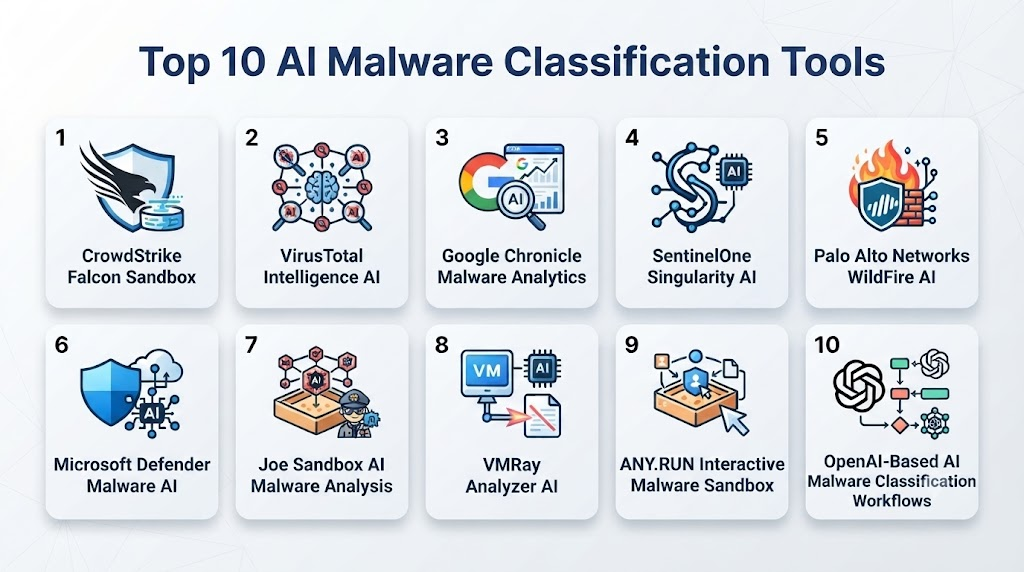
Top 10 AI Malware Classification Tools
1. CrowdStrike Falcon Sandbox
Verdict: AI-powered malware analysis platform for advanced threat detection and classification.
Short Description: CrowdStrike Falcon Sandbox analyzes suspicious files and behaviors to identify malware characteristics and provide threat intelligence.
Key Features:
- Automated malware analysis
- Behavioral detection
- Threat intelligence
- File classification
- Incident investigation
Pros:
- Strong AI threat detection
- Enterprise security integration
Cons:
- Enterprise-focused
- Requires security expertise
Deployment: Cloud-based
Security & Compliance: Enterprise security controls
Integrations & Ecosystem: EDR and security platforms
Support & Community: Enterprise support
Pricing Model: Subscription-based
Best-Fit Scenarios: Enterprise security teams
2. VirusTotal Intelligence AI
Verdict: AI-assisted malware analysis platform with extensive threat intelligence capabilities.
Short Description: VirusTotal Intelligence helps researchers and security teams analyze files, URLs, malware relationships, and threat indicators.
Key Features:
- Malware scanning
- File analysis
- Threat intelligence
- Sample relationships
- Detection insights
Pros:
- Extensive security ecosystem
- Large malware dataset
Cons:
- Requires analyst expertise
- Advanced features vary
Deployment: Cloud-based
Security & Compliance: Platform security controls
Integrations & Ecosystem: Security tools and APIs
Support & Community: Research community
Pricing Model: Subscription-based
Best-Fit Scenarios: Malware research teams
3. Google Chronicle Malware Analytics
Verdict: AI-driven security analytics platform supporting malware investigation and classification.
Short Description: Google Chronicle uses AI-powered analysis to help security teams investigate threats and identify malicious activity.
Key Features:
- Threat analytics
- Malware investigation
- Security intelligence
- Detection analytics
- Incident analysis
Pros:
- Strong AI capabilities
- Cloud-scale analytics
Cons:
- Requires Google security expertise
- Enterprise-focused
Deployment: Cloud-based
Security & Compliance: Enterprise cloud security
Integrations & Ecosystem: Security operations platforms
Support & Community: Enterprise support
Pricing Model: Usage-based
Best-Fit Scenarios: Enterprise SOC teams
4. SentinelOne Singularity AI
Verdict: AI-powered endpoint security platform with malware classification capabilities.
Short Description: SentinelOne Singularity uses behavioral AI to detect, classify, and respond to malware threats.
Key Features:
- Behavioral malware detection
- Threat classification
- Automated response
- Endpoint analytics
- AI investigation
Pros:
- Strong autonomous detection
- Real-time protection
Cons:
- Endpoint-focused
- Requires platform deployment
Deployment: Cloud-based
Security & Compliance: Enterprise security controls
Integrations & Ecosystem: Endpoint security ecosystem
Support & Community: Enterprise support
Pricing Model: Subscription-based
Best-Fit Scenarios: Endpoint security teams
5. Palo Alto Networks WildFire AI
Verdict: AI-powered malware analysis and cloud sandboxing platform.
Short Description: Palo Alto Networks WildFire analyzes suspicious files and identifies malware using behavioral analysis and machine learning.
Key Features:
- Malware sandboxing
- Behavioral analysis
- Threat intelligence
- File classification
- Automated detection
Pros:
- Strong enterprise security integration
- Advanced sandbox capabilities
Cons:
- Best with Palo Alto ecosystem
- Requires configuration
Deployment: Cloud-based
Security & Compliance: Enterprise security standards
Integrations & Ecosystem: Palo Alto security platforms
Support & Community: Enterprise support
Pricing Model: Subscription-based
Best-Fit Scenarios: Enterprise cybersecurity teams
6. Microsoft Defender Malware AI
Verdict: AI-enabled malware detection platform integrated with Microsoft security solutions.
Short Description: Microsoft Defender uses AI, behavioral analysis, and threat intelligence to detect and classify malware.
Key Features:
- Malware detection
- Behavioral analysis
- Cloud intelligence
- Automated investigation
- Threat response
Pros:
- Strong Microsoft ecosystem
- Broad enterprise adoption
Cons:
- Best within Microsoft environment
- Configuration required
Deployment: Cloud-based
Security & Compliance: Enterprise security framework
Integrations & Ecosystem: Microsoft security ecosystem
Support & Community: Enterprise support
Pricing Model: Subscription-based
Best-Fit Scenarios: Microsoft security environments
7. Joe Sandbox AI Malware Analysis
Verdict: AI-enhanced malware analysis and sandbox platform for researchers and enterprises.
Short Description: Joe Sandbox analyzes suspicious files, URLs, and malware behavior to provide detailed threat intelligence.
Key Features:
- Malware sandboxing
- Behavioral analysis
- Threat reports
- File analysis
- Automated detection
Pros:
- Detailed malware analysis
- Research-friendly platform
Cons:
- Requires technical expertise
- Advanced workflows need knowledge
Deployment: Cloud and enterprise environments
Security & Compliance: Security controls available
Integrations & Ecosystem: Security platforms
Support & Community: Customer support
Pricing Model: Subscription-based
Best-Fit Scenarios: Malware researchers
8. VMRay Analyzer AI
Verdict: AI-assisted malware analysis platform focused on advanced threat detection.
Short Description: VMRay Analyzer provides automated malware analysis using behavioral monitoring and advanced detection methods.
Key Features:
- Malware analysis
- Behavioral monitoring
- Threat classification
- Detection reports
- Investigation support
Pros:
- Strong analysis capabilities
- Good enterprise workflows
Cons:
- Specialized security tool
- Requires expertise
Deployment: Cloud and enterprise environments
Security & Compliance: Enterprise security controls
Integrations & Ecosystem: Security platforms
Support & Community: Enterprise support
Pricing Model: Subscription-based
Best-Fit Scenarios: Security research teams
9. ANY.RUN Interactive Malware Sandbox
Verdict: Interactive AI-assisted malware analysis platform for threat investigation.
Short Description: ANY.RUN helps analysts inspect malware behavior, investigate suspicious files, and classify threats.
Key Features:
- Interactive sandboxing
- Malware behavior analysis
- Threat intelligence
- File investigation
- Collaboration tools
Pros:
- Interactive analysis
- Useful for researchers
Cons:
- Requires analyst knowledge
- Some advanced features vary
Deployment: Cloud-based
Security & Compliance: Platform security controls
Integrations & Ecosystem: Security tools
Support & Community: Research community
Pricing Model: Subscription-based
Best-Fit Scenarios: Malware analysts
10. OpenAI-Based AI Malware Classification Workflows
Verdict: Custom AI approach for building organization-specific malware classification systems.
Short Description: AI workflows can analyze malware reports, behavioral data, threat indicators, and security telemetry to support malware classification and investigation.
Key Features:
- Malware report analysis
- Threat classification assistance
- Behavioral insight generation
- Intelligence summarization
- Custom security workflows
Pros:
- Highly customizable
- Supports unique research requirements
Cons:
- Requires cybersecurity expertise
- Needs validation and governance
Deployment: API and custom environments
Security & Compliance: Depends on implementation
Integrations & Ecosystem: SIEM, EDR, sandbox, threat intelligence platforms
Support & Community: Developer ecosystem
Pricing Model: Usage-based
Best-Fit Scenarios: Custom malware intelligence systems
Comparison Table
| Platform | AI Classification | Malware Analysis | Automation | Integrations | Best Use |
|---|---|---|---|---|---|
| CrowdStrike Falcon Sandbox | Excellent | Excellent | Excellent | Excellent | Enterprise detection |
| VirusTotal Intelligence | Excellent | Excellent | High | High | Malware research |
| Google Chronicle | Excellent | High | High | High | SOC analytics |
| SentinelOne Singularity | Excellent | High | Excellent | High | Endpoint security |
| Palo Alto WildFire | Excellent | Excellent | High | Excellent | Enterprise sandboxing |
| Microsoft Defender AI | Excellent | High | Excellent | Excellent | Microsoft security |
| Joe Sandbox | High | Excellent | High | High | Malware analysis |
| VMRay Analyzer | High | Excellent | High | High | Threat research |
| ANY.RUN | High | High | Medium | High | Interactive analysis |
| OpenAI Workflows | Excellent | Custom | Custom | Custom | Custom solutions |
Evaluation & Scoring Table
| Platform | AI Accuracy 25% | Malware Analysis 15% | Detection 15% | Integrations 15% | Security 10% | Ease 10% | Value 10% | Total |
|---|---|---|---|---|---|---|---|---|
| CrowdStrike Falcon Sandbox | 25 | 15 | 15 | 15 | 10 | 8 | 9 | 97 |
| VirusTotal Intelligence | 25 | 15 | 14 | 14 | 10 | 9 | 9 | 96 |
| Google Chronicle | 24 | 14 | 14 | 14 | 10 | 8 | 8 | 92 |
| SentinelOne Singularity | 25 | 14 | 15 | 14 | 10 | 9 | 9 | 96 |
| Palo Alto WildFire | 25 | 15 | 15 | 15 | 10 | 8 | 8 | 96 |
| Microsoft Defender AI | 25 | 14 | 15 | 15 | 10 | 9 | 9 | 97 |
| Joe Sandbox | 23 | 15 | 14 | 13 | 9 | 8 | 9 | 91 |
| VMRay Analyzer | 23 | 15 | 14 | 13 | 10 | 8 | 8 | 91 |
| ANY.RUN | 22 | 14 | 13 | 13 | 9 | 10 | 9 | 90 |
| OpenAI Workflows | 25 | 15 | 15 | 12 | 8 | 8 | 9 | 92 |
Which AI Malware Classification Tool Is Right for You?
- Enterprise Endpoint Protection: Microsoft Defender AI, SentinelOne Singularity, CrowdStrike Falcon Sandbox
- Advanced Malware Research: VirusTotal Intelligence, Joe Sandbox, VMRay Analyzer
- Enterprise Sandbox Analysis: Palo Alto WildFire
- Cloud Security Analytics: Google Chronicle
- Interactive Malware Investigation: ANY.RUN
- Custom Malware Intelligence: OpenAI-based workflows
Implementation Playbook
30 Days
- Identify malware analysis requirements
- Review security data sources
- Define investigation workflows
60 Days
- Integrate security platforms
- Configure analysis workflows
- Test malware samples
90 Days
- Automate classification processes
- Improve threat investigation speed
- Optimize detection models
Common Mistakes
- Relying only on signatures
- Ignoring behavioral analysis
- Poor malware sample handling
- Lack of analyst validation
- Not integrating threat intelligence
Frequently Asked Questions
What are AI malware classification tools?
They are AI-powered systems that analyze and classify malicious software based on behavior and characteristics.
How does AI detect malware?
AI analyzes code patterns, behaviors, files, and threat indicators to identify malicious activity.
Can AI detect unknown malware?
Yes. Machine learning helps identify previously unseen malware patterns.
Do malware AI tools use sandboxing?
Many platforms use sandbox environments to observe malware behavior.
Can AI classify malware families?
Yes. AI can group malware based on similarities and behaviors.
Do these tools support threat intelligence?
Most enterprise solutions integrate threat intelligence sources.
Can AI replace malware analysts?
No. AI assists analysts by speeding up investigation and classification.
Are AI malware tools used by enterprises?
Yes. Security teams use them for advanced threat detection.
Can AI analyze ransomware?
Many platforms support ransomware behavior analysis.
Are malware classification platforms secure?
Organizations should evaluate isolation, access controls, and security practices.
Can small teams use malware analysis tools?
Cloud-based platforms can support smaller security teams.
How should organizations implement AI malware classification?
Start with secure analysis workflows, integrate intelligence sources, validate results, and continuously improve detection.
Conclusion
AI Malware Classification Tools are transforming cybersecurity by improving malware detection, accelerating threat analysis, and helping security teams respond faster to emerging threats. Platforms such as Microsoft Defender AI, CrowdStrike Falcon Sandbox, Palo Alto WildFire, and VirusTotal Intelligence provide advanced capabilities for modern security operations.Organizations should choose solutions based on malware analysis requirements, security infrastructure, research needs, and operational maturity. Combining AI-powered malware classification with expert security teams helps organizations improve threat visibility, reduce response time, and strengthen cyber defense.
