Introduction
AI Personalized Study Plan Tools use artificial intelligence, machine learning, learning analytics, recommendation systems, and adaptive learning technologies to create customized study schedules and learning pathways based on individual goals, progress, strengths, weaknesses, and available study time.
Traditional study planning often relies on fixed timetables, generic recommendations, or manual organization. Students may struggle to decide what topics to study first, how much time to spend on each subject, and how to balance assignments, revision, and examinations.
AI-powered study planning platforms solve these challenges by analyzing learner information and creating personalized plans that adapt over time. These tools can recommend study sessions, prioritize important topics, track progress, generate practice activities, and adjust schedules based on performance.
AI personalized study planning is increasingly used by:
- School students
- University learners
- Exam preparation candidates
- Language learners
- Professional certification students
- Online course participants
- Corporate learners
Modern AI study planning systems combine scheduling automation, learning analytics, progress tracking, recommendation engines, reminders, and personalized content suggestions.
The goal of these tools is not only to create a timetable but to help learners develop efficient, consistent, and goal-oriented study habits.
How AI Personalized Study Plan Tools Work
Goal Identification
AI analyzes learner objectives such as:
- Exam preparation
- Skill development
- Course completion
- Certification goals
- Academic improvement
Learning Assessment
The system evaluates:
- Current knowledge level
- Previous performance
- Strengths
- Weak areas
- Learning speed
Plan Generation
AI creates personalized schedules including:
- Topics
- Study duration
- Revision cycles
- Practice sessions
- Learning resources
Continuous Adjustment
As learners complete activities and improve skills, AI updates recommendations and modifies study plans.
Common Use Cases
- Exam preparation
- Daily study scheduling
- Homework planning
- Certification preparation
- Language learning
- Skill development
- University coursework
- Professional training
- Competitive exam preparation
- Time management
- Learning progress tracking
Why AI Personalized Study Plan Tools Matter
Better Time Management
Students can organize study activities based on priorities and available time.
Personalized Learning Paths
AI helps learners focus on topics where improvement is needed.
Improved Consistency
Automated reminders and structured schedules encourage regular learning habits.
Reduced Study Stress
Clear plans help students avoid last-minute preparation.
Data-Driven Improvement
Learners receive insights based on progress, performance, and learning behavior.
Evaluation Criteria for Buyers
Personalization Quality
The platform should create plans based on individual goals, performance, and learning preferences.
Progress Tracking
Strong tools provide dashboards showing completed tasks, improvement areas, and milestones.
Adaptive Recommendations
The system should update plans as learner needs change.
Content Support
Useful platforms connect study plans with lessons, exercises, quizzes, and learning resources.
Ease of Use
Students should easily create goals, follow schedules, and monitor progress.
Integration Capability
Important integrations include calendars, learning platforms, note-taking tools, and educational applications.
Privacy and Security
Student information, learning history, and personal data should be protected.
Key Trends
AI Learning Coaches
Study planners are evolving into intelligent assistants that guide learners throughout their education journey.
Adaptive Study Scheduling
AI systems are adjusting plans dynamically based on completion rates and performance.
Personalized Exam Preparation
Students are using AI tools to create revision strategies based on exam dates and topic difficulty.
Learning Analytics
Platforms are using data to identify study patterns and recommend improvements.
AI-Powered Practice Recommendations
Study planners increasingly suggest quizzes, exercises, and resources based on learner weaknesses.
Integrated Learning Ecosystems
AI study planning is becoming connected with online courses, calendars, productivity tools, and educational platforms.
Methodology
The following tools were evaluated using:
- Personalized planning capabilities
- Ease of use
- Integrations and ecosystem
- Security and privacy
- Performance and reliability
- Support and community
- Price and value
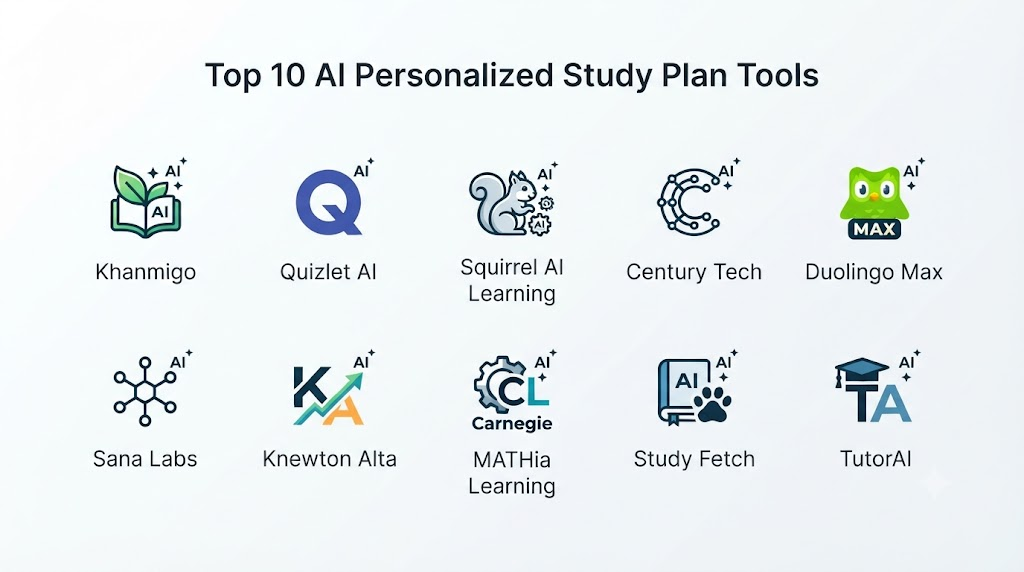
Top 10 AI Personalized Study Plan Tools
1. StudyFetch
StudyFetch is an AI-powered learning platform designed to help students create study materials, personalized learning plans, flashcards, quizzes, and AI tutoring experiences.
Key Features
- AI study plans
- Flashcard generation
- Practice quizzes
- Learning summaries
- AI tutoring
- Document analysis
- Study tracking
- Exam preparation
- Personalized recommendations
- Learning resources
Pros
- Strong student-focused workflow
- Combines multiple study tools
- Useful AI learning assistance
- Supports exam preparation
- Creates personalized materials
Cons
- Requires student input quality
- AI-generated materials need review
- Feature availability varies
Platforms
Web and mobile applications.
Deployment or Support
Cloud-based learning platform.
Security & Compliance
Privacy controls vary by plan.
Integrations & Ecosystem
Study materials, documents, learning workflows, and educational tools.
Support & Community
Documentation, help resources, and user community.
2. Quizlet AI
Quizlet AI provides personalized study experiences through flashcards, practice activities, AI-generated questions, and learning recommendations.
Key Features
- AI flashcards
- Practice tests
- Study modes
- Learning recommendations
- Progress tracking
- Course materials
- Personalized practice
- Quiz generation
- Explanations
- Collaboration
Pros
- Strong study ecosystem
- Excellent for memorization
- Large learning community
- Easy to use
- Supports many subjects
Cons
- Less focused on complete scheduling
- Depends on available study materials
- Advanced features may require subscription
Platforms
Web, iOS, and Android.
Deployment or Support
Cloud-based learning platform.
Security & Compliance
Privacy controls vary by plan.
Integrations & Ecosystem
Education resources, study workflows, and learning platforms.
Support & Community
Help center, tutorials, and learner community.
3. Khanmigo
Khanmigo provides AI-powered educational assistance with guided learning, tutoring support, and personalized learning experiences.
Key Features
- AI tutoring
- Learning guidance
- Practice support
- Personalized explanations
- Study assistance
- Learning conversations
- Progress support
- Educational activities
- Teacher tools
- Skill development
Pros
- Education-focused AI approach
- Encourages understanding
- Strong learning guidance
- Supports multiple subjects
- Designed around student needs
Cons
- Availability varies
- Primarily connected with supported educational content
- Not a dedicated planner only
Platforms
Web-based learning environment.
Deployment or Support
Cloud-based educational platform.
Security & Compliance
Education-focused privacy controls.
Integrations & Ecosystem
Learning resources, educational content, and classroom environments.
Support & Community
Educational resources and support.
4. Duolingo
Duolingo uses AI personalization to create adaptive language learning paths, practice schedules, and skill progression plans.
Key Features
- Personalized language learning
- Adaptive exercises
- Progress tracking
- AI conversations
- Practice reminders
- Skill levels
- Learning streaks
- Feedback
- Speech practice
- Mobile learning
Pros
- Excellent engagement
- Strong adaptive learning
- Effective daily practice
- Easy mobile experience
- Large learner community
Cons
- Mainly focused on languages
- Limited general study planning
- Professional learning use cases are limited
Platforms
Web, iOS, and Android.
Deployment or Support
Cloud-based learning platform.
Security & Compliance
Consumer privacy controls vary.
Integrations & Ecosystem
Language learning ecosystem and mobile education workflows.
Support & Community
Learning resources and community support.
5. Notion AI
Notion AI combines AI assistance with note-taking, task management, databases, and personal knowledge organization.
Key Features
- Study planning
- Task organization
- AI summaries
- Notes management
- Goal tracking
- Templates
- Knowledge organization
- Writing assistance
- Database workflows
- Collaboration
Pros
- Flexible planning system
- Strong organization features
- Useful for students and professionals
- Combines notes and tasks
- Highly customizable
Cons
- Requires setup
- Less education-specific
- Personalization depends on user configuration
Platforms
Web, desktop, and mobile.
Deployment or Support
Cloud-based productivity platform.
Security & Compliance
Security controls vary by plan.
Integrations & Ecosystem
Productivity tools, calendars, databases, and collaboration systems.
Support & Community
Documentation and user community.
6. MyStudyLife
MyStudyLife is a student planner designed for managing schedules, assignments, exams, and academic activities.
Key Features
- Study scheduling
- Class management
- Assignment tracking
- Exam reminders
- Calendar planning
- Task management
- Student dashboard
- Academic organization
- Notifications
- Progress tracking
Pros
- Designed specifically for students
- Simple planning workflow
- Useful academic organization
- Easy scheduling
- Mobile-friendly
Cons
- AI capabilities may vary
- Less focused on adaptive learning
- Limited advanced analytics
Platforms
Web, iOS, and Android.
Deployment or Support
Cloud-based student planner.
Security & Compliance
Privacy controls vary.
Integrations & Ecosystem
Calendars, student workflows, and productivity tools.
Support & Community
Help resources and user support.
7. Todoist AI
Todoist AI provides task management and productivity assistance that learners can use to organize study goals, assignments, and learning schedules.
Key Features
- Task planning
- AI task assistance
- Priority management
- Reminders
- Productivity tracking
- Project organization
- Goal management
- Scheduling
- Collaboration
- Workflow automation
Pros
- Excellent task management
- Flexible organization
- Useful reminders
- Simple interface
- Works beyond education
Cons
- Not specifically designed for learning
- Requires manual study planning
- Limited educational analytics
Platforms
Web, desktop, and mobile.
Deployment or Support
Cloud-based productivity platform.
Security & Compliance
Security features vary by plan.
Integrations & Ecosystem
Calendars, productivity tools, and collaboration platforms.
Support & Community
Documentation and user community.
8. RemNote AI
RemNote AI combines note-taking, spaced repetition, flashcards, and AI learning assistance to support long-term knowledge retention.
Key Features
- AI notes
- Flashcards
- Spaced repetition
- Knowledge organization
- Study workflows
- Learning summaries
- Concept linking
- Review scheduling
- Document management
- Research notes
Pros
- Strong memory-based learning
- Excellent note organization
- Useful for students
- Supports long-term retention
- Combines notes and practice
Cons
- Requires learning the system
- Best suited for motivated learners
- Not a complete academic planner
Platforms
Web, desktop, and mobile.
Deployment or Support
Cloud-based learning platform.
Security & Compliance
Privacy controls vary.
Integrations & Ecosystem
Knowledge management, study workflows, and note systems.
Support & Community
Documentation and user community.
9. Knowji
Knowji is an AI-assisted vocabulary learning application focused on personalized language improvement.
Key Features
- Vocabulary learning
- Personalized practice
- Memory techniques
- Audio learning
- Progress tracking
- Word exercises
- Learning reminders
- Language support
- Practice activities
- Study improvement
Pros
- Focused language learning
- Good vocabulary practice
- Personalized repetition
- Easy mobile usage
- Learner-friendly
Cons
- Limited subject coverage
- Mainly vocabulary focused
- Not a general study planner
Platforms
Mobile applications.
Deployment or Support
Cloud-based learning application.
Security & Compliance
Privacy controls vary.
Integrations & Ecosystem
Language learning workflows.
Support & Community
Learning resources and support.
10. Sana AI
Sana AI provides AI-powered learning and knowledge management solutions for organizations, including personalized learning recommendations and employee development.
Key Features
- Personalized learning
- AI knowledge assistant
- Learning recommendations
- Training automation
- Content generation
- Knowledge management
- Employee development
- Search capabilities
- Learning analytics
- Enterprise workflows
Pros
- Strong enterprise learning capabilities
- Combines knowledge and learning
- Supports workforce development
- Modern AI workflows
- Useful analytics
Cons
- Enterprise-focused
- Not designed primarily for individual students
- Requires implementation planning
Platforms
Web and enterprise applications.
Deployment or Support
Cloud-based enterprise platform.
Security & Compliance
Enterprise controls vary by agreement.
Integrations & Ecosystem
LMS platforms, workplace tools, knowledge systems, and enterprise applications.
Support & Community
Enterprise support and onboarding.
Comparison Table
| Tool Name | Best For | Platform(s) Supported | Deployment | Standout Feature | Public Rating |
|---|---|---|---|---|---|
| StudyFetch | AI study planning | Web, mobile | Cloud | Personalized study materials | N/A |
| Quizlet AI | Practice learning | Web, mobile | Cloud | AI study activities | N/A |
| Khanmigo | Guided learning | Web | Cloud | AI tutoring support | N/A |
| Duolingo | Language learning | Web, mobile | Cloud | Adaptive practice | N/A |
| Notion AI | Study organization | Web, desktop, mobile | Cloud | Flexible knowledge management | N/A |
| MyStudyLife | Student scheduling | Web, mobile | Cloud | Academic planner | N/A |
| Todoist AI | Task organization | Web, mobile | Cloud | Productivity planning | N/A |
| RemNote AI | Memory learning | Web, mobile | Cloud | Spaced repetition | N/A |
| Knowji | Vocabulary learning | Mobile | Cloud | Personalized language practice | N/A |
| Sana AI | Enterprise learning | Web | Cloud | AI learning recommendations | N/A |
Weighted Evaluation
| Tool Name | Core Features 25% | Ease of Use 15% | Integrations & Ecosystem 15% | Security & Compliance 10% | Performance & Reliability 10% | Support & Community 10% | Price/Value 15% | Total |
|---|---|---|---|---|---|---|---|---|
| StudyFetch | 23 | 14 | 12 | 8 | 9 | 9 | 13 | 88 |
| Quizlet AI | 22 | 15 | 14 | 8 | 9 | 10 | 13 | 91 |
| Khanmigo | 23 | 14 | 14 | 9 | 9 | 10 | 12 | 91 |
| Duolingo | 21 | 15 | 13 | 8 | 10 | 10 | 14 | 91 |
| Notion AI | 22 | 14 | 15 | 9 | 10 | 10 | 13 | 93 |
| MyStudyLife | 20 | 15 | 11 | 8 | 9 | 9 | 13 | 85 |
| Todoist AI | 20 | 15 | 15 | 9 | 10 | 10 | 13 | 92 |
| RemNote AI | 22 | 13 | 12 | 8 | 9 | 10 | 13 | 87 |
| Knowji | 19 | 15 | 10 | 8 | 9 | 8 | 13 | 82 |
| Sana AI | 22 | 12 | 14 | 10 | 9 | 9 | 11 | 87 |
Which AI Personalized Study Plan Tool Is Right for You?
Choose StudyFetch when students need AI-generated study materials and personalized exam preparation.
Choose Quizlet AI when flashcards, practice tests, and revision activities are important.
Choose Khanmigo when guided learning and AI tutoring support are priorities.
Choose Duolingo when personalized language learning is the main goal.
Choose Notion AI when students need flexible study organization and knowledge management.
Choose MyStudyLife when academic scheduling and student planning are the priority.
Choose Todoist AI when task management and productivity planning matter.
Choose RemNote AI when long-term memory retention and structured notes are important.
Choose Knowji when vocabulary learning requires personalized practice.
Choose Sana AI when organizations need personalized workforce learning.
Implementation Playbook
Phase 1: Define Learning Goals
- Identify academic objectives
- Set study deadlines
- Define target skills
- Determine available study time
- Select learning priorities
Phase 2: Create Learning Profile
- Add subjects
- Identify strengths
- Identify weak areas
- Set preferred learning methods
- Track current progress
Phase 3: Generate Study Plan
- Create schedules
- Assign topics
- Add revision cycles
- Include practice sessions
- Set reminders
Phase 4: Monitor Progress
- Track completed tasks
- Analyze performance
- Adjust study priorities
- Review recommendations
- Improve learning habits
Phase 5: Optimize Learning
- Update goals
- Improve schedules
- Add new resources
- Maintain consistency
- Measure outcomes
Common Mistakes
- Following AI plans without personal adjustment
- Setting unrealistic study schedules
- Ignoring learning preferences
- Not reviewing progress
- Depending completely on AI recommendations
- Failing to include revision time
- Ignoring personal learning challenges
- Not maintaining consistent habits
FAQs
1. What are AI Personalized Study Plan Tools?
AI Personalized Study Plan Tools use artificial intelligence to create customized learning schedules, recommend resources, track progress, and adapt study plans according to learner needs.
2. How do AI study planners personalize learning?
They analyze goals, performance, available time, learning behavior, and progress to recommend suitable study activities.
3. Can AI create a study plan for exams?
Yes. Many tools can generate revision schedules based on exam dates, subjects, difficulty levels, and learning goals.
4. Can AI study planners replace teachers or tutors?
No. They support learning organization and provide recommendations, but teachers and tutors provide guidance and expertise.
5. Are AI study plans suitable for all students?
They can help many learners, but students should customize plans according to their personal needs and circumstances.
6. Can AI track study progress?
Yes. Many platforms monitor completed tasks, practice performance, and learning improvement.
7. Do AI study planners support professional learning?
Yes. Many tools support certification preparation, workplace training, and skill development.
8. How accurate are AI study recommendations?
Accuracy depends on the platform, available data, and learner feedback. Students should review and adjust recommendations.
9. Can AI help improve study habits?
Yes. AI reminders, schedules, progress tracking, and personalized recommendations can encourage consistent learning.
10. What should users consider before choosing an AI study planning tool?
Users should evaluate personalization, ease of use, progress tracking, integrations, privacy, cost, and learning support features.
Conclusion
AI Personalized Study Plan Tools are changing how students and professionals organize learning by creating adaptive, goal-focused study experiences. These platforms help learners manage time, identify improvement areas, maintain consistency, and follow structured learning paths.StudyFetch and Quizlet AI support student-focused learning, Khanmigo provides guided educational assistance, Duolingo demonstrates adaptive language learning, and Notion AI and Todoist AI help organize broader study workflows. Enterprise solutions such as Sana AI extend personalized learning into professional development environments.
