Introduction
AI Language Learning Conversation Bots use artificial intelligence, natural language processing, speech recognition, machine learning, and conversational AI technologies to help learners practice languages through interactive conversations.
Traditional language learning methods often focus on memorization, grammar exercises, and textbook-based practice. While these methods build foundational knowledge, many learners struggle with real-world communication, pronunciation, confidence, and spontaneous conversations.
AI-powered language conversation bots provide a more interactive learning experience by allowing students to practice speaking, writing, listening, and comprehension skills through realistic conversations. These tools can simulate dialogues, correct mistakes, explain grammar, provide vocabulary suggestions, and adapt lessons based on learner progress.
AI language conversation bots are used by:
- Language students
- Travelers
- Professionals working globally
- International students
- Schools and universities
- Corporate training teams
- Self-paced learners
Modern AI language learning platforms combine conversational AI, speech recognition, personalized recommendations, pronunciation analysis, adaptive exercises, and real-time feedback to create immersive language practice environments.
The goal of these tools is not only translation but helping learners build communication skills through continuous practice.
How AI Language Learning Conversation Bots Work
Conversation Simulation
AI creates realistic dialogues based on everyday situations such as travel, work, interviews, and social conversations.
Speech Recognition
The system analyzes spoken language to evaluate pronunciation, fluency, and accuracy.
Language Understanding
Natural language processing identifies grammar mistakes, vocabulary usage, and sentence structure.
Personalized Feedback
AI provides corrections, explanations, and recommendations based on learner performance.
Adaptive Learning
The platform adjusts difficulty levels, vocabulary, and conversation topics based on progress.
Common Use Cases
- Speaking practice
- Pronunciation improvement
- Vocabulary building
- Grammar learning
- Travel language preparation
- Business communication
- Interview preparation
- Language immersion
- Daily conversation practice
- Translation assistance
- Cultural language learning
Why AI Language Learning Conversation Bots Matter
Speaking Confidence
Learners can practice conversations without fear of making mistakes in front of others.
Anytime Practice
AI tutors are available anytime, allowing learners to practice consistently.
Personalized Learning
Students receive feedback based on their individual strengths and weaknesses.
Real-Life Communication
Conversation-based learning helps learners develop practical language skills.
Faster Feedback
AI provides immediate corrections and explanations.
Evaluation Criteria for Buyers
Conversation Quality
The AI should provide natural, realistic, and context-aware conversations.
Language Accuracy
The platform should provide reliable grammar, vocabulary, and pronunciation feedback.
Speech Recognition
Strong voice analysis is important for improving speaking ability.
Personalization
Tools should adapt lessons based on learner level, goals, and progress.
Language Availability
Users should evaluate supported languages and learning depth.
Learning Features
Important features include exercises, vocabulary practice, lessons, progress tracking, and assessments.
Privacy and Security
Voice recordings, learning data, and personal information should be protected.
Key Trends
AI Speaking Tutors
Language platforms are moving toward conversational AI tutors that provide realistic speaking practice.
Voice-Based Learning
Speech recognition is improving pronunciation coaching and fluency evaluation.
Personalized Language Paths
AI is creating customized learning journeys based on learner goals and performance.
Real-Time Translation Assistance
Conversation bots are supporting multilingual communication and workplace collaboration.
Cultural Learning Support
Advanced systems are incorporating cultural context, expressions, and real-world communication styles.
Immersive Learning
AI conversations are becoming more realistic through role-play scenarios and interactive environments.
Methodology
The following tools were evaluated using:
- Conversation capabilities
- Language learning features
- Ease of use
- Integrations and ecosystem
- Security and privacy
- Performance and reliability
- Support and community
- Price and value
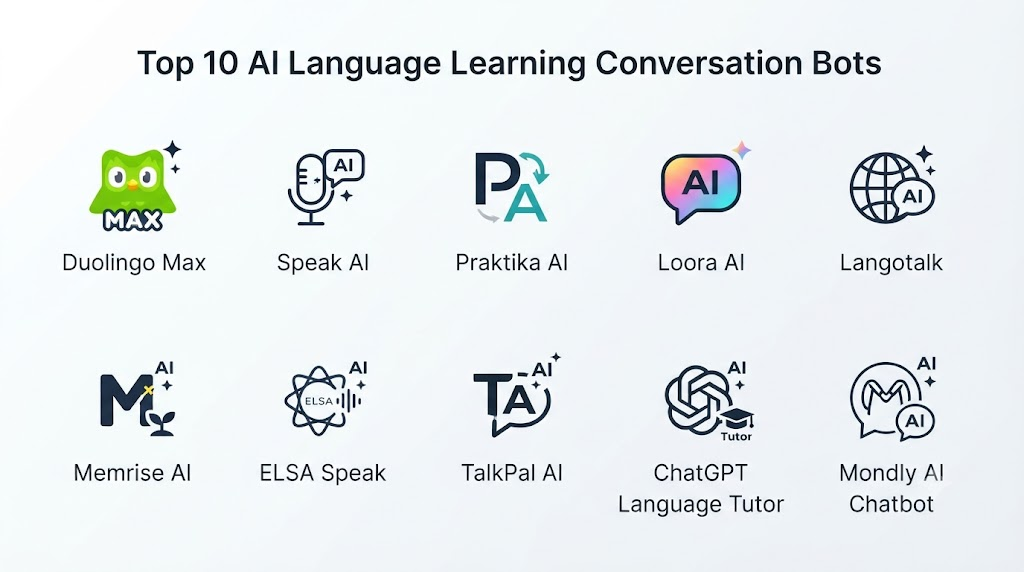
Top 10 AI Language Learning Conversation Bots
1. Duolingo Max
Duolingo Max combines AI-powered conversation practice, explanations, and personalized language learning experiences.
Key Features
- AI conversation practice
- Role-play scenarios
- Grammar explanations
- Personalized lessons
- Speaking exercises
- Vocabulary practice
- Pronunciation support
- Progress tracking
- Adaptive learning
- Mobile learning
Pros
- Highly engaging learning experience
- Strong gamification
- Large language library
- Beginner-friendly
- Good daily practice system
Cons
- Conversation depth varies
- Advanced learners may need additional resources
- Premium features require subscription
Platforms
Web, iOS, and Android.
Deployment or Support
Cloud-based language learning platform.
Security & Compliance
Consumer privacy controls vary.
Integrations & Ecosystem
Language learning ecosystem, mobile applications, and education workflows.
Support & Community
Help center, learning resources, and user community.
2. ChatGPT
ChatGPT provides conversational language practice by allowing learners to interact with AI tutors, practice dialogues, improve writing, and receive explanations.
Key Features
- Language conversations
- Grammar explanations
- Vocabulary practice
- Role-play scenarios
- Writing correction
- Translation support
- Pronunciation guidance
- Cultural explanations
- Custom learning exercises
- Multilingual support
Pros
- Highly flexible conversations
- Supports many languages
- Customizable learning styles
- Useful for advanced learners
- Provides detailed explanations
Cons
- Requires learner direction
- Pronunciation features vary by usage environment
- Not a dedicated language curriculum platform
Platforms
Web, desktop, and mobile applications.
Deployment or Support
Cloud-based AI assistant.
Security & Compliance
Controls vary by plan and usage environment.
Integrations & Ecosystem
Learning workflows, productivity tools, APIs, and educational applications.
Support & Community
Documentation and user community.
3. Babbel AI Conversations
Babbel AI Conversations provide guided speaking practice integrated with structured language learning courses.
Key Features
- AI conversation practice
- Speaking exercises
- Grammar lessons
- Vocabulary training
- Real-life dialogues
- Pronunciation support
- Course progression
- Learning reviews
- Personalized practice
- Language exercises
Pros
- Structured language courses
- Practical conversation focus
- Good beginner experience
- Strong lesson design
- Real-world scenarios
Cons
- Limited compared with open conversation AI
- Language availability varies
- Advanced learners may need more flexibility
Platforms
Web, iOS, and Android.
Deployment or Support
Cloud-based learning platform.
Security & Compliance
Consumer privacy controls vary.
Integrations & Ecosystem
Language courses, mobile learning, and educational workflows.
Support & Community
Learning resources and customer support.
4. Speak
Speak uses AI conversation technology to help learners practice speaking skills through interactive lessons and voice conversations.
Key Features
- AI speaking practice
- Voice conversations
- Pronunciation feedback
- Speaking lessons
- Real-time corrections
- Conversation scenarios
- Learning progress
- Vocabulary practice
- Personalized lessons
- Language exercises
Pros
- Strong speaking focus
- Useful pronunciation practice
- Interactive conversations
- Beginner-friendly
- Mobile learning experience
Cons
- Language availability may vary
- Focused mainly on speaking
- Requires consistent practice
Platforms
Mobile applications and web access.
Deployment or Support
Cloud-based language learning platform.
Security & Compliance
Privacy controls vary.
Integrations & Ecosystem
Language learning workflows and mobile education environments.
Support & Community
Documentation and user support.
5. Memrise AI
Memrise combines AI conversation practice with vocabulary learning and real-world language exposure.
Key Features
- AI conversations
- Vocabulary practice
- Native speaker videos
- Pronunciation exercises
- Personalized reviews
- Learning reminders
- Listening practice
- Speaking activities
- Progress tracking
- Language courses
Pros
- Strong vocabulary learning
- Real-world language exposure
- Engaging content
- Good memory techniques
- Supports multiple languages
Cons
- Conversation features vary
- Less focused on formal grammar
- Advanced learners may require more resources
Platforms
Web, iOS, and Android.
Deployment or Support
Cloud-based learning platform.
Security & Compliance
Consumer privacy controls vary.
Integrations & Ecosystem
Language learning resources and mobile applications.
Support & Community
Learning resources and support.
6. Praktika AI
Praktika AI provides AI-powered language practice through virtual tutors and conversational learning experiences.
Key Features
- AI language tutors
- Speaking practice
- Role-play conversations
- Pronunciation feedback
- Personalized lessons
- Conversation scenarios
- Learning progress
- Vocabulary practice
- Interactive exercises
- Virtual characters
Pros
- Immersive conversation experience
- Strong speaking practice
- Personalized interactions
- Engaging interface
- Useful for confidence building
Cons
- Mainly conversation focused
- Language coverage varies
- Requires subscription for advanced features
Platforms
Mobile applications.
Deployment or Support
Cloud-based AI learning platform.
Security & Compliance
Privacy controls vary.
Integrations & Ecosystem
Mobile learning workflows and language education.
Support & Community
Help resources and customer support.
7. Loora AI
Loora AI provides AI English conversation practice with speaking exercises, corrections, and personalized feedback.
Key Features
- English conversation practice
- Voice interaction
- Pronunciation feedback
- Grammar correction
- Speaking improvement
- Real-time conversations
- Personalized lessons
- Vocabulary development
- Learning progress
- AI tutor
Pros
- Strong English speaking focus
- Good conversational practice
- Immediate feedback
- Beginner-friendly
- Voice-based learning
Cons
- Primarily English focused
- Requires regular practice
- Advanced grammar needs additional resources
Platforms
Mobile applications.
Deployment or Support
Cloud-based language learning platform.
Security & Compliance
Privacy controls vary.
Integrations & Ecosystem
Language learning workflows and mobile applications.
Support & Community
Documentation and support resources.
8. ELSA Speak
ELSA Speak uses AI speech recognition to help learners improve pronunciation, fluency, and spoken English skills.
Key Features
- Pronunciation analysis
- Speaking practice
- Accent improvement
- Speech recognition
- AI feedback
- Vocabulary lessons
- Conversation practice
- Progress tracking
- Personalized exercises
- Speaking assessments
Pros
- Strong pronunciation technology
- Detailed speaking feedback
- Good for English learners
- Structured practice
- Useful assessment features
Cons
- Mainly focused on English
- Less broad conversation flexibility
- Advanced users may need more resources
Platforms
Web, iOS, and Android.
Deployment or Support
Cloud-based language learning platform.
Security & Compliance
Consumer privacy controls vary.
Integrations & Ecosystem
Language education workflows and mobile learning.
Support & Community
Learning resources and customer support.
9. Mondly AI
Mondly AI provides conversational language practice through AI chatbots, speech recognition, and interactive lessons.
Key Features
- AI conversations
- Voice recognition
- Daily lessons
- Vocabulary practice
- Role-play scenarios
- Pronunciation feedback
- Multiple languages
- Learning progress
- Chatbot practice
- Interactive exercises
Pros
- Supports many languages
- Good conversation practice
- Interactive lessons
- Beginner-friendly
- Mobile-focused
Cons
- Advanced conversations may be limited
- Grammar depth varies
- Some features require subscription
Platforms
Web, iOS, and Android.
Deployment or Support
Cloud-based learning platform.
Security & Compliance
Privacy controls vary.
Integrations & Ecosystem
Language learning ecosystem and mobile applications.
Support & Community
Help center and user support.
10. Lingoda AI Tools
Lingoda provides structured language learning experiences supported by digital tools, personalized practice, and conversational learning workflows.
Key Features
- Language lessons
- Speaking practice
- Learning plans
- Teacher-supported learning
- Progress tracking
- Vocabulary practice
- Course structure
- Conversation activities
- Learning materials
- Skill development
Pros
- Structured language programs
- Human-supported learning
- Professional learning approach
- Good course organization
- Practical communication focus
Cons
- Less AI-focused than dedicated AI bots
- Requires scheduled learning
- Pricing varies
Platforms
Web and mobile-supported learning.
Deployment or Support
Cloud-based language education platform.
Security & Compliance
Privacy controls vary.
Integrations & Ecosystem
Online education workflows and language learning environments.
Support & Community
Learner support and educational resources.
Comparison Table
| Tool Name | Best For | Platform(s) Supported | Deployment | Standout Feature | Public Rating |
|---|---|---|---|---|---|
| Duolingo Max | General language learning | Web, mobile | Cloud | AI conversation practice | N/A |
| ChatGPT | Flexible language practice | Web, desktop, mobile | Cloud | Custom AI conversations | N/A |
| Babbel AI Conversations | Structured courses | Web, mobile | Cloud | Guided dialogues | N/A |
| Speak | Speaking improvement | Mobile, web | Cloud | Voice conversations | N/A |
| Memrise AI | Vocabulary learning | Web, mobile | Cloud | Real-world language exposure | N/A |
| Praktika AI | AI language tutors | Mobile | Cloud | Virtual conversation tutors | N/A |
| Loora AI | English speaking | Mobile | Cloud | AI English practice | N/A |
| ELSA Speak | Pronunciation | Web, mobile | Cloud | Speech analysis | N/A |
| Mondly AI | Multilingual learning | Web, mobile | Cloud | AI chatbot lessons | N/A |
| Lingoda AI Tools | Structured language learning | Web, mobile | Cloud | Professional courses | N/A |
Weighted Evaluation
| Tool Name | Core Features 25% | Ease of Use 15% | Integrations & Ecosystem 15% | Security & Compliance 10% | Performance & Reliability 10% | Support & Community 10% | Price/Value 15% | Total |
|---|---|---|---|---|---|---|---|---|
| Duolingo Max | 24 | 15 | 14 | 8 | 10 | 10 | 13 | 94 |
| ChatGPT | 24 | 14 | 15 | 8 | 10 | 10 | 13 | 94 |
| Babbel AI Conversations | 22 | 15 | 13 | 8 | 10 | 9 | 12 | 89 |
| Speak | 22 | 15 | 12 | 8 | 10 | 9 | 13 | 89 |
| Memrise AI | 21 | 15 | 13 | 8 | 9 | 10 | 13 | 89 |
| Praktika AI | 21 | 14 | 11 | 8 | 9 | 8 | 13 | 84 |
| Loora AI | 21 | 15 | 11 | 8 | 9 | 8 | 13 | 85 |
| ELSA Speak | 22 | 15 | 12 | 8 | 10 | 9 | 12 | 88 |
| Mondly AI | 21 | 15 | 13 | 8 | 9 | 9 | 13 | 88 |
| Lingoda AI Tools | 21 | 13 | 12 | 9 | 10 | 10 | 11 | 86 |
Which AI Language Learning Conversation Bot Is Right for You?
Choose Duolingo Max when you want engaging language learning with AI conversations and structured lessons.
Choose ChatGPT when you need flexible conversations, explanations, and customized language practice.
Choose Babbel AI Conversations when structured language courses and practical dialogues are important.
Choose Speak when improving speaking confidence is the primary goal.
Choose Memrise AI when vocabulary and real-world language exposure matter.
Choose Praktika AI when immersive AI tutor conversations are preferred.
Choose Loora AI when English speaking practice is the main requirement.
Choose ELSA Speak when pronunciation improvement is the priority.
Choose Mondly AI when learning multiple languages through chatbot practice is important.
Choose Lingoda AI Tools when structured professional language learning is needed.
Implementation Playbook
Phase 1: Define Language Goals
- Select target language
- Identify learning objectives
- Determine current proficiency
- Set communication goals
- Define practice schedule
Phase 2: Create Learning Profile
- Choose preferred learning style
- Identify weak areas
- Set vocabulary goals
- Select conversation topics
- Configure difficulty level
Phase 3: Begin AI Practice
- Practice conversations
- Complete lessons
- Review corrections
- Improve pronunciation
- Expand vocabulary
Phase 4: Track Progress
- Monitor speaking improvement
- Review mistakes
- Adjust learning plans
- Increase conversation difficulty
- Practice regularly
Phase 5: Build Fluency
- Practice real-world scenarios
- Combine AI with human conversations
- Improve cultural understanding
- Maintain consistent learning habits
- Evaluate progress
Common Mistakes
- Using AI without regular practice
- Memorizing without conversation
- Ignoring pronunciation feedback
- Depending only on translations
- Avoiding mistakes instead of learning from them
- Choosing tools without checking language support
- Not practicing real communication
- Expecting instant fluency
FAQs
1. What are AI Language Learning Conversation Bots?
AI Language Learning Conversation Bots are artificial intelligence tools that help learners practice languages through interactive conversations, feedback, and personalized lessons.
2. Can AI conversation bots replace language teachers?
No. They provide practice and feedback but human teachers offer cultural understanding, detailed guidance, and personalized instruction.
3. Can AI improve speaking skills?
Yes. Many tools provide voice conversations, pronunciation feedback, and speaking practice.
4. Which languages can AI conversation bots teach?
Language availability varies by platform. Many support popular global languages, while some specialize in specific languages.
5. Are AI language conversations realistic?
Modern AI systems provide increasingly natural conversations, but learners should combine AI practice with real-world communication.
6. Can AI correct grammar mistakes?
Yes. Many platforms identify grammar issues and explain corrections.
7. Are AI language tools useful for beginners?
Yes. Many are designed for beginners with guided lessons, vocabulary support, and simple conversations.
8. Can AI help prepare for language exams?
Some platforms support vocabulary, speaking practice, and skill development useful for language examinations.
9. How do AI language bots improve pronunciation?
They analyze speech patterns, compare pronunciation, and provide feedback on speaking accuracy.
10. What should users consider before choosing an AI language conversation tool?
Users should evaluate supported languages, conversation quality, pronunciation features, personalization, privacy, pricing, and learning goals.
Conclusion
AI Language Learning Conversation Bots are transforming language education by making speaking practice more accessible, personalized, and interactive. These tools help learners build confidence, improve pronunciation, expand vocabulary, and practice real-world conversations anytime.Duolingo Max and ChatGPT provide flexible learning experiences, Babbel and Lingoda offer structured learning paths, ELSA Speak focuses on pronunciation, and platforms such as Speak, Loora AI, and Praktika AI specialize in conversational practice.
The strongest language learning results come from combining AI conversation practice with consistent effort, human interaction, cultural exposure, and active communication. AI should serve as a learning partner that helps users practice more effectively and build real language confidence.
