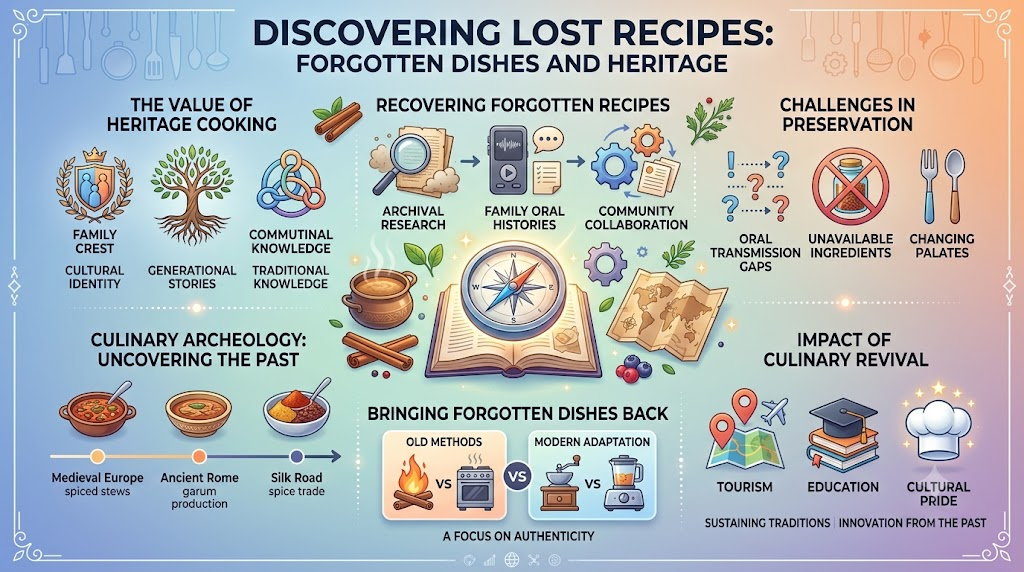
Every culture keeps its deepest memories near the stove. The scent of roasted seeds, the rhythm of a wooden pestle against stone, or the quiet patience of a simmering broth can anchor an entire community to its past. Yet, as daily life accelerates, undocumented kitchen wisdom quietly slips away. The search for lost recipes allows us to recover these vanishing culinary traditions and safeguard the food heritage built across centuries. Culinary heritage is not merely a collection of vintage flavors; it is an irreplaceable record of local ecology, regional craft, and generational care. At Blendz, the mission is to document, celebrate, and archive these culinary traditions before they disappear from daily practice. In this guide, we examine why traditional dishes vanish, how domestic cooks carry historical knowledge, and how documenting these traditions protects cultural memory.
What Are Lost Recipes?
In food history and gastronomy, the phrase describes culinary preparations, regional ingredients, and domestic methods that have faded from everyday household practice. While these preparations may not be entirely extinct, they are no longer part of common cooking routines.
What Makes a Recipe Become Lost?
A dish often recedes from daily life when domestic routines change. As younger generations migrate to urban centers, access to wood-fired hearths, native produce, and specialized earthenware decreases. Without active practice or detailed records, intricate methods are gradually abandoned.
How Recipes Are Passed Between Generations
For centuries, culinary knowledge traveled through direct participation rather than formal writing. Apprentices and children learned by standing beside senior cooks, observing how dough responded to humidity, how spices bloomed in hot fat, and when a dish reached peak flavor. While this oral tradition fosters great culinary intuition, it leaves cooking heritage vulnerable whenever household routines break down.
Why Traditional Recipes Disappear
Dishes vanish when speed and standardization overtake time-intensive preparation. The widespread availability of mass-produced, shelf-stable groceries has replaced labor-heavy cooking techniques. When workdays lengthen, dishes requiring multi-day fermentation, slow braising, or hand-grinding are frequently set aside.
The Difference Between Lost, Forgotten, and Rare Recipes
To understand culinary preservation, it is essential to distinguish between these categories:
- Lost recipes are dishes that have vanished from regular domestic preparation, even if scattered notes or memories survive.
- Forgotten recipes are preparations that were once common household staples but fell out of favor due to changing dining fashions.
- Rare recipes are highly localized specialties that were never widespread, often tied to single villages, specific microclimates, or rare rituals.
A dish does not need to date back centuries to face extinction; everyday family preparations from the twentieth century face the same risk if they remain unrecorded.
Why Preserving Traditional Recipes Matters
Safeguarding traditional recipes protects far more than lists of ingredients and cooking steps. Every heritage dish reflects its local environment, native agricultural systems, and communal identity.
Culinary heritage creates an active dialogue between the past and present. Preparing a heritage dish connects modern cooks to the daily lives of their forebears. Furthermore, historic cooking traditions preserve essential agricultural biodiversity, including knowledge of drought-tolerant grains, seasonal foraging, and zero-waste kitchen economics. Protecting these preparations maintains global culinary diversity against growing dietary uniformity.
Forgotten Recipes and Grandmother Recipes
Domestic kitchens have always been the primary laboratories of cultural cooking, making home-tested knowledge irreplaceable.
Why Grandmother Recipes Often Carry Unique Knowledge
Grandmother recipes embody decades of quiet experimentation and resource management. Experienced domestic cooks understand how seasonal shifts affect cooking vessels, how to extract deep flavor from humble ingredients, and how to adapt meals during lean seasons.
Oral Cooking Traditions and Handwritten Notes
A large portion of the world’s culinary heritage was never printed in commercial books. Instead, it survived through spoken guidance or grease-stained, handwritten ledger entries. These personal records document unique regional variations that mainstream publishing overlooked.
Cooking Without Exact Measurements
Heirloom family preparations rarely rely on digital scales or precise milliliters. Instead, they depend on sensory markers: the sound of crackling oil, a handful of dried herbs, or the color of browned flour. Working with these cues cultivates deep culinary intuition.
Family Adaptations Over Generations
Family dishes are dynamic, evolving alongside changes in kitchens and markets. As families relocate or adopt new cookware, they adjust their methods. Cataloging forgotten recipes and grandmother recipes allows us to document these adaptations without losing sight of foundational techniques.
Traditional Food Recipes and Cultural Identity
Every culture expresses its communal values around the shared table. Traditional food recipes mirror the landscape, seasonal rhythms, and social bonds of the communities that developed them.
From hand-pinched dumplings to communal clay-pot stews, traditional cooking fosters collaboration and shared labor. Regional dishes often display dozens of distinct variations across neighboring valleys or domestic households. Recognizing these differences broadens our appreciation of cultural history and historical trade networks.
Ancient Recipes and Historical Cooking Traditions
The ongoing interest in ancient recipes reflects a desire to experience history through taste. Culinary historians and researchers examine historical cooking traditions to understand how past societies nourished themselves, organized their pantries, and celebrated milestones.
To evaluate these traditions accurately, researchers categorize historical foodways carefully:
- Historically Documented Dishes: Preparations recorded in surviving clay tablets, monastic scrolls, medical manuscripts, or court ledgers.
- Traditional Living Recipes: Continuous cooking practices passed down and adjusted across generations without interruption.
- Family Heritage Dishes: Distinct preparations preserved within private domestic settings.
- Modern Historical Recreations: Contemporary dishes designed to approximate historical flavors using current kitchen equipment.
Ancient cooking traditions relied fundamentally on fire, earthenware pots, stone grinding, and wild fermentation. Studying these techniques shows how early cooks achieved complex flavors and preserved nutrients with minimal tools.
Rare Ingredients and Disappearing Food Knowledge
Culinary traditions frequently vanish because their core ingredients become difficult to obtain. Culinary preservation is deeply intertwined with agricultural conservation and biodiversity.
The scarcity of rare ingredients stems from several structural shifts:
- Agricultural Monoculture: Modern industrial farming favors uniform, high-yielding crops over delicate heirloom produce.
- Rural-to-Urban Migration: As agricultural communities shrink, traditional foraging practices and small-scale cultivation decline.
- Environmental Degradation: Shifting regional climates disrupt the natural habitats of wild herbs, native tubers, and heritage grains.
- Retail Homogenization: Supermarkets prioritize uniform, shelf-stable goods, making heirloom grains and regional herbs difficult for home cooks to source.
When an indigenous crop falls out of use, the specialized knowledge required to cultivate, harvest, and cook it disappears as well.
Food Heritage: More Than Recipes
True food heritage encompasses the entire cultural ecosystem surrounding how humans produce, cook, and share food. It includes:
- Ingredients: Heirloom seeds, wild-foraged plants, native livestock breeds, and pure regional waters.
- Techniques: Slow smoking, sun-drying, pit-roasting, lactic fermentation, and stone-milling.
- Tools: Clay tagines, heavy granite pestles, cast-iron kettles, and hand-woven steaming baskets.
- Seasonal Calendars: Planting, harvesting, and gathering aligned with seasonal weather shifts.
- Oral Histories: The songs, folklore, and family memories woven into harvest days and festival meals.
Culinary heritage lives through communal practices, showing that the context of preparation is just as significant as the meal itself.
Festival Food Recipes and Cultural Celebrations
Communal milestones and spiritual holidays have always been centered on ceremonial cooking. Festival food recipes demand specialized ingredients, detailed preparation, and collective effort rarely seen in daily cooking.
Across different cultures, festive meals celebrate shared values:
- Harvest Festivals: Celebrations like South Indian Pongal honor agricultural abundance with freshly harvested rice, raw sugar, and lentils cooked in new earthenware.
- Symbolic Sweets: Delicacies such as East Asian Mooncakes and Mediterranean Baklava feature layered pastries and rich nut fillings to commemorate cultural holidays.
- Ceremonial Crafts: Preparations like Japanese Mochi require synchronized, rhythmic pounding, turning food preparation into a communal performance.
Because these celebratory dishes are made only at specific times of the year, documenting their methods is critical to keeping festive heritage alive.
Traditional Recipes From Around the World
Surveying traditional recipes from around the world shows how diverse cultures adapted to their local environments:
- Asia: Regional cuisines across India, Japan, and Southeast Asia showcase sophisticated spice blending, long-term fermentation, and complex broth building.
- The Americas: Indigenous cuisines from Oaxaca to the Andean highlands demonstrate deep agricultural knowledge through nixtamalization, wild chili selection, and heirloom potato cultivation.
- Africa: Culinary traditions across Ethiopia, the Sahel, and the Maghreb feature indigenous grains like teff, complex pepper pastes, and slow-simmered earthen stews.
- Europe: Regional European cooking highlights artisan cheese making, cured meats, stone-ground breads, and micro-seasonal vegetable dishes.
- The Middle East: Traditional Levantine and Persian cooking centers on wild herbs, sun-dried fruits, slow-braised legumes, and communal platters.
Every country contains a rich mosaic of regional and micro-regional food cultures shaped by geography and historical migrations.
How Lost Recipes Can Be Preserved
Protecting domestic culinary heritage requires thoughtful documentation. Anyone can contribute to preserving traditional culinary knowledge with practical steps:
- Record Domestic Elders: Interview older family cooks, capturing their methods, seasonal tips, and memories on audio or video.
- Document Sensory Details: Record aromas, textures, pan sounds, and visual markers rather than relying solely on standard measurements.
- Identify Heritage Ingredients: Note the exact regional herbs, grains, and spice blends used in traditional preparations.
- Photograph Methods: Capture critical technique steps, including dough folding, sauce reduction, and shaping methods.
- Build Digital Archives: Share family recipes on open culinary repositories so the information remains accessible to future cooks.
- Support Local Heritage Farmers: Buy heirloom varieties, regional pulses, and native spices from local markets and independent growers.
Challenges in Preserving Food Heritage
Safeguarding historical culinary practices involves real-world challenges. Many heritage recipes were never written down, creating gaps when older generations pass on. Modern home kitchens often lack the wood fires, heavy stone mortars, or cool underground larders required for traditional preparations.
Additionally, language barriers, urban migration, and hectic work schedules make slow-cooking methods harder to maintain. Meeting these challenges requires adapting heritage techniques for modern kitchens while respecting their original cultural roots.
How to Research a Forgotten or Traditional Recipe
When investigating an old dish, a structured research approach ensures accuracy:
- Locate the Region: Identify the exact province, valley, or ethnic community where the dish developed.
- Consult Multiple Sources: Cross-reference domestic memories, regional community pamphlets, and historical accounts.
- Analyze Ingredients: Check what crops, wild plants, and seasonings were historically available in that landscape during that season.
- Examine the Technique: Understand why a specific vessel, heat level, or curing step was originally chosen.
- Document Variations: Record household variations without labeling any single version as the only authentic one.
- Capture the Context: Preserve the stories, family memories, and occasions tied to the dish.
Blendz and the Preservation of Food Heritage
Global food heritage archives serve as vital bridges connecting historical traditions with modern cooks. Blendz focuses on discovering, documenting, and archiving culinary traditions that risk fading from memory.
By highlighting ancient recipes, regional specialties, rare ingredients, festival cooking, and everyday family traditions, the platform ensures valuable culinary knowledge remains available to cooks, researchers, and food lovers worldwide.
Benefits of Documenting Lost Recipes
Preserving traditional culinary knowledge offers lasting benefits for modern kitchens:
- Safeguards Cultural Memory: Keeps family histories and community identity alive through shared meals.
- Maintains Dietary Diversity: Encourages the cultivation and consumption of underutilized plant varieties.
- Promotes Sustainable Cooking: Reclaims historical techniques like whole-plant cooking, fermentation, and zero-waste kitchen practices.
- Fosters Intergenerational Bonds: Connects younger home cooks with elder mentors through shared cooking.
- Expands Culinary Intuition: Helps home cooks move beyond processed supermarket convenience by teaching sensory-based cooking.
Lost Recipes vs Modern Recipes
Comparing traditional foodways with contemporary recipe development highlights the unique strengths of both approaches.
| Factor | Lost or Traditional Recipes | Modern Recipes |
| Primary Source | Family memory, oral heritage, or historical notes | Professional developers and digital publications |
| Measurement Style | Sensory markers and approximate proportions | Standardized weights and metric measurements |
| Ingredient Sourcing | Seasonal, wild-foraged, or regional crops | Widely available commercial grocery items |
| Preparation Style | Slow simmering, fermentation, manual grinding | Quick-prep methods adapted for modern appliances |
| Cultural Context | Closely tied to community traditions and identity | Often focused primarily on speed and convenience |
| Recipe Variations | Differs naturally across families and villages | Standardized to produce uniform results |
Neither culinary approach is inherently superior. Blending modern kitchen tools with the depth of traditional recipes allows home cooks to preserve heritage while cooking efficiently.
Frequently Asked Questions
- What are lost recipes?
Lost recipes are traditional dishes, preparation methods, and food traditions that were once widely practiced but have faded from regular household use. They often survive only in historical manuscripts, private family notes, or the memories of older generations.
- Why are grandmother recipes considered so valuable?
Grandmother recipes contain decades of practical kitchen wisdom, seasonal intuition, and regional knowledge. They demonstrate how to balance complex flavors through sensory observation rather than rigid formulas, preserving unique family traditions.
- How do traditional recipes differ from modern recipes?
Traditional recipes rely heavily on local crops, seasonal availability, sensory cues, and time-tested preparation techniques. Modern recipes prioritize convenience, standardized measurements, and ingredients that can be purchased year-round in commercial grocery stores.
- What does food heritage mean?
Food heritage encompasses the entire cultural tradition of food production and dining. It includes agricultural practices, heirloom ingredients, cooking tools, preservation methods, family stories, and festive rituals passed down across generations.
- Why do some traditional ingredients become rare?
Traditional ingredients become rare due to industrial agricultural standardization, loss of small farms, environmental shifts, and retail markets that prioritize high-yielding, transportable produce over delicate regional crops.
- What makes festival food recipes unique?
Festival dishes are created specifically for cultural, religious, or seasonal celebrations. They frequently require rare ingredients, intricate multi-step preparations, and collaborative cooking that brings households and communities together.
- How can I preserve my family’s old recipes?
You can preserve family recipes by interviewing older relatives, cooking alongside them, recording exact sensory cues on video, photographing each step, and writing down their personal kitchen stories.
- Are ancient recipes still safe to cook today?
Many ancient recipes can be safely prepared today with simple adjustments. Modern hygiene standards, clean municipal water, and reliable refrigeration make recreating historical dishes enjoyable and safe for home cooks.
- Why is biodiversity important for traditional cooking?
Traditional cooking relies on a wide variety of native plants, heirloom grains, and regional spices. Maintaining agricultural biodiversity ensures that the authentic ingredients needed for these recipes do not vanish.
- Can lost recipes be adapted for modern kitchens?
Yes. While preserving original methods is important for historical accuracy, adapting cooking steps for modern stoves, blenders, and ovens helps keep traditional dishes practical for everyday home cooking.
Conclusion
Safeguarding culinary traditions is about far more than compiling antique recipe cards. Every traditional meal carries the resilience, ingenuity, and cultural identity of the hands that created it. By taking the time to research, document, and cook traditional recipes, we protect our living food heritage for future generations. Digital platforms like Blendz help keep these essential food stories visible, connecting ancestral wisdom with modern kitchens. By documenting family dishes, supporting regional crops, and sharing culinary stories, we ensure that the rich diversity of human food culture continues to thrive.
