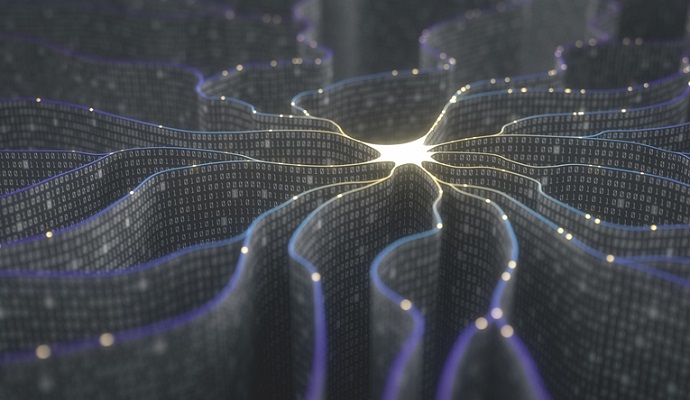
Source: analyticsinsight.net
The idea of creating intelligent systems has always fascinated data science professionals. The advent of computers and technology uplifts the notion that an algorithm that can learn from itself and adapt to changing model inputs. The art of self-learning algorithms helping data science with valuable information is an uncharted territory that AI-powered neural networks would like to explore more, courtesy the growing interest of professionals and technology experts alike.
Understanding Artificial Neural Networks (ANNs)
To understand the complexities of Artificial Neural Networks (ANNs) lets first decode how our brain learns and relearns from different experiences. The human brain is made up of interconnected networks, these are called neurons. These neurons are responsible for processing different pieces of information. Let’s understand through the concept of a hierarchy pyramid. Our brain is composed of different levels, and each level is responsible for decoding and understanding information from the surroundings.
As information passes on through layers from different levels arranged hierarchically, each layer of neurons understand, process, gather knowledgeable insight, and pass this information to the next layer in the hierarchy. Thus, ensuring the information which reaches on the pinnacle of the pyramid is intelligently accurate and without any bias.
Let’s understand the Artificial Neural Network through food!
For example, when you get a whiff of something delicious cooking, for instance, a loaf of banana bread with chocolate chips baking your brain may process the information as… ‘I smell banana bread and chocolate chips,’ (that’s your data input) … ‘I love banana bread with chocolate chips!’ (thought) … ‘I’ll eat a lot of banana bread with chocolate chips’ (decision making) … ‘Oh, but they add to calories, I promised to go on a diet’ (memory) … ‘But, one slice won’t hurt?’ (reasoning) ‘I will have one slice for sure!’ (final course of action).
Likewise, ANNs seek to simulate information passing through layers of networks or interconnected brain cells, to let them learn and make decisions in a realistically human like manner. This is the layered approach to process information that ANNs strive to simulate. The human brain is complex and replicating it is a tough task, however, in its simplest form, an ANN can comprise of three layers of neurons-
1. The input layer (for data input)
2. The hidden layer (information processing layer)
3. The output layer (decision-making step).
A lot happens in the hidden layer, often called as the black box of ANN decision making point. The black box can add up to multiple hidden layers for the flow of information from one layer to another, just like what happens inside the human brain.
Comprehending Deep Learning Algorithms
Deep learning seeks to understand what exactly happens within those hidden layers of the ANN. Representing the very cutting edge of Artificial Intelligence (AI), an algorithm trains itself to process and learn from data that is injected into the model in the input layer.
How is that possible? Thanks to the hidden layer of ANNs which is also called a ‘deep neural network’ (DNNs), or in simple words deep learning. It is a self-teaching algorithm that filters information through multiple hidden layers same as a human mind does. Here are some interesting concepts and viewpoints of deep learning-
• Goodfellow, Bengio and Courville explained that while shallow neural networks are trained to handle complex problems, deep learning networks add to accuracy as more neuron layers are added in the information hierarchy.
• These additional layers can yield maximum accuracy till the 9th or 10th layer, after which a decline is observed in their predictive power.
• At present, most ANNs and implementations deploy a maximum of 3-10 deep network neuron layers.
Bridging the Gap between ANNs and Deep Learning
To make DNNs “learn” increasingly complex algorithms for accurate prediction, classification, several features run behind the black box, adding more layers to the hidden layer is one of them. More layers and more neurons do represent complex models with greater accuracy, but at the same time, data science experts must compute the cost and time aspect in model building.
The tech world is looking forward to achieve the perfect balance blending time, cost, model building and accuracy in predictions with deep neural networks, to solve the complex classification and prediction tasks in a jiffy.