Introduction
Data Clean Room Platforms for AI are secure environments where multiple parties can collaboratively analyze and use sensitive datasets without directly exposing raw data. These platforms enable privacy-preserving computation, allowing organizations to combine insights from different data sources while maintaining strict control over personal, financial, or proprietary information. data clean rooms have become a critical infrastructure layer for AI, especially in advertising, healthcare, finance, and enterprise analytics. With increasing privacy regulations and the rise of collaborative AI training (including federated learning and cross-organization RAG systems), clean rooms help organizations unlock data value without violating compliance rules.
Real-world use cases include:
- Privacy-safe ad targeting and measurement across publishers
- Collaborative AI model training between enterprises without data sharing
- Secure healthcare research across hospitals
- Fraud detection using cross-bank intelligence sharing
- Retail and e-commerce joint analytics between brands and marketplaces
Key evaluation criteria for buyers:
- Privacy-preserving computation capabilities
- Support for secure multi-party collaboration
- Query isolation and access control mechanisms
- Integration with AI/ML pipelines
- Real-time vs batch processing support
- Data governance and compliance controls
- Identity resolution and matching capabilities
- Scalability for large datasets
- Auditability and logging features
- API and interoperability with data ecosystems
Best for: Enterprises, ad-tech companies, healthcare institutions, financial organizations, and AI teams working on cross-organization data collaboration.
Not ideal for: Small projects or standalone applications that do not require cross-party data sharing.
What’s Changed in Data Clean Room Platforms
- Shift from marketing-only clean rooms to general-purpose AI collaboration environments
- Integration with LLM training and federated learning pipelines
- Strong adoption of privacy-enhancing technologies (PETs)
- Secure multi-party computation (SMPC) becoming mainstream
- Zero-trust architecture as default design pattern
- AI-driven query optimization inside clean rooms
- Support for real-time clean room analytics
- Identity resolution without exposing raw identifiers
- Embedded governance and compliance automation
- Cross-cloud clean room interoperability
- Integration with data marketplaces and AI ecosystems
- Expansion into multimodal data collaboration (text, image, behavioral data)
Quick Buyer Checklist
- Does it support secure multi-party computation?
- Can it operate without exposing raw data?
- Does it support AI/ML and RAG workflows?
- Is identity resolution privacy-preserving?
- Can it integrate with existing data warehouses?
- Does it support real-time query execution?
- Are governance and audit logs built-in?
- Does it support federated learning or similar AI workflows?
- Can it scale across multiple organizations?
- Is cross-cloud compatibility available?
- Does it support encrypted data processing?
- Are APIs available for automation?
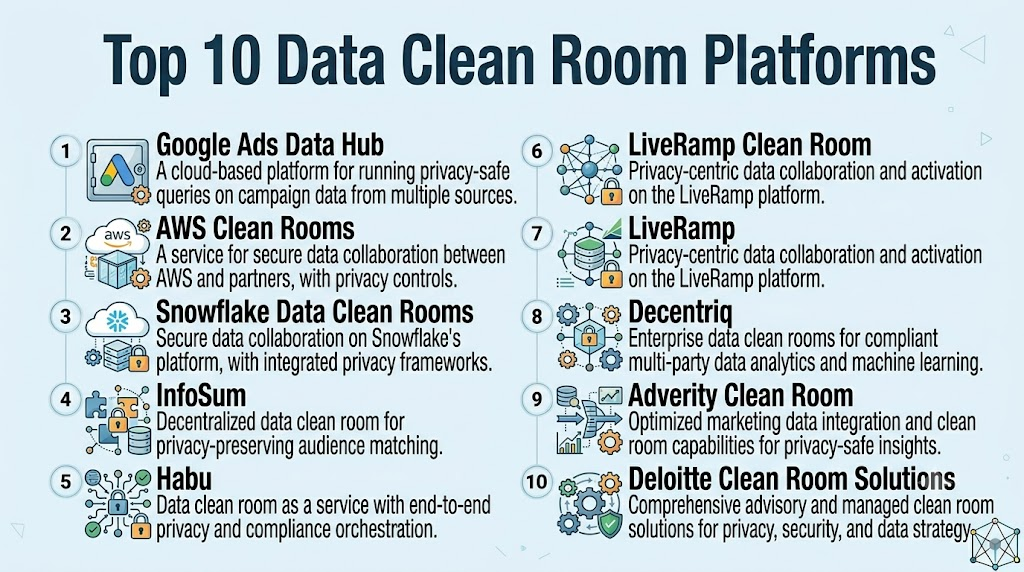
Top 10 Data Clean Room Platforms
1 — Google Ads Data Hub
One-line verdict: Best advertising-focused clean room for privacy-safe cross-channel analytics.
Short description:
Google Ads Data Hub is a privacy-first clean room that enables advertisers and publishers to analyze campaign performance without accessing user-level data.
Standout Capabilities
- Privacy-safe ad performance measurement
- Aggregated data analysis only
- Integration with Google Marketing Platform
- Cross-device attribution modeling
- Secure query execution environment
- Identity-safe data matching
- Scalable analytics engine
AI-Specific Depth
- Model support: Not model-centric (analytics-focused)
- Data workflows: Ad-tech and marketing datasets
- Privacy: Strong aggregation-based privacy protection
- Computation: Secure query execution
- Observability: Reporting dashboards
Pros
- Strong ad ecosystem integration
- Highly scalable
- Industry standard for marketing clean rooms
Cons
- Limited flexibility outside ad-tech
- Google ecosystem dependency
Security & Compliance
- Strict privacy-preserving query rules
- No raw data exposure
- Compliance-ready architecture
Deployment & Platforms
- Cloud-based (Google ecosystem)
Integrations & Ecosystem
- Google Ads
- BigQuery
- Google Marketing Platform
- Analytics tools
Pricing Model
Usage-based enterprise pricing
Best-Fit Scenarios
- Ad performance measurement
- Marketing attribution analytics
- Publisher collaboration
2 — AWS Clean Rooms
One-line verdict: Best general-purpose enterprise clean room for secure cross-organizational analytics.
Short description:
AWS Clean Rooms enables organizations to collaborate on datasets without sharing raw data, using secure compute environments.
Standout Capabilities
- Secure multi-party collaboration
- No raw data exposure architecture
- SQL-based query execution
- Fine-grained access controls
- Data filtering and privacy rules
- Scalable analytics engine
- Integration with AWS ecosystem
AI-Specific Depth
- Model support: Not model-centric but ML pipeline compatible
- Data workflows: Enterprise analytics + AI datasets
- Privacy: Strong isolation + encryption
- Computation: Secure query execution
- Observability: AWS monitoring tools
Pros
- Highly secure architecture
- Strong AWS integration
- Flexible enterprise use cases
Cons
- AWS lock-in
- Requires technical expertise
Security & Compliance
- Encryption in transit and at rest
- IAM-based access control
- Audit logging supported
Deployment & Platforms
- AWS cloud-native
Integrations & Ecosystem
- Redshift
- S3
- AWS analytics stack
- Athena
Pricing Model
Pay-as-you-go
Best-Fit Scenarios
- Enterprise data collaboration
- Cross-company analytics
- Secure AI dataset sharing
3 — Snowflake Data Clean Rooms
One-line verdict: Best cloud-agnostic clean room for enterprise data collaboration and AI workflows.
Short description:
Snowflake provides clean room capabilities enabling secure data collaboration across organizations using its cloud data platform.
Standout Capabilities
- Secure data sharing without exposure
- SQL-based collaborative analytics
- Cross-cloud interoperability
- Data governance controls
- Scalable compute engine
- Identity-safe matching
- AI-ready data pipelines
AI-Specific Depth
- Model support: ML pipeline compatible
- Data workflows: Structured enterprise datasets
- Privacy: Strong access isolation
- Computation: Secure SQL execution
- Observability: Query logs and lineage tracking
Pros
- Multi-cloud flexibility
- Strong performance
- Easy collaboration model
Cons
- Requires Snowflake ecosystem
- Complex pricing model
Security & Compliance
- Role-based access control
- Encryption and governance layers
Deployment & Platforms
- Cloud-based (multi-cloud support)
Integrations & Ecosystem
- BI tools
- ML pipelines
- Data warehouses
- ETL tools
Pricing Model
Usage-based enterprise pricing
Best-Fit Scenarios
- Cross-enterprise analytics
- AI dataset collaboration
- Data marketplace workflows
4 — InfoSum
One-line verdict: Best privacy-first clean room built for identity-safe collaboration.
Short description:
InfoSum provides a decentralized data clean room architecture where data never moves, enabling privacy-preserving collaboration.
Standout Capabilities
- Zero data movement architecture
- Identity-safe data matching
- Secure federated analytics
- Privacy-preserving computation
- Cross-company collaboration
- Data anonymization framework
- Scalable distributed processing
AI-Specific Depth
- Model support: Not model-native but AI-compatible
- Data workflows: Identity-based datasets
- Privacy: Zero data exposure model
- Computation: Federated execution
- Observability: Aggregated reporting
Pros
- Strong privacy architecture
- No data centralization required
- Highly secure design
Cons
- Complex onboarding
- Limited flexibility for raw ML workflows
Security & Compliance
- Zero-trust architecture
- Strong privacy-first design principles
Deployment & Platforms
- Cloud-based distributed platform
Integrations & Ecosystem
- Ad-tech platforms
- Data warehouses
- Identity systems
- APIs
Pricing Model
Enterprise licensing
Best-Fit Scenarios
- Identity-safe collaboration
- Ad-tech ecosystems
- Cross-company analytics
5 — Habu
One-line verdict: Best enterprise clean room platform for marketing and customer data collaboration.
Short description:
Habu provides clean room solutions for secure collaboration between brands, publishers, and partners.
Standout Capabilities
- Multi-party data collaboration
- Marketing analytics clean rooms
- Identity resolution workflows
- Secure audience segmentation
- Privacy-preserving insights
- Data activation pipelines
- Cross-channel measurement
AI-Specific Depth
- Model support: Not model-centric
- Data workflows: Marketing + customer datasets
- Privacy: Strong data isolation
- Computation: Secure analytics engine
- Observability: Campaign insights dashboards
Pros
- Strong marketing focus
- Easy collaboration workflows
- Good ecosystem integration
Cons
- Limited general AI use cases
- Mostly marketing-centric
Security & Compliance
- Role-based access controls
- Privacy-preserving computation model
Deployment & Platforms
- Cloud-based SaaS platform
Integrations & Ecosystem
- Ad platforms
- CRM systems
- Data warehouses
- Marketing tools
Pricing Model
Enterprise subscription
Best-Fit Scenarios
- Marketing analytics
- Customer data collaboration
- Ad measurement workflows
6 — LiveRamp Clean Room
One-line verdict: Best identity-driven clean room for advertising and audience analytics.
Short description:
LiveRamp enables identity-based clean rooms for secure data collaboration in advertising and marketing ecosystems.
Standout Capabilities
- Identity resolution engine
- Secure data collaboration
- Audience segmentation tools
- Cross-device tracking support
- Privacy-safe analytics
- Data activation workflows
- Scalable identity graph
AI-Specific Depth
- Model support: Not model-native
- Data workflows: Identity-based datasets
- Privacy: Strong anonymization layer
- Computation: Secure matching engine
- Observability: Audience insights tracking
Pros
- Strong identity graph
- Widely used in ad-tech
- Good ecosystem integration
Cons
- Limited non-marketing use cases
- Requires ecosystem adoption
Security & Compliance
- Strong privacy compliance controls
- Identity protection mechanisms
Deployment & Platforms
- Cloud-based platform
Integrations & Ecosystem
- Ad platforms
- CRM systems
- Data warehouses
- Identity providers
Pricing Model
Enterprise pricing
Best-Fit Scenarios
- Ad targeting and measurement
- Identity-based analytics
- Customer segmentation
7 — Microsoft Azure Data Clean Room (Purview + Synapse)
One-line verdict: Best enterprise clean room within Microsoft ecosystem for secure analytics.
Short description:
Microsoft provides clean room capabilities through Azure Synapse and Purview for secure collaboration and governance.
Standout Capabilities
- Secure data collaboration
- Policy-based access control
- SQL-based analytics
- Data governance integration
- Identity-safe queries
- Enterprise security controls
- Cross-cloud support
AI-Specific Depth
- Model support: Azure ML compatible
- Data workflows: Enterprise datasets
- Privacy: Strong governance layer
- Computation: Secure query engine
- Observability: Azure monitoring tools
Pros
- Strong enterprise integration
- Deep governance tools
- Scalable infrastructure
Cons
- Azure ecosystem lock-in
- Complex setup
Security & Compliance
- Azure security framework
- RBAC and IAM controls
Deployment & Platforms
- Azure cloud-native
Integrations & Ecosystem
- Synapse Analytics
- Azure ML
- Data Lake
- Power BI
Pricing Model
Usage-based Azure pricing
Best-Fit Scenarios
- Enterprise analytics
- AI governance workflows
- Cross-company collaboration
8 — Decentriq
One-line verdict: Best privacy-enhancing clean room platform using secure multi-party computation.
Short description:
Decentriq uses advanced cryptographic techniques to enable privacy-safe collaboration without exposing raw data.
Standout Capabilities
- Secure multi-party computation (SMPC)
- Privacy-preserving analytics
- Encrypted data collaboration
- Regulatory compliance support
- Cross-organization data insights
- Identity-safe aggregation
- Scalable clean room architecture
AI-Specific Depth
- Model support: Not model-native
- Data workflows: Privacy-sensitive datasets
- Privacy: SMPC-based architecture
- Computation: Encrypted execution
- Observability: Aggregated insights only
Pros
- Strong cryptographic privacy
- High security guarantees
- Innovative architecture
Cons
- Complex setup
- Limited ecosystem integrations
Security & Compliance
- SMPC-based encryption model
- Strong privacy guarantees
Deployment & Platforms
- Cloud-based secure platform
Integrations & Ecosystem
- Data warehouses
- Ad-tech systems
- APIs
- Analytics tools
Pricing Model
Enterprise licensing
Best-Fit Scenarios
- High-security data collaboration
- Financial analytics
- Healthcare research
9 — Adverity Clean Room
One-line verdict: Best marketing analytics clean room integrated with data intelligence workflows.
Short description:
Adverity provides clean room capabilities focused on marketing data integration and analytics collaboration.
Standout Capabilities
- Marketing data aggregation
- Secure analytics environment
- Cross-channel reporting
- ETL pipeline integration
- Data transformation workflows
- Privacy-safe insights
- Automation tools
AI-Specific Depth
- Model support: Not model-centric
- Data workflows: Marketing datasets
- Privacy: Aggregated insights model
- Computation: Secure analytics layer
- Observability: Marketing dashboards
Pros
- Strong marketing focus
- Easy to use
- Good integrations
Cons
- Limited enterprise AI use cases
- Narrow domain scope
Security & Compliance
Not publicly stated
Deployment & Platforms
- Cloud-based SaaS
Integrations & Ecosystem
- CRM tools
- Ad platforms
- Data warehouses
- BI systems
Pricing Model
Subscription-based
Best-Fit Scenarios
- Marketing analytics
- Campaign measurement
- Ad performance tracking
10 — Deloitte Clean Room Solutions
One-line verdict: Best consulting-led enterprise clean room implementation for custom AI ecosystems.
Short description:
Deloitte provides enterprise clean room solutions integrated into custom data collaboration architectures for large organizations.
Standout Capabilities
- Custom clean room architecture design
- Enterprise data governance
- Secure collaboration frameworks
- Compliance-driven workflows
- Identity resolution strategies
- AI-ready data ecosystems
- Cross-industry implementations
AI-Specific Depth
- Model support: Custom AI pipelines
- Data workflows: Enterprise-specific datasets
- Privacy: Governance-driven controls
- Computation: Custom secure architecture
- Observability: Consulting-driven reporting
Pros
- Highly customizable
- Strong enterprise expertise
- Industry-specific solutions
Cons
- Not a product platform
- Requires consulting engagement
Security & Compliance
- Enterprise-grade governance frameworks
Deployment & Platforms
- Custom deployments (hybrid/cloud/on-prem)
Integrations & Ecosystem
- Enterprise data systems
- Cloud platforms
- BI tools
- AI pipelines
Pricing Model
Consulting + enterprise project-based pricing
Best-Fit Scenarios
- Large enterprise transformations
- Custom AI data ecosystems
- Regulated industries
Comparison Table (Top 10)
| Tool Name | Best For | Deployment | Privacy Model | Strength | Watch-Out | Public Rating |
|---|---|---|---|---|---|---|
| Google ADH | Ad-tech analytics | Cloud | Aggregated | Ecosystem | Limited flexibility | N/A |
| AWS Clean Rooms | Enterprise collaboration | AWS cloud | Isolation | Security | AWS lock-in | N/A |
| Snowflake | Cross-cloud analytics | Multi-cloud | Secure SQL | Flexibility | Cost complexity | N/A |
| InfoSum | Identity-safe analytics | Cloud | Zero data movement | Privacy | Complex setup | N/A |
| Habu | Marketing clean rooms | Cloud | Isolation | Collaboration | Narrow scope | N/A |
| LiveRamp | Identity graphs | Cloud | Identity-safe | Ad-tech strength | Ecosystem lock-in | N/A |
| Azure Clean Room | Enterprise AI workflows | Azure cloud | Governance | Integration | Azure dependency | N/A |
| Decentriq | SMPC clean rooms | Cloud | Cryptographic | Privacy-first | Complexity | N/A |
| Adverity | Marketing analytics | Cloud | Aggregated | Ease of use | Limited AI use | N/A |
| Deloitte | Custom solutions | Hybrid | Governance-based | Flexibility | Not a product | N/A |
Scoring & Evaluation (Weighted Rubric)
| Tool | Core | Privacy | Scalability | Integration | Ease | Performance | Security | Support | Weighted Total |
|---|---|---|---|---|---|---|---|---|---|
| Google ADH | 9 | 9 | 9 | 10 | 8 | 9 | 9 | 9 | 9.0 |
| AWS Clean Rooms | 10 | 10 | 10 | 9 | 8 | 9 | 10 | 9 | 9.4 |
| Snowflake | 10 | 10 | 10 | 10 | 8 | 10 | 9 | 9 | 9.5 |
| InfoSum | 9 | 10 | 9 | 8 | 7 | 9 | 10 | 8 | 8.9 |
| Habu | 8 | 9 | 8 | 9 | 8 | 8 | 9 | 8 | 8.5 |
| LiveRamp | 9 | 9 | 9 | 9 | 8 | 9 | 9 | 8 | 8.8 |
| Azure Clean Room | 9 | 9 | 9 | 9 | 8 | 9 | 9 | 9 | 8.9 |
| Decentriq | 9 | 10 | 9 | 8 | 7 | 9 | 10 | 8 | 8.8 |
| Adverity | 8 | 8 | 8 | 8 | 9 | 8 | 8 | 8 | 8.1 |
| Deloitte | 9 | 10 | 10 | 10 | 6 | 9 | 10 | 9 | 8.7 |
Which Data Clean Room Platform Is Right for You?
Solo / Freelancer
Not typically applicable; clean rooms are enterprise-focused systems.
SMB
Adverity and Habu offer simpler entry into clean room analytics.
Mid-Market
Snowflake and AWS Clean Rooms provide scalable collaboration frameworks.
Enterprise
AWS Clean Rooms, Snowflake, and Azure Clean Rooms dominate large-scale adoption.
Regulated industries
Decentriq and InfoSum provide strongest privacy guarantees.
Budget vs premium
- Budget: Adverity
- Mid-range: Habu, LiveRamp
- Premium: Snowflake, AWS Clean Rooms, Decentri
Common Mistakes & How to Avoid Them
- Treating clean rooms like traditional data warehouses
- Ignoring privacy constraint configuration
- Poor identity resolution strategy
- Over-sharing sensitive attributes
- Not defining governance rules clearly
- Lack of audit logging setup
- Underestimating query performance costs
- Not aligning cross-party access policies
- Ignoring regulatory requirements
- No integration with AI/ML workflows
- Overcomplicating initial setup
- Not testing data leakage scenarios
- Failing to validate output aggregation rules
- Vendor lock-in without planning
FAQs
1. What is a data clean room?
It is a secure environment where multiple parties analyze data collaboratively without exposing raw datasets.
2. Why are clean rooms important for AI?
They enable privacy-safe training, analytics, and collaboration across organizations.
3. Do clean rooms expose raw data?
No, they only allow controlled queries and aggregated outputs.
4. What industries use clean rooms most?
Ad-tech, healthcare, finance, and enterprise AI industries.
5. Can clean rooms be used for ML training?
Yes, especially for federated learning and secure dataset collaboration.
6. What is secure multi-party computation?
A cryptographic method that allows computation without revealing underlying data.
7. Are clean rooms real-time?
Some modern platforms support real-time query execution.
8. Do clean rooms support AI models?
Indirectly, through secure dataset sharing and ML pipeline integration.
9. Are clean rooms cloud-based?
Most modern platforms are cloud-native, though hybrid models exist.
10. What is identity resolution in clean rooms?
It matches data across datasets without exposing raw identifiers.
11. Are clean rooms expensive?
Enterprise platforms can be costly due to security and compute requirements.
12. What is the future of data clean rooms?
They are evolving into AI-native collaboration environments with real-time, multimodal, privacy-preserving analytics.
Conclusion
Data Clean Room Platforms are becoming essential infrastructure for privacy-first AI collaboration. They allow organizations to unlock cross-party insights while maintaining strict control over sensitive data.
There is no single best platform. Snowflake and AWS Clean Rooms lead enterprise adoption, Google Ads Data Hub dominates marketing analytics, and InfoSum and Decentriq provide cutting-edge privacy architectures.
