Introduction
Fundraising platforms are specialized software solutions that enable organizations, nonprofits, and individuals to collect, manage, and optimize donations effectively. They simplify the process of engaging donors, automating campaign management, and ensuring transparency in funds tracking. In and beyond, the demand for reliable fundraising platforms has grown due to the increasing need for digital-first engagement, data-driven insights, and seamless donor experiences.
Organizations use these platforms to raise money for a variety of purposes, such as nonprofit initiatives, social campaigns, educational projects, and personal causes. Fundraising platforms can support multiple channels, including email campaigns, social media integrations, peer-to-peer campaigns, and mobile donations, making it easier to reach diverse donor segments.
Real-world use cases include:
- Nonprofits managing annual giving campaigns and recurring donations.
- Educational institutions collecting alumni contributions and tuition donations.
- Community projects or local initiatives seeking micro-donations from residents.
- Startups or creative ventures launching crowdfunding campaigns.
- Global charities tracking compliance and donor engagement across multiple countries.
Evaluation criteria for buyers:
- Feature richness and flexibility
- User interface and ease of use
- Security and compliance standards
- Integration with payment gateways and CRM systems
- Reporting and analytics capabilities
- Customer support and onboarding experience
- Pricing model and scalability
- Automation and AI-powered insights
- Mobile access and donor engagement features
Best for: Nonprofits, educational institutions, community organizers, startups, and fundraising professionals seeking centralized donor management, automated campaign tracking, and analytics.
Not ideal for: Organizations that have minimal fundraising needs, prefer manual collection, or operate entirely offline; basic payment gateways or simple spreadsheets may suffice for small-scale fundraising.
Key Trends in Fundraising Platforms
- Increasing adoption of AI-powered donor analytics to predict giving behavior.
- Automation of recurring campaigns, thank-you workflows, and reminders.
- Integration with social media for peer-to-peer fundraising and viral campaigns.
- Enhanced mobile-first experiences for donors and campaign managers.
- Support for global currencies, multi-language campaigns, and cross-border compliance.
- Advanced security features, including SOC 2, MFA, and encryption for sensitive donor data.
- Hybrid deployment models: cloud-based for scalability, self-hosted for privacy-conscious organizations.
- Real-time dashboards for performance tracking and donor engagement metrics.
- Crowdfunding capabilities integrated with gamification and reward mechanisms.
- Subscription-based pricing models with modular add-ons for custom workflows.
How We Selected These Tools (Methodology)
- Market adoption & mindshare: Platforms widely recognized across nonprofits and fundraising communities.
- Feature completeness: Comprehensive tools covering campaigns, donor management, analytics, and reporting.
- Reliability/performance: Platforms with consistent uptime and stable performance.
- Security posture: Verification of compliance measures, encryption, and access controls.
- Integrations & ecosystem: Compatibility with CRMs, payment gateways, and marketing tools.
- Customer fit: Platforms suitable for small, mid-market, and enterprise-level fundraising organizations.
- Scalability & flexibility: Ability to support growing donor bases and campaign complexity.
- Support & community: Documentation quality, support tiers, and active user communities.
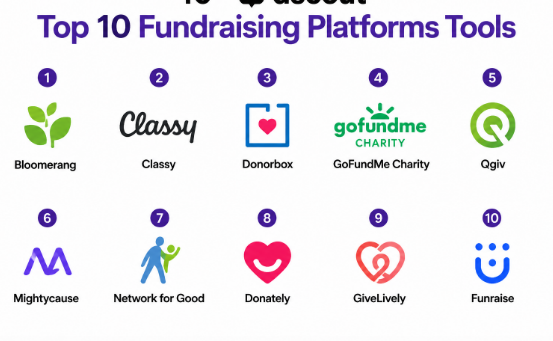
Top 10 Fundraising Platforms Tools
1- Bloomerang
Short description: Bloomerang helps nonprofits retain and engage donors through an intuitive dashboard, automated communications, and donor analytics. It’s suitable for small to mid-sized organizations seeking a data-driven approach to fundraising.
Key Features
- Donor management and segmentation
- Email and social campaign automation
- Online donation forms
- Real-time reporting and analytics
- Integration with accounting and CRM tools
- Volunteer management modules
Pros
- Strong donor retention focus
- User-friendly interface
- Flexible reporting options
Cons
- Limited customization for large-scale enterprises
- Certain integrations may require extra cost
Platforms / Deployment
- Web / iOS / Android
- Cloud
Security & Compliance
- Not publicly stated
Integrations & Ecosystem
Supports integrations with:
- QuickBooks
- Mailchimp
- Salesforce Nonprofit Cloud
- Zapier workflows
- Payment processors (Stripe, PayPal)
Support & Community
- Email and phone support
- Knowledge base and webinars
- Community forums for nonprofit users
2- Classy
Short description: Classy is designed for nonprofits to run peer-to-peer fundraising, crowdfunding, and recurring donation campaigns. Its modular design supports complex campaigns for large nonprofits.
Key Features
- Crowdfunding and peer-to-peer campaign creation
- Donor management and CRM integration
- Event registration and ticketing
- Recurring donations and automated workflows
- Reporting dashboards with advanced analytics
Pros
- Excellent for peer-to-peer campaigns
- Strong event management capabilities
- Scalable for large organizations
Cons
- Steeper learning curve for new users
- Higher pricing for smaller organizations
Platforms / Deployment
- Web / iOS / Android
- Cloud
Security & Compliance
- Not publicly stated
Integrations & Ecosystem
- Salesforce, HubSpot, Blackbaud, Zapier
- Payment processors and email marketing tools
Support & Community
- Dedicated account management
- Documentation and community forums
- Onboarding webinars
3- Donorbox
Short description: Donorbox provides a simple yet powerful donation platform for nonprofits, offering embeddable donation forms, recurring donations, and donor management for organizations of all sizes.
Key Features
- Easy embeddable donation forms
- Recurring donation management
- Stripe, PayPal, and Apple Pay integration
- Multi-currency support
- Donor analytics and reporting
Pros
- Quick setup and easy implementation
- Affordable for small organizations
- Supports recurring donations efficiently
Cons
- Limited advanced features for enterprise-level campaigns
- Branding customization is basic
Platforms / Deployment
- Web
- Cloud
Security & Compliance
- Not publicly stated
Integrations & Ecosystem
- CRM integrations via Zapier
- Email marketing tools
- Event management tools
Support & Community
- Email support
- Knowledge base and guides
- Community forum
4- GoFundMe Charity
Short description: GoFundMe Charity is optimized for nonprofits and personal fundraising campaigns, with peer-to-peer functionality and social sharing tools to maximize donations.
Key Features
- Peer-to-peer campaign creation
- Social media sharing tools
- Donation tracking and reporting
- Mobile-friendly donation forms
- Integration with CRM tools
Pros
- Highly recognizable brand boosts donor confidence
- Easy social media integrations
- Mobile-optimized donation experience
Cons
- Less customization for complex campaigns
- Some fees apply for processing payments
Platforms / Deployment
- Web / iOS / Android
- Cloud
Security & Compliance
- Not publicly stated
Integrations & Ecosystem
- Salesforce, HubSpot
- Email marketing tools
- Payment gateways (Stripe, PayPal)
Support & Community
- Email and chat support
- Guides and tutorials
- Community knowledge base
5- Qgiv
Short description: Qgiv is a versatile platform for online fundraising, events, and peer-to-peer campaigns, offering donation forms, auctions, and text-to-give campaigns for mid-to-large nonprofits.
Key Features
- Online donation forms and widgets
- Peer-to-peer and text-to-give campaigns
- Auction and event fundraising modules
- Reporting and analytics dashboard
- CRM integration and donor management
Pros
- Comprehensive event and campaign support
- Flexible donation options
- Strong reporting capabilities
Cons
- Interface can feel complex for new users
- Advanced features may require add-ons
Platforms / Deployment
- Web / iOS / Android
- Cloud
Security & Compliance
- Not publicly stated
Integrations & Ecosystem
- Salesforce, Mailchimp, Blackbaud
- Payment processing tools
- Event management software
Support & Community
- Phone, chat, and email support
- Knowledge base and webinars
- User community forum
6- Mightycause
Short description: Mightycause focuses on nonprofits and community organizations, providing fundraising tools for peer-to-peer, recurring donations, and events while offering donor insights.
Key Features
- Crowdfunding and peer-to-peer campaigns
- Recurring donation capabilities
- Event registration and ticketing
- Donor reporting and analytics
- Corporate giving management
Pros
- Simplifies peer-to-peer fundraising
- Clear reporting tools
- Engaging event management features
Cons
- Limited integrations with external CRMs
- Customization options are moderate
Platforms / Deployment
- Web
- Cloud
Security & Compliance
- Not publicly stated
Integrations & Ecosystem
- Payment gateways
- Email marketing tools
- Corporate partnership tools
Support & Community
- Email support and documentation
- Community knowledge base
7- Network for Good
Short description: Network for Good is tailored for small to mid-sized nonprofits, combining donor management, fundraising pages, and automated campaigns in one intuitive platform.
Key Features
- Donor database and segmentation
- Customizable donation pages
- Automated email and thank-you campaigns
- Event fundraising and ticketing
- Reporting dashboards with metrics
Pros
- All-in-one platform for small nonprofits
- Easy to use with minimal setup
- Automated donor engagement features
Cons
- Less scalable for large enterprises
- Advanced analytics limited
Platforms / Deployment
- Web
- Cloud
Security & Compliance
- Not publicly stated
Integrations & Ecosystem
- CRM and email marketing integrations
- Payment processors
- Event management platforms
Support & Community
- Email support
- Tutorials and guides
- Community forums
8- Donately
Short description: Donately offers simple online donation tools for nonprofits with recurring donation options, donor management, and integration-friendly features.
Key Features
- Online donation forms
- Recurring donation management
- Donor database and CRM integration
- Reporting and analytics
- Campaign tracking tools
Pros
- Quick setup and simple interface
- Affordable pricing for small organizations
- Focused on recurring donations
Cons
- Fewer advanced features
- Limited event management tools
Platforms / Deployment
- Web
- Cloud
Security & Compliance
- Not publicly stated
Integrations & Ecosystem
- Payment processors (Stripe, PayPal)
- Zapier for automation
- Email marketing tools
Support & Community
- Email and chat support
- Knowledge base
- Community resources
9- GiveLively
Short description: GiveLively provides a free platform for nonprofits to run donation pages, peer-to-peer campaigns, and text-to-give initiatives, aiming to democratize fundraising.
Key Features
- Donation pages and forms
- Peer-to-peer fundraising
- Text-to-give and mobile donations
- Event ticketing
- Campaign analytics
Pros
- Free to use, no platform fees
- Mobile-first design
- Easy social sharing features
Cons
- Limited integrations with advanced CRMs
- Support is primarily digital
Platforms / Deployment
- Web / iOS / Android
- Cloud
Security & Compliance
- Not publicly stated
Integrations & Ecosystem
- Payment gateways
- Email marketing platforms
- Basic CRM integrations
Support & Community
- Digital documentation
- Community forums
- Limited personalized support
10- Funraise
Short description: Funraise is a modern fundraising platform for nonprofits, blending donation management, automation, peer-to-peer campaigns, and reporting in a unified interface.
Key Features
- Online donation forms and recurring donations
- Peer-to-peer and crowdfunding campaigns
- Automation and email workflows
- Real-time analytics and reporting
- Integration with CRM and marketing tools
Pros
- Modern and user-friendly interface
- Supports complex campaigns
- Strong automation and analytics
Cons
- Pricing may be higher for small organizations
- Some features may require add-ons
Platforms / Deployment
- Web / iOS / Android
- Cloud
Security & Compliance
- Not publicly stated
Integrations & Ecosystem
- Salesforce, Mailchimp, Zapier
- Payment gateways
- Event management tools
Support & Community
- Email and chat support
- Knowledge base and webinars
- Active user community
Comparison Table (Top 10)
| Tool Name | Best For | Platform(s) Supported | Deployment | Standout Feature | Public Rating |
|---|---|---|---|---|---|
| Bloomerang | Small to mid-sized nonprofits | Web, iOS, Android | Cloud | Donor retention analytics | N/A |
| Classy | Large nonprofits | Web, iOS, Android | Cloud | Peer-to-peer campaigns | N/A |
| Donorbox | Small nonprofits, campaigns | Web | Cloud | Embeddable donation forms | N/A |
| GoFundMe Charity | Social and personal fundraising | Web, iOS, Android | Cloud | Social sharing integration | N/A |
| Qgiv | Mid to large nonprofits | Web, iOS, Android | Cloud | Event and auction support | N/A |
| Mightycause | Community & nonprofits | Web | Cloud | Peer-to-peer fundraising | N/A |
| Network for Good | Small to mid-sized nonprofits | Web | Cloud | Automated donor engagement | N/A |
| Donately | Small nonprofits | Web | Cloud | Recurring donations | N/A |
| GiveLively | Small nonprofits, free usage | Web, iOS, Android | Cloud | No platform fees | N/A |
| Funraise | Nonprofits with complex campaigns | Web, iOS, Android | Cloud | Automation and analytics | N/A |
Evaluation & Scoring of Fundraising Platforms
| Tool Name | Core (25%) | Ease (15%) | Integrations (15%) | Security (10%) | Performance (10%) | Support (10%) | Value (15%) | Weighted Total (0–10) |
|---|---|---|---|---|---|---|---|---|
| Bloomerang | 9 | 9 | 8 | 7 | 9 | 8 | 8 | 8.6 |
| Classy | 9 | 8 | 9 | 7 | 8 | 8 | 7 | 8.3 |
| Donorbox | 8 | 10 | 7 | 7 | 8 | 8 | 9 | 8.3 |
| GoFundMe Charity | 7 | 9 | 7 | 7 | 8 | 7 | 8 | 7.9 |
| Qgiv | 8 | 8 | 8 | 7 | 8 | 7 | 7 | 7.8 |
| Mightycause | 7 | 8 | 6 | 7 | 7 | 7 | 8 | 7.3 |
| Network for Good | 7 | 9 | 7 | 7 | 7 | 7 | 8 | 7.5 |
| Donately | 7 | 9 | 6 | 7 | 7 | 7 | 9 | 7.6 |
| GiveLively | 6 | 8 | 6 | 7 | 7 | 6 | 9 | 7.0 |
| Funraise | 8 | 8 | 8 | 7 | 8 | 8 | 7 | 7.9 |
Interpretation: Scores are comparative; a higher weighted total indicates stronger overall functionality relative to peers. Buyers should consider scores in combination with organizational size, budget, and campaign complexity.
Which Fundraising Platform Tool Is Right for You?
Solo / Freelancer
- Donorbox or GiveLively is ideal for small-scale fundraising or personal campaigns. They offer simple setup and low overhead.
SMB
- Bloomerang or Network for Good provides a balance of features, automation, and analytics suitable for nonprofits with recurring campaigns.
Mid-Market
- Classy, Qgiv, or Funraise offer peer-to-peer, event, and reporting capabilities suitable for growing organizations seeking scalability.
Enterprise
- Classy, Funraise, and Qgiv scale to complex campaigns, international donors, and multi-channel fundraising with advanced analytics.
Budget vs Premium
- Donorbox and GiveLively are cost-effective for basic campaigns.
- Funraise and Classy deliver premium features for organizations requiring automation, integration, and large-scale analytics.
Feature Depth vs Ease of Use
- Bloomerang and Network for Good are easy to use with moderate feature sets.
- Classy and Funraise provide deep functionality but require training and onboarding.
Integrations & Scalability
- Enterprise platforms excel in CRM, accounting, and marketing tool integrations.
- Small platforms are limited but can leverage Zapier for basic connectivity.
Security & Compliance Needs
- Organizations handling sensitive donor data should prioritize platforms with strong encryption, audit logs, and verified compliance; check SOC 2 or ISO standards if required.
Frequently Asked Questions (FAQs)
1- What pricing models do fundraising platforms use?
Most platforms offer subscription-based pricing with tiered plans. Some, like GiveLively, provide free usage. Fees may also apply for payment processing and advanced features.
2- How easy is it to onboard new users?
Platforms typically provide documentation, tutorials, webinars, and support teams. Enterprise platforms may include dedicated onboarding assistance.
3- Can these platforms handle recurring donations?
Yes, recurring donations are a core feature for most platforms. Donorbox, Bloomerang, and Funraise offer automation for monthly or yearly donor contributions.
4- How secure is donor data?
Security varies; most cloud platforms implement encryption, access controls, and audit logs. Verify each platform’s compliance certifications for your region and organizational needs.
5- Are there mobile capabilities?
Yes, iOS and Android apps or mobile-optimized web forms are common to facilitate donations and campaign management on-the-go.
6- What are common mistakes when implementing a platform?
- Skipping integration with existing CRMs
- Ignoring donor analytics and segmentation
- Failing to train staff on automation tools
7- How do integrations work?
Platforms integrate with CRMs, email marketing tools, accounting software, and payment gateways. Zapier is commonly used for connecting with additional tools.
8- Can I switch platforms easily?
Migration can be complex due to donor data and historical campaign tracking. Plan for CSV exports, CRM syncing, and testing before full migration.
9- Do platforms support international donations?
Many platforms support multiple currencies and global payment processors. Verify currency coverage and local compliance requirements.
10- Are there alternatives to dedicated fundraising platforms?
Some organizations use generic CRMs, spreadsheets, or payment gateways directly. However, these may lack automation, reporting, and donor engagement capabilities.
Conclusion
Fundraising platforms provide essential tools for managing campaigns, engaging donors, and optimizing contributions in a digital-first world. Selecting the right platform depends on your organization’s size, complexity, budget, and campaign strategy. Smaller nonprofits may prioritize ease of use and low cost, while large organizations need automation, integrations, and advanced analytics. Next steps: shortlist 2–3 platforms that align with your needs, run a pilot campaign, and verify integration and security compliance to maximize fundraising efficiency.
