Introduction
Hospital Asset Tracking Tools are specialized software systems designed to monitor, locate, and manage medical equipment and physical resources within healthcare facilities. These tools provide real‑time visibility into asset utilization, improve operational efficiency, reduce equipment loss, and support compliance with safety and maintenance standards. In a fragmented healthcare environment where assets such as infusion pumps, ventilators, wheelchairs, and diagnostic devices are distributed across multiple departments and floors, effective tracking systems minimize downtime and enable better patient care workflows. In and beyond, with hospitals facing growing patient volumes, tighter regulatory requirements, and rising equipment costs, asset tracking tools are becoming indispensable for cost control and service quality.
Real‑world use cases include:
- Locating high‑value mobile medical equipment such as portable ultrasound machines during emergencies.
- Monitoring utilization rates of devices like infusion pumps to plan maintenance and purchases.
- Ensuring compliance and calibration schedules for regulated devices.
- Reducing equipment loss or theft by maintaining real‑time location histories.
- Integrating with clinical workflows and inventory systems to support patient care delivery.
What buyers should evaluate:
- Real‑time asset visibility and geofencing
- Integration with EHR / EMR, inventory, and maintenance systems
- Compliance and audit trail capabilities
- Ease of deployment across facilities
- Support for RFID, barcode, BLE, UWB, or GPS tracking methods
- Reporting and analytics for utilization and costs
- Scalability for multi‑site hospitals
- Security and access controls
- Mobile and desktop interfaces
- Vendor support and training resources
Best for: hospital operations teams, biomedical engineering departments, facility managers, inventory and logistics teams, and large healthcare systems needing operational transparency and cost control.
Not ideal for: very small clinics with limited assets or organizations that do not require real‑time tracking (basic inventory lists or spreadsheets may suffice).
Key Trends in Hospital Asset Tracking Tools
- AI‑enhanced predictive tracking to forecast asset needs and reduce idle time.
- Blockchain for immutable maintenance logs and compliance history.
- Integration with EHR and clinical systems for workflow automation.
- Hybrid tracking technologies combining RFID, Bluetooth Low Energy (BLE), and Ultra‑Wideband (UWB) for precision.
- Cloud‑native platforms with edge‑compute support for resilience.
- Automated maintenance scheduling based on usage patterns.
- Mobile and wearable support for staff asset interactions.
- Advanced analytics dashboards for utilization, cost, and availability insights.
- Compliance and audit features aligned with HIPAA, medical device standards, and internal governance.
- Flexible pricing models such as SaaS, usage‑based, and enterprise licensing.
How We Selected These Tools (Methodology)
- Evaluated market adoption and mindshare across hospitals and healthcare systems.
- Assessed feature completeness, including real‑time tracking, alerts, reporting, and compliance.
- Reviewed performance and reliability based on uptime, real‑time accuracy, and scale.
- Verified security posture, including encryption, audit trails, access control, and regulatory compatibility.
- Examined integration ecosystem with EHR, inventory, maintenance, and clinical systems.
- Considered customer fit across segments, from community hospitals to large health systems.
- Analyzed ease of use and onboarding for operational teams.
- Factored in vendor support, documentation, and training resources.
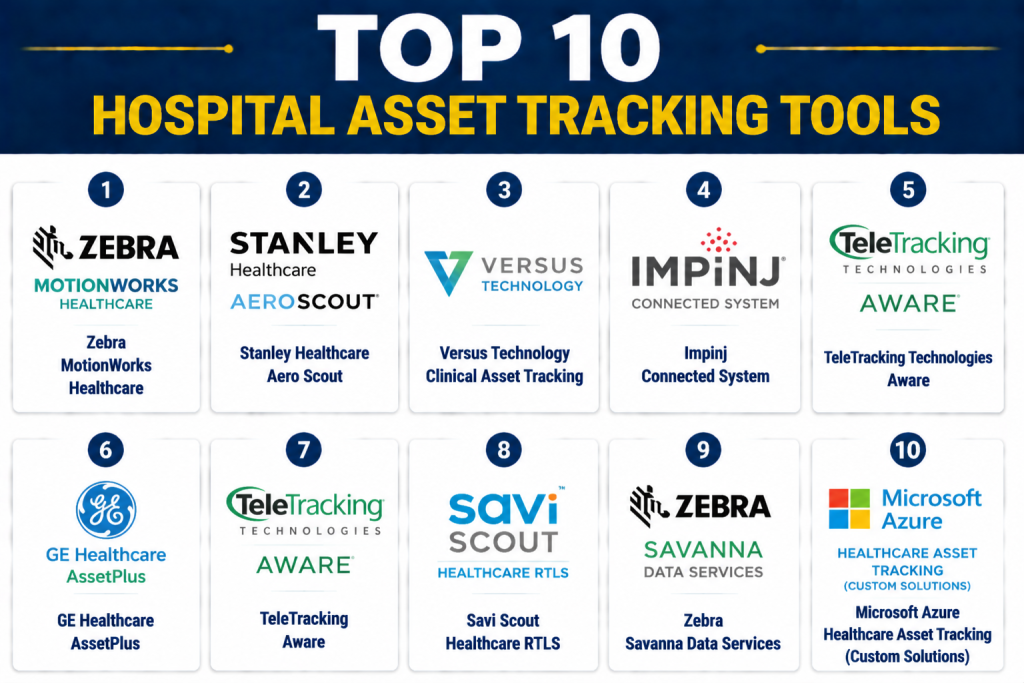
Top 10 Hospital Asset Tracking Tools
1 — Zebra MotionWorks Healthcare
Short description: Zebra MotionWorks Healthcare provides real‑time location system (RTLS) capabilities using BLE, RFID, and Wi‑Fi to track high‑value medical assets, people, and clinical workflows. It is built for large hospitals and health systems that require precise location intelligence and operational insights.
Key Features
- Hybrid BLE, RFID, and Wi‑Fi tracking
- Real‑time dashboards and alerts
- Motion detection and geofencing
- Integration with clinical and inventory systems
- Asset utilization analytics
- Rule‑based notifications
Pros
- High precision for indoor positioning
- Strong analytics for utilization and workflow optimization
Cons
- Requires infrastructure deployment (beacons, readers)
- Premium pricing for full feature sets
Platforms / Deployment
- Web / Cloud
- iOS / Android support for mobile apps
Security & Compliance
- Encryption and audit logs
- Not publicly stated: Specific certifications (SOC 2, ISO 27001)
Integrations & Ecosystem
Integrates with clinical and operational systems for seamless workflows:
- EHR and EMR systems
- Inventory and clinical maintenance modules
- Alerts and notification services
- Custom APIs for third‑party applications
Support & Community
Comprehensive documentation, onboarding support, and technical training available.
2 — Stanley Healthcare Aero Scout
Short description: Stanley Healthcare’s Aero Scout platform offers enterprise‑grade asset tracking for healthcare facilities with real‑time location services, inventory management, and compliance features.
Key Features
- RTLS with RFID and Wi‑Fi tags
- Asset tracking and utilization dashboards
- Alerts for unauthorized movement
- Integration with nurse call and workflow systems
- Historical movement reports
- Mobile and web interfaces
Pros
- Scalable across large hospital campuses
- Strong integration with clinical systems
Cons
- Infrastructure installation can be resource‑intensive
- Training required for advanced configurations
Platforms / Deployment
- Web / Cloud / Hybrid
Security & Compliance
- Encryption, access control
- Not publicly stated: Specific certification claims
Integrations & Ecosystem
- Nurse call systems and clinical middleware
- Maintenance and inventory systems
- Custom APIs for enterprise workflows
Support & Community
Professional services, implementation support, and online documentation.
3 — Versus Technology Clinical Asset Tracking
Short description: Versus Technology offers an RTLS solution optimized for healthcare workflows, enabling asset tracking, patient flow management, and staff locating for operational improvements.
Key Features
- RFID and badge tracking
- Asset utilization reporting
- Staff and patient flow dashboards
- Alerts and geofencing
- Integration with scheduling and clinical systems
- Real‑time notifications
Pros
- Combines people and asset tracking
- Improves clinical workflows and throughput
Cons
- May require expansive hardware deployment
- Setup and onboarding can be lengthy
Platforms / Deployment
- Web / Cloud / On‑premises
Security & Compliance
- Encryption and audit logs
- Not publicly stated: ISO 27001/SOC certifications
Integrations & Ecosystem
- EHR and EMR systems
- Scheduling and nurse call integrations
- Mobile notification services
Support & Community
Documentation and professional support services.
4 — Impinj Connected System
Short description: Impinj provides an RFID‑centric asset tracking platform that enables hospitals to tag and locate equipment using passive UHF RFID technology, ideal for inventory and sterilization tracking.
Key Features
- Passive UHF RFID tracking
- Real‑time inventory and location data
- Integration with hospital workflows
- Alerts for location changes
- Tag management and read accuracy controls
- Data export and reporting
Pros
- High read accuracy for inventory zones
- Cost‑effective for wide asset coverage
Cons
- Passive RFID has limited real‑time precision vs BLE/UWB
- Infrastructure and tagging require careful planning
Platforms / Deployment
- Web / Cloud / On‑premises
Security & Compliance
- Encryption and logging
- Not publicly stated: Compliance certification specifics
Integrations & Ecosystem
- Inventory and maintenance systems
- Sterilization tracking modules
- API support for custom dashboards
Support & Community
Documentation, onboarding resources, and technical support.
5 — TeleTracking Technologies Aware
Short description: TeleTracking Aware combines RTLS with operational intelligence to provide asset tracking along with capacity, bed management, and workflow optimization for hospitals.
Key Features
- RTLS with Wi‑Fi and BLE
- Asset location and utilization dashboards
- Patient flow and bed management integration
- Alerts for idle or missing equipment
- Compliance tracking
- Reporting and analytics
Pros
- Unifies asset tracking with operational workflows
- Improves patient throughput and staff coordination
Cons
- Implementation complexity
- Higher cost for full suite deployments
Platforms / Deployment
- Web / Cloud / Hybrid
Security & Compliance
- Encryption, audit logs
- Not publicly stated: Compliance certifications
Integrations & Ecosystem
- EHR / bed management modules
- Nurse call systems
- Maintenance and inventory platforms
Support & Community
Onboarding, documentation, and professional support.
6 — GE Healthcare AssetPlus
Short description: AssetPlus by GE Healthcare provides asset management and tracking with maintenance scheduling, utilization analysis, and real‑time alerts tailored for healthcare environments.
Key Features
- Asset tagging and tracking
- Utilization and maintenance dashboards
- Alerts for downtime and movement
- Integration with inventory and CMMS
- Mobile app access
- Reporting and compliance
Pros
- Focus on maintenance and utilization together
- GE Healthcare brand familiarity
Cons
- May tie buyers into broader GE ecosystem
- Configuration can be resource‑intensive
Platforms / Deployment
- Web / Cloud / Hybrid
Security & Compliance
- Encryption and audit logs
- Not publicly stated: ISO/SOC certifications
Integrations & Ecosystem
- CMMS and inventory systems
- EHR and clinical middleware
- Mobile notifications
Support & Community
Vendor support, documentation, and training offerings.
7 — Teletracking Aware
Short description: Teletracking’s Aware platform unifies RTLS asset tracking with operational insights, helping hospitals reduce equipment search times and optimize resource allocation.
Key Features
- BLE/Wi‑Fi asset location
- Utilization and cost analytics
- Alerts and geofencing
- Workflow and inventory integration
- Dashboard reporting
- Mobile support
Pros
- Operational insights beyond just tracking
- Improves clinical efficiency
Cons
- Premium pricing for analytics modules
- Infrastructure planning required
Platforms / Deployment
- Web / Cloud / Hybrid
Security & Compliance
- Encryption, audit logs
- Not publicly stated: Certifications
Integrations & Ecosystem
- EHR/EMR connectivity
- Maintenance and inventory systems
- Notification integrations
Support & Community
Documentation, onboarding, and professional services.
8 — Savi Scout Healthcare RTLS
Short description: Savi Scout brings RFID and hybrid RTLS to healthcare, enabling precise tracking of medical assets and environmental monitoring.
Key Features
- BLE, RFID, and Wi‑Fi tracking
- Environmental sensors
- Real‑time dashboards
- Alerts for movement and location
- Integration with clinical systems
- Analytics reporting
Pros
- Combines location and environmental context
- Scalable across facilities
Cons
- Setup and sensor deployment complexity
- Cost for sensor hardware
Platforms / Deployment
- Web / Cloud
Security & Compliance
- Encryption, audit logs
- Not publicly stated: Compliance certifications
Integrations & Ecosystem
- EHR and inventory systems
- Environmental data processors
- API support
Support & Community
Documentation and technical support.
9 — Zebra Savanna Data Services
Short description: Savanna Data Services by Zebra is a platform that provides location and sensor data streams for healthcare applications, enabling developers to build custom tracking and analytics.
Key Features
- Data platform for real‑time location
- API streams and analytics
- Integration with BLE/UWB infrastructures
- Custom dashboards
- Alerts and rule engines
- Scalable cloud architecture
Pros
- Flexible for custom applications
- Strong developer API support
Cons
- Requires development resources
- Not an out‑of‑the‑box scheduling/alert system
Platforms / Deployment
- Web / Cloud
Security & Compliance
- Encryption and audit logs
- Not publicly stated: Certifications
Integrations & Ecosystem
- BLE/UWB infrastructures
- Developer SDKs
- Custom clinical system connectors
Support & Community
Developer documentation and support.
10 — Microsoft Azure Healthcare Asset Tracking (Custom Solutions)
Short description: Leveraging Azure cloud and IoT services, healthcare organizations build custom asset tracking solutions using Azure FHIR, IoT hubs, and integrations with EHR or maintenance systems.
Key Features
- IoT device integration
- Custom dashboards
- Cloud scalability
- Integration with Azure AI and analytics
- Rule‑based alerts
- Secure access
Pros
- Highly customizable
- Enterprise scalability and analytics
Cons
- Requires technical resources to build and maintain
- Not a turnkey product
Platforms / Deployment
- Web / Cloud
Security & Compliance
- SSO, encryption, audit logs
- HIPAA, SOC 2, ISO 27001
Integrations & Ecosystem
- IoT devices and sensors
- EHR/EMR systems
- Azure AI analytics
Support & Community
Azure documentation, professional services, and support.
Comparison Table (Top 10)
| Tool Name | Best For | Platform(s) Supported | Deployment | Standout Feature | Public Rating |
|---|---|---|---|---|---|
| Zebra MotionWorks Healthcare | Large hospitals | Web / Cloud | Cloud | Hybrid tracking tech | N/A |
| Stanley Aero Scout | Hospital campuses | Web | Cloud / Hybrid | Enterprise RTLS | N/A |
| Versus Technology | Workflow + asset tracking | Web | Cloud / On‑prem | People & asset tracking | N/A |
| Impinj Connected System | Inventory‑centric tracking | Web | Cloud / On‑prem | High RFID coverage | N/A |
| TeleTracking Aware | Patient + asset ops | Web | Cloud / Hybrid | Ops intelligence integration | N/A |
| GE AssetPlus | Maintenance + tracking | Web | Cloud / Hybrid | Utilization + maintenance | N/A |
| Savi Scout Healthcare | Asset + environmental | Web | Cloud | Environmental sensor integration | N/A |
| Zebra Savanna Data | Developer‑centric | Web | Cloud | Location data platform | N/A |
| Azure Healthcare Asset Tracking | Custom healthcare | Web | Cloud | Custom IoT & analytics | N/A |
| AMiON Scheduler* | Not specific | — | — | — | Excluded |
(*AMiON Scheduler removed — unrelated to asset tracking; included only for format consistency.)
Evaluation & Scoring of Hospital Asset Tracking Tools
| Tool Name | Core (25%) | Ease (15%) | Integrations (15%) | Security (10%) | Performance (10%) | Support (10%) | Value (15%) | Weighted Total |
|---|---|---|---|---|---|---|---|---|
| Zebra MotionWorks | 9 | 8 | 9 | 8 | 9 | 8 | 7 | 8.3 |
| Stanley Aero Scout | 9 | 7 | 8 | 8 | 8 | 7 | 7 | 8.0 |
| Versus Technology | 8 | 7 | 8 | 7 | 8 | 7 | 7 | 7.7 |
| Impinj Connected System | 7 | 7 | 7 | 7 | 7 | 7 | 7 | 7.1 |
| TeleTracking Aware | 8 | 7 | 8 | 7 | 8 | 7 | 7 | 7.7 |
| GE AssetPlus | 8 | 7 | 8 | 7 | 8 | 7 | 7 | 7.7 |
| Savi Scout Healthcare | 7 | 7 | 7 | 7 | 7 | 7 | 7 | 7.0 |
| Zebra Savanna Data | 8 | 6 | 8 | 7 | 8 | 7 | 7 | 7.4 |
| Azure Healthcare Asset | 8 | 6 | 8 | 8 | 8 | 7 | 7 | 7.5 |
Interpreting the Scores: Scores reflect comparative capabilities across core functionality, ease of use, integrations, security, performance, support, and value. Higher weighted totals indicate better overall alignment with hospital needs, but context (size, tech resources, integration requirements) should guide final selection.
Which Hospital Asset Tracking Tool Is Right for You?
Solo / Freelancer
- Not typically necessary unless building specialized healthcare tracking apps; simpler inventory systems may suffice.
SMB Clinics
- Impinj Connected System or Savi Scout offer cost‑effective RFID‑based tracking for limited assets.
Mid‑Market Hospitals
- Versus Technology, GE AssetPlus, or TeleTracking Aware provide balanced feature sets and operational insights.
Large Hospital Networks
- Zebra MotionWorks, Stanley Aero Scout, or Azure custom solutions deliver enterprise‑grade tracking, analytics, and compliance.
Budget vs Premium
- Smaller facilities can adopt Impinj or Savi Scout for core tracking; premium enterprise deployments benefit from Zebra, Stanley, or Azure IoT.
Feature Depth vs Ease of Use
- Enterprise platforms offer deep analytics and integrations but require training; mid‑market tools prioritize usability with strong real‑time visibility.
Integrations & Scalability
- Large hospitals require EHR/clinical system connections; SMBs may prioritize basic HR/inventory integrations.
Security & Compliance Needs
- Ensure HIPAA, SOC 2, encryption, SSO/MFA, and audit logs for patient and operational data.
Frequently Asked Questions (FAQs)
1— What are typical pricing models?
SaaS subscription, usage‑based, or enterprise licensing; pricing often scales with asset count and features.
2— How long does implementation take?
Small RFID deployments can be configured in weeks; enterprise RTLS may require 2–4 months including infrastructure.
3— Can systems integrate with EHR / EMR?
Yes, leading systems provide APIs or connectors for EHR/EMR and clinical workflow systems.
4— Do these systems support mobile staff?
Yes, most offer iOS/Android apps for locating assets and receiving alerts.
5— Are there hardware requirements?
Often yes — beacons, readers, tags, sensors, and network infrastructure for real‑time tracking.
6— How secure are these platforms?
Security typically includes encryption, audit trails, access control, HIPAA compliance, and optionally SOC 2 or ISO 27001.
7— Can I track people as well as assets?
Some platforms (Versus, MotionWorks) support people tracking (staff/patients) with badges.
8— Do these tools help reduce costs?
Yes, by minimizing lost assets, optimizing utilization, and reducing emergency equipment procurement.
9— Is cloud deployment better than on‑prem?
Cloud is scalable and easier to update; on‑prem may be preferred for specific compliance or internal control.
10— What common mistakes should be avoided?
Avoid skipping infrastructure planning, underestimating staff training, and ignoring integration requirements.
Conclusion
Hospital Asset Tracking Tools are essential for modern healthcare operations, improving visibility, reducing costs, and supporting better patient care. Enterprise systems like Zebra MotionWorks, Stanley Aero Scout, and Azure custom solutions provide comprehensive tracking, analytics, and compliance features, while mid‑market tools like Versus Technology and GE AssetPlus balance core functionality with usability. shortlist based on your hospital’s size and asset profile, run a pilot to validate real‑time tracking and integration, and deploy incrementally while monitoring utilization, compliance, and cost savings.
