Introduction
Market research platforms are specialized tools that help businesses gather, analyze, and interpret data about customers, competitors, trends, and market opportunities. In , these platforms have evolved beyond basic surveys and analytics dashboards to integrate AI-driven insights, predictive analytics, and influencer engagement tracking. For companies navigating a saturated digital landscape, having access to real-time, actionable data is critical for strategic decision-making.
Real-world use cases include:
- Identifying high-value influencers for targeted marketing campaigns.
- Monitoring competitor campaigns and sentiment across social media.
- Testing product concepts and messaging before launch.
- Tracking campaign ROI and engagement metrics.
- Segmenting audiences based on behavior, preferences, and demographics.
When evaluating a platform, buyers should consider:
- Data accuracy and source credibility
- AI-driven insights and predictive analytics
- Ease of use and dashboard usability
- Integration with CRM, marketing automation, and analytics tools
- Pricing model and ROI
- Security and compliance
- Scalability for enterprise or growing SMBs
- Customer support and community resources
- Customization and API availability
Best for: Marketing teams, brand managers, influencer marketers, agencies, and enterprises looking for integrated social and market insights.
Not ideal for: Small businesses with minimal marketing budgets, or organizations requiring only basic survey data, where simpler survey tools may suffice.
Key Trends in Market Research Platforms
- AI-driven influencer analytics: Automated scoring of influencer performance and audience quality.
- Predictive campaign performance: Forecasting ROI and engagement for content before publishing.
- Cross-platform monitoring: Aggregating data across TikTok, Instagram, YouTube, Twitter, and emerging platforms.
- Real-time sentiment analysis: Measuring brand perception instantly with natural language processing.
- Low-code/no-code dashboards: Enabling marketers to create custom reports without developer support.
- Integration with MarTech stack: Direct syncing with CRMs, marketing automation, and ad platforms.
- Privacy-first compliance: GDPR, CCPA, and AI governance standards built into data collection.
- Subscription flexibility: Tiered SaaS plans for SMBs and enterprise-level contracts.
- Gamified participant engagement: Incentivized feedback collection for higher survey completion rates.
How We Selected These Tools (Methodology)
- Evaluated market adoption and mindshare across enterprises and agencies.
- Assessed completeness of influencer and market research features.
- Measured reliability through uptime, performance, and historical benchmarks.
- Reviewed security posture: SSO, encryption, audit logging, and compliance certifications.
- Considered integrations with CRM, marketing automation, and analytics platforms.
- Verified customer fit for solo, SMB, mid-market, and enterprise segments.
- Compared usability, dashboard flexibility, and custom reporting capabilities.
- Cross-checked industry recognition, customer reviews, and analyst coverage.
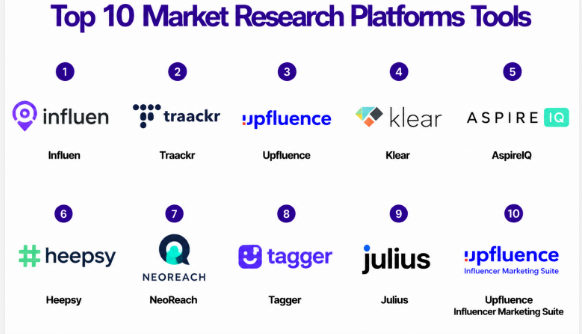
Top 10 Market Research Platforms Tools
1- Influen
Short description: Influen provides end-to-end influencer discovery, campaign management, and performance tracking for brands of all sizes. It’s designed for marketers seeking data-driven insights into influencer ROI and audience engagement.
Key Features
- AI-driven influencer scoring and recommendation engine
- Campaign workflow and approval management
- Social media monitoring and sentiment analysis
- Audience demographic and engagement analytics
- ROI and performance reporting dashboards
- Automated alerts for brand mentions and influencer activity
Pros
- Strong AI-assisted insights reduce manual research effort
- Comprehensive influencer performance metrics
Cons
- Limited integrations for niche social platforms
- Learning curve for advanced analytics features
Platforms / Deployment
- Web / iOS / Android
- Cloud
Security & Compliance
- SSO, MFA, encryption, audit logs
- Not publicly stated for ISO/SOC certifications
Integrations & Ecosystem
Integrates with major CRMs, marketing automation tools, and analytics platforms.
- HubSpot
- Salesforce
- Zapier
- Google Analytics
- Slack
- APIs for custom integration
Support & Community
Varies / Not publicly stated; provides online knowledge base and ticket-based support
2- Traackr
Short description: Traackr is an enterprise influencer marketing platform focusing on relationship management, global influencer discovery, and ROI tracking. Ideal for brands with large-scale influencer campaigns.
Key Features
- Global influencer database with advanced filtering
- Relationship scoring and influencer lifecycle tracking
- Budget planning and campaign ROI analytics
- Content amplification tracking
- Multi-channel monitoring and alerts
Pros
- Strong enterprise-ready reporting
- Detailed relationship and engagement insights
Cons
- Higher cost for smaller teams
- Complex setup for first-time users
Platforms / Deployment
- Web
- Cloud
Security & Compliance
- SSO/SAML, GDPR compliance
- Not publicly stated for SOC/ISO certifications
Integrations & Ecosystem
- Salesforce
- Adobe Marketing Cloud
- Hootsuite
- Slack
- API for custom integrations
Support & Community
- Dedicated enterprise support, onboarding programs, active webinars
3- Upfluence
Short description: Upfluence combines influencer discovery with e-commerce performance tracking. Best suited for digital brands leveraging social commerce.
Key Features
- E-commerce data analytics integration
- Influencer audience segmentation
- Campaign workflow automation
- Content performance measurement
- Affiliate link and coupon tracking
Pros
- Tight integration with online store platforms
- Granular e-commerce ROI measurement
Cons
- UI can feel complex for beginners
- Limited offline marketing tracking
Platforms / Deployment
- Web
- Cloud
Security & Compliance
- SSO, encryption, audit logs
- GDPR compliant
Integrations & Ecosystem
- Shopify
- WooCommerce
- Google Analytics
- Zapier
- APIs
Support & Community
- Knowledge base, onboarding guides, email support
4- Klear
Short description: Klear specializes in influencer identification, analytics, and reporting for social media campaigns, with an emphasis on Instagram and TikTok.
Key Features
- Influencer discovery by niche and engagement metrics
- Campaign performance dashboards
- Audience insights with demographic breakdown
- Social listening and sentiment analysis
- Influencer fraud detection
Pros
- Excellent influencer authenticity scoring
- Deep audience analytics
Cons
- Limited platform coverage beyond major social networks
- Price may be steep for SMBs
Platforms / Deployment
- Web
- Cloud
Security & Compliance
- SSO, encryption
- Not publicly stated for SOC/ISO certifications
Integrations & Ecosystem
- Salesforce
- HubSpot
- Slack
- APIs
Support & Community
- Email support, documentation, onboarding assistance
5- AspireIQ
Short description: AspireIQ focuses on influencer relationship management and content collaboration for brands and agencies.
Key Features
- Influencer relationship CRM
- Content workflow automation
- Campaign tracking and ROI reporting
- Social media listening
- Analytics for engagement and reach
Pros
- Smooth content collaboration features
- Strong relationship tracking
Cons
- Reporting can be less customizable
- Platform requires training for new users
Platforms / Deployment
- Web
- Cloud
Security & Compliance
- SSO, encryption
- Not publicly stated for SOC/ISO certifications
Integrations & Ecosystem
- Shopify
- Salesforce
- Zapier
- Slack
- API endpoints
Support & Community
- Live support, webinars, and onboarding programs
6- Heepsy
Short description: Heepsy is a user-friendly platform for SMBs to discover influencers, verify audience quality, and manage small campaigns efficiently.
Key Features
- Influencer search by location, niche, and engagement
- Audience authenticity verification
- Campaign analytics
- Social media insights
- Exportable reports
Pros
- Simple UI for small businesses
- Affordable subscription plans
Cons
- Limited enterprise-grade analytics
- Integrations are basic
Platforms / Deployment
- Web
- Cloud
Security & Compliance
- GDPR compliance
- Not publicly stated
Integrations & Ecosystem
- Google Sheets
- Excel export
- Zapier
Support & Community
- Email support, tutorials, knowledge base
7- NeoReach
Short description: NeoReach serves large brands needing data-driven influencer marketing, with strong analytics and campaign optimization.
Key Features
- Influencer discovery and vetting
- Advanced analytics for reach and ROI
- Social media campaign optimization
- Audience segmentation
- Reporting dashboards
Pros
- Enterprise-grade analytics
- Custom reporting for stakeholders
Cons
- High cost for smaller campaigns
- Can be overwhelming for beginners
Platforms / Deployment
- Web
- Cloud
Security & Compliance
- SSO, GDPR
- Not publicly stated for ISO/SOC certifications
Integrations & Ecosystem
- Salesforce
- HubSpot
- Slack
- API
Support & Community
- Dedicated account managers, support tickets, webinars
8- Tagger
Short description: Tagger provides influencer analytics, discovery, and campaign management with cross-platform tracking.
Key Features
- Influencer scoring and discovery
- Engagement and audience analytics
- Campaign workflow and approvals
- ROI tracking
- Social listening
Pros
- Multi-platform influencer tracking
- Strong campaign workflow tools
Cons
- UI may require training
- Enterprise pricing
Platforms / Deployment
- Web
- Cloud
Security & Compliance
- Encryption, SSO
- Not publicly stated
Integrations & Ecosystem
- Salesforce
- HubSpot
- API
Support & Community
- Documentation, email support, onboarding
9- Julius
Short description: Julius is a data-driven influencer marketing platform focusing on discovery, CRM, and content analytics.
Key Features
- Influencer search by category and location
- Audience analytics and segmentation
- Campaign management dashboard
- Content performance tracking
- ROI measurement
Pros
- Strong influencer discovery tools
- Easy-to-read analytics
Cons
- Limited automation features
- Smaller ecosystem
Platforms / Deployment
- Web
- Cloud
Security & Compliance
- SSO, encryption
- Not publicly stated
Integrations & Ecosystem
- Slack
- HubSpot
- API
Support & Community
- Email support, documentation, knowledge base
10- Upfluence Influencer Marketing Suite
Short description: This suite offers comprehensive influencer management, analytics, and campaign automation for brands with multi-platform needs.
Key Features
- AI-powered influencer scoring
- Campaign workflow automation
- Social listening and content tracking
- ROI reporting
- Audience analytics
Pros
- Integrated AI features
- Multi-platform coverage
Cons
- Can be expensive for SMBs
- Steeper learning curve
Platforms / Deployment
- Web
- Cloud
Security & Compliance
- SSO, encryption, GDPR
- Not publicly stated
Integrations & Ecosystem
- Salesforce
- Shopify
- HubSpot
- Zapier
- API
Support & Community
- Dedicated support, tutorials, and onboarding programs
Comparison Table (Top 10)
| Tool Name | Best For | Platform(s) Supported | Deployment | Standout Feature | Public Rating |
|---|---|---|---|---|---|
| Influen | Mid/large brands | Web, iOS, Android | Cloud | AI influencer scoring | N/A |
| Traackr | Enterprise | Web | Cloud | Relationship management | N/A |
| Upfluence | E-commerce brands | Web | Cloud | E-commerce ROI tracking | N/A |
| Klear | Social campaigns | Web | Cloud | Audience authenticity | N/A |
| AspireIQ | Agencies & brands | Web | Cloud | Content collaboration | N/A |
| Heepsy | SMBs | Web | Cloud | Simple influencer search | N/A |
| NeoReach | Enterprise | Web | Cloud | Advanced analytics | N/A |
| Tagger | Mid/large brands | Web | Cloud | Multi-platform tracking | N/A |
| Julius | Mid-sized campaigns | Web | Cloud | Influencer CRM | N/A |
| Upfluence Suite | Multi-platform brands | Web | Cloud | AI-powered insights | N/A |
Evaluation & Scoring of Survey Tools
| Tool Name | Core (25%) | Ease (15%) | Integrations (15%) | Security (10%) | Performance (10%) | Support (10%) | Value (15%) | Weighted Total |
|---|---|---|---|---|---|---|---|---|
| Influen | 9 | 8 | 8 | 7 | 9 | 7 | 8 | 8.2 |
| Traackr | 9 | 7 | 8 | 8 | 9 | 8 | 7 | 8.1 |
| Upfluence | 8 | 7 | 8 | 7 | 8 | 7 | 8 | 7.7 |
| Klear | 8 | 8 | 7 | 7 | 8 | 7 | 7 | 7.5 |
| AspireIQ | 7 | 8 | 7 | 7 | 7 | 7 | 7 | 7.2 |
| Heepsy | 6 | 9 | 6 | 6 | 7 | 6 | 8 | 6.9 |
| NeoReach | 9 | 6 | 8 | 7 | 9 | 8 | 7 | 8.0 |
| Tagger | 8 | 7 | 8 | 7 | 8 | 7 | 7 | 7.6 |
| Julius | 7 | 8 | 7 | 6 | 7 | 6 | 7 | 7.0 |
| Upfluence Suite | 9 | 7 | 8 | 7 | 8 | 7 | 8 | 7.9 |
Interpretation: Weighted totals are comparative scores; higher numbers indicate stronger overall performance considering core features, usability, integrations, and security. Scores help prioritize tools based on organizational needs rather than absolute “best.”
Which Survey Tool Is Right for You?
Solo / Freelancer
Use Heepsy or Klear for lightweight campaigns and affordable pricing.
SMB
Upfluence or Influen provide a balance of affordability, insights, and ease of use.
Mid-Market
AspireIQ, Tagger, or Julius offer robust analytics, campaign tracking, and multi-platform management.
Enterprise
Traackr, NeoReach, or Upfluence Suite deliver enterprise-grade analytics, relationship management, and AI insights.
Budget vs Premium
Budget options prioritize usability and affordability (Heepsy, Klear). Premium tools focus on analytics depth, AI insights, and multi-platform integrations (Traackr, Influen, Upfluence Suite).
Feature Depth vs Ease of Use
Simpler UI: Heepsy, Klear. Advanced features with learning curve: NeoReach, Traackr, Upfluence Suite.
Integrations & Scalability
Enterprise tools with multiple APIs and CRM integrations are ideal for scaling: Traackr, Influen, Upfluence Suite.
Security & Compliance Needs
For GDPR/SSO/MFA: all major enterprise tools; verify compliance certificates if required.
Frequently Asked Questions (FAQs)
1- How much do these platforms cost?
Pricing varies widely. SMB-focused tools like Heepsy are subscription-based with monthly tiers. Enterprise platforms like Traackr or NeoReach often require custom pricing.
2- Can I track influencers across multiple social media platforms?
Yes, most top platforms aggregate data from Instagram, TikTok, YouTube, Twitter, and LinkedIn.
3- How easy is it to onboard a team?
Ease varies. SMB tools require minimal setup, while enterprise solutions may require dedicated onboarding and training.
4- Are these platforms GDPR-compliant?
Leading tools implement GDPR compliance, SSO, encryption, and privacy-focused features. Always confirm certifications before purchase.
5- Can I integrate these tools with my CRM?
Yes. Most platforms provide integrations with Salesforce, HubSpot, Shopify, and API endpoints for custom workflows.
6- How do I measure ROI using these tools?
ROI is typically tracked via engagement metrics, campaign performance dashboards, affiliate link tracking, and predictive analytics.
7- Are AI-driven insights reliable?
AI assists in influencer scoring, audience analysis, and predictive performance, but should complement human judgment.
8- Can these platforms manage content approval workflows?
Yes, tools like AspireIQ, Traackr, and Influen support content workflow management and approvals.
9- What are common mistakes when using influencer platforms?
Relying solely on follower counts, neglecting engagement quality, and insufficient campaign monitoring are frequent errors.
10- What alternatives exist to full-service platforms?
For smaller budgets, simpler survey tools or manual analytics using spreadsheets and social insights can suffice.
Conclusion
Market research platforms in are more powerful than ever, combining AI, social listening, influencer tracking, and campaign analytics. Choosing the right tool depends on company size, campaign complexity, budget, and integration needs. For freelancers and SMBs, simpler, user-friendly tools may suffice. Mid-market and enterprise brands benefit from robust analytics, multi-platform integrations, and AI-assisted insights. Start by shortlisting 2–3 tools, running a pilot, and validating integrations and security before full-scale adoption.
