Introduction
Meal planning apps are digital platforms that help individuals, families, nutritionists, and food service teams organize meals, plan grocery shopping, and manage dietary requirements. They combine convenience, efficiency, and automation to simplify meal prep while ensuring balanced nutrition. In , these apps have become critical as consumers, businesses, and healthcare providers increasingly rely on data-driven insights for health, efficiency, and cost optimization.
Real-world use cases include:
- Busy professionals and families planning weekly meals and shopping lists.
- Nutritionists and dietitians providing clients with personalized meal plans.
- Fitness enthusiasts tracking caloric intake, macronutrients, and hydration.
- Restaurants and catering services streamlining menu planning and procurement.
- Wellness programs integrating meal planning with health tracking devices.
Best for: Home cooks, nutritionists, dietitians, fitness professionals, families, and restaurants seeking structured meal planning, dietary tracking, and grocery automation.
Not ideal for: Individuals who prefer spontaneous cooking, minimal meal tracking, or manual grocery shopping without digital integration.
Key Trends in Meal Planning Apps
- AI-driven meal suggestions tailored to user preferences, dietary restrictions, and health goals.
- Integration with grocery delivery services for automated shopping lists.
- IoT and wearable compatibility for nutrition tracking and calorie burn monitoring.
- Cloud-based multi-device support and offline access for on-the-go meal planning.
- Enhanced personalization through user data, health metrics, and lifestyle habits.
- Social and collaborative features for families, teams, and communities.
- Subscription-based models combining premium content, analytics, and coaching.
- Sustainability-focused meal suggestions, reducing food waste.
- Advanced reporting and analytics for professional kitchens and dietitians.
- Compliance with GDPR, HIPAA, and data security standards for enterprise usage.
How We Selected These Tools (Methodology)
- Evaluated market adoption and user base for home and professional users.
- Assessed feature completeness, including AI recommendations, nutritional analysis, and grocery integration.
- Considered performance and reliability for consistent user experience.
- Reviewed security posture, privacy policies, and compliance with relevant regulations.
- Analyzed integrations with health, fitness, grocery, and enterprise systems.
- Assessed suitability across solo users, SMBs, mid-market businesses, and enterprise teams.
- Considered user interface, experience, and ease of learning.
- Balanced innovation potential and future scalability for evolving meal planning trends.
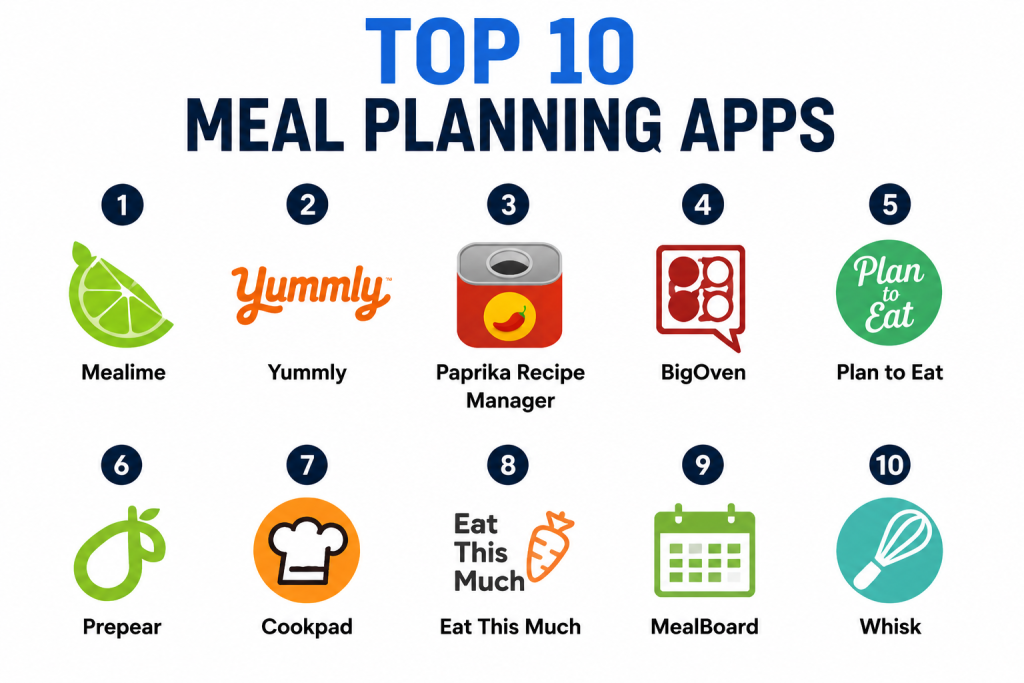
Top 10 Meal Planning Apps
1- Mealime
Short description : Mealime helps users create weekly meal plans, generate grocery lists, and customize menus based on dietary restrictions. It is ideal for busy families and health-conscious individuals seeking efficient meal preparation and nutrition management.
Key Features
- Personalized meal plans
- Grocery list automation
- Dietary restriction filters
- Recipe scaling and adjustments
- AI-based meal recommendations
- Integration with nutrition tracking apps
Pros
- Simplifies weekly meal planning
- Saves time and reduces grocery waste
Cons
- Limited team collaboration features
- Some advanced functionality behind subscription
Platforms / Deployment
- iOS / Android / Web
- Cloud-based
Security & Compliance
- Not publicly stated
Integrations & Ecosystem
Mealime integrates with grocery services and health apps.
- Nutrition tracking apps
- Grocery delivery services
- Calendar syncing
- Recipe import/export
Support & Community
- In-app tutorials
- Help center support
- Active user forums
2- Yummly
Short description: Yummly offers AI-powered recipe recommendations and meal planning for home cooks. Users can filter by dietary preferences, allergies, and cuisine, making it suitable for personalized nutrition management.
Key Features
- AI-driven recipe suggestions
- Meal planning and calendar integration
- Grocery list generation
- Dietary and allergy filters
- Smart search by ingredients and cuisine
Pros
- Highly personalized meal suggestions
- Large recipe database
Cons
- Premium subscription required for full features
- Limited enterprise collaboration
Platforms / Deployment
- iOS / Android / Web
- Cloud-based
Security & Compliance
- Not publicly stated
Integrations & Ecosystem
- Grocery apps
- Health and fitness tracking
- Smart kitchen appliances
- Export options for meal plans
Support & Community
- Email and in-app support
- Community recipe sharing
- Tutorials and guidance available
3- Paprika Recipe Manager
Short description: Paprika allows users to store, organize, and plan meals using recipes from websites or manual entry. It’s ideal for home cooks seeking structured meal planning and grocery management.
Key Features
- Recipe organization and categorization
- Meal planning calendar
- Grocery list automation
- Cross-device sync
- Ingredient scaling
- Web recipe import
Pros
- Easy-to-use interface
- Reliable cross-device sync
Cons
- Limited collaboration for teams
- No built-in nutritional analysis
Platforms / Deployment
- iOS / Android / Windows / macOS
- Cloud-based sync
Security & Compliance
- Not publicly stated
Integrations & Ecosystem
- Grocery apps
- Meal planners
- Export options for inventory tracking
Support & Community
- Email support
- Documentation and tutorials
- User forums
4- BigOven
Short description: BigOven is a comprehensive platform for recipe management, meal planning, and grocery lists, suitable for home cooks and small-scale catering services.
Key Features
- Recipe cataloging
- Meal planning calendar
- Grocery list generation
- Leftover tracking
- Web recipe import
Pros
- Robust recipe management
- Useful for small teams and families
Cons
- User interface can feel cluttered
- Advanced analytics limited
Platforms / Deployment
- iOS / Android / Web
- Cloud-based
Security & Compliance
- Not publicly stated
Integrations & Ecosystem
- Grocery apps
- Meal planning apps
- Recipe import/export
Support & Community
- Email support
- Community recipe sharing
- Help center guides
5- Plan to Eat
Short description: Plan to Eat emphasizes meal planning and grocery automation with drag-and-drop scheduling, ideal for home cooks managing weekly menus.
Key Features
- Drag-and-drop meal planner
- Grocery list generation
- Recipe import
- Categorization and tagging
- Meal prep scheduling
Pros
- Strong automation for meal prep
- Intuitive interface
Cons
- Limited collaboration
- Subscription required for full features
Platforms / Deployment
- iOS / Android / Web
- Cloud-based
Security & Compliance
- Not publicly stated
Integrations & Ecosystem
- Grocery delivery apps
- Calendar syncing
- Export/import of recipes
Support & Community
- Email support
- Tutorials and guides
- Community forums
6- Prepear
Short description: Prepear combines recipe management, meal planning, grocery lists, and social sharing, ideal for nutrition-focused users and families.
Key Features
- Meal planner and calendar
- Recipe storage and categorization
- Grocery list automation
- Community recipe sharing
- AI-based meal suggestions
Pros
- Combines personal and social features
- Streamlines weekly meal planning
Cons
- Limited enterprise features
- Some functionality behind subscription
Platforms / Deployment
- iOS / Android / Web
- Cloud-based
Security & Compliance
- Not publicly stated
Integrations & Ecosystem
- Grocery apps
- Health tracking apps
- Meal planning integration
Support & Community
- In-app support
- Online community
- Tutorials available
7- Cookpad
Short description: Cookpad is a social recipe and meal planning platform enabling users to share recipes, collaborate, and explore trending meals globally.
Key Features
- Community recipe sharing
- Meal planning tools
- Collaboration and commenting
- Trending recipe feeds
- Multilingual support
Pros
- Strong social engagement
- Discover new recipes easily
Cons
- Limited enterprise functionality
- Offline access limited
Platforms / Deployment
- iOS / Android / Web
- Cloud-based
Security & Compliance
- Not publicly stated
Integrations & Ecosystem
- Social media sharing
- Export recipes to planners
- Photo/video uploads
Support & Community
- In-app help
- Community forums
- Tutorials
8- Eat This Much
Short description: Eat This Much automates meal planning based on calories, nutrition goals, and diet types, ideal for fitness enthusiasts and diet-conscious users.
Key Features
- Automatic meal plan generation
- Calorie and macronutrient tracking
- Grocery list creation
- Diet and goal customization
- Integration with fitness apps
Pros
- Personalized nutrition-focused plans
- Time-saving automation
Cons
- Premium features require subscription
- Limited social/community features
Platforms / Deployment
- iOS / Android / Web
- Cloud-based
Security & Compliance
- Not publicly stated
Integrations & Ecosystem
- Fitness trackers
- Grocery apps
- Meal plan export
- Nutrition trackers
Support & Community
- Email support
- In-app tutorials
- Community forums
9- MealBoard
Short description: MealBoard combines meal planning, grocery management, and pantry tracking, suitable for households and small meal prep services.
Key Features
- Drag-and-drop meal planning
- Grocery list and pantry tracking
- Recipe import from web
- Meal schedule calendar
- Cross-device syncing
Pros
- Integrated pantry management
- Streamlines household meal prep
Cons
- Limited collaboration for teams
- Subscription needed for full features
Platforms / Deployment
- iOS / Android / Web
- Cloud-based
Security & Compliance
- Not publicly stated
Integrations & Ecosystem
- Grocery apps
- Calendar sync
- Recipe import/export
Support & Community
- Email support
- Help center
- Community guides
10- Whisk
Short description: Whisk provides recipe management, collaborative meal planning, and smart grocery lists, popular among families and meal prep enthusiasts.
Key Features
- Collaborative meal planner
- Grocery list automation
- Recipe import and sharing
- Multi-device sync
- Dietary preference filtering
Pros
- Family and team collaboration
- Smart grocery integration
Cons
- Premium subscription needed for advanced features
- Limited enterprise reporting
Platforms / Deployment
- iOS / Android / Web
- Cloud-based
Security & Compliance
- Not publicly stated
Integrations & Ecosystem
- Grocery apps
- Recipe import/export
- Calendar integrations
- API access limited
Support & Community
- Email and in-app support
- Tutorials and guides
- Active user community
Comparison Table (Top 10)
| Tool Name | Best For | Platform(s) Supported | Deployment | Standout Feature | Public Rating |
|---|---|---|---|---|---|
| Mealime | Families & health-focused | iOS / Android / Web | Cloud | AI-based meal suggestions | N/A |
| Yummly | Personalized nutrition | iOS / Android / Web | Cloud | AI-powered recipe recommendations | N/A |
| Paprika Recipe Manager | Home cooks | iOS / Android / Windows / macOS | Cloud | Meal planning & grocery list | N/A |
| BigOven | Families & small catering | iOS / Android / Web | Cloud | Leftover tracking & grocery automation | N/A |
| Plan to Eat | Home cooks | iOS / Android / Web | Cloud | Drag-and-drop meal planner | N/A |
| Prepear | Nutrition-focused users | iOS / Android / Web | Cloud | Meal planning & community sharing | N/A |
| Cookpad | Social recipe sharing | iOS / Android / Web | Cloud | Community engagement & collaboration | N/A |
| Eat This Much | Fitness & diet tracking | iOS / Android / Web | Cloud | Automatic nutrition-based meal plans | N/A |
| MealBoard | Household & small prep services | iOS / Android / Web | Cloud | Pantry tracking & grocery management | N/A |
| Whisk | Families & meal prep teams | iOS / Android / Web | Cloud | Collaborative meal planning & grocery lists | N/A |
Evaluation & Scoring of Meal Planning Apps
| Tool Name | Core (25%) | Ease (15%) | Integrations (15%) | Security (10%) | Performance (10%) | Support (10%) | Value (15%) | Weighted Total |
|---|---|---|---|---|---|---|---|---|
| Mealime | 9 | 9 | 8 | 7 | 8 | 8 | 7 | 8.25 |
| Yummly | 9 | 8 | 8 | 7 | 8 | 7 | 7 | 8.00 |
| Paprika Recipe Manager | 8 | 9 | 8 | 7 | 8 | 8 | 7 | 8.05 |
| BigOven | 8 | 8 | 7 | 7 | 8 | 7 | 7 | 7.65 |
| Plan to Eat | 7 | 9 | 7 | 7 | 7 | 7 | 7 | 7.50 |
| Prepear | 8 | 8 | 7 | 7 | 8 | 7 | 7 | 7.70 |
| Cookpad | 7 | 8 | 6 | 7 | 7 | 7 | 6 | 7.05 |
| Eat This Much | 8 | 8 | 7 | 7 | 8 | 7 | 7 | 7.70 |
| MealBoard | 7 | 8 | 6 | 7 | 7 | 7 | 6 | 6.95 |
| Whisk | 8 | 8 | 7 | 7 | 8 | 7 | 7 | 7.70 |
Interpretation: Scores reflect comparative evaluation of core features, usability, integrations, security, reliability, support, and value. Higher totals indicate more robust and versatile meal planning solutions for home and professional users.
Which Meal Planning Tool Is Right for You?
Solo / Freelancer
- Mealime, Plan to Eat, or Yummly for personal or small-scale meal planning with AI recommendations.
SMB
- BigOven, Prepear, or Whisk for small food service operations or nutrition consulting. Allows collaboration and grocery automation.
Mid-Market
- Cookpad for Teams or Eat This Much for fitness or health-focused mid-sized teams. Provides analytics, dietary compliance, and collaboration features.
Enterprise
- Cookpad for Teams, Prepear, or Whisk for enterprise kitchens, wellness programs, or corporate nutrition services. Scales across multiple locations and users.
Budget vs Premium
- Budget: MealBoard, Plan to Eat, Paprika – basic meal planning and grocery integration.
- Premium: Mealime, Yummly, Cookpad for Teams – advanced AI, collaboration, and analytics.
Feature Depth vs Ease of Use
- Feature Depth: Cookpad for Teams, Eat This Much, Prepear – extensive meal planning, AI recommendations, analytics.
- Ease of Use: Mealime, Plan to Eat, Paprika – intuitive interfaces, simple setup.
Integrations & Scalability
- High: Cookpad for Teams, Mealime, Whisk – integrate with grocery services, meal planning, and enterprise systems.
- Moderate: Paprika, Plan to Eat, MealBoard – limited third-party integrations.
Security & Compliance Needs
- Cloud-based apps typically offer encryption; enterprise users should prioritize apps with SSO/MFA and audit logging where available.
Frequently Asked Questions (FAQs)
1- Can I plan meals for a week in advance?
Yes, most meal planning apps provide weekly or monthly meal calendars with automated grocery list generation.
2- Do these apps support dietary restrictions?
Yes, apps allow filtering and planning around allergies, vegetarian, vegan, keto, gluten-free, and other dietary preferences.
3- Are grocery lists automated?
Most top apps can generate grocery lists from meal plans, sometimes integrating with delivery services.
4- Can multiple users collaborate on meal plans?
Enterprise or team-focused apps like Cookpad for Teams and Whisk support multi-user collaboration.
5- Are offline capabilities available?
Some apps, like Paprika and MealBoard, offer offline access, though syncing enhances usability.
6- How do subscriptions work?
Free versions offer basic meal planning; premium subscriptions unlock AI recommendations, analytics, and collaboration features.
7- Can I integrate with fitness or nutrition apps?
Yes, many apps integrate with health, fitness, and nutrition tracking apps to provide holistic wellness insights.
8- Are these apps suitable for restaurants?
Yes, enterprise versions support professional kitchens with multi-location collaboration, recipe standardization, and reporting.
9- How secure is my data?
Security varies; encryption is standard, but compliance with HIPAA or enterprise-grade standards is typically Not publicly stated.
10- Can I import recipes from the web?
Yes, apps like Paprika, Prepear, and MealBoard allow importing recipes directly from websites or other sources.
Conclusion
Meal planning apps in are critical tools for streamlining nutrition, meal prep, and grocery management. Selection depends on user type, collaboration needs, and desired features. Solo users benefit from Mealime, Plan to Eat, or Yummly for AI-assisted personal meal planning. SMBs and mid-market teams gain efficiency using BigOven, Prepear, or Whisk for grocery automation and team collaboration. Enterprises can leverage Cookpad for Teams or Prepear for scalable meal management across multiple users. Start by shortlisting 2–3 tools aligned with your goals, pilot them for a few weeks, validate integrations, and then scale usage for efficient, healthy, and cost-effective meal planning in.
