Introduction
Music streaming apps are digital platforms that allow users to access, play, discover, and manage music content on demand across devices. These services have become central to how people consume music in , with millions of tracks available instantly without local storage. Modern streaming apps integrate AI‑powered recommendations, collaborative playlists, cross‑device sync, offline listening, and social features that tailor experiences for individual tastes. As competition intensifies, users demand high‑quality audio, flexible discovery tools, personalization, and seamless integrations with smart speakers, wearables, and vehicle systems.
Real‑world use cases include:
- Daily listening: Users streaming music during commutes, workouts, and leisure.
- Discovery and playlists: Curating personal playlists and exploring new artists via recommendations.
- Family plans: Multiple household members sharing a subscription with tailored profiles.
- Social engagement: Sharing tracks, collaborating on playlists, and seeing friends’ activity.
- Work and creativity: Background music for focus sessions, video productions, and creative projects.
Best for: Individual listeners, families, remote workers seeking focus music, creators using licensed tracks, and social listeners who share playlists.
Not ideal for: Users who prefer local music libraries only or those with extremely niche or rare catalog demands not covered by major services.
Key Trends in Music Streaming Apps
- AI‑Powered Recommendations: Personalized playlists and song suggestions based on deep listening habits.
- High‑Definition Audio: Support for lossless, spatial, and high‑resolution streaming quality.
- Social Listening & Collaboration: Real‑time shared listening experiences and collaborative playlists.
- Cross‑Platform Sync: Smooth transitions among mobile, desktop, vehicle, and smart speaker environments.
- Contextual Playlists: Mood, activity, and event‑based playlist suggestions.
- Subscription Tiers: Family, student, and bundled service plans with added perks.
- Integrated Podcasts and Audio Shows: Unified audio platforms combining music and spoken‑word content.
- Advanced Discovery Tools: Semantic search, AI genre blending, and curated mood stations.
- Voice Assistant Integration: Seamless playback control via voice interfaces.
- Privacy & Compliance: Stronger user data control and transparency over recommendations.
How We Selected These Tools (Methodology)
- Evaluated catalog size and variety of music content.
- Assessed AI and personalization capabilities for discovery and playlists.
- Reviewed audio quality options and format support.
- Considered cross‑platform support and device integrations.
- Analyzed offline listening and data usage features.
- Examined social and collaborative features like shared playlists and social feeds.
- Investigated subscription pricing tiers and family/student plans.
- Studied security, privacy, and data protection signals.
- Considered user experience and ease of use.
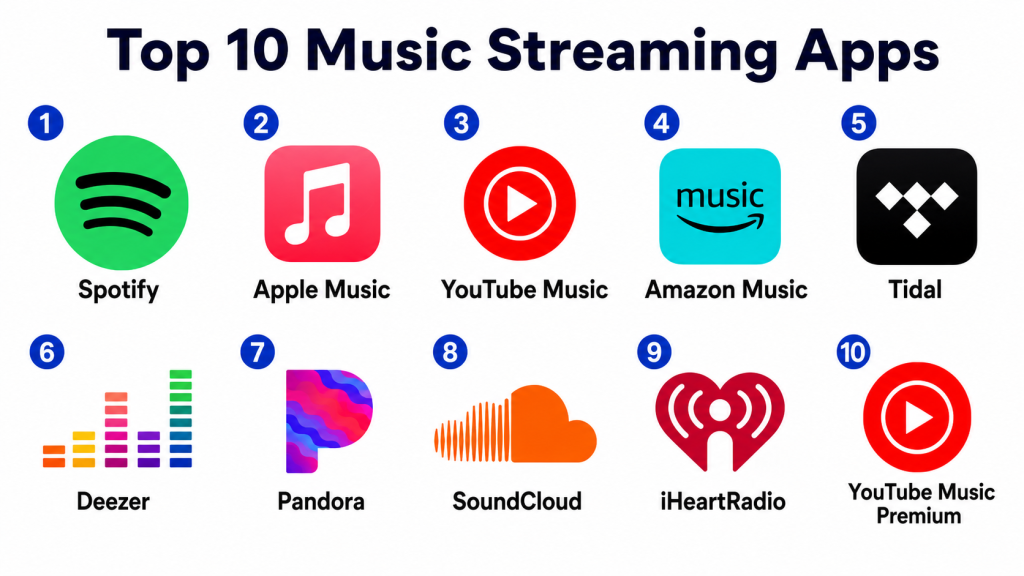
Top 10 Music Streaming Apps
1— Spotify
Short description: Spotify is one of the most widely used music streaming apps with a vast catalog, personalized discovery features, collaborative playlists, and strong social sharing tools.
Key Features
- AI‑driven Discover Weekly and Daily Mixes
- Collaborative playlists and social sharing
- Podcast integration
- Cross‑platform sync
- Offline listening
- Smart recommendations
Pros
- Excellent discovery and personalization
- Strong social and collaborative features
Cons
- Premium required for offline and ad‑free listening
- Higher audio quality tiers limited
Platforms / Deployment
- Web, iOS, Android, macOS, Windows / Cloud
Security & Compliance
- Not publicly stated
Integrations & Ecosystem
Spotify integrates with:
- Smart speakers and voice assistants
- Car entertainment systems
- Wearables and fitness platforms
Support & Community
- Tutorials, help center resources
- Active online user community
2— Apple Music
Short description: Apple Music offers a comprehensive streaming experience with high‑quality audio, exclusive releases, curated playlists, and deep integration with Apple devices.
Key Features
- Lossless and spatial audio
- Curated playlists and radio shows
- Cross‑device sync via iCloud
- Artist and album exclusives
- Offline listening
- Family sharing plans
Pros
- High audio quality options
- Seamless integration in Apple ecosystem
Cons
- Discoverability can feel less intuitive
- Android support less mature
Platforms / Deployment
- iOS, macOS, iPadOS, Android, Windows / Cloud
Security & Compliance
- Not publicly stated
Integrations & Ecosystem
- Apple devices and ecosystem
- Siri voice control
- CarPlay and Apple Watch
Support & Community
- Apple support guides
- Community forums
3— YouTube Music
Short description: YouTube Music combines traditional streaming with access to official tracks, remixes, live performances, and user‑generated content, making it unique for diversified listening.
Key Features
- Official tracks and user‑generated content
- Smart playlists based on history
- Seamless switching between audio and video
- Offline downloads
- Personalized recommendations
Pros
- Unique content variety
- Cross‑media integrations
Cons
- UI complexity for new users
- Ads without subscription
Platforms / Deployment
- Web, iOS, Android / Cloud
Security & Compliance
- Not publicly stated
Integrations & Ecosystem
- YouTube ecosystem
- Google Assistant
- Chromecast and TVs
Support & Community
- Help center and tutorials
- Online discussions
4— Amazon Music
Short description: Amazon Music offers a wide catalog with high‑quality audio options, often bundled with Prime memberships, plus curated stations and smart recommendations.
Key Features
- High‑quality and lossless tiers (for premium)
- Curated playlists and stations
- Offline downloads
- Alexa voice control
- Cross‑device sync
Pros
- Great value with Prime
- Strong voice integration
Cons
- Discovery less powerful than competitors
- Interface can feel cluttered
Platforms / Deployment
- Web, iOS, Android, Fire devices / Cloud
Security & Compliance
- Not publicly stated
Integrations & Ecosystem
- Alexa and Echo devices
- Smart TVs
- Automotive integrations
Support & Community
- Tutorials and help resources
- Customer support
5— Tidal
Short description: Tidal is a music streaming app focused on audio quality, offering lossless and high‑resolution streams with editorial picks and exclusive content for audiophiles.
Key Features
- HiFi and Master quality tracks
- Curated editorial playlists
- Exclusive artist content
- Offline listening
- Personalized recommendations
Pros
- Exceptional audio quality
- Strong editorial content
Cons
- Higher subscription tiers are pricey
- Smaller social ecosystem
Platforms / Deployment
- Web, iOS, Android, desktop / Cloud
Security & Compliance
- Not publicly stated
Integrations & Ecosystem
- High‑res audio devices
- Smart speakers with lossless support
- Professional audio gear
Support & Community
- Help center documentation
- Support tickets
6— Deezer
Short description: Deezer offers a global music catalog with personalized flow, curated playlists, and quality tiers including HiFi streaming.
Key Features
- Deezer Flow personalized mixes
- Curated playlists by genre and mood
- Offline playback
- Podcast and radio integration
- Cross‑device sync
Pros
- Strong personalization features
- Easy workflow
Cons
- HiFi tier requires premium
- Market share smaller than major competitors
Platforms / Deployment
- Web, iOS, Android, desktop / Cloud
Security & Compliance
- Not publicly stated
Integrations & Ecosystem
- Smart speakers and voice assistants
- Automotive integration
- Wearables
Support & Community
- Tutorials and help guides
- Community forums
7— Pandora
Short description: Pandora offers personalized radio stations and on‑demand streaming with deep music genome personalization, particularly popular in the United States.
Key Features
- Music Genome Project personalization
- Radio stations and playlists
- Offline listening (plus plan)
- Podcast integration
- Cross‑device sync
Pros
- Strong automatic personalization
- Radio‑style discovery
Cons
- On‑demand catalog smaller outside U.S.
- Premium required for ad‑free experience
Platforms / Deployment
- Web, iOS, Android / Cloud
Security & Compliance
- Not publicly stated
Integrations & Ecosystem
- Voice assistants
- Smart speakers
- Automotive systems
Support & Community
- Help center
- Tutorials
8— SoundCloud
Short description: SoundCloud is a platform that blends mainstream music with creator‑uploaded tracks, remixes, and indie content, making it ideal for discovery and niche audio.
Key Features
- Creator uploads and indie tracks
- Personalized sets and recommendations
- Offline listening for premium
- Comments on waveforms
- Playlist creation
Pros
- Great discovery for emerging artists
- Community interaction features
Cons
- Audio quality lower than lossless tiers
- Catalog varies widely by region
Platforms / Deployment
- Web, iOS, Android / Cloud
Security & Compliance
- Not publicly stated
Integrations & Ecosystem
- Artist and creator tools
- Social sharing
- Podcast integration
Support & Community
- Help center
- Creator forums
9— iHeartRadio
Short description: iHeartRadio combines music streaming with radio stations and live broadcasts, focusing on curated stations and personality‑driven content.
Key Features
- Live radio and curated stations
- On‑demand music streaming
- Offline listening (premium)
- Personalized recommendations
- Podcast integration
Pros
- Combines radio and streaming
- Strong curated station lineup
Cons
- Personal music catalog weaker
- Premium required for full functionality
Platforms / Deployment
- Web, iOS, Android / Cloud
Security & Compliance
- Not publicly stated
Integrations & Ecosystem
- Smart speakers
- Automotive
- Podcast partners
Support & Community
- Help center
- Tutorials
10— YouTube Music Premium
Short description: YouTube Music Premium extends YouTube Music with ad‑free listening, background play, and offline downloads for an enhanced streaming experience.
Key Features
- Ad‑free listening
- Background play
- Offline downloads
- Smart recommendations with AI
- Cross‑device sync
Pros
- Combines YouTube ecosystem with audio
- Rich recommendations
Cons
- Requires Premium
- Catalog experience similar to free tier
Platforms / Deployment
- Web, iOS, Android / Cloud
Security & Compliance
- Not publicly stated
Integrations & Ecosystem
- YouTube ecosystem
- Google Assistant
- Chromecast
Support & Community
- Help center
- Tutorials
Comparison Table (Top 10)
| Tool Name | Best For | Platform(s) Supported | Deployment | Standout Feature | Public Rating |
|---|---|---|---|---|---|
| Spotify | Personalized discovery | Web, iOS, Android | Cloud | AI playlists | N/A |
| Apple Music | Apple ecosystem | macOS, iOS, Android | Cloud | High‑quality audio | N/A |
| YouTube Music | Video + audio | Web, iOS, Android | Cloud | Rich media catalog | N/A |
| Amazon Music | Prime users | Web, iOS, Android | Cloud | Unlimited storage (Prime) | N/A |
| Tidal | Audiophiles | Web, iOS, Android | Cloud | HiFi/Master audio | N/A |
| Deezer | Mood stream | Web, iOS, Android | Cloud | Global flow | N/A |
| Pandora | Radio‑style | Web, iOS, Android | Cloud | Genome personalization | N/A |
| SoundCloud | Indie discovery | Web, iOS, Android | Cloud | Creator uploads | N/A |
| iHeartRadio | Radio + streaming | Web, iOS, Android | Cloud | Live stations | N/A |
| YouTube Music Premium | Enhanced YouTube | Web, iOS, Android | Cloud | Background & offline | N/A |
Evaluation & Scoring
| Tool Name | Core (25%) | Ease (15%) | Integrations (15%) | Security (10%) | Performance (10%) | Support (10%) | Value (15%) | Weighted Total |
|---|---|---|---|---|---|---|---|---|
| Spotify | 9 | 9 | 9 | 8 | 9 | 8 | 8 | 8.8 |
| Apple Music | 9 | 8 | 8 | 8 | 9 | 8 | 8 | 8.6 |
| YouTube Music | 8 | 7 | 9 | 7 | 8 | 7 | 7 | 7.9 |
| Amazon Music | 8 | 8 | 8 | 7 | 8 | 7 | 8 | 8.0 |
| Tidal | 8 | 7 | 7 | 7 | 8 | 7 | 7 | 7.5 |
| Deezer | 7 | 8 | 8 | 7 | 8 | 7 | 7 | 7.5 |
| Pandora | 7 | 8 | 7 | 7 | 7 | 7 | 7 | 7.3 |
| SoundCloud | 7 | 7 | 8 | 7 | 7 | 7 | 7 | 7.3 |
| iHeartRadio | 6 | 7 | 7 | 7 | 7 | 7 | 7 | 7.0 |
| YouTube Music Premium | 8 | 8 | 9 | 7 | 8 | 7 | 8 | 8.0 |
Interpretation: Higher scores indicate stronger alignment with key criteria like catalog, personalization, cross‑platform support, ease of use, and integrations. Streaming needs vary by user context — casual listeners might prioritize ease and cost, while audiophiles value quality.
Which Music Streaming App Is Right for You?
Solo / Casual Listener
Best choices: Spotify, Apple Music, Amazon Music — easy discovery, strong catalogs, and daily playlists.
Family Plan
Best choices: Spotify family, Apple Music family — multiple profiles under one subscription.
Audiophiles
Best choices: Tidal, Apple Music (spatial & lossless) — premium high‑res audio options.
Indie & Discovery
Best choices: SoundCloud, YouTube Music — creator content and unique tracks.
Radio/Familiar Format
Best choices: Pandora, iHeartRadio — radio‑style personalization and live stations.
Budget vs Premium
Free tiers of Spotify and YouTube Music offer value; premium plans unlock offline, ad‑free, and high‑quality audio.
Integration & Smart Devices
Apple Music leads in Apple ecosystem; Amazon Music excels with Alexa; Spotify is strongest for third‑party integrations.
Audio Quality & Fidelity
Tidal and Apple Music offer best quality tiers for high‑fidelity listeners.
Frequently Asked Questions (FAQs)
1— What pricing models do music streaming apps use?
Most offer freemium access with ads, monthly subscriptions for ad‑free listening, and family/student plans.
2— Can I listen offline?
Yes — premium plans support offline downloads across devices.
3— Do streaming apps use AI?
Yes — AI recommends personalized playlists, mixes, and discovery feeds based on listening behavior.
4— Are there high‑quality audio options?
Tidal and Apple Music offer lossless and spatial formats; Premium tiers vary by app.
5— Can music be shared with friends?
Many apps support shared playlists and social features; specific sharing formats vary by service.
6— Do streaming apps integrate with smart speakers?
Yes — most integrate with popular voice assistants and smart speakers.
7— Which app has the best discovery algorithm?
Spotify consistently rates high for AI‑driven discovery and personalized mixes.
8— How important is cross‑platform support?
Very — syncing between mobile, desktop, vehicles, and speakers creates a seamless listening experience.
9— Are there privacy concerns?
Streaming services collect usage data for personalization; check privacy policies for data control.
10— What’s best for families?
Subscription family plans allow multiple users under one account, often with personalized profiles.
Conclusion
Music streaming apps in offer diverse experiences tailored to different needs — from personalized discovery and social playlist sharing to high‑resolution audio and family plans. Spotify leads in discovery and social features, Apple Music excels with audio quality and ecosystem integration, and Amazon Music provides strong value for Prime users. Audiophiles may lean toward Tidal, while SoundCloud and YouTube Music offer unique content discovery. Casual listeners will appreciate seamless offline listening and cross‑device sync from most platforms. Buyers should shortlist , test recommendations and audio quality, and validate family plans and smart integrations before settling on the best fit. Ultimately, the “best” music streaming app depends on listening lifestyle, device ecosystem, and personal priorities.
