Introduction
Print‑on‑Demand (POD) platforms are tools that enable creators, brands, and online sellers to design, produce, and fulfill custom printed products—such as apparel, accessories, home goods, and promotional items—without the need for inventory or upfront manufacturing costs. These platforms act as the bridge between design and delivery, automatically producing items only after customers place orders. In , POD platforms have become integral to ecommerce, content monetization, and brand extension strategies thanks to reduced overhead, global fulfillment networks, and seamless integrations with online stores.
Real‑world use cases include:
- Artists selling custom apparel and merchandise via online stores.
- Influencers monetizing personal brands with printed swag.
- Small businesses offering branded promotional products.
- Creators testing new product designs without inventory risk.
- Organizations fundraising through custom goods like mugs or shirts.
When evaluating Print‑on‑Demand platforms, buyers should consider:
- Product catalog breadth and customization options.
- Print quality and fulfillment reliability.
- Integration with ecommerce platforms and marketplaces.
- Global shipping footprint and delivery speed.
- Pricing models, profit margins, and cost transparency.
- Ease of design tools and mockup generation.
- Branding controls (labels, packaging, packaging inserts).
- Analytics and order reporting.
- Customer support and resources.
- Scalability for growing order volume.
Best for: Creators, designers, small businesses, ecommerce entrepreneurs, and brands that want to sell custom merchandise without inventory risks.
Not ideal for: Companies needing bulk wholesale production, proprietary manufacturing quality guarantees, or full control over packaging and fulfillment.
Key Trends in Print‑on‑Demand Platforms
- AI‑assisted design tools that generate or enhance artwork for products.
- Global fulfillment networks with accelerated shipping and fulfillment centers across regions.
- Sustainable, eco‑friendly POD options using recycled materials and low‑impact printing.
- Direct Marketplace Integrations with major ecommerce platforms and social commerce channels.
- Interactive product configurators and augmented reality previews for buyers.
- Branded packaging and premium custom inserts for higher perceived value.
- Automated tax and compliance handling across jurisdictions.
- Expanded product catalogs including tech accessories, home décor, and niche merch.
- Mobile‑optimized seller dashboards and analytics for on‑the‑go management.
- Dynamic pricing and profit optimization tools for higher seller margins.
How We Selected These Tools (Methodology)
- Reviewed market adoption and widespread usage among creators and ecommerce sellers.
- Assessed product breadth, customization features, and printing techniques.
- Evaluated integration capabilities with ecommerce storefronts and marketplaces.
- Considered fulfillment speed, global reach, and shipping reliability.
- Analyzed seller economics including cost transparency and margin control.
- Verified print quality signals from user reviews and industry feedback.
- Assessed analytics, reporting, and seller performance tools.
- Prioritized scalability and long‑term viability for growing ecommerce operations.
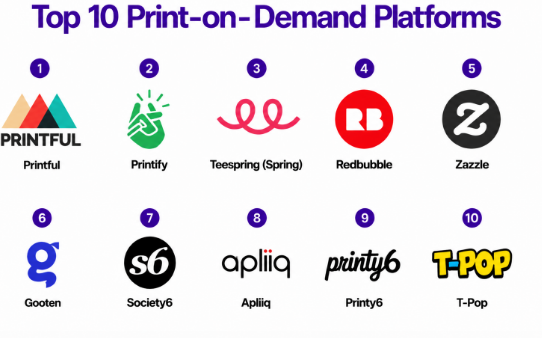
Top 10 Print‑on‑Demand Platforms
1 — Printful
Short description: Printful is a leading POD platform providing a wide range of customizable products along with global fulfillment, seamless ecommerce integrations, and white‑label services for brands and creators.
Key Features
- Extensive product catalog including apparel, home goods, and accessories.
- Mockup generator and design tools.
- Global fulfillment centers.
- White‑label packaging and branding options.
- Integrations with major ecommerce platforms.
Pros
- High print and fulfillment quality.
- Strong integration ecosystem.
Cons
- Slightly higher product cost than some competitors.
- Some advanced features in premium tiers.
Platforms / Deployment
- Web / Cloud
Security & Compliance
- Payment processing compliance
- Not publicly stated
Integrations & Ecosystem
Printful integrates with ecommerce platforms and marketplaces:
- Online storefront platforms
- Social commerce
- Analytics and marketing tools
Support & Community
- Help center, guides, webinars, seller resources
2 — Printify
Short description: Printify offers a marketplace of print providers allowing sellers to choose fulfillment partners based on cost, print quality, and shipping location for printed products.
Key Features
- Multiple print provider options.
- Large product catalog.
- Pricing comparison tools.
- Custom branding options.
- Integrations with ecommerce platforms.
Pros
- Competitive pricing and network flexibility.
- Choice of fulfillment partners.
Cons
- Quality can vary by provider.
- More manual comparison needed by sellers.
Platforms / Deployment
- Web / Cloud
Security & Compliance
- Payment encryption
- Not publicly stated
Integrations & Ecosystem
- Ecommerce integrations
- Analytics dashboards
Support & Community
- Documentation, community forum, email support
3 — Teespring (Spring)
Short description: Spring (formerly Teespring) allows creators to design, promote, and sell custom merchandise with a focus on social integration and creator tooling for online influencers.
Key Features
- Social channel integration for product promotion.
- Custom product designs.
- Creator‑friendly sales tools.
- Built‑in marketing and analytics.
- Campaign management.
Pros
- Easy to launch and promote new designs.
- Strong social media alignment.
Cons
- Less advanced ecommerce storefront features.
- Limited niche product selection compared to others.
Platforms / Deployment
- Web / Cloud
Security & Compliance
- Payment security
- Not publicly stated
Integrations & Ecosystem
- Social commerce
- Analytics
Support & Community
- Guides, onboarding docs, email support
4 — Redbubble
Short description: Redbubble is a marketplace‑centric POD platform where independent artists upload designs for global customers, with Redbubble handling production, shipping, and support.
Key Features
- Marketplace for artist designs.
- Broad product categories.
- Global fulfillment.
- Artist dashboard and revenue reports.
- Customer order support.
Pros
- Built‑in marketplace traffic.
- Easy for artists without separate storefronts.
Cons
- Less control over pricing.
- Marketplace fees and margins vary.
Platforms / Deployment
- Web / Cloud
Security & Compliance
- Payment encryption
- Not publicly stated
Integrations & Ecosystem
- Artist tools
- Sales analytics
Support & Community
- Help resources, community forums
5 — Zazzle
Short description: Zazzle enables creators to build custom products with flexible design tools and offers a marketplace where customers can explore and purchase creator designs.
Key Features
- Design customization tools.
- Marketplace exposure.
- Wide product catalog.
- Royalty setting per product.
- Customer personalization features.
Pros
- Strong design freedom and customer personalization.
- Marketplace exposure.
Cons
- Design tools can be complex for beginners.
- Marketplace competition is high.
Platforms / Deployment
- Web / Cloud
Security & Compliance
- Secure payments
- Not publicly stated
Integrations & Ecosystem
- Marketplace promotion
- Sales analytics
Support & Community
- Documentation, help center
6 — Gooten
Short description: Gooten is a global POD and fulfillment network aimed at ecommerce sellers looking for scalability, automation, and custom product offerings.
Key Features
- Ecommerce integrations.
- Diverse product selection.
- Automated order routing.
- Global fulfillment footprint.
- Analytics and performance dashboards.
Pros
- Strong automation and scalability.
- Multiple fulfillment partner options.
Cons
- Not as creator‑focused branding tools.
- Onboarding curve for beginners.
Platforms / Deployment
- Web / Cloud
Security & Compliance
- Payment encryption
- Not publicly stated
Integrations & Ecosystem
- Ecommerce platforms
- Reporting tools
Support & Community
- Documentation, tutorials, support ticketing
7 — Society6
Short description: Society6 is an artist‑centric POD marketplace focused on art prints, decor, and lifestyle products, enabling designers to earn royalties on sales.
Key Features
- Artist storefronts.
- Home and lifestyle product lines.
- Global fulfillment.
- Pricing and royalty setup.
- Marketing and discovery tools.
Pros
- Artist‑friendly with niche products.
- Marketplace discovery.
Cons
- Less control over standalone shops.
- Limited ecommerce integration.
Platforms / Deployment
- Web / Cloud
Security & Compliance
- Secure transactions
- Not publicly stated
Integrations & Ecosystem
- Artist dashboards
- Analytics
Support & Community
- Help center, community features
8 — Apliiq
Short description: Apliiq focuses on apparel and fashion items with custom labeling, embroidery, and branding options tailored to independent designers and streetwear brands.
Key Features
- Custom labels and branding.
- Embroidery and fabric variations.
- Apparel product focus.
- Integration with ecommerce.
- Mockup and design tools.
Pros
- Strong clothing branding options.
- Quality garment customization.
Cons
- Apparel focus limits broader product offerings.
- Cost can be higher for premium customization.
Platforms / Deployment
- Web / Cloud
Security & Compliance
- Payment encryption
- Not publicly stated
Integrations & Ecosystem
- Ecommerce platforms
- Analytics dashboards
Support & Community
- Guides, documentation, support
9 — Printy6
Short description: Printy6 offers easy POD setup for ecommerce sellers with a focus on quick design tools, automated fulfillment, and broad product categories.
Key Features
- Simple design tools.
- Automated fulfillment workflows.
- Product catalog variety.
- Order reporting.
- Integration with online storefronts.
Pros
- Easy onboarding.
- Good for beginners.
Cons
- Fewer advanced branding features.
- Analytics are basic.
Platforms / Deployment
- Web / Cloud
Security & Compliance
- Payment encryption
- Not publicly stated
Integrations & Ecosystem
- Ecommerce plugins
- Basic sales tools
Support & Community
- Documentation, email support
10 — T‑Pop
Short description: T‑Pop is a European POD platform emphasizing eco‑friendly printing, minimal packaging, and sustainability in custom merchandise production.
Key Features
- Eco‑friendly production.
- European fulfillment centers.
- Custom branding controls.
- Sustainable packaging options.
- Automated order routing.
Pros
- Strong sustainability focus.
- Good for European sellers.
Cons
- Smaller global footprint outside Europe.
- Product range can be limited.
Platforms / Deployment
- Web / Cloud
Security & Compliance
- Payment encryption
- Not publicly stated
Integrations & Ecosystem
- Ecommerce integrations
- Analytics
Support & Community
- Help center, guides
Comparison Table (Top 10)
| Tool Name | Best For | Platform(s) Supported | Deployment | Standout Feature | Public Rating |
|---|---|---|---|---|---|
| Printful | Broad POD needs | Web | Cloud | White‑label branding | N/A |
| Printify | Cost‑flexible sellers | Web | Cloud | Multiple provider marketplace | N/A |
| Spring (Teespring) | Social creator merch | Web | Cloud | Built‑in social integration | N/A |
| Redbubble | Artist marketplace | Web | Cloud | Marketplace traffic | N/A |
| Zazzle | Custom products & personalization | Web | Cloud | Customer personalization | N/A |
| Gooten | Ecommerce focused | Web | Cloud | Automated routing | N/A |
| Society6 | Artist‑centric decor | Web | Cloud | Artist royalties | N/A |
| Apliiq | Fashion & apparel branding | Web | Cloud | Custom labels/embroidery | N/A |
| Printy6 | Beginner POD | Web | Cloud | Easy onboarding | N/A |
| T‑Pop | Eco‑friendly merchandise | Web | Cloud | Sustainable POD | N/A |
Evaluation & Scoring of Print‑on‑Demand Platforms
| Tool Name | Core | Ease | Integrations | Security | Performance | Support | Value | Weighted Total |
|---|---|---|---|---|---|---|---|---|
| Printful | 9 | 8 | 8 | 7 | 8 | 8 | 7 | 7.9 |
| Printify | 8 | 8 | 7 | 7 | 8 | 7 | 8 | 7.7 |
| Spring | 7 | 9 | 7 | 7 | 7 | 7 | 7 | 7.5 |
| Redbubble | 8 | 8 | 6 | 7 | 7 | 7 | 8 | 7.5 |
| Zazzle | 8 | 7 | 6 | 7 | 7 | 7 | 8 | 7.4 |
| Gooten | 8 | 7 | 8 | 7 | 8 | 7 | 7 | 7.6 |
| Society6 | 7 | 8 | 5 | 7 | 7 | 7 | 8 | 7.3 |
| Apliiq | 8 | 7 | 7 | 7 | 8 | 7 | 7 | 7.6 |
| Printy6 | 7 | 9 | 6 | 7 | 7 | 7 | 8 | 7.5 |
| T‑Pop | 7 | 8 | 7 | 7 | 7 | 7 | 8 | 7.4 |
Interpretation: Weighted totals reflect balance across core product offerings, ease, integrations, security, performance, support, and value. Higher totals show better overall balance for most sellers; specific needs like sustainability or marketplace exposure may guide choice.
Which Print‑on‑Demand Platform Is Right for You?
Solo / Freelancer
- Printy6, Spring (Teespring), Printify: Easy setup and low barrier to selling custom merchandise.
SMB Sellers
- Printful, Gooten, Apliiq: Broad product catalogs, strong integrations, reliable fulfillment.
Mid‑Market / Growth
- Printful, Printify with multiple providers: Scale with fulfillment partners and global reach.
Artist‑Focused
- Redbubble, Society6: Built‑in marketplaces and artist exposure.
Sustainability Conscious
- T‑Pop: Eco‑friendly printing and packaging focus.
Feature Depth vs Ease of Use
- Platforms like Printful and Printify offer deeper tools but require learning curve; Printy6 and Spring are easier for quick launches.
Integrations & Scalability
- Printful and Gooten integrate with major ecommerce platforms and provide scalability for shop growth.
Security & Compliance Needs
- All platforms provide basic payment encryption; evaluate additional compliance for enterprise requirements.
Frequently Asked Questions (FAQs)
1. What products can I sell with Print‑on‑Demand?
Products include apparel, accessories, home goods, drinkware, tech items, art prints, and more depending on platform.
2. How are designs uploaded and applied?
Most platforms use a mockup generator for uploading designs, adjusting placement, and previewing products.
3. Do POD platforms handle shipping?
Yes—fulfillment and shipping are automated once an order is received; sellers rarely hold inventory.
4. Can I use POD with my own ecommerce site?
Many integrate with Shopify, WooCommerce, Etsy, marketplaces, and social stores.
5. Are profits guaranteed?
Profit depends on product pricing, platform fees, and shipping costs; higher markups increase margins.
6. Can I customize branding?
Some platforms offer white‑label packaging, custom labels, and inserts for branding.
7. What is the quality like?
Quality varies by provider; Printful and Apliiq are known for higher quality apparel.
8. Do platforms offer analytics?
Yes—most include sales reporting, order tracking, and growth analytics.
9. Are there eco‑friendly POD options?
Yes—platforms like T‑Pop focus on sustainable printing and packaging.
10. Do these platforms handle taxes?
Many provide tax calculations and reports but creators should confirm region support and compliance.
Conclusion
Print‑on‑Demand platforms empower creators, sellers, and brands to monetize designs and products without inventory risks. Solo sellers benefit from easy tools like Printy6 and Spring, while SMB and growth sellers find broader catalogs and integrations in Printful, Printify, and Gooten. Artist‑centric marketplaces like Redbubble and Society6 help with discovery, and T‑Pop provides eco‑friendly options. To choose the right platform, shortlist based on needs—product range, global reach, budget, and integration capability—pilot test workflows, and ensure customer, fulfillment, and analytics features align with your long‑term ecommerce goals.
