Introduction
Social commerce platforms are software solutions that enable businesses and creators to sell products and services directly through social media channels, livestreams, in‑app storefronts, and integrated social shopping experiences. Unlike traditional ecommerce—where a separate online store is the selling destination—social commerce embeds purchase paths within the platforms users already frequent, such as social feeds, stories, live videos, messaging, and community spaces. In , social commerce has emerged as a primary revenue channel for direct‑to‑consumer brands, influencers, and digital creators due to its ability to shorten conversion paths, increase impulse buys, and connect social engagement to purchase behavior.
Real‑world use cases include:
- Selling products directly through shoppable posts on social feeds.
- Converting livestream audiences into buyers with real‑time checkout.
- Allowing creators to showcase and sell merchandise without redirecting users.
- Using user‑generated content and influencer tags to increase sales.
- Embedding storefronts in social profiles for seamless discovery.
Buyers evaluating social commerce platforms should consider:
- Native support for social channel integrations (e.g., Instagram, TikTok, Facebook, Pinterest).
- Livestream shopping and interactive commerce features.
- Shoppable post and story functionality.
- Integration with existing ecommerce systems (catalog sync, inventory, payments).
- Analytics linking social engagement to sales performance.
- Support for multiple payment options and local currencies.
- Creator and influencer affiliate monetization support.
- Scalability for large audiences and peak shopping events.
- Security and compliance for digital payments and data handling.
- Customer support, onboarding resources, and developer APIs.
Best for: Digital brands, D2C sellers, influencer‑driven businesses, livestream sellers, and creators looking to sell products directly from social platforms.
Not ideal for: Brands without social audiences or those that already have strong, separate ecommerce ecosystems where social commerce adds redundant complexity.
Key Trends in Social Commerce Platforms
- Livestream shopping with in‑video checkout options.
- Shoppable user‑generated content feeds with analytics attribution.
- AI‑driven product recommendations based on social behavior.
- Seamless integration of social profiles with product catalogs.
- Social CRM features linking followers to purchase data.
- Creator‑centric affiliate and tip‑based monetization features.
- Mobile‑first commerce experiences with secure one‑tap payments.
- Commerce features embedded in messaging and community spaces.
- Augmented reality (AR) try‑on and immersive preview experiences.
- Flexible pricing and global payment support for cross‑border sales.
How We Selected These Tools (Methodology)
- Reviewed platforms with strong adoption among social commerce‑driven brands.
- Assessed integration capabilities with major social networks and social APIs.
- Evaluated core commerce features including catalog sync, shoppable posts, and livestream commerce.
- Verified payment, security, and compliance functionalities.
- Analyzed analytics and attribution tools linking social engagement to conversions.
- Considered ease of setup and ongoing management for social campaigns.
- Checked scalability for high‑traffic social events and campaigns.
- Prioritized innovation in AI recommendations, influencer support, and mobile commerce.
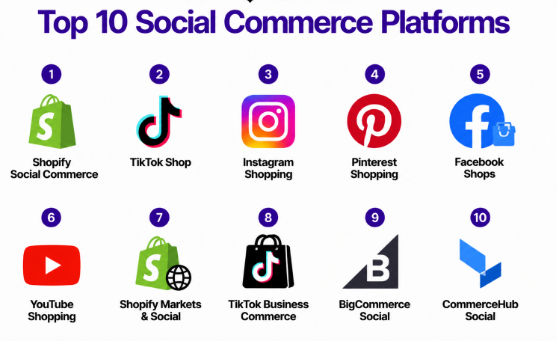
Top 10 Social Commerce Platforms
1 — Shopify Social Commerce
Short description: Shopify Social Commerce enables brands using Shopify to sell products directly on social channels like Instagram, Facebook, TikTok, and YouTube with seamless catalog sync and checkout workflows.
Key Features
- Shoppable catalog sync across social channels.
- Social media feed commerce tools.
- Integrated checkout experiences.
- Social ad attribution and conversion tracking.
- Unified inventory and order management.
Pros
- Deep integration with established ecommerce infrastructure.
- Strong analytics linking social performance to revenue.
Cons
- Shopify subscription required for full ecosystem benefits.
- Complexity for businesses without Shopify stores.
Platforms / Deployment
- Web / iOS / Android / Cloud
Security & Compliance
- Payment encryption, PCI compliance
- Not publicly stated
Integrations & Ecosystem
Integrates with social platforms, CRM, analytics, and marketing automation.
Support & Community
Documentation, community forums, dedicated support
2 — TikTok Shop
Short description: TikTok Shop allows creators and brands to sell products directly through TikTok videos, livestreams, and in‑profile storefronts, leveraging TikTok’s massive social engagement.
Key Features
- Native in‑app shopping experience.
- Livestream commerce with in‑video checkout.
- Creator affiliate partnerships and incentives.
- Real‑time product analytics.
- Shopping tags in videos and profiles.
Pros
- Massive social reach and discoverability.
- Seamless in‑app commerce experience.
Cons
- Commerce features limited to TikTok ecosystem.
- Fee structures vary by region.
Platforms / Deployment
- Mobile/Cloud
Security & Compliance
- Payment security
- Not publicly stated
Integrations & Ecosystem
Social analytics, creator tools
Support & Community
In‑app help, creator resources
3 — Instagram Shopping
Short description: Instagram Shopping enables businesses and creators to tag products in posts, stories, reels, and livestreams to create seamless purchase experiences directly within Instagram.
Key Features
- Product tagging in posts and reels.
- Shoppable livestream features.
- Storefront on business profiles.
- Shopping insights and conversion metrics.
- AR try‑on experiences.
Pros
- Deep engagement with Instagram audiences.
- High conversion potential from native content.
Cons
- Requires Facebook/Meta commerce account setup.
- Limited outside Meta ecosystem.
Platforms / Deployment
- iOS / Android / Web / Cloud
Security & Compliance
- Secure payments through Meta commerce
- Not publicly stated
Integrations & Ecosystem
Meta ads, analytics, CRM integration
Support & Community
Creator resources, documentation
4 — Pinterest Shopping
Short description: Pinterest Shopping allows brands to create shoppable Pins, catalogs, and dynamic product ads, leveraging Pinterest’s visual discovery platform to drive commerce.
Key Features
- Shoppable Pins with product tags.
- Catalog integration.
- Analytics on pin interactions and conversions.
- Visual discovery and inspiration flows.
- Buyable Pins and product recommendations.
Pros
- Strong visual discovery channel.
- High purchase intent user base.
Cons
- Commerce features limited to Pinterest audience.
- Setup requires catalog feed and tagging.
Platforms / Deployment
- Web / Mobile / Cloud
Security & Compliance
- Secure payment options
- Not publicly stated
Integrations & Ecosystem
Pinterest ads, analytics
Support & Community
Support docs, business resources
5 — Facebook Shops
Short description: Facebook Shops enable businesses to set up branded storefronts on Facebook and Instagram, allowing users to browse and purchase products without leaving the platform.
Key Features
- Unified Facebook/Instagram storefront.
- Social ads with product tagging.
- Checkout and payment processing within app.
- Dynamic product ads.
- Shop analytics.
Pros
- Massive social reach.
- Integrated social ads and commerce.
Cons
- Setup requires Meta commerce account.
- Competitive within large ecosystem.
Platforms / Deployment
- Web / iOS / Android / Cloud
Security & Compliance
- PCI compliance
- Not publicly stated
Integrations & Ecosystem
Meta ads, analytics, CRM
Support & Community
Business support, tutorials
6 — YouTube Shopping
Short description: YouTube Shopping enables creators and brands to showcase products directly in videos and livestreams, linking audiences to shoppable product cards and storefronts.
Key Features
- Product cards in videos.
- Livestream commerce integration.
- Creator monetization and affiliate linking.
- Analytics on engagement and sales.
- Catalog connection.
Pros
- Strong engagement through long‑form content.
- Native shoppable video experiences.
Cons
- Limited to YouTube ecosystem.
- Creator eligibility requirements.
Platforms / Deployment
- Web / iOS / Android / Cloud
Security & Compliance
- Secure checkout
- Not publicly stated
Integrations & Ecosystem
Creator tools, analytics
Support & Community
Creator support resources
7 — Shopify Markets & Social
Short description: Shopify Markets & Social extends Shopify’s commerce tools to social selling across platforms with localized storefronts, multi‑currency support, and unified commerce dashboards.
Key Features
- Localized social storefronts.
- Unified commerce analytics.
- Multi‑currency and language support.
- Social tag integration.
- Campaign tracking across channels.
Pros
- Centralized view across social and direct commerce.
- Scales globally with local support.
Cons
- Requires Shopify subscription.
- Social commerce features may vary by region.
Platforms / Deployment
- Web / Cloud
Security & Compliance
- PCI compliance
- Not publicly stated
Integrations & Ecosystem
CRM, analytics, social ad platforms
Support & Community
Shopify support, guides
8 — TikTok Business Commerce
Short description: TikTok Business Commerce focuses on helping brands run shoppable campaigns, influencer partnerships, and product tagging across TikTok ecosystems.
Key Features
- Commerce dashboards for campaign ROI.
- Branded hashtag commerce tools.
- Influencer affiliate integration.
- Product catalogs and dynamic feeds.
- Conversion tracking.
Pros
- Built for commerce‑centric social campaigns.
- Deep creator partnership support.
Cons
- TikTok‑centric; limited outside platform.
- Campaign setup complexity.
Platforms / Deployment
- Mobile/Cloud
Security & Compliance
- Secure payments
- Not publicly stated
Integrations & Ecosystem
Creator analytics, ads
Support & Community
Business support
9 — BigCommerce Social
Short description: BigCommerce Social enables brands to sync catalogs with social channels, run shoppable ads, and capture conversions within social environments.
Key Features
- Catalog sync with social channels.
- Shoppable social ads.
- Unified order management.
- Analytics and conversion tracking.
- Multi‑channel selling dashboard.
Pros
- Strong ecommerce backbone.
- Great for brands already on BigCommerce.
Cons
- Not as creator‑centric for micro‑influencers.
- Setup adds complexity.
Platforms / Deployment
- Web / Cloud
Security & Compliance
- Encryption, PCI compliance
- Not publicly stated
Integrations & Ecosystem
Social ads, CRM, analytics
Support & Community
Support docs, forums
10 — CommerceHub Social
Short description: CommerceHub Social connects brands and retailers to social commerce channels with dynamic product feeds, influencer campaigns, and shoppable content distribution.
Key Features
- Dynamic product feeds for social platforms.
- Influencer campaign management.
- Analytics and performance dashboards.
- Automated catalog updates.
- Multi‑channel support.
Pros
- Strong enterprise social commerce support.
- Integrates influencer and retailer commerce.
Cons
- Enterprise pricing.
- May be overkill for SMBs.
Platforms / Deployment
- Web / Cloud
Security & Compliance
- Encryption, audit logs
- Not publicly stated
Integrations & Ecosystem
CRM, analytics, social channels
Support & Community
Enterprise support
Comparison Table (Top 10)
| Tool Name | Best For | Platform(s) Supported | Deployment | Standout Feature | Public Rating |
|---|---|---|---|---|---|
| Shopify Social Commerce | Ecommerce + social | Web/iOS/Android | Cloud | Unified catalogue + checkout | N/A |
| TikTok Shop | TikTok sellers | Mobile/Cloud | Cloud | Livestream shopping | N/A |
| Instagram Shopping | IG commerce | Web/iOS/Android | Cloud | Shoppable posts & reels | N/A |
| Pinterest Shopping | Visual social discovery | Web/Mobile | Cloud | Shoppable Pins | N/A |
| Facebook Shops | Meta ecosystem | Web/iOS/Android | Cloud | Unified Facebook/IG storefront | N/A |
| YouTube Shopping | Video commerce | Web/iOS/Android | Cloud | Shoppable videos | N/A |
| Shopify Markets & Social | Global brands | Web | Cloud | Localized storefronts | N/A |
| TikTok Business Commerce | Social commerce campaigns | Mobile/Cloud | Cloud | Influencer commerce | N/A |
| BigCommerce Social | Ecommerce brands | Web | Cloud | Social ads + sales | N/A |
| CommerceHub Social | Enterprise social | Web | Cloud | Dynamic product feed | N/A |
Evaluation & Scoring of Social Commerce Platforms
| Tool Name | Core | Ease | Integrations | Security | Performance | Support | Value | Weighted Total |
|---|---|---|---|---|---|---|---|---|
| Shopify Social Commerce | 9 | 8 | 9 | 8 | 9 | 8 | 7 | 8.5 |
| TikTok Shop | 8 | 9 | 7 | 7 | 8 | 7 | 7 | 7.9 |
| Instagram Shopping | 9 | 8 | 8 | 8 | 8 | 8 | 7 | 8.4 |
| Pinterest Shopping | 7 | 8 | 7 | 7 | 7 | 7 | 7 | 7.4 |
| Facebook Shops | 8 | 8 | 9 | 8 | 8 | 8 | 7 | 8.3 |
| YouTube Shopping | 8 | 8 | 7 | 7 | 8 | 7 | 7 | 7.7 |
| Shopify Markets & Social | 9 | 8 | 9 | 8 | 9 | 8 | 7 | 8.5 |
| TikTok Business Commerce | 8 | 7 | 7 | 7 | 8 | 7 | 7 | 7.6 |
| BigCommerce Social | 8 | 7 | 8 | 8 | 8 | 7 | 7 | 7.8 |
| CommerceHub Social | 7 | 7 | 8 | 8 | 8 | 8 | 7 | 7.7 |
Interpretation: Higher scores indicate strong combinations of social integration, core commerce features, integrations, security, and overall value. Enterprise platforms may score higher for scalability, while mobile‑first experiences excel in ease of use.
Which Social Commerce Platform Is Right for You?
Solo / Freelancer Creators
- TikTok Shop, Instagram Shopping: Native social channel commerce without needing a separate store.
SMB Brands
- Shopify Social Commerce, Facebook Shops, BigCommerce Social: Great balance of ecommerce structure plus social selling.
Mid‑Market Retailers
- Shopify Markets & Social, CommerceHub Social: Strong multi‑channel commerce and catalog management.
Enterprise & Global
- CommerceHub Social, Shopify Markets & Social: Advanced global features and multi‑regional support.
Budget vs Premium
- Budget: Pinterest Shopping and YouTube Shopping for visual discovery and video commerce.
- Premium: Shopify Social Commerce and Shopify Markets & Social for unified commerce.
Feature Depth vs Ease of Use
- Ease of Use: TikTok Shop and Instagram Shopping are straightforward for creators.
- Feature Depth: Shopify offerings and CommerceHub combine robust commerce flows with analytics.
Integrations & Scalability
- Platforms like Shopify Social and BigCommerce Social integrate deeply with ecosystem tools for scaling.
Security & Compliance Needs
- Ensure payment compliance and encryption are enterprise‑grade for high‑volume sellers.
Frequently Asked Questions (FAQs)
1. Do social commerce platforms support international sales?
Many offer multi‑currency and localized storefronts, but specifics vary by platform.
2. Can creators sell without a website?
Yes—platforms like Instagram Shopping and TikTok Shop allow in‑app checkout.
3. Are livestream purchases possible?
Yes—TikTok Shop and Instagram Shopping support livestream commerce with in‑video checkout.
4. How are orders fulfilled?
Some platforms integrate with existing ecommerce backends; others rely on connected stores.
5. Do I need a business account?
Often yes—for commerce features, platforms may require verified business or creator accounts.
6. Are analytics included?
Most platforms provide engagement and conversion metrics to help optimize social campaigns.
7. Can I sync products from my store?
Yes—tools like Shopify Social Commerce and BigCommerce Social sync product catalogs.
8. Is social commerce secure?
Platforms use secure payment encryption and compliance; always confirm specific regional compliance.
9. Do these platforms support influencer collaborations?
Yes—some include affiliate and creator monetization integrations.
10. Are AR features available?
Certain platforms offer augmented reality previews for try‑on or product visuals.
Conclusion
Social commerce platforms are essential tools in for creators, brands, and online sellers looking to convert social engagement into revenue. Creators and small sellers benefit from native commerce features in TikTok Shop and Instagram Shopping, while SMB and enterprise brands leverage Shopify Social Commerce and CommerceHub Social for seamless omnichannel experiences. To choose, shortlist 2–3 platforms that align with your audience, commerce strategy, and technical ecosystem, test integrations with your existing store, and ensure performance tracking and security features meet your long‑term growth needs.
