Introduction
Patient portal platforms are secure online systems that give patients direct access to their clinical records, appointment schedules, test results, and communication with care teams.
These platforms empower patients to engage in their own care, streamline administrative workflows, and enhance communication between providers and patients.
Modern patient portals also include telehealth access, secure messaging, bill payment, and integration with EHR systems for a unified experience.
Choosing the right patient portal improves patient satisfaction, reduces administrative burden, and supports compliance with privacy and interoperability standards.
Real‑world use cases:
- Patients reviewing lab results and clinical notes online
- Scheduling appointments and receiving reminders
- Secure messaging between patients and providers
- Viewing and paying outstanding medical bills
- Telehealth access and care coordination
Key buyer evaluation criteria:
- Integration with EHR/EMR and practice systems
- Secure messaging and telehealth support
- Usability for patients of all ages
- Compliance with HIPAA and privacy standards
- Mobile app or responsive design
- Appointment scheduling and reminders
- Bill pay and insurance eligibility features
- Analytics for engagement
- Customization and branding
Best for: Hospitals, clinics, multi‑specialty practices, and large healthcare networks.
Not ideal for: Entities that do not manage patient records or require minimal patient engagement functionality.
Key Trends in Patient Portal Platforms
- Mobile‑first patient portal experiences for on‑the‑go access
- Seamless telehealth and virtual care integration
- Secure two‑way messaging and automated reminders
- Enhanced interoperability with FHIR/HL7 and EHR standards
- AI‑assisted patient education and FAQ bots
- Real‑time appointment scheduling and waitlist management
- Billing, statement delivery, and secure payment processing
- Multilingual and accessibility‑friendly interfaces
- Analytics dashboards for patient engagement metrics
- Modular pricing and subscription models
How We Selected These Tools (Methodology)
- Depth of EHR/EMR integration and interoperability
- Breadth of patient engagement features
- Security, HIPAA compliance, and access controls
- Mobile and responsive user experience
- Telehealth and secure messaging capabilities
- Analytics and reporting tools
- Scalability from small clinics to large health systems
- Support, documentation, and onboarding services
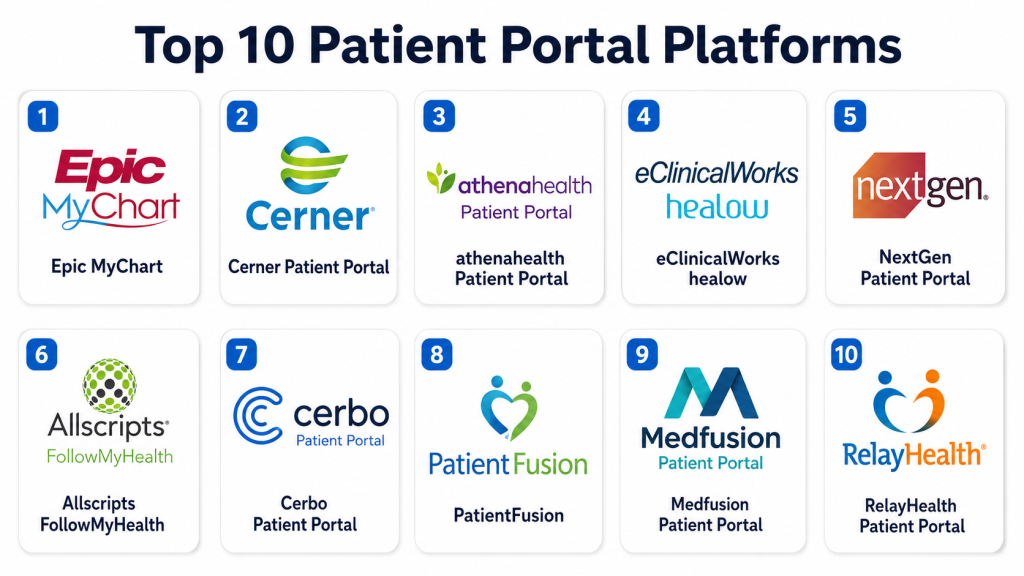
Top 10 Patient Portal Platforms
#1 — Epic MyChart
Short description:
MyChart is Epic’s flagship patient engagement portal used by large health systems.
Provides access to records, messaging, telehealth, scheduling, and billing.
Integrates seamlessly with Epic EMR workflows.
Ideal for enterprise hospitals and multi‑site networks.
Key Features
- Secure messaging and notifications
- Telehealth and appointment scheduling
- Bill payment and statement access
- Lab results, records access
- Family access controls
Pros
- Deep Epic EMR integration
- Enterprise‑grade security
- Broad feature set
Cons
- Higher cost for small practices
- Implementation complexity
Platforms / Deployment
- Web / iOS / Android
- Cloud / On‑premises
Security & Compliance
- Encryption, multifactor authentication
- HIPAA compliant
Integrations & Ecosystem
- Native Epic EMR integration
- APIs for third‑party apps
- FHIR/HL7 support
Support & Community
- Vendor training and certification
- Large user community
#2 — Cerner Patient Portal
Short description:
Cerner’s patient portal connects patients to clinical information and care teams.
Includes secure messaging, appointment management, and results.
Supports telehealth and billing features.
Ideal for hospitals and multi‑specialty clinics.
Key Features
- Secure patient messaging
- Appointment scheduling and reminders
- Results access and notifications
- Billing and payment features
Pros
- Cerner EMR native integration
- Scalable for health systems
- Strong security
Cons
- Customization may require configurations
- Smaller practices may find it complex
Platforms / Deployment
- Web / Mobile (iOS/Android)
- Cloud / On‑premises
Security & Compliance
- Encryption, audit logging
- HIPAA compliant
Integrations & Ecosystem
- FHIR/HL7 standards
- Third‑party app support
Support & Community
- Vendor support
- Documentation
#3 — athenahealth Patient Portal
Short description:
athenahealth’s portal provides patient access to appointments, records, and secure messages.
Includes bill payment and telehealth links.
Designed for ambulatory clinics and hospital networks.
Ideal for practices already using athenahealth EMR.
Key Features
- Records and results access
- Secure messaging
- Telehealth integration
- Bill pay and reminders
Pros
- Cloud‑native and easy to deploy
- Strong integration with athenahealth EMR
- Good patient experience
Cons
- Limited standalone customization
- Best with athenahealth EMR
Platforms / Deployment
- Web / iOS / Android
- Cloud
Security & Compliance
- Encryption, role‑based access
- HIPAA compliant
Integrations & Ecosystem
- API connectivity
- Billing and messaging systems
Support & Community
- Vendor support
- Tutorials
#4 — eClinicalWorks healow
Short description:
healow is a patient portal that supports records access, bill pay, messaging, and telehealth.
Works with eClinicalWorks EMR and practice systems.
Offers mobile app and web experience.
Ideal for small to mid‑size practices.
Key Features
- Clinical record access
- Secure chat and message alerts
- Appointment scheduling & reminders
- Billing and payment
Pros
- Intuitive mobile app
- Strong practice workflow integration
- Affordable for small practices
Cons
- Fewer analytics features
- Advanced customization limited
Platforms / Deployment
- Web / iOS / Android
- Cloud
Security & Compliance
- Encryption, access control
- HIPAA compliant
Integrations & Ecosystem
- EMR integration
- Billing connectivity
Support & Community
- Vendor support
- User guides
#5 — NextGen Patient Portal
Short description:
NextGen’s patient portal offers direct access to health records and test results.
Supports messaging, appointment requests, and payments.
Designed for ambulatory and specialty practices.
Includes mobile access.
Key Features
- Secure messaging
- Appointment scheduling
- Test results and records
- Bill payment
Pros
- User‑friendly interface
- Integrated with NextGen EMR
- Scales with practices
Cons
- Limited enterprise analytics
- Enhanced features require licensing
Platforms / Deployment
- Web / Mobile
- Cloud / On‑premises
Security & Compliance
- Encryption, access control
- HIPAA compliant
Integrations & Ecosystem
- FHIR/HL7 support
- API connections
Support & Community
- Vendor support
- Documentation
#6 — Allscripts FollowMyHealth
Short description:
FollowMyHealth is a universal patient portal platform integrated with Allscripts and other systems.
Provides records, messaging, scheduling, and payments.
Offers telehealth and family access controls.
Suitable for clinics and hospital networks.
Key Features
- Unified health record access
- Messaging and notifications
- Appointment management
- Billing & telehealth
Pros
- Works with multiple EMRs
- Strong mobile experience
- Patient‑centric features
Cons
- Implementation can be complex
- Larger practices may need customization
Platforms / Deployment
- Web / iOS / Android
- Cloud
Security & Compliance
- Encryption, MFA
- HIPAA compliant
Integrations & Ecosystem
- Multiple EMR connectors
- APIs and interoperability
Support & Community
- Vendor support
- User community
#7 — Cerbo Patient Portal
Short description:
Cerbo’s portal offers secure access to records, messaging, appointments, and documents.
Designed with simplicity and patient usability in mind.
Works with third‑party EMRs.
Ideal for small practices and clinics.
Key Features
- Secure messaging and notifications
- Records access
- Appointment scheduling
- Billing information
Pros
- Easy to configure
- Friendly patient experience
- Works with multiple systems
Cons
- Smaller ecosystem
- Fewer enterprise features
Platforms / Deployment
- Web / Mobile
- Cloud
Security & Compliance
- Encryption
- HIPAA compliant
Integrations & Ecosystem
- API support
- Works with various EMRs
Support & Community
- Vendor support
- Documentation
#8 — PatientFusion
Short description:
PatientFusion is a patient portal for clinics needing secure record access and messaging.
Offers appointment requests, records, and bill viewing.
Simple interface designed for patient ease.
Suitable for small to mid‑size practices.
Key Features
- Record and test result access
- Appointment management
- Secure messages
- Billing and payments
Pros
- Affordable and easy to use
- Simplified onboarding
- Cloud platform
Cons
- Limited advanced features
- Smaller integration ecosystem
Platforms / Deployment
- Web / Mobile
- Cloud
Security & Compliance
- Encryption
- HIPAA compliant
Integrations & Ecosystem
- API connections
Support & Community
- Support resources
- Guides
#9 — Medfusion Patient Portal
Short description:
Medfusion provides a secure portal with record access, messaging, and online bill pay.
Includes appointment requests and reminders.
Designed for clinics and health systems.
Provides customizable branding.
Key Features
- Secure messaging
- Records and results
- Appointment and reminders
- Billing & payments
Pros
- Strong usability
- Customizable branding
- Cloud‑native
Cons
- Advanced customization may cost extra
- Smaller enterprise footprint
Platforms / Deployment
- Web / iOS / Android
- Cloud
Security & Compliance
- Encryption, access controls
- HIPAA compliant
Integrations & Ecosystem
- API support
- EMR connectivity
Support & Community
- Vendor documentation
- Support
#10 — RelayHealth Patient Portal
Short description:
RelayHealth’s portal supports secure patient communication, appointments, and records.
Integrates with multiple EMRs for seamless workflows.
Includes bill pay and messaging.
Ideal for multi‑specialty clinics and hospital systems.
Key Features
- Secure messaging and portal access
- Appointment scheduling
- Billing and claim information
- Interoperability with EMRs
Pros
- Broad EMR support
- Reliable messaging
- Scales with practice size
Cons
- Interface can feel dated
- Implementation requires planning
Platforms / Deployment
- Web / Mobile
- Cloud
Security & Compliance
- Encryption, access control
- HIPAA compliant
Integrations & Ecosystem
- FHIR/HL7 support
- API connectivity
Support & Community
- Vendor support
- Documentation
Comparison Table (Top 10)
| Tool Name | Best For | Platform(s) | Deployment | Standout Feature | Public Rating |
|---|---|---|---|---|---|
| Epic MyChart | Enterprise hospitals | Web/iOS/Android | Cloud/On‑prem | Deep EMR integration | N/A |
| Cerner Patient Portal | Health systems | Web/iOS/Android | Cloud/On‑prem | Embedded Cerner ecosystem | N/A |
| athenahealth Portal | Ambulatory clinics | Web/iOS/Android | Cloud | Intuitive user experience | N/A |
| healow (eClinicalWorks) | Small–mid practices | Web/iOS/Android | Cloud | Excellent mobile app | N/A |
| NextGen Patient Portal | Clinics & specialty | Web/Mobile | Cloud/On‑prem | Easy scheduling & messaging | N/A |
| FollowMyHealth | Multi‑EMR support | Web/iOS/Android | Cloud | Works across EMRs | N/A |
| Cerbo Patient Portal | Small practices | Web/Mobile | Cloud | Simple usability | N/A |
| PatientFusion | Small–mid clinics | Web/Mobile | Cloud | Easy onboarding | N/A |
| Medfusion Portal | Clinics & systems | Web/iOS/Android | Cloud | Branding & usability | N/A |
| RelayHealth Portal | Multi‑specialty clinics | Web/Mobile | Cloud | Reliable messaging | N/A |
Evaluation & Scoring
| Tool | Core (25%) | Ease (15%) | Integrations (15%) | Security (10%) | Performance (10%) | Support (10%) | Value (15%) | Weighted Total |
|---|---|---|---|---|---|---|---|---|
| Epic MyChart | 10 | 7 | 9 | 8 | 9 | 8 | 6 | 8.4 |
| Cerner Portal | 9 | 7 | 8 | 8 | 8 | 7 | 6 | 7.9 |
| athenahealth Portal | 8 | 9 | 7 | 8 | 7 | 7 | 8 | 7.9 |
| healow | 8 | 9 | 7 | 8 | 7 | 7 | 8 | 8.0 |
| NextGen Patient Portal | 8 | 8 | 7 | 8 | 7 | 7 | 7 | 7.5 |
| FollowMyHealth | 8 | 8 | 8 | 8 | 8 | 7 | 7 | 7.7 |
| Cerbo Patient Portal | 7 | 9 | 6 | 8 | 7 | 7 | 8 | 7.3 |
| PatientFusion | 7 | 9 | 6 | 8 | 7 | 7 | 8 | 7.3 |
| Medfusion Portal | 8 | 8 | 7 | 8 | 7 | 7 | 7 | 7.5 |
| RelayHealth Portal | 8 | 7 | 7 | 8 | 7 | 7 | 7 | 7.4 |
Decision Guide
Enterprise Hospitals
Epic MyChart and Cerner Patient Portal provide deep EMR integration, broad feature sets, and scalability.
Ambulatory Clinics
athenahealth Patient Portal and healow offer strong patient engagement with easy mobile access.
Multi‑EMR or Cross‑Practice Support
Allscripts FollowMyHealth works across multiple EMR systems.
Small Practices
Cerbo Patient Portal and PatientFusion deliver straightforward, affordable platforms with core features.
Mobile‑First Portals
healow and athenahealth prioritize mobile usability for on‑the‑go access.
Frequently Asked Questions (FAQs)
1. Do these portals sync with EMRs?
Yes — top patient portals integrate with EMR/EMR systems using native APIs or FHIR/HL7 standards.
2. Can patients pay bills through portals?
Most include secure bill pay and statement access.
3. Is telehealth supported?
Yes, modern patient portals often include telehealth scheduling and access features.
4. Are portals HIPAA compliant?
All top platforms enforce encryption, access controls, and audit logs for HIPAA standards.
5. Do portals provide mobile apps?
Many offer iOS and Android mobile apps alongside web access.
6. Can family members access records?
Platforms like MyChart and FollowMyHealth provide proxy or family access controls.
7. Are analytics included?
Portals with provider dashboards offer engagement metrics and usage reporting.
8. Can portals send reminders?
Yes — automated reminders for appointments, medications, and bills are common.
9. Do patient portals support multiple languages?
Some support multilingual interfaces to serve diverse populations.
10. Is training required?
Minimal training is needed for patients, though providers may receive vendor onboarding support.
Conclusion
Selecting the right patient portal platform depends on integration needs, patient demographics, and practice size. Enterprise health systems benefit from deep EMR integrations like Epic MyChart and Cerner Patient Portal with robust engagement workflows. Ambulatory clinics can leverage athenahealth’s portal and healow for strong mobile experiences and secure communication. Multi‑EMR support from FollowMyHealth meets the needs of diverse practice environments, while simpler portals like Cerbo and PatientFusion provide affordable, easy‑to‑deploy options. Prioritizing interoperability, usability, and security ensures effective patient engagement and continuity of care.
