Introduction
In-product messaging platforms are specialized tools that allow companies to communicate directly with users within their software applications. Unlike traditional marketing channels, these platforms provide contextual, real-time messages to guide users, announce updates, drive engagement, and collect feedback. In, they are critical for SaaS companies, e-commerce platforms, and mobile apps that aim to deliver personalized user experiences and reduce churn.
Why it matters now: As digital adoption grows and competition increases, in-product messaging ensures users understand features, complete onboarding, and stay engaged. AI-driven personalization and automation make these platforms more effective than ever.
Real-World Use Cases:
- Onboarding new users: Step-by-step tutorials, tooltips, and welcome messages improve first-use experience.
- Feature adoption campaigns: Highlight new features to encourage engagement and retention.
- User feedback collection: In-app surveys and polls for product insights.
- Upselling and cross-selling: Contextual recommendations and promotions within the app.
- Customer support and alerts: Notify users about downtime, policy updates, or system changes.
Evaluation Criteria for Buyers:
- Ease of integration with existing products
- User segmentation and targeting capabilities
- Personalization options (AI-driven messaging)
- Analytics and reporting depth
- Multi-platform support (web, mobile)
- Security and compliance
- Automation capabilities
- Performance and reliability
- Scalability for growing user bases
- Customer support and ecosystem
Best for: Product managers, growth teams, and SaaS companies of all sizes looking to improve user engagement, reduce churn, and increase product adoption.
Not ideal for: Companies with minimal digital user engagement, static products, or where external messaging channels suffice.
Key Trends in In-product Messaging Platforms
- AI-driven personalization: Adaptive messaging based on user behavior and preferences.
- Omnichannel coordination: Integration across web, mobile, email, and chat for consistent experience.
- In-app automation: Triggered flows for onboarding, retention, and cross-sell.
- Advanced analytics: Real-time dashboards measuring engagement, conversion, and feature adoption.
- No-code/low-code builders: Rapid message creation without engineering overhead.
- Enhanced security and compliance: GDPR, CCPA, SOC 2 compliance for enterprise usage.
- Scalable infrastructure: Cloud-native platforms that support millions of active users.
- Integrations with product ecosystems: Deep connections with CRM, analytics, and marketing tools.
- Dynamic content blocks: Personalized in-product content based on segmentation.
- Subscription and pricing flexibility: Tiered pricing for SMBs vs. enterprise deployments.
How We Selected These Tools (Methodology)
- Evaluated market adoption and mindshare in SaaS and mobile apps.
- Assessed feature completeness including targeting, automation, analytics, and personalization.
- Reviewed reliability and performance signals such as uptime, scalability, and responsiveness.
- Checked security posture signals for SSO, encryption, and regulatory compliance.
- Analyzed integrations and ecosystem capabilities, including APIs and third-party apps.
- Considered customer fit across segments, from startups to enterprise.
- Factored in ease of onboarding and support quality.
- Balanced innovation and roadmap potential for future-proofing messaging strategies.
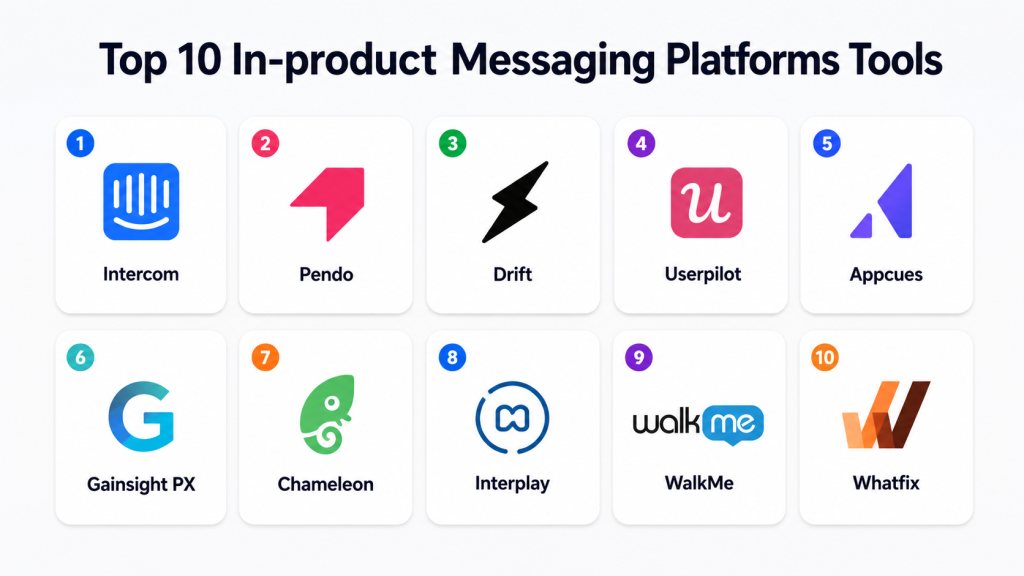
Top 10 In-product Messaging Platforms Tools
1- Intercom
Short description: Intercom is a leading in-product messaging platform designed for SaaS, e-commerce, and digital products. It combines chat, email, and product tours to engage users effectively. Its AI-driven automation helps scale personalized communication for onboarding and retention.
Key Features
- Multi-channel messaging (in-app, email, push notifications)
- AI-powered chatbots and automation flows
- Product tours and onboarding sequences
- Segmentation based on behavior and attributes
- In-app surveys and NPS collection
- Detailed analytics dashboards
- Integration with CRMs and support tools
Pros
- Powerful automation for personalized engagement
- Scalable for small to large organizations
- Strong ecosystem of integrations
Cons
- Can be expensive for small teams
- Some advanced features require technical setup
- Learning curve for non-technical users
Platforms / Deployment
- Web / iOS / Android
- Cloud
Security & Compliance
- SOC 2, GDPR, SSO, MFA, encryption
Integrations & Ecosystem
Intercom connects with major CRMs, analytics, and marketing automation tools.
- Salesforce, HubSpot
- Slack
- Zapier
- Segment
- Jira
- Google Analytics
Support & Community
- Extensive documentation and tutorials
- Tiered support plans
- Active community forums
2- Pendo
Short description: Pendo combines in-product messaging with product analytics to help teams understand user behavior and drive adoption. Its in-app guides and NPS surveys provide actionable insights for product teams.
Key Features
- In-app guides and tooltips
- User analytics and behavioral tracking
- NPS and feedback collection
- Segmentation and personalization
- No-code message builder
- Multi-platform support
- Roadmap prioritization tools
Pros
- Strong analytics integration with messaging
- Excellent for feature adoption and product insights
- Intuitive interface for non-technical teams
Cons
- Pricing can be high for startups
- Some advanced analytics require training
- Limited third-party integrations compared to Intercom
Platforms / Deployment
- Web / iOS / Android
- Cloud
Security & Compliance
- SOC 2, GDPR, encryption, SSO
Integrations & Ecosystem
Integrates with analytics, CRM, and project management tools.
- Salesforce
- Slack
- Jira
- Segment
- Zapier
Support & Community
- Knowledge base and webinars
- Customer success managers for enterprise
- Active user community
3- Drift
Short description: Drift focuses on conversational marketing and in-product messaging, leveraging AI chatbots to engage users in real-time. It is widely used for lead generation, onboarding, and support within digital products.
Key Features
- AI-driven chatbots
- Conversational landing pages and messaging
- In-product campaigns for engagement
- Custom targeting and segmentation
- Real-time analytics
- Integrations with CRM and marketing tools
Pros
- Conversational AI enhances user engagement
- Real-time lead capture
- Flexible messaging templates
Cons
- May be overkill for small products
- Steeper learning curve for non-marketing teams
- Some integrations require enterprise plan
Platforms / Deployment
- Web / iOS / Android
- Cloud
Security & Compliance
- SOC 2, GDPR, encryption, SSO
Integrations & Ecosystem
- Salesforce, HubSpot, Marketo
- Slack, Zoom
- Zapier
Support & Community
- Knowledge base, tutorials
- Enterprise support tiers
- Active community forums
4- Userpilot
Short description: Userpilot helps product teams drive feature adoption with targeted in-product messages and interactive walkthroughs. Focused on no-code implementation, it is ideal for product managers aiming to improve user onboarding and retention.
Key Features
- Interactive product tours
- Contextual tooltips and modals
- Behavioral segmentation
- Analytics dashboards
- NPS and feedback surveys
- Multi-platform support
Pros
- No-code interface simplifies setup
- Effective for onboarding and feature adoption
- Flexible personalization options
Cons
- Less suitable for complex automation
- Limited integrations compared to enterprise solutions
- Reporting depth can be basic for advanced analytics
Platforms / Deployment
- Web / iOS / Android
- Cloud
Security & Compliance
- Not publicly stated
Integrations & Ecosystem
- Segment, Mixpanel
- Zapier
- HubSpot
Support & Community
- Documentation and tutorials
- Email and chat support
- Community forums
5- Appcues
Short description: Appcues offers no-code in-product messaging, product tours, and onboarding flows. It focuses on improving user experience and increasing product adoption without relying on engineering resources.
Key Features
- In-app onboarding flows
- Tooltips, modals, banners
- User segmentation and targeting
- Analytics and performance tracking
- Feedback collection
- Multi-platform support
Pros
- Easy for non-technical teams to deploy
- Strong onboarding and adoption focus
- Flexible content customization
Cons
- Advanced analytics limited
- Integrations smaller compared to enterprise platforms
- Pricing scales quickly with user base
Platforms / Deployment
- Web / iOS / Android
- Cloud
Security & Compliance
- Not publicly stated
Integrations & Ecosystem
- Segment, HubSpot, Slack
- Zapier
Support & Community
- Email support and knowledge base
- Onboarding guidance
- Limited public community
6- Gainsight PX
Short description: Gainsight PX combines product experience and customer success insights. It supports in-product messaging, surveys, and analytics to drive engagement and retention for enterprise SaaS products.
Key Features
- In-app messaging and walkthroughs
- Surveys and NPS collection
- Advanced segmentation and targeting
- Behavioral analytics dashboards
- Automation and lifecycle tracking
Pros
- Enterprise-focused feature set
- Deep customer success insights
- Strong analytics and reporting
Cons
- Complexity may overwhelm small teams
- Pricing targets larger organizations
- Implementation can require consulting
Platforms / Deployment
- Web / iOS / Android
- Cloud
Security & Compliance
- SOC 2, GDPR, SSO
Integrations & Ecosystem
- Salesforce, HubSpot, Jira
- Segment, Slack
- APIs for custom workflows
Support & Community
- Dedicated customer success managers
- Knowledge base and documentation
- Community forums
7- Chameleon
Short description: Chameleon specializes in creating guided product tours, in-app messaging, and onboarding experiences. Its focus is user-centric messaging and feature adoption for SaaS products.
Key Features
- Product tours and tooltips
- Segmentation and behavioral targeting
- Surveys and NPS collection
- Analytics dashboards
- Multi-platform support
Pros
- Flexible for small to medium teams
- Easy no-code setup
- Focused on onboarding success
Cons
- Less suited for large-scale automation
- Limited third-party integrations
- Reporting depth moderate
Platforms / Deployment
- Web / iOS / Android
- Cloud
Security & Compliance
- Not publicly stated
Integrations & Ecosystem
- Segment, Mixpanel, Slack
- Zapier
Support & Community
- Email support, documentation
- Community resources limited
8- Interplay
Short description: Interplay is a newer in-product messaging tool focusing on context-aware engagement, enabling product teams to send personalized messages and guidance to users within digital products.
Key Features
- Contextual in-app messages
- Behavioral targeting and segmentation
- Interactive guides and walkthroughs
- Analytics for engagement tracking
- Multi-device support
Pros
- Lightweight and easy to deploy
- Strong personalization features
- Modern UI and workflow
Cons
- Fewer enterprise-level features
- Smaller ecosystem of integrations
- Reporting and analytics basic
Platforms / Deployment
- Web / iOS / Android
- Cloud
Security & Compliance
- Not publicly stated
Integrations & Ecosystem
- Segment, Zapier
- Slack
Support & Community
- Email support and documentation
- Community limited
9- WalkMe
Short description: WalkMe is a robust digital adoption platform that supports in-product messaging, guidance, and analytics. It is widely used in enterprises to reduce onboarding friction and enhance feature adoption.
Key Features
- Guided product tours and walkthroughs
- Tooltips, pop-ups, and banners
- Behavioral analytics and dashboards
- Segmentation and personalization
- NPS and feedback collection
Pros
- Comprehensive adoption features
- Enterprise-grade analytics and automation
- Strong support and consulting
Cons
- Can be expensive for small teams
- Complex implementation process
- Requires dedicated product team involvement
Platforms / Deployment
- Web / iOS / Android
- Cloud
Security & Compliance
- SOC 2, ISO 27001, GDPR
Integrations & Ecosystem
- Salesforce, HubSpot, Slack
- APIs for custom workflows
Support & Community
- Enterprise support plans
- Knowledge base and tutorials
- Large community and consulting network
10- Whatfix
Short description: Whatfix provides in-product guidance, walkthroughs, and messaging for digital adoption. It focuses on improving engagement, onboarding, and feature discovery in web and mobile applications.
Key Features
- Interactive walkthroughs
- Tooltips and banners
- Segmentation and targeting
- Analytics dashboards
- Multi-device support
Pros
- Strong adoption and engagement focus
- No-code interface for content creation
- Enterprise-ready analytics
Cons
- Limited integrations for SMBs
- Can require training for full feature utilization
- Pricing higher than entry-level tools
Platforms / Deployment
- Web / iOS / Android
- Cloud
Security & Compliance
- SOC 2, GDPR, SSO
Integrations & Ecosystem
- Salesforce, HubSpot, Slack
- Zapier, Segment
Support & Community
- Enterprise support plans
- Documentation and tutorials
- Active community and knowledge base
Comparison Table (Top 10)
| Tool Name | Best For | Platform(s) Supported | Deployment | Standout Feature | Public Rating |
|---|---|---|---|---|---|
| Intercom | SaaS, e-commerce | Web/iOS/Android | Cloud | AI-driven messaging & automation | N/A |
| Pendo | Product analytics + messaging | Web/iOS/Android | Cloud | Product tours + insights | N/A |
| Drift | Conversational marketing | Web/iOS/Android | Cloud | AI chatbots | N/A |
| Userpilot | Onboarding & adoption | Web/iOS/Android | Cloud | Interactive walkthroughs | N/A |
| Appcues | No-code onboarding | Web/iOS/Android | Cloud | Tooltips & modals | N/A |
| Gainsight PX | Enterprise SaaS adoption | Web/iOS/Android | Cloud | Product experience + analytics | N/A |
| Chameleon | Guided product tours | Web/iOS/Android | Cloud | Onboarding success focus | N/A |
| Interplay | Context-aware engagement | Web/iOS/Android | Cloud | Personalized in-app messages | N/A |
| WalkMe | Enterprise digital adoption | Web/iOS/Android | Cloud | Comprehensive adoption platform | N/A |
| Whatfix | Digital adoption & guidance | Web/iOS/Android | Cloud | Interactive walkthroughs | N/A |
Evaluation & Scoring
| Tool Name | Core (25%) | Ease (15%) | Integrations (15%) | Security (10%) | Performance (10%) | Support (10%) | Value (15%) | Weighted Total (0–10) |
|---|---|---|---|---|---|---|---|---|
| Intercom | 9 | 8 | 9 | 8 | 9 | 8 | 7 | 8.5 |
| Pendo | 8 | 8 | 8 | 8 | 8 | 7 | 7 | 7.9 |
| Drift | 8 | 7 | 7 | 8 | 8 | 7 | 7 | 7.6 |
| Userpilot | 7 | 9 | 7 | 7 | 7 | 7 | 8 | 7.5 |
| Appcues | 7 | 9 | 6 | 7 | 7 | 7 | 8 | 7.3 |
| Gainsight PX | 9 | 7 | 8 | 9 | 8 | 8 | 6 | 7.9 |
| Chameleon | 7 | 8 | 6 | 7 | 7 | 7 | 7 | 7.1 |
| Interplay | 6 | 8 | 6 | 7 | 7 | 6 | 7 | 6.8 |
| WalkMe | 9 | 7 | 8 | 9 | 8 | 8 | 6 | 7.9 |
| Whatfix | 8 | 8 | 7 | 8 | 8 | 7 | 7 | 7.6 |
Interpretation: Scores are comparative; higher weighted totals indicate stronger overall capability across core features, integrations, ease of use, and enterprise readiness. Buyer priorities may shift these scores in practical decision-making.
Which In-product Messaging Platform Tool Is Right for You?
Solo / Freelancer
Focus on lightweight, no-code solutions like Appcues or Userpilot for quick onboarding flows without heavy integrations.
SMB
Platforms like Intercom or Drift provide automation and engagement capabilities without needing enterprise-scale investment.
Mid-Market
Pendo or Chameleon offer product analytics and feature adoption insights to grow user engagement effectively.
Enterprise
WalkMe, Gainsight PX, and Whatfix deliver enterprise-grade compliance, analytics, and automation for large-scale deployments.
Budget vs Premium
Startups can use Userpilot or Appcues for cost-effective onboarding. Enterprises needing advanced analytics and security may justify Intercom or WalkMe.
Feature Depth vs Ease of Use
No-code tools like Chameleon and Userpilot favor ease of use, while platforms like Gainsight PX provide deeper analytics at a steeper learning curve.
Integrations & Scalability
Enterprise tools like Intercom, Pendo, and WalkMe integrate with multiple CRMs, analytics, and support systems, ensuring growth without replatforming.
Security & Compliance Needs
Platforms such as Intercom, Gainsight PX, WalkMe, and Whatfix comply with SOC 2 and GDPR, suitable for regulated industries and enterprise deployments.
Frequently Asked Questions (FAQs)
1- What pricing models do in-product messaging platforms use?
Most platforms offer tiered subscriptions based on active users, features, and support. Some provide pay-as-you-grow models or enterprise contracts. Buyers should evaluate cost per MAU and feature access carefully.
2- How difficult is it to implement these tools?
Implementation ranges from a few hours for no-code tools to weeks for enterprise platforms. Integration with existing product data and CRMs may require technical resources.
3- Can these platforms handle multi-platform messaging?
Yes, leading platforms support web, mobile (iOS/Android), and sometimes desktop. Ensure your chosen tool matches your primary user device base.
4- What security features are essential?
Look for SSO/SAML, MFA, encryption, RBAC, and compliance with SOC 2 or GDPR. Security is especially important for enterprise and regulated industries.
5- How do I measure ROI from in-product messaging?
Track feature adoption, onboarding completion rates, churn reduction, NPS, and user engagement analytics to quantify impact.
6- Can I switch platforms easily if needed?
Migration can be complex due to historical data, custom flows, and integrations. Plan for data export capabilities and flexible APIs when evaluating platforms.
7- Are AI features worth the investment?
AI-driven personalization and automated targeting can improve engagement and reduce manual setup, but ROI depends on scale and user complexity.
8- Which tool is best for small SaaS companies?
No-code, affordable tools like Userpilot or Appcues provide rapid onboarding and messaging without significant engineering effort.
9- Can these tools replace email or push notifications?
They complement traditional channels by delivering contextual messages within the product, enhancing adoption and engagement rather than replacing external messaging.
10- What are common mistakes buyers make?
- Ignoring user segmentation and personalization
- Choosing tools without analytics or reporting
- Underestimating integration needs with CRM or analytics
- Overlooking compliance requirements
- Failing to plan for scale and multi-platform deployment
Conclusion
In-product messaging platforms are indispensable for SaaS, mobile, and digital products aiming to improve engagement, adoption, and retention in 2026 and beyond. Selecting the right tool depends on company size, product complexity, budget, and security requirements. Smaller teams benefit from no-code platforms like Userpilot or Appcues, while mid-market and enterprise organizations may require Intercom, WalkMe, or Gainsight PX for advanced analytics, automation, and compliance. A practical approach is to shortlist , run a pilot with real users, and validate integrations, messaging performance, and security before full-scale adoption.
