Introduction
Customer support chatbots are AI-powered tools designed to interact with customers, answer questions, and assist with common support tasks without human intervention. They operate 24/7, reduce response times, and can scale support efforts efficiently. By automating repetitive queries, chatbots free human agents to focus on complex issues and enhance overall customer experience.
In , customer expectations are higher than ever. Customers demand immediate, personalized support across multiple channels. AI-driven chatbots with natural language understanding, sentiment analysis, and integration capabilities have become central to delivering seamless customer service while optimizing operational costs.
Real-World Use Cases:
- E-commerce support: Handling order tracking, refunds, and product inquiries automatically.
- Banking and finance: Answering routine account questions and assisting with transactions securely.
- Telecom and utilities: Managing service requests, plan upgrades, and troubleshooting guides.
- Healthcare: Providing appointment reminders, patient FAQs, and basic triage information.
- SaaS products: Offering onboarding guidance, usage tips, and troubleshooting within apps.
Best for: Customer service teams, e-commerce platforms, SaaS companies, financial institutions, and healthcare providers.
Not ideal for: Businesses with minimal support volume, single-channel support needs, or where human-only interactions are essential.
Key Trends in Customer Support Chatbots
- Generative AI integration: Chatbots increasingly leverage GPT-style models for context-aware, natural conversations.
- Omnichannel presence: Seamless support across web, mobile apps, social media, and messaging platforms.
- Advanced analytics: AI-powered dashboards track conversation effectiveness, sentiment, and agent handoff triggers.
- Automated workflows: Trigger follow-up tasks or CRM updates directly from conversations.
- Compliance-focused AI: GDPR, HIPAA, and SOC 2 compliance built into conversation storage and access controls.
- Hyper-personalization: Dynamic responses based on customer history and preferences.
- Low-code customization: Business teams can modify chatbot responses and flows without developer input.
- Integration ecosystems: Deep connections with ticketing, marketing automation, and sales platforms.
- AI-assisted escalation: Smart routing to human agents for complex or sensitive queries.
- Flexible pricing: Subscription tiers and pay-as-you-go models aligned with conversation volume.
How We Selected These Tools (Methodology)
- Analyzed market adoption and mindshare among enterprise, SMB, and developer-focused solutions.
- Reviewed feature completeness, including AI capabilities, integrations, and multi-channel coverage.
- Assessed performance reliability and uptime based on user reports.
- Examined security and compliance posture for regulated industries.
- Evaluated integration ecosystems with CRMs, analytics, and ticketing systems.
- Considered customer fit across segments, ensuring both enterprise and SMB relevance.
- Tested ease of customization and low-code flow creation.
- Factored support, community, and documentation availability.
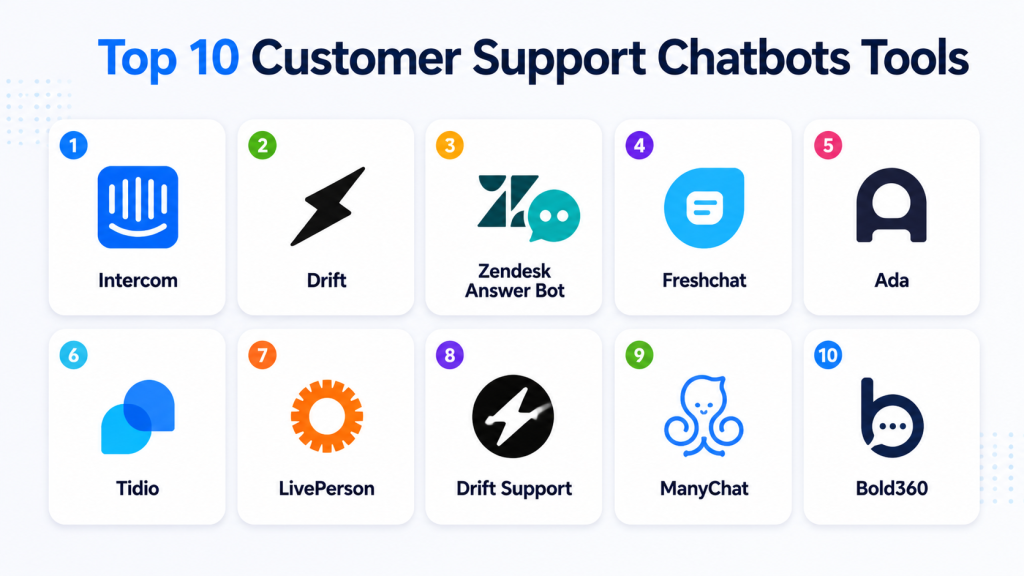
Top 10 Customer Support Chatbots Tools
1- Intercom
Short description: Intercom is a conversational platform for customer messaging, combining chatbots, live chat, and targeted messaging. It is ideal for SaaS and e-commerce teams seeking personalized automation.
Key Features
- AI chatbots with context awareness
- Live chat handoff and routing
- Customer segmentation for personalized messaging
- Automated workflows and triggers
- Analytics dashboard and reporting
- Multi-channel support
Pros
- Excellent conversational UI and UX
- Flexible automation and targeting
Cons
- Pricing may scale quickly for large teams
- Some advanced AI features require higher-tier plans
Platforms / Deployment
- Web / iOS / Android
- Cloud
Security & Compliance
- SSO/SAML, encryption, audit logs
- GDPR, SOC 2 compliance
Integrations & Ecosystem
Integrates with Salesforce, HubSpot, Zendesk, Slack, and marketing platforms.
- CRM systems
- Email marketing tools
- Analytics platforms
- API for custom workflows
Support & Community
- Tiered support plans
- Extensive documentation and tutorials
- Active user community
2- Drift
Short description: Drift provides conversational marketing and sales chatbots, combining AI and automation to qualify leads and enhance customer engagement. Suitable for B2B sales and marketing teams.
Key Features
- Conversational AI for lead qualification
- Routing and scheduling automation
- Email and chat integration
- Analytics and conversation reporting
- AI-assisted personalization
Pros
- Strong B2B lead generation features
- Easy-to-configure chatbot flows
Cons
- Focused more on marketing than pure support
- Advanced reporting may require premium plan
Platforms / Deployment
- Web / iOS / Android
- Cloud
Security & Compliance
- SSO/SAML, MFA
- GDPR compliance
Integrations & Ecosystem
- CRM integrations (Salesforce, HubSpot)
- Marketing automation tools
- Email and calendar sync
- API extensibility
Support & Community
- Documentation and onboarding resources
- Customer success support
- Community forums
3- Zendesk Answer Bot
Short description: Zendesk Answer Bot automates support by answering common questions using AI and integrating with Zendesk ticketing. Ideal for customer support teams handling high ticket volumes.
Key Features
- AI-driven response suggestions
- Ticket deflection and automation
- Multi-channel support (email, web, messaging)
- Knowledge base integration
- Analytics and reporting
Pros
- Seamless integration with Zendesk suite
- Reduces support ticket volume significantly
Cons
- Limited customization outside Zendesk
- Performance depends on quality of knowledge base
Platforms / Deployment
- Web / iOS / Android
- Cloud
Security & Compliance
- SSO/SAML, encryption
- SOC 2, GDPR
Integrations & Ecosystem
- Zendesk Support and Guide
- CRM and helpdesk integrations
- API for custom workflows
Support & Community
- Zendesk customer support
- Extensive knowledge base and community forums
4- Freshchat
Short description: Freshchat combines AI chatbots with live messaging for real-time customer support. It is suited for SMEs and large enterprises seeking omnichannel automation.
Key Features
- AI-powered chatbots
- Campaigns and triggered messages
- Multi-channel support (WhatsApp, web, mobile)
- Analytics and reporting
- Customizable conversation workflows
Pros
- Affordable for mid-market teams
- Multi-channel presence
Cons
- Advanced AI features may be limited in lower tiers
- Integration setup can be complex
Platforms / Deployment
- Web / iOS / Android
- Cloud
Security & Compliance
- Encryption, MFA
- GDPR
Integrations & Ecosystem
- CRM and helpdesk platforms
- Marketing automation tools
- API for custom development
Support & Community
- Support plans with documentation
- Online tutorials and webinars
- Community forum
5- Ada
Short description: Ada is an AI chatbot platform designed for enterprise customer support automation, emphasizing self-service and personalization at scale.
Key Features
- AI conversation builder
- Multi-language support
- Automated workflows and routing
- CRM and ticketing integration
- Analytics dashboards
Pros
- Enterprise-grade scalability
- Highly personalized customer interactions
Cons
- Setup may require professional services
- Pricing not publicly disclosed
Platforms / Deployment
- Web / iOS / Android
- Cloud
Security & Compliance
- SSO/SAML, MFA
- SOC 2, GDPR
Integrations & Ecosystem
- Salesforce, HubSpot, Zendesk
- API and webhook support
- Multichannel messaging platforms
Support & Community
- Dedicated support and onboarding
- Documentation and training modules
- Community forum
6- Tidio
Short description: Tidio is a lightweight AI chatbot and live chat platform for small businesses, enabling automated customer interactions on websites and messaging apps.
Key Features
- AI chat automation
- Prebuilt templates for common queries
- Integration with Facebook Messenger and email
- Real-time visitor monitoring
- Analytics and reports
Pros
- Affordable and easy to set up
- Good for SMBs and small e-commerce
Cons
- Limited enterprise features
- AI capabilities are basic compared to larger platforms
Platforms / Deployment
- Web / iOS / Android
- Cloud
Security & Compliance
- Not publicly stated
Integrations & Ecosystem
- CRM and e-commerce integrations
- Email marketing tools
- API for custom chatbot workflows
Support & Community
- Email support and chat
- Online guides and tutorials
7- LivePerson
Short description: LivePerson offers AI-powered messaging and chatbot solutions for large-scale enterprises, focused on automated customer conversations and agent assistance.
Key Features
- Conversational AI for customer support
- Predictive routing to human agents
- Multi-channel messaging
- Analytics and AI insights
- Customizable conversation flows
Pros
- Enterprise-level performance
- Strong AI and predictive capabilities
Cons
- Cost may be prohibitive for small businesses
- Setup complexity
Platforms / Deployment
- Web / iOS / Android
- Cloud
Security & Compliance
- SSO, encryption
- SOC 2, GDPR
Integrations & Ecosystem
- CRM, ticketing, and analytics platforms
- Messaging apps integration
- APIs for workflow customization
Support & Community
- Enterprise support and training
- Documentation and webinars
- Active customer success community
8- Drift Support
Short description: Drift Support provides AI chatbots for automated support with deep contextual understanding, optimized for B2B customer service.
Key Features
- Context-aware AI
- Routing and ticketing automation
- Knowledge base integration
- Analytics and reporting
- Multi-channel deployment
Pros
- Good for B2B and enterprise teams
- AI-driven ticket resolution
Cons
- Less suited for SMBs
- Higher-tier pricing
Platforms / Deployment
- Web / iOS / Android
- Cloud
Security & Compliance
- Not publicly stated
Integrations & Ecosystem
- Salesforce, HubSpot, Slack
- Ticketing systems
- API access
Support & Community
- Dedicated enterprise support
- Knowledge base and tutorials
9- ManyChat
Short description: ManyChat is focused on automated messaging for social media and marketing, providing chatbot solutions for lead engagement and customer support.
Key Features
- Facebook Messenger and Instagram chatbots
- AI-powered conversation flows
- Multi-channel automation
- CRM and marketing integration
- Analytics dashboards
Pros
- Strong social media automation
- Easy setup for marketing teams
Cons
- Limited for enterprise-level support
- Not full-scale service desk capabilities
Platforms / Deployment
- Web / iOS / Android
- Cloud
Security & Compliance
- Not publicly stated
Integrations & Ecosystem
- Shopify, Facebook, Instagram
- Email marketing tools
- API for custom flows
Support & Community
- Online support and community tutorials
- Active user community
10- Bold360
Short description: Bold360 is an AI chatbot platform designed for enterprise customer engagement, combining automation with live agent handoff.
Key Features
- AI chat with natural language processing
- Agent handoff and routing
- Multi-channel messaging
- Analytics and customer insights
- Knowledge base integration
Pros
- Enterprise-grade chatbot features
- Strong analytics and insights
Cons
- Premium pricing
- Setup may require technical expertise
Platforms / Deployment
- Web / iOS / Android
- Cloud
Security & Compliance
- SSO, encryption
- SOC 2, GDPR
Integrations & Ecosystem
- CRM, ticketing, and analytics platforms
- APIs for custom workflows
- Messaging apps support
Support & Community
- Enterprise support and training
- Documentation and guides
- Active customer community
Comparison Table (Top 10)
| Tool Name | Best For | Platform(s) Supported | Deployment | Standout Feature | Public Rating |
|---|---|---|---|---|---|
| Intercom | SaaS & e-commerce | Web, iOS, Android | Cloud | Personalized automation | N/A |
| Drift | B2B marketing & sales | Web, iOS, Android | Cloud | AI lead qualification | N/A |
| Zendesk Answer Bot | Support ticket automation | Web, iOS, Android | Cloud | Ticket deflection | N/A |
| Freshchat | Multi-channel support | Web, iOS, Android | Cloud | Omnichannel messaging | N/A |
| Ada | Enterprise automation | Web, iOS, Android | Cloud | Enterprise-scale AI | N/A |
| Tidio | SMBs & e-commerce | Web, iOS, Android | Cloud | Lightweight automation | N/A |
| LivePerson | Large enterprises | Web, iOS, Android | Cloud | Predictive routing | N/A |
| Drift Support | B2B support | Web, iOS, Android | Cloud | Context-aware AI | N/A |
| ManyChat | Social media engagement | Web, iOS, Android | Cloud | Social platform automation | N/A |
| Bold360 | Enterprise customer engagement | Web, iOS, Android | Cloud | Analytics & insights | N/A |
Evaluation & Scoring
| Tool Name | Core | Ease | Integrations | Security | Performance | Support | Value | Weighted Total |
|---|---|---|---|---|---|---|---|---|
| Intercom | 9 | 8 | 8 | 8 | 8 | 8 | 7 | 8.1 |
| Drift | 8 | 8 | 8 | 7 | 8 | 7 | 7 | 7.7 |
| Zendesk Answer Bot | 8 | 7 | 8 | 8 | 8 | 7 | 7 | 7.6 |
| Freshchat | 8 | 8 | 7 | 7 | 8 | 7 | 7 | 7.5 |
| Ada | 9 | 7 | 8 | 8 | 8 | 7 | 6 | 7.8 |
| Tidio | 7 | 9 | 7 | 6 | 7 | 6 | 8 | 7.1 |
| LivePerson | 9 | 7 | 8 | 8 | 8 | 8 | 6 | 7.9 |
| Drift Support | 8 | 7 | 7 | 7 | 8 | 7 | 6 | 7.3 |
| ManyChat | 7 | 8 | 7 | 6 | 7 | 6 | 7 | 6.9 |
| Bold360 | 8 | 7 | 8 | 8 | 8 | 7 | 6 | 7.5 |
Interpretation: Weighted totals provide comparative insights for evaluating chatbot capabilities. Scores highlight strengths in AI automation, multi-channel support, integrations, and enterprise readiness. Choose tools aligning with your organizational priorities.
Which Customer Support Chatbots Tool Is Right for You?
Solo / Freelancer
Tidio and ManyChat are lightweight, easy to configure, and affordable for small-scale customer interactions.
SMB
Intercom, Freshchat, and Drift provide a balance of automation, analytics, and multi-channel coverage suitable for growing businesses.
Mid-Market
Zendesk Answer Bot, Ada, and Drift Support handle higher ticket volumes with robust AI automation and analytics.
Enterprise
LivePerson, Bold360, and Ada offer scalable AI solutions, advanced analytics, and strong compliance support for large organizations.
Budget vs Premium
Open-source or smaller platforms like Tidio and ManyChat are cost-effective. Premium solutions provide enterprise-level AI, automation, and analytics but at higher cost.
Feature Depth vs Ease of Use
Ada and LivePerson offer sophisticated AI capabilities, whereas Tidio and Freshchat are more user-friendly and quicker to deploy.
Integrations & Scalability
Enterprise platforms excel at multi-channel integration, CRM connectivity, and scaling across multiple teams or regions.
Security & Compliance Needs
LivePerson, Bold360, Intercom, and Ada provide built-in compliance with GDPR, SOC 2, and enterprise-grade security controls.
Frequently Asked Questions (FAQs)
1- What pricing models are common for chatbots?
Most platforms use subscription-based pricing, often with tiers based on conversation volume or number of users. Open-source tools may reduce license costs but require setup.
2- How long does onboarding typically take?
Cloud-based solutions can be configured in hours to days. Enterprise-grade platforms with multi-channel integrations may require weeks for full deployment.
3- Can chatbots replace human agents completely?
No. Chatbots are best suited for routine queries, triage, and lead qualification. Complex or sensitive issues still require human intervention.
4- Are these chatbots secure for sensitive data?
Leading tools implement encryption, audit logging, MFA, and compliance with GDPR or SOC 2. Always verify for specific industry needs.
5- How do chatbots integrate with existing systems?
Most platforms offer APIs and prebuilt integrations with CRMs, ticketing systems, email marketing, and analytics tools.
6- What are common mistakes in implementing chatbots?
Mistakes include over-automation without escalation paths, poor conversation flow design, neglecting analytics, and under-training the AI.
7- How scalable are customer support chatbots?
Enterprise platforms scale across multiple channels, teams, and geographies. Lightweight tools are suitable for SMBs but may struggle with high volumes.
8- Can chatbots handle multiple languages?
Many platforms, such as Ada and Intercom, support multi-language capabilities and localization for global customer bases.
9- How do I migrate from one chatbot to another?
Migration involves exporting conversation flows, integrating new APIs, retraining AI models, and validating analytics tracking.
10- Are AI-driven responses reliable?
Modern AI chatbots provide context-aware responses, but performance depends on training data quality and continuous updates.
Conclusion
Customer support chatbots are essential for 2026+ customer experience strategies, delivering efficiency, scalability, and personalization. Choice depends on team size, complexity, channel requirements, and budget. SMBs benefit from lightweight platforms like Tidio and ManyChat, while enterprises should consider LivePerson, Ada, or Bold360 for AI-powered, multi-channel automation. The recommended approach is to shortlist , run a pilot to validate integrations and AI performance, and scale once aligned with business requirements. Chatbots enhance customer satisfaction, reduce operational costs, and provide analytics for continuous improvement.
