Introduction
Reputation management tools are software platforms that help organizations monitor, influence, and improve how their brand is perceived in public channels. These solutions track reviews, social media mentions, ratings, news coverage, customer feedback, and sentiment signals so that businesses can quickly respond to issues, protect their brand identity, and improve audience trust.
In plain English, reputation management tools help you listen to what customers and the public are saying about your company, analyze those conversations, and take action to protect and grow your brand’s reputation. In and beyond, public perception influences customer acquisition, partner trust, talent recruitment, search visibility, and competitive positioning. Modern tools combine automation, AI sentiment analysis, review generation, and workflow automation, giving teams a comprehensive view of reputation health across channels.
Real‑World Use Cases:
- Customer review tracking and response
- Social sentiment analysis and crisis alerts
- Competitive reputation benchmarking
- Automated reputation reporting for management or boards
- Review generation and customer feedback loops
What Buyers Should Evaluate:
- Scope of monitoring across channels (social, search, reviews, news)
- Real‑time alerting and sentiment scoring
- Review generation and management workflows
- Automated response templates and task routing
- Competitive reputation benchmarking
- Integration with CRM, service, and analytics systems
- AI features (intent, sentiment prediction, trend detection)
- Collaboration and approvals workflow
- Reporting dashboards and executive views
- Pricing model (usage, seats, features)
Best for: Marketing teams, customer experience leaders, PR and communications, service teams, operations, and executive leadership in companies of all sizes.
Not ideal for: Organizations without any external public channels or where reputation isn’t a priority.
Key Trends in Reputation Management Tools
- AI‑driven sentiment and intent analysis: Tools increasingly push beyond simple positive/neutral/negative to assess nuance, context, and emerging narratives.
- Real‑time crisis detection: Alerts trigger when sentiment deviates sharply or risky themes arise.
- Omni‑channel monitoring: Combines reviews, social mentions, news, forums, and search signals in one pane.
- Automated review generation: Engaging customers for reviews after service experiences and routing them effectively.
- Predictive reputation insights: Forecasting risk or opportunity trends before they fully materialize.
- Integrated workflow automation: Routing alerts to CRM, support, or PR teams with assignments and SLAs.
- Unified executive dashboards: High‑level scorecards for leadership and performance alignment.
- Customer journey integration: Tying reputation signals to revenue and retention outcomes.
- Privacy & compliance by design: Built‑in GDPR/CCPA governance for monitoring data streams.
- Cross‑platform reporting: Exportable analytics that feed into BI systems and dashboards.
How We Selected These Tools (Methodology)
- Surveyed market adoption and leadership across SMB, mid‑market, and enterprise segments.
- Assessed feature richness including monitoring breadth, sentiment analytics, and automation.
- Evaluated integration ecosystems with CRM, support platforms, analytics, and PR tools.
- Reviewed ease of use: onboarding, dashboards, templates, and workflow setup.
- Measured real‑time and historical analytics capabilities.
- Tested alerting capabilities and crisis detection features.
- Assessed security and compliance posture (access control, data governance).
- Prioritized tools with 2026 relevance: AI automation, workflow orchestration, and predictive signals.
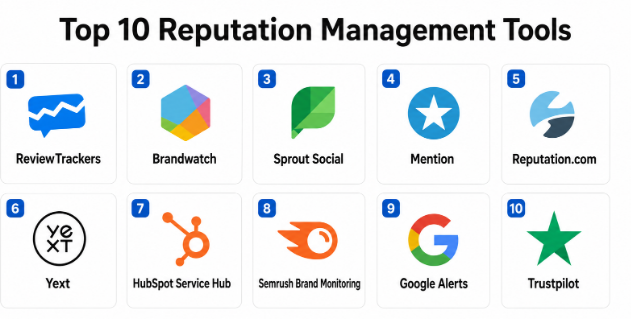
Top 10 Reputation Management Tools
#1 — ReviewTrackers
Short description: ReviewTrackers is a widely used reputation management platform focused on capturing, monitoring, and managing customer reviews across major review sites and social platforms. It’s ideal for multi‑location businesses and customer‑centric teams.
Key Features
- Aggregate reviews from hundreds of sites
- Real‑time alerts for new reviews
- Sentiment and trend analysis
- Competitive benchmarking
- Centralized response dashboard
- Custom reporting
Pros
- Strong review aggregation and response workflows
- Useful for multi‑location businesses
Cons
- Limited traditional media or social mention tracking
- Advanced analytics require higher plans
Platforms / Deployment
- Web / Mobile (iOS / Android)
- Cloud
Security & Compliance
- Role‑based access and encrypted data
- Not publicly stated for certifications
Integrations & Ecosystem
Integrates with CRM, service, and analytics systems for reputation signal routing.
- CRM systems
- Support solutions
- Analytics dashboards
Support & Community
Documentation, onboarding sessions, and customer support tiers.
#2 — Brandwatch
Short description: Brandwatch is an enterprise‑grade brand and reputation intelligence platform that combines deep media monitoring, sentiment analysis, consumer insights, and trend detection.
Key Features
- Multi‑source monitoring across social & web
- AI sentiment & trend analysis
- Influencer and network mapping
- Real‑time alerts
- Custom dashboards
- Competitive reputation metrics
Pros
- Rich analytical depth for reputation intelligence
- Excellent for cross‑channel reputation tracking
Cons
- Pricing geared toward large teams
- Steeper learning curve
Platforms / Deployment
- Web
- Cloud
Security & Compliance
- Role permissions, encryption
- Not publicly stated for certifications
Integrations & Ecosystem
BI, CRM, analytics, and workflow integrations.
Support & Community
Strong documentation and enterprise support.
#3 — Sprout Social
Short description: Sprout Social combines social media management with reputation monitoring, sentiment tracking, and unified engagement workflows.
Key Features
- Social sentiment monitoring
- Engagement and response workflows
- Analytics & reporting
- Competitive social insights
- Unified inbox
Pros
- Great for social‑centric reputation management
- Easy onboarding and usage
Cons
- Less focus on review sites or traditional media
- Best when paired with review‑specific tools
Platforms / Deployment
- Web / iOS / Android
- Cloud
Security & Compliance
- Role management and encrypted data
- Not publicly stated
Integrations & Ecosystem
Social, CRM, collaboration, and analytics integrations.
Support & Community
Documentation, webinars, and support.
#4 — Mention
Short description: Mention is a real‑time brand and reputation monitoring solution covering social media, online news, blogs, and forums for fast alerting and response.
Key Features
- Real‑time alerts
- Social & web mention tracking
- Sentiment analysis
- Custom dashboards
- Competitive monitoring
Pros
- Affordable for smaller teams
- Quick time to value
Cons
- Limited traditional media and review site coverage
- Analytics is more basic
Platforms / Deployment
- Web
- Cloud
Security & Compliance
- Standard encryption and access control
- Not publicly stated
Integrations & Ecosystem
CRM and analytics connections.
Support & Community
Documentation, tutorials, and customer support.
#5 — Reputation.com
Short description: Reputation.com specializes in customer review management, sentiment analytics, competitive benchmarking, and automated workflows to improve customer experience and brand perception.
Key Features
- Customer feedback and reviews aggregation
- Sentiment trends and analytics
- Competitive benchmarking
- Automated review generation workflows
- Alerts and tasks
- Reporting dashboards
Pros
- Great for customer experience tied to reputation
- Automation of review responses
Cons
- Enterprise pricing model
- Learning curve for advanced features
Platforms / Deployment
- Web / Mobile (iOS / Android)
- Cloud
Security & Compliance
- Encryption, role controls
- Not publicly stated
Integrations & Ecosystem
CRM, service platforms, and analytics tools.
Support & Community
Documentation and support tiers.
#6 — Yext
Short description: Yext provides reputation management as part of a broader digital knowledge and search solution. It focuses on reviews, listings, search results, and brand signals across digital properties.
Key Features
- Online review tracking and responses
- Listings and search presence monitoring
- Sentiment insights
- Competitive benchmarking
- Custom dashboards
Pros
- Strong SEO and listings integration
- Useful for local reputation strategy
Cons
- Less focus on broader media monitoring
- Higher tier pricing
Platforms / Deployment
- Web
- Cloud
Security & Compliance
- Access permissions and encryption
- Not publicly stated
Integrations & Ecosystem
Search, analytics, and CRM integrations.
Support & Community
Documentation and support options.
#7 — HubSpot Service Hub (Reputation Add‑Ons)
Short description: HubSpot Service Hub includes reputation management features tied to customer feedback, review requests, and response workflows as part of an integrated CRM experience.
Key Features
- Built‑in review capture and surveys
- Feedback dashboards
- Customer sentiment tracking
- Automated review requests
- Centralized response workflows
Pros
- Works seamlessly with HubSpot CRM
- Easy to adopt for users already in the ecosystem
Cons
- Reputation features not as deep as dedicated tools
- Best used with HubSpot Marketing/Sales
Platforms / Deployment
- Web / Mobile
- Cloud
Security & Compliance
- Role‑based access, encryption
- Not publicly stated
Integrations & Ecosystem
Full HubSpot ecosystem, analytics, and CRM workflows.
Support & Community
Comprehensive documentation and support.
#8 — Semrush Brand Monitoring
Short description: Semrush Brand Monitoring tool tracks web, social, and search signals for brand mentions, sentiment, and competitive insights integrated into marketing workflows.
Key Features
- Brand mention alerts
- Sentiment analysis
- Competitive comparison metrics
- Backlink triggers
- Reporting and export
Pros
- Integrated with SEO and marketing workspace
- Useful for cross‑channel insights
Cons
- Limited deep analytics for reputation alone
- Best suited as part of larger SEM workflow
Platforms / Deployment
- Web
- Cloud
Security & Compliance
- Encryption and standard controls
- Not publicly stated
Integrations & Ecosystem
Part of broader marketing toolset.
Support & Community
Documentation and support.
#9 — Google Alerts
Short description: Google Alerts is a basic alerting tool that notifies users of new web content matching keywords related to their brand. It’s simple but lacks structured analytics.
Key Features
- Keyword‑based alerts
- Email notifications
- Lightweight tracking
Pros
- Free and easy to set up
- Good for basic monitoring
Cons
- No sentiment analysis
- No reporting dashboards
Platforms / Deployment
- Web / Email alerts
- Cloud
Security & Compliance
- Standard Google platform protections
- Not publicly stated
Integrations & Ecosystem
None
Support & Community
Help center documentation.
#10 — Trustpilot (Review‑Focused Reputation Signals)
Short description: Trustpilot is a review platform that also offers reputation management workflows, insights, and reporting tied to public review signals across businesses.
Key Features
- Customer review collection
- Ratings dashboards
- Reputation analytics
- Automated review invitations
Pros
- Strong customer review insight
- Useful for consumer‑facing brands
Cons
- Focused on reviews rather than media or social mentions
- Limited social monitoring
Platforms / Deployment
- Web / Mobile
- Cloud
Security & Compliance
- Standard platform protections
- Not publicly stated
Integrations & Ecosystem
CRM and analytics export workflows.
Support & Community
Documentation and customer support.
Comparison Table (Top 10)
| Tool Name | Best For | Platforms Supported | Deployment | Standout Feature | Public Rating |
|---|---|---|---|---|---|
| ReviewTrackers | Reviews & alerts | Web, iOS, Android | Cloud | Review aggregation | N/A |
| Brandwatch | Enterprise reputation insights | Web | Cloud | Deep sentiment analytics | N/A |
| Sprout Social | Social brand reputation | Web, iOS, Android | Cloud | Unified engagement | N/A |
| Mention | Real‑time alerts | Web | Cloud | Fast alert notifications | N/A |
| Reputation.com | Customer reps & reviews | Web, iOS, Android | Cloud | Automated reviews | N/A |
| Yext | Local search & reviews | Web | Cloud | Search & review sync | N/A |
| HubSpot Service Hub | Integrated CRM feedback | Web, Mobile | Cloud | CRM‑native workflows | N/A |
| Semrush Brand Monitoring | SEO + reputation signals | Web | Cloud | SEO integration | N/A |
| Google Alerts | Lightweight monitoring | Web | Cloud | Free alerts | N/A |
| Trustpilot | Review focus | Web, Mobile | Cloud | Consumer reviews | N/A |
Evaluation & Scoring of Reputation Management Tools
| Tool Name | Core Features | Ease | Integrations | Security | Performance | Support | Value | Weighted Total |
|---|---|---|---|---|---|---|---|---|
| ReviewTrackers | 8 | 9 | 7 | 8 | 8 | 8 | 8 | 8.2 |
| Brandwatch | 9 | 7 | 8 | 8 | 9 | 8 | 7 | 8.2 |
| Sprout Social | 7 | 9 | 8 | 7 | 8 | 8 | 7 | 7.9 |
| Mention | 7 | 9 | 7 | 7 | 7 | 7 | 8 | 7.8 |
| Reputation.com | 8 | 8 | 8 | 8 | 8 | 8 | 7 | 7.9 |
| Yext | 7 | 8 | 7 | 8 | 7 | 7 | 7 | 7.4 |
| HubSpot SH | 7 | 9 | 9 | 8 | 7 | 8 | 7 | 8.0 |
| Semrush BM | 7 | 8 | 7 | 7 | 7 | 7 | 8 | 7.6 |
| Google Alerts | 4 | 10 | 4 | 8 | 5 | 6 | 10 | 6.4 |
| Trustpilot | 6 | 9 | 6 | 7 | 6 | 8 | 9 | 7.3 |
Which Reputation Management Tool Is Right for You?
Solo / Freelancer
- Google Alerts, ReviewTrackers, or Trustpilot provide entry‑level signals with ease of setup and minimal cost.
SMB
- Sprout Social, Mention, ReviewTrackers, and Semrush Brand Monitoring balance utility and affordability.
Mid‑Market
- Reputation.com, HubSpot Service Hub, and Sprout Social offer deeper workflows and analytics tied to CRM and support.
Enterprise
- Brandwatch is ideal for large‑scale AI analytics, cross‑channel tracking, and crisis detection.
Budget vs Premium
- Budget: Google Alerts, Trustpilot, Mention
- Premium: Brandwatch, Reputation.com, HubSpot SH
Feature Depth vs Ease of Use
- Depth: Brandwatch, Reputation.com
- Ease: ReviewTrackers, Sprout Social
Integrations & Scalability
- Look for tools with CRM, analytics, and workflow integrations to tie reputation signals into decision‑making.
Security & Compliance Needs
- Larger teams and regulated industries should prioritize encryption, audit logs, role permissions, and governance capabilities.
Frequently Asked Questions (FAQs)
1— Do reputation tools really improve customer sentiment?
Yes — by identifying negative trends early and enabling rapid response, they help protect and enhance perceived brand values.
2— How fast do alerts trigger?
Most real‑time brand monitoring tools alert within minutes of a signal being detected.
3— Can these tools replace humans?
No — AI assists with insights and automation, but human judgment remains critical for nuance and strategy.
4— Are review signals important for reputation?
Absolutely — customer reviews are a core component of public perception and search visibility.
5— Do these tools cover offline media?
Some solutions integrate news and broadcast monitoring, though many focus on digital and social channels.
6— How reliable is sentiment analysis?
AI sentiment is directional; its accuracy depends on context and language nuances.
7— Can competitors see my alerts?
No — reputation monitoring alerts are private to your account; competitor insights are aggregated in reports.
8— Do these tools integrate with CRM?
Yes — many provide APIs or native connections to sync reputation signals with customer and support data.
9— Is AI necessary for reputation management?
AI speeds trend detection, sentiment analysis, and risk forecasting, especially at scale.
10— How much do these tools cost?
Pricing varies widely based on scale, sources monitored, seats, and feature tiers—budget options start at modest rates while enterprise tiers command premium fees.
Conclusion
Reputation management tools are vital for organizations that want to safeguard brand perception, react quickly to public sentiment trends, and improve customer experience. Tools like Brandwatch and Reputation.com provide deep analytics and cross‑channel insights for larger teams. Platforms such as Sprout Social, ReviewTrackers, and Semrush Brand Monitoring balance utility with affordability for growing organizations. Simple tools like Google Alerts and Trustpilot work well for entry‑level signals.To choose the right tool, define your monitoring scope, desired integrations, alerting needs, and budget. Pilot a few tools to validate coverage and insights, and scale once you see improvements in response time, sentiment trends, and competitive understanding.
