Source: unite.ai
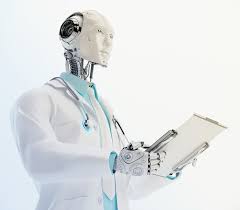
Researchers from Carnegie Mellon University have demonstrated how they can build intelligent tutoring systems. These systems are effective at teaching various subjects, including algebra and grammar.
The researchers used a new method that relies on artificial intelligence in order to allow a teacher to teach a computer. The wording makes this method seem confusing, but think of it as a computer being taught how to teach by a human teacher. The computer can be taught by the human teacher showing it how to solve certain problems, such as multicolumn addition. If the computer gets the problem wrong, the teacher can correct it.
Solving Problems On Its Own
One of the interesting parts of this method is that the computer system is able to not only teach and solve the problems how it was taught, but it can also solve all other problems in the topic by generalizing. This means that the computer can end up solving a problem outside of the ways the teacher taught it to.
Daniel Weitekamp III is a Ph.D student in CMU’s Human-Computer Interaction Institute (HCII).
“A student might learn one way to do a problem and that would be sufficient,” Weitekamp said. “But a tutoring system needs to learn every kind of way to solve a problem. It needs to learn how to teach problem solving, not just how to solve problems.”
The challenge that Weitekamp explains is one of the greatest in the development of AI-based tutoring systems. Newly developed intelligent tutoring systems can track student progress, help determine what to do next, and help students develop new skills by selecting effective practice problems.
The Development of AI-Based Tutoring Systems
Ken Koedinger is a professor of human-computer interaction and psychology. Koedinger was one of the early developers of intelligent tutors, and working with others, production rules were programmed by hand. According to Koedinger, each hour of tutored instruction took 200 hours of development. Eventually, the group developed a more effective method, which demonstrated all of the possible ways to solve a problem. This took the 200 hours down to 40 or 50, but it is extremely difficult to demonstrate all of the possible solutions to some patterns.
Koedinger has said that the new method could end up allowing a teacher to develop a 30-minute lesson in the same amount of time.
“The only way to get to the full intelligent tutor up to now has been to write these AI rules,” Koedinger said. “But now the system is writing those rules.”
In the new method, a machine learning program is used to simulate the ways in which students learn. A teaching interface was created by Weitekamp, and it utilizes a “show-and-correct” process for programming.
While the method was demonstrated with multicolumn addition, the machine learning engine that is used can be applied to other subjects, such as equation solving, fraction addition, chemistry, English grammar, and science experiment environments.
One of the main goals is for this method to allow teachers to construct their own computerized lessons, without the need of an AI programmer. This allows teachers to apply their own personal views on how to teach or which methods to use.
Weitekamp, Koedinger, and HCII System Scientist Erik Harpstead authored the paper describing the method. It was accepted by the Conference of Human Factors in Computing Systems (CHI 2020). The conference was originally planned for this month, but the COVID-19 pandemic forced it to be canceled. The paper can now be found in the conference proceedings, located in the Association for Computing Machinery’s Digital Library.
The Institute of Education Sciences and Google helped support the research.