Introduction
AI Regulatory Change Monitoring with NLP Tools use artificial intelligence, natural language processing, machine learning, and regulatory intelligence technologies to help organizations track, analyze, and respond to changes in laws, regulations, policies, and compliance requirements.
Regulatory environments continuously evolve across industries such as finance, healthcare, technology, insurance, energy, and manufacturing. Organizations must monitor thousands of regulatory updates from government agencies, industry bodies, and legal authorities to maintain compliance.
Traditional regulatory monitoring requires compliance teams to manually review regulatory publications, government announcements, legal updates, and policy changes. This approach can be slow, resource-intensive, and difficult when organizations operate across multiple regions.
AI-powered regulatory monitoring platforms automate this process by collecting regulatory information, analyzing legal text, identifying relevant changes, classifying updates, and providing compliance teams with actionable insights.
These tools help organizations:
- Monitor regulatory updates automatically
- Identify relevant compliance changes
- Analyze regulatory impact
- Reduce manual monitoring efforts
- Improve compliance response times
- Track obligations across jurisdictions
- Support risk management
AI regulatory intelligence solutions are used by:
- Financial institutions
- Healthcare organizations
- Insurance companies
- Legal departments
- Compliance teams
- Government agencies
- Enterprise businesses
Modern regulatory monitoring platforms combine NLP, machine learning, semantic search, document analysis, regulatory databases, workflow automation, and compliance analytics.
The goal of these solutions is to help organizations proactively manage regulatory changes and reduce compliance risks.
How AI Regulatory Change Monitoring with NLP Works
Data Collection
AI systems collect regulatory information from:
- Government publications
- Regulatory agencies
- Legal databases
- Industry updates
- Policy documents
Natural Language Processing
NLP analyzes regulatory text to identify:
- New requirements
- Changed obligations
- Compliance deadlines
- Affected business areas
Change Detection
AI compares previous and updated regulations to highlight:
- Added requirements
- Removed provisions
- Modified language
- Compliance impacts
Risk Classification
Platforms categorize changes based on:
- Industry relevance
- Business impact
- Regulatory category
- Risk level
Compliance Workflow Support
Teams receive:
- Alerts
- Reports
- Action recommendations
- Compliance tasks
Common Use Cases
- Regulatory monitoring
- Compliance management
- Risk assessment
- Policy updates
- Financial regulation tracking
- Healthcare compliance monitoring
- Privacy regulation monitoring
- Environmental regulation tracking
- Internal audit preparation
- Governance management
Why AI Regulatory Change Monitoring Tools Matter
Faster Regulatory Awareness
AI helps organizations discover important regulatory changes quickly.
Reduced Manual Effort
Automation reduces the workload of compliance teams.
Better Compliance Management
Organizations can respond faster to changing requirements.
Improved Risk Visibility
AI helps identify regulations that may impact business operations.
Global Regulatory Tracking
Companies can monitor multiple regions and jurisdictions more effectively.
Evaluation Criteria for Buyers
Regulatory Coverage
Platforms should provide broad and reliable regulatory data sources.
NLP Accuracy
AI should correctly understand legal and regulatory language.
Change Detection Capability
Strong solutions should identify meaningful regulatory differences.
Workflow Automation
Useful features include alerts, assignments, approvals, and reporting.
Integration Capability
Important integrations include GRC platforms, compliance systems, and enterprise applications.
Security and Privacy
Regulatory information and compliance data require strong protection.
Reporting and Analytics
Organizations need clear insights into regulatory impact.
Key Trends
AI-Powered Regulatory Intelligence
Organizations are moving from manual tracking toward automated regulatory monitoring.
NLP-Based Legal Understanding
AI models are improving interpretation of complex regulatory language.
Automated Compliance Workflows
Regulatory alerts are becoming connected with compliance task management.
Global Compliance Monitoring
Businesses are using AI to track regulations across multiple jurisdictions.
Generative AI Compliance Assistance
AI tools are increasingly providing summaries and explanations of regulatory updates.
Predictive Compliance Management
Organizations are using AI insights to anticipate future regulatory impacts.
Methodology
The following platforms were evaluated using:
- Regulatory monitoring capabilities
- NLP features
- Compliance intelligence
- Ease of use
- Integrations and ecosystem
- Security and privacy
- Performance and reliability
- Support and community
- Price and value
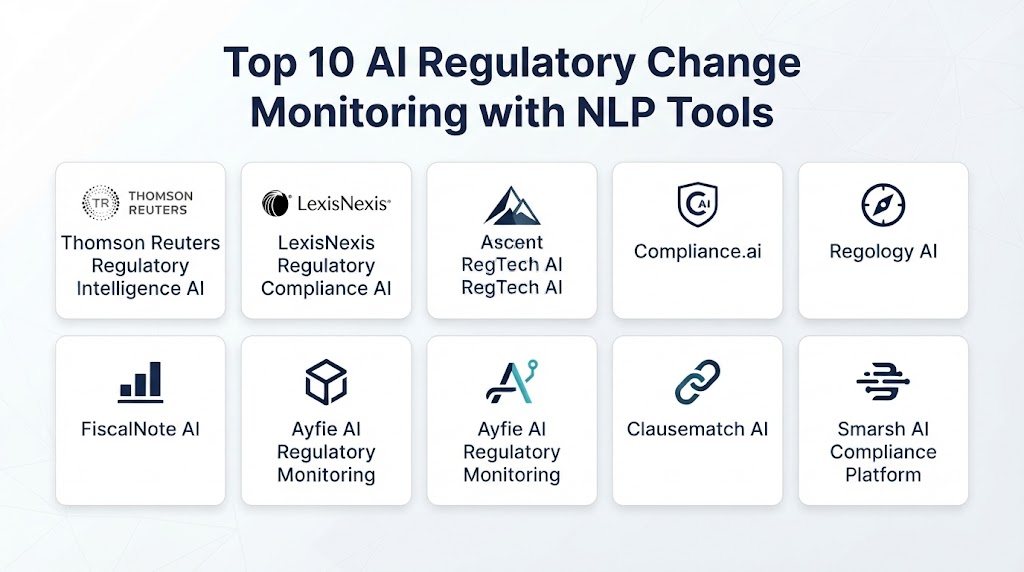
Top 10 AI Regulatory Change Monitoring with NLP Tools
1. RegASK
RegASK provides AI-powered regulatory intelligence and compliance monitoring capabilities.
Key Features
- AI regulatory monitoring
- Regulatory research
- NLP-based analysis
- Compliance insights
- Regulatory updates
- Risk identification
- Expert-supported intelligence
- Regulatory reporting
- Global monitoring
- Knowledge management
Pros
- AI-driven regulatory insights
- Supports global monitoring
- Useful compliance intelligence
- Helps reduce research workload
- Strong regulatory focus
Cons
- Enterprise-oriented
- Requires compliance expertise
- Pricing varies
Platforms
Web-based platform.
Deployment or Support
Cloud-based regulatory intelligence platform.
Security & Compliance
Security practices vary.
Integrations & Ecosystem
Compliance workflows, legal systems, and enterprise platforms.
Support & Community
Professional support.
2. Compliance.ai
Compliance.ai provides AI-powered regulatory change management and compliance intelligence solutions.
Key Features
- Regulatory monitoring
- NLP analysis
- Regulatory alerts
- Compliance workflows
- Document analysis
- Change tracking
- Risk assessment
- Regulatory search
- Reporting
- Knowledge management
Pros
- Strong regulatory monitoring
- Useful AI analysis
- Compliance-focused workflows
- Good alert capabilities
- Supports financial compliance teams
Cons
- Primarily enterprise focused
- Requires configuration
- Industry coverage varies
Platforms
Web-based platform.
Deployment or Support
Cloud-based compliance platform.
Security & Compliance
Enterprise controls vary.
Integrations & Ecosystem
GRC platforms, compliance tools, and enterprise systems.
Support & Community
Customer support.
3. Ascent RegTech
Ascent provides regulatory intelligence and compliance automation solutions using AI and machine learning.
Key Features
- Regulatory monitoring
- Compliance mapping
- AI analysis
- Obligation tracking
- Regulatory updates
- Risk identification
- Workflow automation
- Compliance reporting
- Policy management
- Regulatory intelligence
Pros
- Strong compliance automation
- Good regulatory mapping
- Supports complex requirements
- Useful obligation tracking
- Enterprise capabilities
Cons
- Requires implementation
- Enterprise pricing
- Setup complexity
Platforms
Web-based platform.
Deployment or Support
Cloud-based compliance solution.
Security & Compliance
Enterprise security controls.
Integrations & Ecosystem
GRC systems, compliance platforms, and business applications.
Support & Community
Enterprise support.
4. CUBE RegTech
CUBE provides AI-powered regulatory intelligence and compliance automation for regulated industries.
Key Features
- Regulatory monitoring
- AI regulatory analysis
- Compliance mapping
- Risk detection
- Regulatory alerts
- Data intelligence
- Workflow automation
- Reporting
- Regulatory knowledge base
- Compliance management
Pros
- Strong automation capabilities
- Supports regulated industries
- AI-powered monitoring
- Good compliance workflows
- Enterprise scalability
Cons
- Enterprise-focused
- Requires configuration
- Implementation effort needed
Platforms
Web-based platform.
Deployment or Support
Cloud-based regulatory technology platform.
Security & Compliance
Enterprise security controls.
Integrations & Ecosystem
GRC systems, compliance tools, and enterprise applications.
Support & Community
Professional support.
5. Thomson Reuters Regulatory Intelligence
Thomson Reuters Regulatory Intelligence provides regulatory monitoring, analysis, and compliance information services.
Key Features
- Regulatory tracking
- Compliance updates
- Regulatory database access
- Risk insights
- Legal analysis
- Alerts
- Research tools
- Regulatory reporting
- Global monitoring
- Compliance support
Pros
- Extensive regulatory information
- Trusted legal resources
- Global coverage
- Strong research capabilities
- Professional adoption
Cons
- Subscription-based
- Requires compliance expertise
- Enterprise-focused
Platforms
Web-based platform.
Deployment or Support
Cloud-based regulatory intelligence platform.
Security & Compliance
Enterprise security controls.
Integrations & Ecosystem
Compliance systems, legal workflows, and enterprise platforms.
Support & Community
Professional support.
6. LexisNexis Regulatory Compliance
LexisNexis provides regulatory compliance solutions with legal research, monitoring, and compliance management capabilities.
Key Features
- Regulatory monitoring
- Legal research
- Compliance alerts
- Regulatory analysis
- Policy tracking
- Risk management
- Document intelligence
- Reporting
- Compliance workflows
- Knowledge management
Pros
- Strong legal database
- Reliable regulatory information
- Useful compliance resources
- Professional adoption
- Broad legal coverage
Cons
- Requires training
- Subscription-based
- Enterprise-oriented
Platforms
Web-based platform.
Deployment or Support
Cloud-based compliance platform.
Security & Compliance
Enterprise controls vary.
Integrations & Ecosystem
Legal research systems, compliance tools, and enterprise workflows.
Support & Community
Professional support.
7. Bloomberg Regulatory Intelligence
Bloomberg Regulatory Intelligence provides regulatory tracking and compliance insights for organizations.
Key Features
- Regulatory monitoring
- Policy updates
- Compliance analysis
- Regulatory alerts
- Legal research
- Risk insights
- Industry intelligence
- Reporting
- Data analysis
- Global coverage
Pros
- Strong regulatory intelligence
- Financial industry focus
- Useful analytics
- Professional resources
- Global information access
Cons
- Enterprise pricing
- Best suited for professionals
- Requires expertise
Platforms
Web-based platform.
Deployment or Support
Cloud-based intelligence platform.
Security & Compliance
Enterprise security controls.
Integrations & Ecosystem
Compliance workflows and enterprise systems.
Support & Community
Professional support.
8. Regology
Regology provides AI-powered regulatory intelligence and compliance management solutions.
Key Features
- AI regulatory monitoring
- NLP analysis
- Regulatory updates
- Compliance mapping
- Change detection
- Obligation management
- Risk analysis
- Reporting
- Workflow automation
- Regulatory intelligence
Pros
- AI-first regulatory approach
- Good automation capabilities
- Supports compliance teams
- Useful regulatory tracking
- Helps reduce manual effort
Cons
- Enterprise-oriented
- Requires setup
- Coverage varies
Platforms
Web-based platform.
Deployment or Support
Cloud-based regulatory intelligence platform.
Security & Compliance
Security controls vary.
Integrations & Ecosystem
GRC platforms and compliance workflows.
Support & Community
Customer support.
9. Clausematch
Clausematch provides AI-powered regulatory and policy management solutions.
Key Features
- Regulatory change management
- Policy management
- Document collaboration
- Compliance workflows
- Change tracking
- Document automation
- Governance support
- Review processes
- Reporting
- Collaboration tools
Pros
- Strong policy management
- Good collaboration features
- Supports compliance teams
- Useful governance workflows
- Document-focused approach
Cons
- More policy-focused
- Requires configuration
- Enterprise deployment needed
Platforms
Web-based platform.
Deployment or Support
Cloud-based compliance platform.
Security & Compliance
Security controls vary.
Integrations & Ecosystem
Compliance systems and business workflows.
Support & Community
Customer support.
10. Fenergo Regulatory Compliance
Fenergo provides regulatory compliance technology for financial services organizations.
Key Features
- Regulatory compliance
- Risk monitoring
- Policy management
- Regulatory workflows
- Customer lifecycle compliance
- Data management
- Reporting
- Compliance automation
- Governance tools
- Regulatory support
Pros
- Strong financial compliance focus
- Enterprise capabilities
- Good workflow automation
- Supports regulated industries
- Compliance expertise
Cons
- Industry-specific
- Complex implementation
- Enterprise-focused
Platforms
Web-based platform.
Deployment or Support
Cloud-based enterprise solution.
Security & Compliance
Enterprise security controls.
Integrations & Ecosystem
Financial systems, compliance platforms, and enterprise applications.
Support & Community
Enterprise support.
Comparison Table
| Tool Name | Best For | Platform(s) Supported | Deployment | Standout Feature | Public Rating |
|---|---|---|---|---|---|
| RegASK | Regulatory intelligence | Web | Cloud | AI regulatory insights | N/A |
| Compliance.ai | Compliance monitoring | Web | Cloud | NLP regulatory analysis | N/A |
| Ascent RegTech | Compliance automation | Web | Cloud | Obligation mapping | N/A |
| CUBE RegTech | Regulatory automation | Web | Cloud | AI monitoring | N/A |
| Thomson Reuters Regulatory Intelligence | Enterprise compliance | Web | Cloud | Regulatory database | N/A |
| LexisNexis Regulatory Compliance | Legal compliance | Web | Cloud | Legal research | N/A |
| Bloomberg Regulatory Intelligence | Financial regulation | Web | Cloud | Regulatory intelligence | N/A |
| Regology | AI regulatory monitoring | Web | Cloud | Change detection | N/A |
| Clausematch | Policy management | Web | Cloud | Governance workflows | N/A |
| Fenergo Regulatory Compliance | Financial compliance | Web | Cloud | Compliance automation | N/A |
Weighted Evaluation
| Tool Name | Core Features 25% | Ease of Use 15% | Integrations & Ecosystem 15% | Security & Compliance 10% | Performance & Reliability 10% | Support & Community 10% | Price/Value 15% | Total |
|---|---|---|---|---|---|---|---|---|
| RegASK | 23 | 13 | 13 | 9 | 10 | 10 | 11 | 89 |
| Compliance.ai | 24 | 13 | 14 | 10 | 10 | 10 | 11 | 92 |
| Ascent RegTech | 24 | 12 | 14 | 10 | 10 | 10 | 10 | 90 |
| CUBE RegTech | 23 | 12 | 14 | 10 | 10 | 10 | 10 | 89 |
| Thomson Reuters Regulatory Intelligence | 25 | 12 | 15 | 10 | 10 | 10 | 10 | 92 |
| LexisNexis Regulatory Compliance | 24 | 12 | 15 | 10 | 10 | 10 | 10 | 91 |
| Bloomberg Regulatory Intelligence | 24 | 12 | 15 | 10 | 10 | 10 | 10 | 91 |
| Regology | 23 | 13 | 13 | 9 | 10 | 10 | 11 | 89 |
| Clausematch | 22 | 14 | 13 | 9 | 10 | 10 | 12 | 90 |
| Fenergo Regulatory Compliance | 23 | 11 | 14 | 10 | 10 | 10 | 10 | 88 |
Which AI Regulatory Change Monitoring with NLP Tool Is Right for You?
Choose Compliance.ai when organizations need AI-powered regulatory monitoring and compliance workflows.
Choose Thomson Reuters Regulatory Intelligence when extensive regulatory coverage is required.
Choose LexisNexis Regulatory Compliance when legal research and compliance management are priorities.
Choose Bloomberg Regulatory Intelligence when financial regulatory intelligence is important.
Choose Ascent RegTech when automated obligation mapping is needed.
Choose CUBE RegTech when enterprise regulatory automation is required.
Choose RegASK when AI-powered regulatory insights are valuable.
Choose Regology when automated regulatory change detection is the focus.
Choose Clausematch when policy and governance workflows are priorities.
Choose Fenergo Regulatory Compliance when financial compliance operations are required.
Implementation Playbook
Phase 1: Define Compliance Requirements
- Identify regulations to monitor
- Define affected business areas
- Establish compliance priorities
- Select stakeholders
- Create response workflows
Phase 2: Prepare Regulatory Data
- Connect regulatory sources
- Configure monitoring rules
- Define risk categories
- Set user permissions
- Review security requirements
Phase 3: Deploy AI Monitoring
- Activate regulatory tracking
- Review AI alerts
- Validate changes
- Assign compliance actions
- Monitor workflows
Phase 4: Measure Effectiveness
- Track response times
- Review alert accuracy
- Evaluate compliance improvements
- Collect feedback
- Optimize processes
Phase 5: Maintain Compliance Intelligence
- Update monitoring rules
- Review regulatory sources
- Improve AI models
- Maintain documentation
- Monitor changing requirements
Common Mistakes
- Ignoring regulatory source quality
- Treating AI alerts as final decisions
- Failing to validate regulatory changes
- Not defining ownership of compliance actions
- Ignoring regional regulations
- Choosing tools without integration planning
- Not training compliance teams
- Overlooking data security
FAQs
1. What are AI Regulatory Change Monitoring Tools?
AI Regulatory Change Monitoring Tools use artificial intelligence and NLP to track, analyze, and identify changes in regulations and compliance requirements.
2. How does NLP help regulatory monitoring?
NLP helps AI systems understand legal language, identify changes, and classify regulatory information.
3. Can AI automatically detect regulatory changes?
Yes. AI platforms can monitor regulatory updates and highlight important changes for review.
4. Can AI replace compliance professionals?
No. AI supports compliance teams, but human review and decision-making remain essential.
5. Which industries use AI regulatory monitoring tools?
Financial services, healthcare, insurance, technology, and other regulated industries use these platforms.
6. How do AI tools identify relevant regulations?
They analyze regulatory text, business rules, industry categories, and compliance requirements.
7. Can these tools monitor regulations globally?
Many platforms support multiple jurisdictions, depending on their regulatory databases.
8. How do organizations respond to AI regulatory alerts?
Teams review changes, assess impact, assign actions, and update policies or processes.
9. Are AI regulatory monitoring tools secure?
Organizations should evaluate security controls, access management, and data protection practices.
10. What should companies consider before choosing an AI regulatory monitoring platform?
Companies should evaluate regulatory coverage, NLP accuracy, integrations, security, scalability, and cost.
Conclusion
AI Regulatory Change Monitoring with NLP Tools are helping organizations move from reactive compliance management toward proactive regulatory intelligence. These platforms analyze regulatory information, identify changes, and provide insights that help businesses respond faster.Compliance.ai, Thomson Reuters Regulatory Intelligence, LexisNexis Regulatory Compliance, and Bloomberg Regulatory Intelligence provide strong regulatory monitoring capabilities, while Ascent RegTech and CUBE RegTech focus on compliance automation.
The most effective regulatory monitoring strategies combine AI technology with compliance expertise, human validation, and clear governance processes. AI should help organizations manage regulatory complexity while improving transparency, efficiency, and compliance readiness.
