Introduction
AI Skills Ontology & Mapping Tools use artificial intelligence, machine learning, natural language processing, and knowledge graph technologies to identify, organize, and connect skills across job roles, resumes, learning programs, and workforce data. These platforms help organizations understand employee capabilities, standardize skill definitions, and improve talent management decisions.
Modern organizations often struggle with inconsistent skill terminology, changing job requirements, and fragmented workforce data. For example, different teams may use different terms for similar capabilities, making it difficult to identify talent gaps or match employees with suitable opportunities. AI-powered skills ontology and mapping solutions create structured skill frameworks that connect related skills, experiences, and career pathways.
These tools support HR teams, recruiters, learning teams, and workforce planners by improving talent discovery, internal mobility, workforce planning, and skills-based hiring.
Real-world use cases:
- Creating enterprise skill taxonomies
- Mapping employee skills to roles
- Candidate skill matching
- Identifying workforce skill gaps
- Supporting internal mobility
- Improving job description accuracy
- Skills-based hiring
- Learning and development planning
- Career path recommendations
- Workforce analytics
Evaluation Criteria for Buyers:
- AI skill extraction accuracy
- Ontology creation capabilities
- Skill relationship mapping
- Job role matching
- Integration with HR systems
- Workforce analytics features
- Customization options
- Security and governance controls
Best for
Enterprise HR teams, talent management departments, recruitment organizations, learning platforms, and companies building skills-based workforce strategies.
Not ideal for
Small organizations without structured workforce data or businesses that do not require advanced talent intelligence.
Key Trends
- Skills-based workforce planning
- AI-powered talent intelligence
- Dynamic skills taxonomies
- Knowledge graph-based skill relationships
- Automated job architecture
- Internal talent marketplaces
- AI career development recommendations
- Workforce capability analytics
- Continuous skills tracking
- Personalized learning pathways
Methodology
- Selected platforms based on AI skills ontology and mapping capabilities
- Evaluated skill intelligence, mapping accuracy, integrations, analytics, and scalability
- Considered solutions for enterprises, HR teams, and workforce planning
- Prioritized platforms supporting modern skills-based hiring approaches
- Reviewed customization, governance, and usability features
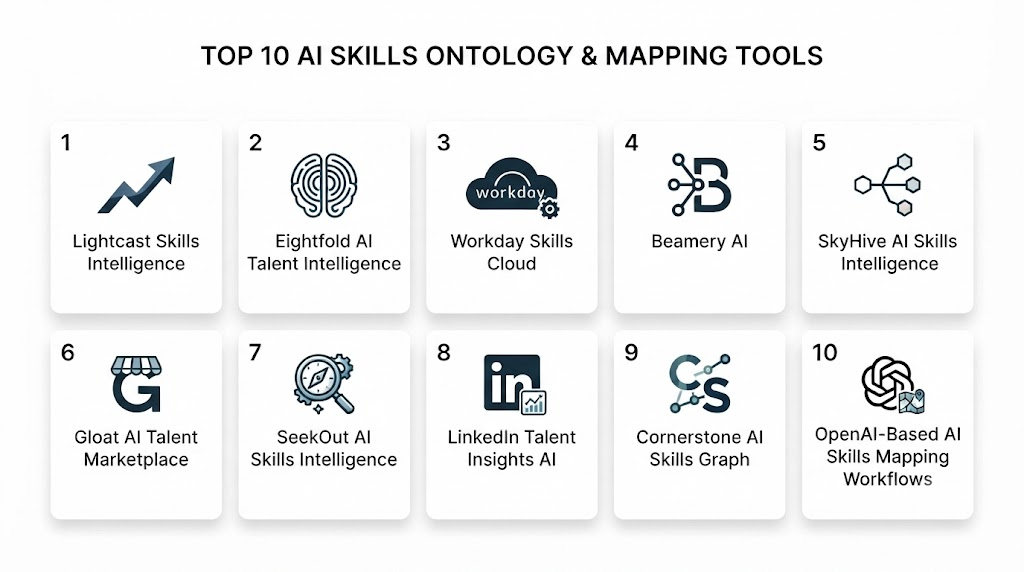
Top 10 AI Skills Ontology & Mapping Tools
1. Lightcast Skills Intelligence
Verdict: AI-powered skills intelligence platform for workforce analytics and talent management.
Short Description: Lightcast Skills Intelligence helps organizations understand skills, map job requirements, analyze labor markets, and build skills-based workforce strategies.
Key Features:
- Skills ontology
- Job and skill mapping
- Workforce analytics
- Talent intelligence
- Labor market insights
Pros:
- Extensive skills intelligence capabilities
- Strong workforce analytics
Cons:
- Enterprise-focused
- Requires implementation planning
Deployment: Cloud-based
Security & Compliance: Enterprise security controls
Integrations & Ecosystem: HR platforms and workforce systems
Support & Community: Enterprise support
Pricing Model: Subscription-based
Best-Fit Scenarios: Enterprise workforce planning
2. Eightfold AI Talent Intelligence
Verdict: AI talent intelligence platform with advanced skills mapping capabilities.
Short Description: Eightfold AI analyzes skills, career paths, and workforce data to help organizations understand talent capabilities and improve hiring decisions.
Key Features:
- Skill extraction
- Talent intelligence
- Skills matching
- Career pathway analysis
- Workforce planning
Pros:
- Advanced AI capabilities
- Strong enterprise scalability
Cons:
- Complex implementation
- Enterprise pricing
Deployment: Cloud-based
Security & Compliance: Enterprise security controls
Integrations & Ecosystem: HR systems and enterprise platforms
Support & Community: Enterprise support
Pricing Model: Subscription-based
Best-Fit Scenarios: Large organizations
3. Workday Skills Cloud
Verdict: Enterprise skills intelligence platform integrated with workforce management.
Short Description: Workday Skills Cloud helps organizations create skill frameworks, understand employee capabilities, and support workforce planning.
Key Features:
- Skills ontology
- Employee skill profiles
- Job skill mapping
- Workforce insights
- Talent management support
Pros:
- Strong HR ecosystem
- Enterprise workforce integration
Cons:
- Best within Workday environment
- Complex deployment
Deployment: Cloud-based
Security & Compliance: Enterprise security standards
Integrations & Ecosystem: Workday HR platform
Support & Community: Enterprise support
Pricing Model: Subscription-based
Best-Fit Scenarios: Workday customers
4. Beamery AI
Verdict: AI-powered talent platform with skills intelligence and workforce mapping capabilities.
Short Description: Beamery AI helps organizations understand talent profiles, map skills, and improve workforce planning strategies.
Key Features:
- Skill mapping
- Talent intelligence
- Employee profiles
- Workforce planning
- Career mobility
Pros:
- Strong talent management features
- Enterprise capabilities
Cons:
- Requires HR process maturity
- Complex setup
Deployment: Cloud-based
Security & Compliance: Enterprise security controls
Integrations & Ecosystem: HR and recruitment platforms
Support & Community: Enterprise support
Pricing Model: Subscription-based
Best-Fit Scenarios: Enterprise talent teams
5. SkyHive AI Skills Intelligence
Verdict: AI-powered workforce intelligence platform focused on skills transformation.
Short Description: SkyHive AI helps organizations identify skills, analyze workforce capabilities, and plan future talent requirements.
Key Features:
- Skills ontology
- Workforce intelligence
- Skill gap analysis
- Career pathway mapping
- Talent insights
Pros:
- Strong future skills analysis
- Good workforce planning capabilities
Cons:
- Enterprise-focused
- Requires data integration
Deployment: Cloud-based
Security & Compliance: Enterprise security controls
Integrations & Ecosystem: HR systems and workforce platforms
Support & Community: Enterprise support
Pricing Model: Subscription-based
Best-Fit Scenarios: Workforce transformation teams
6. Gloat AI Talent Marketplace
Verdict: AI-powered internal talent marketplace with skills matching capabilities.
Short Description: Gloat AI helps organizations identify employee skills, match talent to opportunities, and improve internal mobility.
Key Features:
- Skills matching
- Talent marketplace
- Employee profiles
- Opportunity recommendations
- Workforce analytics
Pros:
- Strong internal mobility focus
- Employee skill discovery
Cons:
- Focused on internal talent
- Requires employee data
Deployment: Cloud-based
Security & Compliance: Enterprise controls
Integrations & Ecosystem: HR systems and learning platforms
Support & Community: Enterprise support
Pricing Model: Subscription-based
Best-Fit Scenarios: Large organizations
7. SeekOut AI Skills Intelligence
Verdict: AI-powered talent search platform with skills mapping capabilities.
Short Description: SeekOut AI helps recruiters and HR teams understand candidate skills, identify talent, and improve hiring decisions.
Key Features:
- Skill identification
- Candidate matching
- Talent search
- Profile analysis
- Workforce insights
Pros:
- Strong candidate intelligence
- Good technical skill analysis
Cons:
- Recruiting-focused
- Less focused on enterprise ontology management
Deployment: Cloud-based
Security & Compliance: Enterprise security options
Integrations & Ecosystem: ATS and HR platforms
Support & Community: Customer support
Pricing Model: Subscription-based
Best-Fit Scenarios: Talent acquisition teams
8. LinkedIn Talent Insights AI
Verdict: AI-powered workforce intelligence platform using professional talent data.
Short Description: LinkedIn Talent Insights helps organizations analyze skills trends, workforce availability, and talent markets.
Key Features:
- Skills analysis
- Talent market insights
- Workforce trends
- Location intelligence
- Hiring analytics
Pros:
- Large professional data ecosystem
- Strong market insights
Cons:
- Limited custom ontology capabilities
- Enterprise-focused
Deployment: Cloud-based
Security & Compliance: Enterprise security controls
Integrations & Ecosystem: HR and recruiting platforms
Support & Community: Enterprise support
Pricing Model: Subscription-based
Best-Fit Scenarios: Workforce planning teams
9. Cornerstone AI Skills Graph
Verdict: AI-powered skills intelligence solution for learning and workforce development.
Short Description: Cornerstone AI helps organizations connect employee skills, learning content, and career opportunities.
Key Features:
- Skills graph
- Learning recommendations
- Skill assessment
- Career pathways
- Workforce insights
Pros:
- Strong learning ecosystem
- Good employee development support
Cons:
- Best within Cornerstone ecosystem
- Requires learning data
Deployment: Cloud-based
Security & Compliance: Enterprise security controls
Integrations & Ecosystem: Learning and HR platforms
Support & Community: Enterprise support
Pricing Model: Subscription-based
Best-Fit Scenarios: Learning-focused organizations
10. OpenAI-Based AI Skills Mapping Workflows
Verdict: Custom AI approach for building organization-specific skills ontology systems.
Short Description: AI-powered workflows can analyze resumes, job descriptions, employee profiles, and workforce data to create custom skill maps and relationships.
Key Features:
- Skill extraction
- Ontology generation
- Skill relationship mapping
- Job matching
- Custom analytics
Pros:
- Highly customizable
- Supports unique workforce models
Cons:
- Requires implementation effort
- Needs governance controls
Deployment: API and custom environments
Security & Compliance: Depends on implementation
Integrations & Ecosystem: HR systems, ATS, learning platforms, APIs
Support & Community: Developer ecosystem
Pricing Model: Usage-based
Best-Fit Scenarios: Custom enterprise solutions
Comparison Table
| Platform | Skills Ontology | Skill Mapping | Workforce Analytics | Integrations | Best Use |
|---|---|---|---|---|---|
| Lightcast Skills Intelligence | Excellent | Excellent | Excellent | High | Workforce planning |
| Eightfold AI | Excellent | Excellent | Very High | Excellent | Talent intelligence |
| Workday Skills Cloud | Very High | High | High | Excellent | Enterprise HR |
| Beamery AI | High | High | High | High | Talent management |
| SkyHive AI | Excellent | Excellent | High | High | Skills transformation |
| Gloat AI | High | High | High | High | Internal mobility |
| SeekOut AI | High | High | Medium | High | Talent acquisition |
| LinkedIn Talent Insights | High | Medium | Excellent | High | Labor market analysis |
| Cornerstone Skills Graph | High | High | High | High | Learning development |
| OpenAI Workflows | Excellent | Custom | Custom | Custom | Custom solutions |
Evaluation & Scoring Table
| Platform | AI Accuracy 25% | Skills Mapping 15% | Analytics 15% | Integrations 15% | Security 10% | Ease 10% | Value 10% | Total |
|---|---|---|---|---|---|---|---|---|
| Lightcast Skills Intelligence | 25 | 15 | 15 | 14 | 10 | 8 | 8 | 95 |
| Eightfold AI | 25 | 15 | 15 | 15 | 10 | 8 | 8 | 96 |
| Workday Skills Cloud | 24 | 14 | 14 | 15 | 10 | 8 | 8 | 93 |
| Beamery AI | 23 | 14 | 14 | 14 | 10 | 9 | 9 | 93 |
| SkyHive AI | 25 | 15 | 15 | 13 | 9 | 8 | 8 | 93 |
| Gloat AI | 23 | 14 | 14 | 14 | 9 | 9 | 9 | 92 |
| SeekOut AI | 22 | 13 | 12 | 14 | 9 | 10 | 9 | 89 |
| LinkedIn Talent Insights | 23 | 12 | 15 | 14 | 10 | 9 | 8 | 91 |
| Cornerstone Skills Graph | 23 | 14 | 14 | 14 | 10 | 8 | 9 | 92 |
| OpenAI Workflows | 25 | 15 | 15 | 12 | 8 | 8 | 9 | 92 |
Which AI Skills Ontology & Mapping Tool Is Right for You?
- Enterprise Skills Intelligence: Eightfold AI, Lightcast Skills Intelligence
- HR Platform Integration: Workday Skills Cloud
- Workforce Transformation: SkyHive AI
- Internal Talent Mobility: Gloat AI
- Learning and Development: Cornerstone Skills Graph
- Talent Market Analysis: LinkedIn Talent Insights
- Custom Skills Ontology Systems: OpenAI-based workflows
Common Mistakes
- Creating skills frameworks without business goals
- Ignoring changing skill requirements
- Using inconsistent workforce data
- Not validating AI-generated mappings
- Failing to involve HR stakeholders
Frequently Asked Questions
What are AI skills ontology and mapping tools?
They are AI-powered platforms that organize, connect, and analyze skills across workforce data.
How do AI skills mapping tools work?
They analyze job descriptions, resumes, and employee data to identify and connect related skills.
Why do organizations use skills ontology platforms?
They help businesses understand workforce capabilities and improve talent decisions.
Can AI map employee skills to job roles?
Yes. These platforms match skills with current and future role requirements.
Do skills mapping tools support internal mobility?
Yes. They help employees discover suitable career opportunities.
Can AI identify skill gaps?
Yes. Many platforms analyze workforce capabilities and missing skills.
Do these tools integrate with HR systems?
Most support HR, learning, and recruitment platforms.
Are AI skill mappings accurate?
Accuracy depends on data quality and AI model performance.
Can small businesses use skills ontology tools?
Yes, although they are more commonly used by larger organizations.
Do these platforms replace HR teams?
No. They support HR teams with better workforce insights.
Can AI help with learning recommendations?
Yes. Many platforms connect skills with learning opportunities.
How should companies implement skills mapping tools?
Start with clear skill goals, validate mappings, and expand across workforce processes.
Conclusion
AI Skills Ontology & Mapping Tools are helping organizations move toward skills-based workforce management by creating structured connections between people, skills, roles, and opportunities. Platforms such as Eightfold AI, Lightcast Skills Intelligence, Workday Skills Cloud, and SkyHive AI provide powerful capabilities for understanding workforce capabilities and planning future talent needs.Organizations should choose solutions based on workforce goals, HR system requirements, data maturity, and customization needs. Combining AI-powered skills intelligence with strategic workforce planning helps businesses improve hiring, employee development, internal mobility, and long-term talent strategies.
