Introduction
AI Warehouse Slotting Optimization Tools use artificial intelligence (AI), machine learning (ML), predictive analytics, warehouse intelligence, and optimization algorithms to determine the most efficient storage locations for inventory, improve picking efficiency, reduce travel time, and maximize warehouse productivity.
Warehouse slotting is the process of assigning products to optimal storage locations based on factors such as demand frequency, product dimensions, weight, seasonality, order patterns, replenishment cycles, and handling requirements. Traditional slotting methods are often manual, static, and updated infrequently, making them less effective as inventory and customer demand change.
AI-powered warehouse slotting optimization platforms continuously analyze order history, SKU movement, inventory turnover, warehouse layouts, labor productivity, equipment utilization, and picking paths to dynamically recommend the best storage locations.
These solutions combine machine learning, demand forecasting, digital twins, warehouse simulation, optimization engines, and real-time analytics to reduce picking times, improve space utilization, increase order accuracy, and lower warehouse operating costs.
Modern AI slotting optimization platforms integrate with Warehouse Management Systems (WMS), Enterprise Resource Planning (ERP), Transportation Management Systems (TMS), robotics platforms, barcode systems, RFID infrastructure, and warehouse automation technologies.
They support industries including manufacturing, retail, e-commerce, food and beverage, pharmaceuticals, logistics, wholesale distribution, consumer goods, and third-party logistics (3PL).
Real-world Use Cases
- Warehouse slotting optimization
- Fast-moving SKU placement
- Picking path optimization
- Storage space utilization
- Seasonal inventory allocation
- Replenishment optimization
- Warehouse layout analysis
- Distribution center optimization
- Labor productivity improvement
- Order fulfillment optimization
Evaluation Criteria for Buyers
When selecting an AI Warehouse Slotting Optimization Platform, consider:
- AI optimization capabilities
- Warehouse layout analysis
- WMS integration
- SKU demand analytics
- Dynamic slotting
- Picking optimization
- Scalability
- Security controls
- Reporting capabilities
- Ease of deployment
Best For
- Distribution centers
- Manufacturing warehouses
- Retail fulfillment centers
- E-commerce operations
- Third-party logistics providers
Not Ideal For
Organizations without digital warehouse operations, inventory systems, or structured warehouse processes.
Key Trends
- AI-powered warehouse optimization
- Dynamic slotting intelligence
- Autonomous warehouse planning
- Warehouse digital twins
- Intelligent inventory placement
- Smart picking optimization
- Robotics-enabled warehousing
- Predictive warehouse analytics
- Connected warehouse ecosystems
- Real-time fulfillment optimization
Methodology
The platforms below were evaluated based on:
- AI slotting capabilities
- Warehouse intelligence
- Enterprise integration
- Analytics maturity
- Scalability
- Enterprise adoption
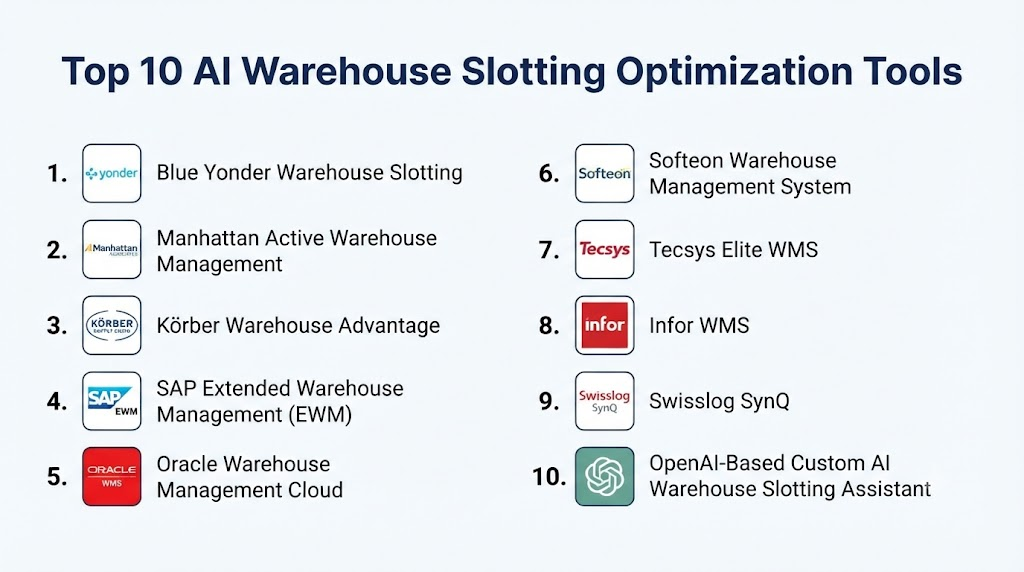
Top 10 AI Warehouse Slotting Optimization Tools
1. Blue Yonder Warehouse Slotting
Verdict: Best overall AI-powered warehouse slotting optimization platform.
Short Description: Blue Yonder combines AI, warehouse intelligence, and predictive analytics to optimize SKU placement, warehouse productivity, and fulfillment efficiency.
Key Features
- Dynamic slotting
- SKU optimization
- Warehouse analytics
- Picking optimization
- Inventory intelligence
Pros
- Excellent warehouse optimization
- Enterprise scalability
- Strong WMS integration
Cons
- Enterprise implementation required
Deployment: Enterprise cloud platform
Security & Compliance: Enterprise-grade security controls
Integrations & Ecosystem: WMS, ERP, robotics, warehouse automation
Support & Community: Enterprise support
Pricing Model: Custom enterprise pricing
Best-Fit Scenarios: Large distribution centers
2. Manhattan Active Warehouse Management
Verdict: Enterprise warehouse optimization platform.
Short Description: Manhattan Active provides AI-powered warehouse slotting, inventory optimization, labor management, and fulfillment intelligence.
Key Features
- Warehouse slotting
- Inventory optimization
- Picking optimization
- Labor management
- Warehouse analytics
Pros
- Comprehensive warehouse platform
- Strong fulfillment capabilities
Cons
- Enterprise-focused deployment
3. Körber Warehouse Advantage
Verdict: Intelligent warehouse optimization platform.
Short Description: Körber combines AI analytics, warehouse optimization, and fulfillment intelligence to improve warehouse efficiency.
Key Features
- Slotting optimization
- Warehouse analytics
- Inventory visibility
- Picking optimization
- AI recommendations
Pros
- Flexible warehouse capabilities
- Strong automation support
Cons
- Requires implementation planning
4. SAP Extended Warehouse Management (EWM)
Verdict: Enterprise warehouse management and optimization platform.
Short Description: SAP EWM provides AI-assisted warehouse optimization, inventory management, and fulfillment planning integrated with SAP ERP.
Key Features
- Warehouse optimization
- Dynamic slotting
- Inventory intelligence
- Warehouse automation
- ERP integration
Pros
- Strong SAP ecosystem
- Enterprise scalability
Cons
- Requires SAP expertise
5. Oracle Warehouse Management Cloud
Verdict: Cloud-native warehouse optimization platform.
Short Description: Oracle Warehouse Management Cloud helps optimize warehouse operations, slotting, labor utilization, and inventory placement.
Key Features
- Slotting optimization
- Warehouse analytics
- Inventory management
- Labor optimization
- AI recommendations
Pros
- Cloud-native architecture
- Strong enterprise integration
Cons
- Best suited for Oracle environments
6. Softeon Warehouse Management System
Verdict: AI-supported warehouse optimization solution.
Short Description: Softeon provides warehouse optimization, intelligent slotting, labor planning, and inventory analytics for complex distribution operations.
Key Features
- Dynamic slotting
- Warehouse planning
- Inventory optimization
- Labor management
- Analytics dashboards
Pros
- Flexible warehouse capabilities
- Strong distribution support
Cons
- Enterprise deployment required
7. Tecsys Elite WMS
Verdict: Intelligent warehouse management platform.
Short Description: Tecsys Elite WMS combines warehouse analytics, AI-assisted inventory optimization, and fulfillment management.
Key Features
- Warehouse optimization
- Inventory intelligence
- Picking optimization
- Warehouse dashboards
- AI analytics
Pros
- Strong warehouse visibility
- Good inventory management
Cons
- Advanced AI capabilities vary
8. Infor WMS
Verdict: AI-enabled warehouse operations platform.
Short Description: Infor WMS provides warehouse optimization, inventory planning, labor management, and intelligent slotting recommendations.
Key Features
- Slotting optimization
- Warehouse intelligence
- Labor management
- Inventory optimization
- Operational analytics
Pros
- Manufacturing-friendly platform
- Enterprise capabilities
Cons
- Requires implementation planning
9. Swisslog SynQ
Verdict: Warehouse automation and optimization platform.
Short Description: Swisslog SynQ integrates warehouse automation, robotics, AI analytics, and intelligent inventory placement.
Key Features
- Warehouse automation
- Robotics integration
- Inventory optimization
- AI analytics
- Fulfillment optimization
Pros
- Excellent automation capabilities
- Strong robotics ecosystem
Cons
- Best suited for automated warehouses
10. OpenAI-Based Custom AI Warehouse Slotting Assistant
Verdict: Flexible AI assistant for customized warehouse optimization.
Short Description: Organizations can build custom AI warehouse slotting assistants using large language models integrated with WMS platforms, ERP systems, inventory databases, warehouse layouts, robotics systems, picking analytics, and order management platforms. These assistants can recommend SKU placement, explain slotting decisions, identify warehouse bottlenecks, summarize fulfillment performance, and support warehouse managers while requiring operational validation.
Key Features
- Slotting recommendations
- Warehouse performance summaries
- Picking optimization insights
- Inventory analysis
- Operational reporting
Pros
- Highly customizable
- Flexible integrations
- Improves warehouse productivity
Cons
- Requires warehouse operations expertise
- Validation required
Comparison Table
| Platform | AI Slotting | Warehouse Optimization | WMS Integration | Picking Optimization | Best Use |
|---|---|---|---|---|---|
| Blue Yonder | Excellent | Excellent | Excellent | Excellent | Enterprise Warehousing |
| Manhattan Active WMS | Excellent | Excellent | Excellent | Excellent | Fulfillment Centers |
| Körber Warehouse Advantage | High | Excellent | High | High | Warehouse Operations |
| SAP EWM | High | Excellent | Excellent | High | SAP Warehouses |
| Oracle WMS Cloud | High | High | Excellent | High | Cloud Warehousing |
| Softeon WMS | High | High | High | High | Distribution Centers |
| Tecsys Elite WMS | High | High | High | High | Warehouse Management |
| Infor WMS | High | High | High | High | Manufacturing Warehouses |
| Swisslog SynQ | High | Excellent | High | Excellent | Automated Warehouses |
| OpenAI Custom | Custom | Custom | Custom | Custom | AI Warehouse Assistant |
Evaluation & Scoring Table
| Platform | AI Capability 20% | Slotting Optimization 20% | Analytics 15% | Integration 15% | Security 10% | Ease 10% | Value 10% | Total |
|---|---|---|---|---|---|---|---|---|
| Blue Yonder | 20 | 20 | 15 | 15 | 10 | 8 | 8 | 96 |
| Manhattan Active WMS | 19 | 20 | 15 | 15 | 10 | 8 | 8 | 95 |
| SAP EWM | 18 | 19 | 15 | 15 | 10 | 8 | 8 | 93 |
| Swisslog SynQ | 18 | 19 | 15 | 14 | 10 | 8 | 8 | 92 |
| Oracle WMS Cloud | 18 | 18 | 15 | 15 | 10 | 8 | 8 | 92 |
| Körber Warehouse Advantage | 18 | 18 | 14 | 14 | 10 | 8 | 8 | 90 |
| Softeon WMS | 17 | 18 | 14 | 14 | 10 | 8 | 8 | 89 |
| Infor WMS | 17 | 17 | 14 | 14 | 10 | 8 | 8 | 88 |
| Tecsys Elite WMS | 17 | 17 | 14 | 13 | 10 | 9 | 8 | 88 |
| OpenAI Custom | 20 | 16 | 12 | 15 | 8 | 7 | 9 | 87 |
Which AI Warehouse Slotting Optimization Platform Is Right for You?
| If your priority is… | Recommended Platform |
|---|---|
| Enterprise warehouse optimization | Blue Yonder Warehouse Slotting |
| Large fulfillment centers | Manhattan Active Warehouse Management |
| Flexible warehouse operations | Körber Warehouse Advantage |
| SAP warehouse ecosystem | SAP Extended Warehouse Management |
| Cloud warehouse operations | Oracle Warehouse Management Cloud |
| Distribution center optimization | Softeon WMS |
| Warehouse visibility | Tecsys Elite WMS |
| Manufacturing warehouse management | Infor WMS |
| Warehouse automation and robotics | Swisslog SynQ |
| Custom AI warehouse assistant | OpenAI-Based AI Assistant |
Implementation Playbook
First 30 Days
- Analyze warehouse layout
- Collect SKU movement data
- Define warehouse KPIs
- Identify fast- and slow-moving inventory
Days 31–60
- Integrate WMS and ERP systems
- Configure AI slotting models
- Validate slotting recommendations
- Train warehouse teams
Days 61–90
- Automate slotting optimization
- Improve picking efficiency
- Optimize warehouse space utilization
- Expand AI-driven warehouse intelligence
Common Mistakes
- Poor SKU master data
- Ignoring changing demand patterns
- Weak WMS integration
- Overreliance on AI recommendations
- Inadequate warehouse layout analysis
- Poor replenishment planning
- Missing labor optimization
- Failure to update slotting models
Frequently Asked Questions
1. What are AI Warehouse Slotting Optimization Tools?
They are AI-powered platforms that optimize inventory placement within warehouses to improve picking efficiency, space utilization, and fulfillment performance.
2. How does AI improve warehouse slotting?
AI analyzes SKU movement, demand patterns, order history, warehouse layouts, and picking behavior to recommend optimal storage locations.
3. Can AI reduce warehouse operating costs?
Yes. AI helps reduce travel distance, improve labor productivity, increase storage efficiency, and lower fulfillment costs.
4. Which industries use AI warehouse slotting platforms?
Manufacturing, retail, e-commerce, logistics, pharmaceuticals, food and beverage, wholesale distribution, and third-party logistics providers.
5. What data is required?
SKU master data, inventory records, warehouse layouts, order history, picking activity, replenishment schedules, and WMS information.
6. Can AI dynamically adjust slotting recommendations?
Yes. Many platforms continuously optimize inventory placement as demand patterns and warehouse operations change.
7. Do these platforms integrate with WMS and ERP systems?
Many integrate with WMS, ERP, warehouse automation, robotics, RFID systems, barcode scanners, and fulfillment platforms.
8. Are AI-generated slotting recommendations always optimal?
Performance depends on inventory data quality, warehouse layouts, operational constraints, and continuous model optimization.
9. How is warehouse data protected?
Organizations should implement encryption, role-based access controls, cybersecurity measures, and enterprise data governance.
10. What should companies evaluate before adoption?
Consider AI optimization capabilities, WMS compatibility, integrations, scalability, warehouse automation support, reporting, and operational requirements.
Conclusion
AI Warehouse Slotting Optimization Platforms are transforming warehouse operations by enabling intelligent inventory placement, faster picking, better space utilization, and higher fulfillment efficiency. By combining artificial intelligence, predictive analytics, machine learning, and warehouse intelligence, these solutions help organizations reduce operating costs, improve labor productivity, and enhance order fulfillment performance.Organizations implementing AI warehouse slotting optimization solutions should prioritize accurate inventory data, seamless WMS integration, continuous validation of AI recommendations, and close collaboration between warehouse managers, inventory planners, and operations teams. Platforms such as Blue Yonder Warehouse Slotting, Manhattan Active Warehouse Management, SAP Extended Warehouse Management, Oracle Warehouse Management Cloud, and Swisslog SynQ demonstrate how artificial intelligence is enabling smarter warehouse operations and more efficient fulfillment networks.
