Introduction
Mental health therapy apps are digital platforms designed to support psychological well‑being, emotional resilience, and therapeutic care through tools like guided programs, therapist communication, mood tracking, self‑help exercises, and cognitive behavioral therapy (CBT) techniques.
These apps help individuals manage stress, anxiety, depression, sleep issues, and other behavioral health challenges conveniently from a smartphone or tablet. With rising demand for accessible mental health support and workforce shortages in clinical care, apps provide scalable, on‑demand support that complements traditional therapy.
Real‑world use cases:
- Accessing guided therapy programs for anxiety, depression, and stress
- Mood and symptom tracking for self‑monitoring or clinical sharing
- Connecting with licensed therapists via messaging or video
- Learning coping skills via evidence‑based modules
- Sleep and mindfulness support for emotional regulation
Key buyer evaluation criteria:
- Therapeutic approach (CBT, DBT, mindfulness, etc.)
- Access to licensed professionals vs self‑guided use
- Privacy, security, and data policies
- User experience and engagement tools
- Multi‑platform availability (iOS, Android, web)
- Integration with clinician care plans
- Mood and symptom tracking features
- Analytics and progress reporting
- Cost and subscription structure
Best for: Individuals seeking mental health support, clinicians augmenting care, caregivers looking for tools to support loved ones, and organizations implementing workplace well‑being programs.
Not ideal for: Acute crisis situations where immediate human intervention is required.
Key Trends in Mental Health Therapy Apps
- Evidence‑based therapeutic approaches like CBT, DBT, ACT built into digital programs
- Teletherapy integration connecting users with licensed clinicians
- AI‑assisted chatbots for anytime emotional support
- Personalized treatment paths driven by user data and assessments
- Mood and symptom tracking with reminders for daily check‑ins
- Privacy and HIPAA compliance features for therapy data
- Gamified habit formation and engagement mechanics
- Wearable and sensor integration for stress and sleep data
- Multi‑language and culturally adaptive content
- Clinician dashboards to collaborate with patient progress
How We Selected These Tools (Methodology)
- Market adoption and user base for mental health apps
- Therapeutic framework breadth and evidence‑based credibility
- Access to clinician support (licensed professionals)
- Privacy, security, and data policies
- Ease of use and engagement mechanisms
- Tracking, analytics, and reporting features
- Multi‑platform support (mobile + web)
- Integration with clinician care plans or health systems
- Support resources and community features
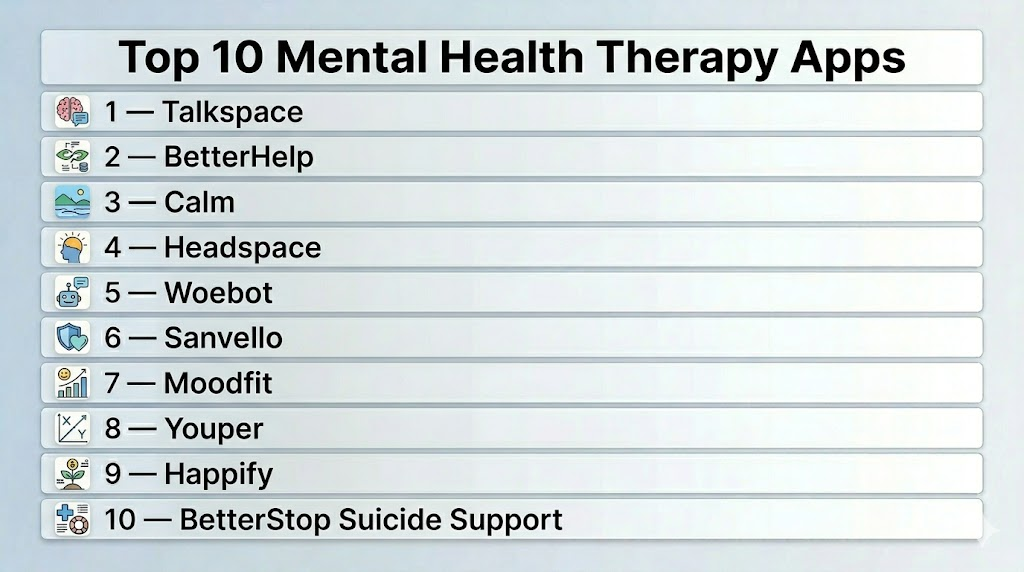
Top 10 Mental Health Therapy Apps
#1 — Talkspace
Short description:
Talkspace is a widely used mental health app providing access to licensed therapists via messaging, audio, and video.
Offers personalized therapy plans and unlimited messaging sessions.
Ideal for individuals seeking affordable, flexible therapist support.
Key Features
- Messaging therapy with licensed clinicians
- Live audio/video sessions
- Care plans and progress tracking
- Secure HIPAA‑compliant platform
- Multi‑device support
Pros
- Easy access to licensed therapists
- Flexible communication formats
- Secure and private
Cons
- Subscription cost can be high
- Therapist availability varies by region
Platforms / Deployment
- iOS / Android / Web
- Cloud
Security & Compliance
- HIPAA‑compliant encryption and safeguards
- Secure message storage
Integrations & Ecosystem
- Connects with scheduling systems
- APIs for enterprise wellness platforms
Support & Community
- In‑app support
- Help center and guidance
#2 — BetterHelp
Short description:
BetterHelp is a large therapy network app offering licensed counselor support via messaging, live chat, phone, and video.
Provides personalized therapist matching based on needs.
Ideal for individuals seeking structured professional support.
Key Features
- Licensed counselor matching
- Messaging and live sessions
- Homework and activity exercises
- Progress tracking dashboards
Pros
- Wide therapist network
- Flexible communication modes
- Personalized matching
Cons
- Costs vary by therapist level
- No crisis support
Platforms / Deployment
- iOS / Android / Web
- Cloud
Security & Compliance
- HIPAA‑like privacy and encryption
- Secure communication
Integrations & Ecosystem
- Integration with scheduling and billing services
Support & Community
- Dedicated support services
- FAQs and guides
#3 — Calm
Short description:
Calm focuses on mindfulness, meditation, sleep stories, and stress reduction programs.
Uses evidence‑based relaxation techniques.
Ideal for general wellness and daily stress management.
Key Features
- Guided meditation and breathing exercises
- Sleep stories and music
- Lessons for anxiety and depression
- Daily mood check‑ins
Pros
- Excellent mindfulness content
- Engaging audio/visual experiences
- Suitable for broad user base
Cons
- Not a substitute for clinical therapy
- Limited clinician integration
Platforms / Deployment
- iOS / Android / Web
- Cloud
Security & Compliance
- Standard encrypted privacy
Integrations & Ecosystem
- Wearable data import
- Calendar reminders
Support & Community
- Support portals
- Community challenges
#4 — Headspace
Short description:
Headspace provides guided meditation, stress relief exercises, sleep support, and mental well‑being programs.
Known for simple, approachable UX and daily journeys.
Ideal for mindfulness and stress reduction.
Key Features
- Mindfulness programs and tracks
- Sleep and breathing exercises
- Daily guided sessions
- Mood and habit tracking
Pros
- Excellent UX for beginners
- Rich meditation library
- Cross‑platform support
Cons
- Limited clinical therapy content
- Subscription required for full access
Platforms / Deployment
- iOS / Android / Web
- Cloud
Security & Compliance
- Standard encrypted privacy
Integrations & Ecosystem
- Calendar sync
- Wearable support
Support & Community
- Help center
- Guided introductions
#5 — Woebot
Short description:
Woebot is an AI‑powered chatbot that uses CBT principles to support emotional awareness, mood tracking, and coping strategies.
Available 24/7 with conversational check‑ins.
Ideal for those seeking immediate support and self‑guided CBT tools.
Key Features
- AI‑driven CBT‑like conversations
- Mood tracking
- Daily emotional check‑ins
- Behavioral techniques and tips
Pros
- Always available conversational support
- Based on evidence‑inspired CBT methods
- Engaging interaction
Cons
- Not a replacement for human therapy
- Limited advanced analytics
Platforms / Deployment
- iOS / Android / Web
- Cloud
Security & Compliance
- Encrypted privacy
- Standard safeguards
Integrations & Ecosystem
- Mood tracker exports
Support & Community
- In‑app guidance
- Support resources
#6 — Sanvello
Short description:
Sanvello combines self‑care tools with coaching and optional therapist support.
Includes CBT‑based exercises, mood tracking, goal setting, and peer communities.
Ideal for users who want self‑guided tools with optional professional support.
Key Features
- CBT and mindfulness programs
- Mood and symptom tracking
- Coaching sessions (optional)
- Goal setting and progress reports
- Community support features
Pros
- Strong CBT framework
- Combination of tools + coaching
- Rich content library
Cons
- Premium subscription needed for full access
- Therapist support costs extra
Platforms / Deployment
- iOS / Android / Web
- Cloud
Security & Compliance
- HIPAA‑like safeguards
- Encrypted user data
Integrations & Ecosystem
- Wearable sync
- Habit tracking
Support & Community
- Peer forums
- In‑app help resources
#7 — Moodfit
Short description:
Moodfit is a mental health app focused on mood tracking and well‑being insights with exercises for stress and anxiety.
Includes customizable dashboards and data export.
Ideal for users who want detailed mood analytics and self‑monitoring.
Key Features
- Daily mood tracking
- Stress, sleep, and habit trackers
- Insights and analytics dashboards
- Goals and reminders
Pros
- Robust mood analytics
- Custom tracking metrics
- Data export ability
Cons
- No live clinician support
- Self‑guided only
Platforms / Deployment
- iOS / Android
- Cloud
Security & Compliance
- Secure data encryption
Integrations & Ecosystem
- Calendar reminders
- Optional integrations
Support & Community
- Help articles
- FAQs
#8 — Youper
Short description:
Youper uses AI‑driven conversational therapy tools with CBT and acceptance commitment therapy (ACT) approaches.
Provides emotional check‑ins, mood tracking, and therapeutic modules.
Ideal for self‑guided emotional support with AI facilitation.
Key Features
- AI‑guided emotional conversations
- Mood tracking
- Cognitive tools and exercises
- Personalized therapy paths
Pros
- Engaging AI experience
- Evidence‑based techniques
- Flexible self‑guided therapy
Cons
- No direct live human therapists
- Paid subscription required for advanced modules
Platforms / Deployment
- iOS / Android / Web
- Cloud
Security & Compliance
- Encrypted data
- Standard protections
Integrations & Ecosystem
- Health data imports
- Reminders
Support & Community
- In‑app help
- Guidance resources
#9 — Happify
Short description:
Happify uses gamified behavior change activities, evidence‑based positive psychology exercises, and structured programs to support emotional well‑being.
Ideal for users seeking engaging, activity‑based mental wellness tools.
Key Features
- Gamified wellbeing programs
- Positive psychology exercises
- Progress tracking
- Custom tracks for specific concerns
Pros
- Fun and engaging format
- Evidence‑based activities
- Strong motivation dynamics
Cons
- Not clinical therapy
- Limited clinician sharing
Platforms / Deployment
- iOS / Android / Web
- Cloud
Security & Compliance
- Encrypted user data
Integrations & Ecosystem
- Progress reminders
Support & Community
- FAQs and help guides
#10 — BetterStop Suicide Support
Short description:
BetterStop offers crisis‑reduction tools, safety planning templates, and supportive messaging to help users manage suicidal ideation and thoughts.
Important supplemental support, not a replacement for clinical intervention.
Key Features
- Safety planning tools
- Crisis resources
- Support templates
- Urgent guidance tips
Pros
- Focused crisis safety resources
- Actionable planning tools
Cons
- Not a full therapy tool
- Designed for supplemental use only
Platforms / Deployment
- iOS / Android
- Cloud
Security & Compliance
- Encrypted content
Integrations & Ecosystem
- Local crisis support info
Support & Community
- Resource links
- Help guidance
Comparison Table (Top 10)
| Tool Name | Best For | Platform(s) Supported | Deployment | Standout Feature | Public Rating |
|---|---|---|---|---|---|
| Talkspace | Licensed therapist support | iOS/Android/Web | Cloud | 1:1 therapist access | N/A |
| BetterHelp | Counselor matching | iOS/Android/Web | Cloud | Large therapist network | N/A |
| Calm | Mindfulness & stress | iOS/Android/Web | Cloud | Meditation & sleep library | N/A |
| Headspace | Daily mindfulness | iOS/Android/Web | Cloud | Guided meditation | N/A |
| Woebot | AI chat support | iOS/Android/Web | Cloud | AI‑driven CBT support | N/A |
| Sanvello | CBT + coaching | iOS/Android/Web | Cloud | Mixed tools + coaching | N/A |
| Moodfit | Mood tracking | iOS/Android | Cloud | Detailed analytics | N/A |
| Youper | AI emotional tools | iOS/Android/Web | Cloud | Personalized AI paths | N/A |
| Happify | Gamified wellness | iOS/Android/Web | Cloud | Positive psychology | N/A |
| BetterStop | Crisis planning | iOS/Android | Cloud | Safety and crisis tools | N/A |
Evaluation & Scoring
| Tool | Core (25%) | Ease (15%) | Integrations (15%) | Security (10%) | Performance (10%) | Support (10%) | Value (15%) | Weighted Total |
|---|---|---|---|---|---|---|---|---|
| Talkspace | 10 | 8 | 9 | 9 | 9 | 8 | 7 | 8.9 |
| BetterHelp | 10 | 8 | 8 | 9 | 8 | 8 | 7 | 8.6 |
| Calm | 8 | 9 | 7 | 8 | 8 | 7 | 8 | 8.0 |
| Headspace | 8 | 9 | 7 | 8 | 8 | 7 | 8 | 8.0 |
| Woebot | 8 | 9 | 6 | 8 | 8 | 7 | 7 | 7.7 |
| Sanvello | 9 | 8 | 7 | 9 | 8 | 7 | 7 | 8.0 |
| Moodfit | 7 | 8 | 6 | 8 | 8 | 7 | 8 | 7.5 |
| Youper | 8 | 8 | 6 | 8 | 8 | 7 | 7 | 7.6 |
| Happify | 7 | 9 | 6 | 8 | 7 | 7 | 8 | 7.6 |
| BetterStop | 6 | 8 | 5 | 8 | 7 | 7 | 7 | 7.1 |
Decision Guide
Licensed Therapist Support
If direct access to licensed professionals is key, Talkspace and BetterHelp provide robust counselor matching and live session capabilities.
Mindfulness & Stress Reduction
Tools like Calm and Headspace deliver rich guided meditation and stress‑reduction libraries suitable for general well‑being.
AI‑Assisted Emotional Support
Woebot and Youper leverage conversational AI to provide interactive CBT‑informed support around the clock.
Data‑Driven Self‑Monitoring
Moodfit and Sanvello offer strong tracking dashboards and CBT‑themed programs with coaching options.
Engagement & Motivation
Gamified wellness programs in Happify help users build habits and stay engaged with positive psychology.
Crisis Safety Tools
BetterStop is focused on safety planning and crisis response templates to supplement therapeutic care.
Frequently Asked Questions (FAQs)
1. Are these apps replacements for clinical therapy?
No — while helpful, apps should complement professional care, not replace licensed therapy, especially in acute cases.
2. Do these apps provide licensed counselors?
Yes — Talkspace and BetterHelp connect users with real licensed therapists via messaging and live sessions.
3. Do they support HIPAA compliance?
Top tools like Talkspace, BetterHelp, and Sanvello use encryption and privacy safeguards; always review individual privacy policies.
4. Can family members track progress?
Some like CareZone and MyMeds support shared access, but clinician sharing depends on the app.
5. Are medication or appointment reminders included?
Some platforms include mood reminders, but they are not primarily medication management tools.
6. Do they work offline?
Basic features may work offline, but syncing data and communication typically require internet.
7. Is there crisis support built in?
Apps like BetterStop provide safety planning, but emergency help should be sought via urgent hotlines or local services.
8. Are subscriptions required?
Most apps offer freemium models with subscriptions required for full content or clinician access.
9. Do they integrate with wearables?
Yes — many like Calm, Headspace, and Sanvello can connect with wearable sleep and activity data.
10. Can clinicians view user data?
Some offer clinician dashboards or exportable reports; confirm with each app’s sharing policies.
Conclusion
Mental health therapy apps offer scalable, accessible support across a spectrum of needs — from self‑guided mindfulness and CBT tools to direct connections with licensed therapists. If personalized therapy and clinician contact are your priority, Talkspace and BetterHelp provide comprehensive support with licensed professionals. If general well‑being, stress management, and habit building are your focus, Calm, Headspace, Sanvello, and Happify deliver compelling content. For interactive AI‑driven therapy support, tools like Woebot and Youper provide engaging conversational experiences, while Moodfit is ideal for data‑driven self‑monitoring. For supplemental crisis safety planning, BetterStop provides focused resources. Choosing the right app depends on whether your goal is clinical support, self‑guided mental wellness, or a blend of both — but the ten options above offer strong coverage across every major use case in 202X and beyond.
