Introduction
Pricing Intelligence Tools are software platforms designed to help businesses collect, analyze, and act on competitive and market pricing data. These tools provide insights for dynamic pricing, revenue optimization, margin improvement, and market positioning. In , with omnichannel commerce, subscription services, and global marketplaces, pricing intelligence has become critical for businesses looking to maintain competitiveness, optimize profit margins, and react swiftly to market fluctuations.
Real‑world use cases include:
- Retailers tracking competitor pricing to optimize promotions.
- Ecommerce platforms leveraging dynamic repricing for marketplace competitiveness.
- SaaS companies evaluating subscription pricing tiers and usage-based models.
- Travel and hospitality brands adjusting rates based on seasonality and demand.
- Brands identifying pricing opportunities and margin leaks across channels.
Buyers evaluating pricing intelligence tools should consider:
- Competitive price monitoring and benchmarking.
- Dynamic pricing capabilities and rule‑based automation.
- Data aggregation across online marketplaces, POS, and digital channels.
- Price elasticity and demand analytics.
- Integration with ERP, ecommerce, and analytics platforms.
- Forecasting and predictive pricing recommendations.
- User-friendly dashboards and visualization.
- Multi-market and multi-currency support.
- Security and compliance for sensitive competitive data.
- Vendor support, onboarding, and scalability for growing operations.
Best for: Retailers, ecommerce brands, SaaS companies, travel/hospitality operators, and any business seeking to optimize pricing strategies across multiple channels.
Not ideal for: Small businesses with static pricing or limited competitive exposure where manual pricing management is sufficient.
Key Trends in Pricing Intelligence Tools
- AI‑driven price optimization for dynamic margin and revenue growth.
- Real-time competitor price tracking across digital marketplaces and brick-and-mortar POS.
- Integration with ERP, CRM, and ecommerce platforms for automated pricing updates.
- Predictive pricing analytics based on demand forecasting, seasonality, and promotions.
- Subscription and usage-based pricing intelligence for SaaS businesses.
- Omnichannel price visibility to ensure consistency across channels.
- Automated repricing engines with business rule customization.
- Market segmentation and personalization for customer-specific pricing.
- Global currency and regional pricing support for multinational operations.
- Compliance and data security standards for sensitive pricing and competitive intelligence.
How We Selected These Tools (Methodology)
- Evaluated market adoption and vendor credibility across industries.
- Assessed core capabilities: monitoring, analysis, and dynamic pricing automation.
- Verified integration capabilities with ERP, ecommerce, POS, and analytics platforms.
- Reviewed security posture including encryption and access control.
- Considered scalability for large SKU catalogs and global markets.
- Assessed predictive analytics, AI recommendations, and rule‑based automation.
- Analyzed reporting, dashboards, and decision-making insights.
- Prioritized vendor support, documentation, and ease of deployment.
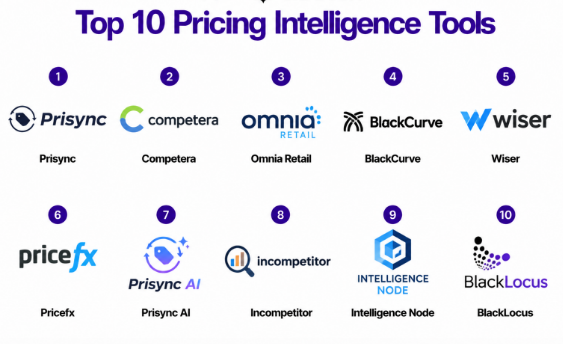
Top 10 Pricing Intelligence Tools
1 — Prisync
Short description: Prisync is a competitive pricing and monitoring platform for ecommerce and retailers, offering real-time price tracking, alerts, and dynamic pricing recommendations.
Key Features
- Real-time competitor price tracking.
- Automated price change alerts.
- Dynamic pricing rules and repricing automation.
- Multi-market and multi-currency support.
- Integration with Shopify, WooCommerce, and marketplaces.
Pros
- Accurate and automated competitor insights.
- Supports dynamic pricing strategies efficiently.
Cons
- Focused mainly on ecommerce, less suitable for offline-only retailers.
- Advanced analytics may require higher pricing tiers.
Platforms / Deployment
- Web / Cloud
Security & Compliance
- Encryption
- Not publicly stated
Integrations & Ecosystem
- Ecommerce platforms, marketplaces, ERP connectors
Support & Community
- Email support, knowledge base, webinars
2 — Competera
Short description: Competera is a pricing platform that combines competitor monitoring, price optimization, and AI-powered recommendations for retail and ecommerce brands.
Key Features
- Price monitoring across online marketplaces.
- Dynamic pricing automation.
- AI-powered price recommendations.
- Revenue and margin optimization analytics.
- Multi-channel integration.
Pros
- Strong AI-based optimization engine.
- Scalable for large SKU catalogs.
Cons
- Enterprise pricing may be prohibitive for small businesses.
- Setup complexity for multi-channel integration.
Platforms / Deployment
- Web / Cloud
Security & Compliance
- Encryption, access controls
- Not publicly stated
Integrations & Ecosystem
- Ecommerce, ERP, analytics platforms
Support & Community
- Documentation, support desk, webinars
3 — Omnia Retail
Short description: Omnia Retail provides dynamic pricing, promotions, and analytics for retailers, focusing on real-time adjustments and margin optimization.
Key Features
- Rule-based dynamic pricing.
- Promotion optimization.
- Competitor monitoring.
- Price elasticity analytics.
- Integration with POS and ecommerce platforms.
Pros
- Real-time margin and revenue optimization.
- Flexible pricing rule engine.
Cons
- Higher learning curve for complex rule setups.
- Geared toward mid-to-large retailers.
Platforms / Deployment
- Web / Cloud
Security & Compliance
- Encryption
- Not publicly stated
Integrations & Ecosystem
- Ecommerce, POS, ERP, analytics
Support & Community
- Documentation, training, email support
4 — BlackCurve
Short description: BlackCurve offers pricing optimization, competitor tracking, and margin analytics for multi-channel retail operations.
Key Features
- Centralized pricing dashboard.
- Rule-based pricing automation.
- Competitor price monitoring.
- Revenue and profit impact analysis.
- Multi-market support.
Pros
- Scales well for large multi-channel retailers.
- Easy-to-read analytics dashboards.
Cons
- Not tailored for subscription-based models.
- Advanced features may require consultancy setup.
Platforms / Deployment
- Web / Cloud
Security & Compliance
- Encryption
- Not publicly stated
Integrations & Ecosystem
- Ecommerce and ERP systems
Support & Community
- Knowledge base, email support
5 — Wiser
Short description: Wiser provides competitive pricing, dynamic repricing, and market insights for retailers and brands seeking margin optimization.
Key Features
- Competitor price and promotion tracking.
- Dynamic pricing automation.
- Price optimization recommendations.
- Analytics dashboards for margin and revenue.
- Multi-channel commerce support.
Pros
- Strong real-time market monitoring.
- Supports omnichannel pricing strategy.
Cons
- Enterprise pricing may be high.
- Integration setup requires technical input.
Platforms / Deployment
- Web / Cloud
Security & Compliance
- Encryption
- Not publicly stated
Integrations & Ecosystem
- Ecommerce, POS, analytics
Support & Community
- Documentation, webinars, support desk
6 — Pricefx
Short description: Pricefx provides SaaS-based pricing software for pricing optimization, margin management, and strategic price analytics across industries.
Key Features
- Price optimization and simulation.
- Strategic price analytics dashboards.
- Rule-based price automation.
- Integration with ERP, CRM, and ecommerce.
- Multi-currency and regional support.
Pros
- Enterprise-grade analytics and forecasting.
- Suitable for large and complex catalogs.
Cons
- Implementation complexity.
- High-end pricing may be challenging for SMBs.
Platforms / Deployment
- Web / Cloud
Security & Compliance
- Encryption, access controls
- Not publicly stated
Integrations & Ecosystem
- ERP, ecommerce, analytics
Support & Community
- Documentation, customer success teams
7 — Prisync AI
Short description: Prisync AI enhances traditional pricing intelligence with machine learning algorithms for predictive pricing and competitor analysis.
Key Features
- Predictive competitor pricing alerts.
- AI-driven price recommendations.
- Dynamic repricing workflows.
- SKU-level price analytics.
- Integration with ecommerce platforms.
Pros
- AI-powered insights reduce manual monitoring.
- Supports rapid pricing adjustments.
Cons
- Enterprise pricing tier.
- Data-heavy platform may require training.
Platforms / Deployment
- Web / Cloud
Security & Compliance
- Encryption
- Not publicly stated
Integrations & Ecosystem
- Ecommerce and analytics platforms
Support & Community
- Knowledge base, email support
8 — Incompetitor
Short description: Incompetitor tracks competitor pricing and market trends, offering actionable insights for dynamic pricing decisions.
Key Features
- Competitor price scraping.
- Market trend analysis.
- Real-time alerts.
- Price benchmarking reports.
- Multi-market tracking.
Pros
- Quick visibility into competitive landscape.
- Easy alerts and reporting.
Cons
- Less advanced automation features.
- Best suited for smaller to mid-sized catalogs.
Platforms / Deployment
- Web / Cloud
Security & Compliance
- Encryption
- Not publicly stated
Integrations & Ecosystem
- Ecommerce dashboards
Support & Community
- Documentation, email support
9 — Intelligence Node
Short description: Intelligence Node provides real-time price monitoring, dynamic pricing, and AI-powered margin optimization for retailers and brands.
Key Features
- Real-time competitor pricing monitoring.
- AI-based dynamic pricing.
- Revenue impact analytics.
- Rule-based automation.
- Integration with commerce and ERP systems.
Pros
- Real-time competitive intelligence.
- AI-driven recommendations.
Cons
- Enterprise-focused pricing.
- Setup and onboarding required.
Platforms / Deployment
- Web / Cloud
Security & Compliance
- Encryption, access controls
- Not publicly stated
Integrations & Ecosystem
- Ecommerce, ERP, analytics
Support & Community
- Documentation, email, webinars
10 — BlackLocus
Short description: BlackLocus (now part of Revionics) provides predictive pricing and competitive intelligence, enabling brands to optimize pricing strategies for margin and revenue.
Key Features
- Predictive pricing algorithms.
- Market intelligence dashboards.
- Competitive price tracking.
- Automated price updates.
- Multichannel support.
Pros
- Strong predictive analytics.
- Scales for enterprise-level retail.
Cons
- Enterprise pricing and complexity.
- Smaller businesses may not leverage full features.
Platforms / Deployment
- Web / Cloud
Security & Compliance
- Encryption
- Not publicly stated
Integrations & Ecosystem
- ERP, ecommerce, analytics
Support & Community
- Enterprise support, documentation
Comparison Table (Top 10)
| Tool Name | Best For | Platform(s) Supported | Deployment | Standout Feature | Public Rating |
|---|---|---|---|---|---|
| Prisync | Ecommerce competitive pricing | Web | Cloud | Real-time competitor monitoring | N/A |
| Competera | Retail & SaaS optimization | Web | Cloud | AI price recommendations | N/A |
| Omnia Retail | Retail margin optimization | Web | Cloud | Dynamic pricing rules | N/A |
| BlackCurve | Multi-channel retail | Web | Cloud | Price optimization dashboards | N/A |
| Wiser | Retailers & brands | Web | Cloud | Market insights | N/A |
| Pricefx | Enterprise pricing | Web | Cloud | Predictive analytics | N/A |
| Prisync AI | Predictive repricing | Web | Cloud | AI-driven competitor alerts | N/A |
| Incompetitor | Competitor price tracking | Web | Cloud | Quick market insights | N/A |
| Intelligence Node | AI pricing optimization | Web | Cloud | Real-time dynamic pricing | N/A |
| BlackLocus | Enterprise retail | Web | Cloud | Predictive pricing and automation | N/A |
Evaluation & Scoring of Pricing Intelligence Platforms
| Tool Name | Core | Ease | Integrations | Security | Performance | Support | Value | Weighted Total |
|---|---|---|---|---|---|---|---|---|
| Prisync | 9 | 8 | 8 | 7 | 8 | 8 | 7 | 7.9 |
| Competera | 9 | 8 | 8 | 7 | 8 | 8 | 7 | 8.0 |
| Omnia Retail | 8 | 7 | 8 | 7 | 8 | 7 | 7 | 7.5 |
| BlackCurve | 8 | 7 | 7 | 7 | 8 | 7 | 7 | 7.4 |
| Wiser | 8 | 7 | 7 | 7 | 8 | 7 | 7 | 7.4 |
| Pricefx | 9 | 7 | 8 | 8 | 9 | 8 | 7 | 8.1 |
| Prisync AI | 9 | 7 | 8 | 7 | 8 | 8 | 7 | 8.0 |
| Incompetitor | 7 | 8 | 7 | 7 | 7 | 7 | 7 | 7.2 |
| Intelligence Node | 9 | 7 | 8 | 8 | 8 | 8 | 7 | 8.0 |
| BlackLocus | 9 | 7 | 8 | 8 | 8 | 8 | 7 | 8.0 |
Which Pricing Intelligence Tool Is Right for You?
Solo / Small Sellers
- Incompetitor, Prisync: Basic competitor monitoring and pricing insights.
SMB & Growing Brands
- Omnia Retail, Wiser, Competera: Dynamic pricing and multi-channel optimization.
Enterprise
- Pricefx, Intelligence Node, BlackLocus: AI-driven predictive pricing, analytics, and large-scale automation.
Feature Depth vs Ease of Use
- Tools like Pricefx and Intelligence Node offer deeper analytics with learning curves.
- Prisync and Wiser are easier to deploy for quick insights.
Integrations & Scalability
- Enterprise platforms integrate with ERP, ecommerce, marketplaces, and analytics for global operations.
Security & Compliance Needs
- Most platforms provide encryption and access controls; enterprise solutions include role-based management.
Frequently Asked Questions (FAQs)
1. How do pricing intelligence tools gather competitor data?
They scrape publicly available prices, promotions, and product listings across marketplaces, websites, and digital channels.
2. Can these tools support subscription-based pricing?
Yes—advanced platforms provide usage-based and tiered pricing insights for SaaS and subscription models.
3. Are real-time alerts possible?
Yes—most platforms offer real-time notifications and dashboards for competitor and market changes.
4. Can these tools integrate with ERP or ecommerce systems?
Yes—most integrate via APIs with Shopify, Magento, WooCommerce, Salesforce, and ERP platforms.
5. Do they provide predictive pricing?
Enterprise-grade solutions like Pricefx and Intelligence Node provide AI-based predictive pricing recommendations.
6. How scalable are these platforms?
Designed to scale from hundreds to hundreds of thousands of SKUs with multi-market coverage.
7. Can small businesses benefit?
Yes—simpler tools like Prisync and Wiser are accessible to SMBs for basic competitor and repricing tasks.
8. Are global currencies supported?
Yes, most enterprise tools support multi-currency pricing and regional localization.
9. Do they include margin and revenue analytics?
Yes—tools provide insights on profit impact, revenue optimization, and margin recommendations.
10. How quickly can these tools be implemented?
Entry-level setups can take days, enterprise deployments may take weeks for full configuration.
Conclusion
Pricing Intelligence Tools are essential in for businesses seeking competitive advantage, revenue optimization, and dynamic pricing strategies. Small sellers can benefit from Prisync and Wiser for rapid deployment and competitor insights, SMBs can leverage Omnia Retail and Competera, while enterprises achieve advanced predictive pricing and analytics through Pricefx, Intelligence Node, and BlackLocus. To select the right tool, shortlist 2–3 solutions aligned with your product catalog, sales channels, and analytical needs, pilot with sample SKUs, and ensure integrations and reporting support your growth strategy.
