Introduction
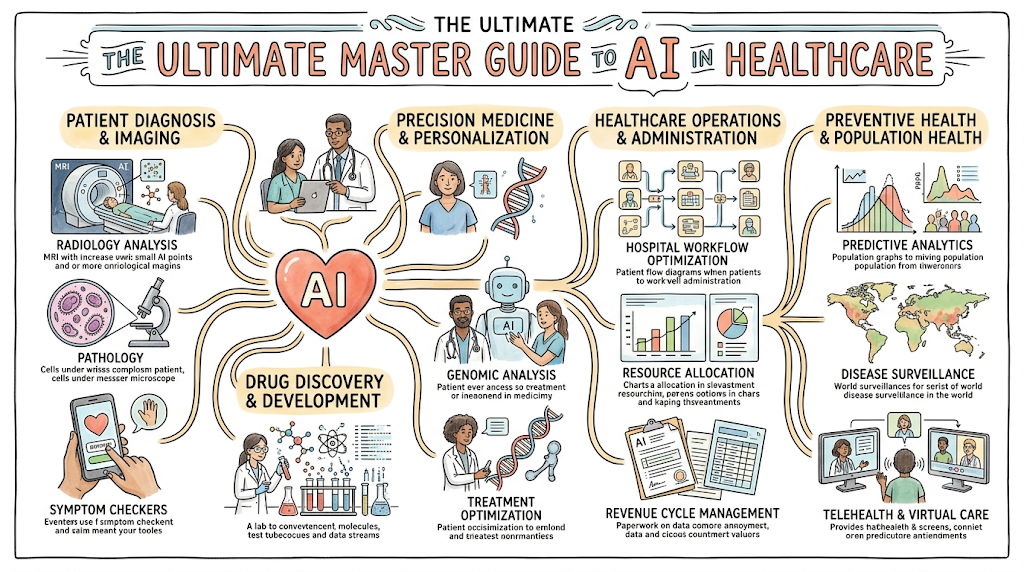
The global medical landscape is facing a silent crisis: data overload. Modern medical facilities generate vast quantities of clinical inputs every second, from continuous heart rate streaming to high-resolution radiological images. Human administrative and clinical teams are working under immense pressure, managing highly fractured networks of documentation and diagnosis. This is where AI in Healthcare steps in—not as a mechanical replacement for human empathy, but as an intelligent infrastructure built to handle this immense operational strain.
Intelligent medical platforms are no longer limited to theoretical research labs. They are actively processing billing cycles, predicting patient deterioration hours before it occurs, and helping clinicians look closer at complex diagnostic files. At AIUniverse, we view this technological shift as an opportunity to build a more responsive, reliable, and precise care ecosystem. Whether you are an administrative leader trying to optimize your facility or an aspiring data professional entering the space, this master guide will provide you with a practical, clear look at the digital systems transforming modern medicine.
What Is AI in Healthcare?
At its foundational level, AI in Healthcare is the implementation of specialized machine learning models and computational algorithms designed to process, interpret, and act upon medical data. Traditional software depends entirely on rigid rules written by a programmer; if a clinical situation doesn’t fit the exact logic, the system stalls. AI operates differently. It functions by recognizing complex structural patterns across thousands of historical medical files, allowing systems to provide real-time decision support.
The integration of artificial intelligence in healthcare bridges the massive gap between static patient databases and active clinical interventions. Medical organizations adopt these systems because human data generation has surpassed human processing capacity. From early digitization in electronic health records to modern predictive platforms, the evolution of digital health focuses on a single core purpose: minimizing clinical uncertainty and automating administrative friction so providers can focus entirely on patient recovery.
Why AI Matters in Modern Healthcare
The modern medical ecosystem demands faster analytical turnaround times without compromising patient safety. When a patient arrives at an emergency department, every minute spent waiting for diagnostic confirmation impacts their recovery trajectory. AI mitigates this friction by acting as an omnipresent digital assistant, managing the heavy analytical lifting in the background.
Consider the practical operational benefits these platforms bring to modern clinical settings:
- Accelerated Diagnostics: Algorithms pre-screen critical laboratory panels, flagging life-threatening anomalies for immediate review.
- Proactive Patient Monitoring: Predictive systems constantly evaluate incoming telemetry data to spot subtle signs of physiological decline.
- Minimized Care Friction: Automated administrative routing handles insurance pre-authorizations and scheduling logistics instantly.
- Data-Driven Clinical Insights: Systems synthesize entire historical health profiles to present clinicians with relevant, contextual treatment data.
- Reduced Provider Burnout: By removing repetitive data entry tasks, systems restore time for direct, face-to-face patient engagement.
Top AI Applications in Healthcare
AI-Powered Medical Imaging
Modern radiological workflows rely heavily on deep learning models to screen thousands of pixels in seconds. When an MRI, CT scan, or X-ray is completed, the visual data is processed through neural networks trained on millions of confirmed historical scans. The system automatically highlights suspicious micro-calcifications, tiny pulmonary nodules, or hidden bone fractures. This pre-screening process ensures that high-risk cases are prioritized at the top of the radiologist’s workflow queue, reducing critical diagnostic delays.
Predictive Diagnostics
Predictive models analyze vast arrays of unstructured data inside electronic medical records to identify hidden long-term risks. By analyzing slight, historical changes in blood pressure, kidney function, and genetic history, the system can calculate a patient’s precise risk score for chronic conditions like type-2 diabetes, cardiovascular disease, or sepsis. This allows clinical teams to establish preventative treatment protocols before acute physical symptoms ever appear.
Virtual Healthcare Assistants
Virtual assistants serve as the primary digital touchpoint for outpatient management. These tools interact directly with patients via secure mobile applications to monitor post-surgical recovery or manage medication adherence for chronic illnesses. By asking guided, clinically validated questions, the assistant can determine if a patient is recovering safely at home or if their reported symptoms require direct intervention from an on-call clinical team member.
Personalized Treatment Planning
Every human body possesses unique genetic variations that influence how it responds to medical therapies. AI platforms evaluate a patient’s genomic sequences alongside existing clinical trial data to assist oncologists and specialists in designing custom therapeutic regimens. This eliminates the traditional trial-and-error approach to complex prescriptions, ensuring patients receive the precise molecular compound that offers the highest statistical probability of success.
Drug Discovery and Research
Developing a single market-ready medication traditionally requires billions of dollars and over a decade of clinical trials. Machine learning models radically compress this timeline by simulating how chemical compounds interact with targeted biological receptors in a virtual environment. This predictive modeling allows pharmaceutical researchers to bypass millions of unsuccessful chemical combinations, identifying promising drug candidates within months instead of years.
Remote Patient Monitoring
Wearable biosensors and connected home devices continuously track blood oxygen levels, heart rates, and glucose metrics in real time. This incoming data stream is evaluated by remote monitoring algorithms that separate natural biological fluctuations from true clinical emergencies. If a patient suffering from congestive heart failure shows sudden, abnormal fluid retention patterns, the system automatically triggers an alert for the care team, preventing avoidable emergency room readmissions.
Healthcare Chatbots
Automated conversational tools handle the initial layers of patient triage and intake management. When a user logs onto a hospital portal, the chatbot securely gathers baseline data regarding symptoms, insurance coverage, and medical history. Using structured clinical protocols, the bot guides the user to the correct resource—whether that means booking a routine primary care appointment or directing them to immediate urgent care facilities.
AI in Hospital Administration
Managing a massive clinical facility requires complex logistical orchestration. Predictive analytics engines process historical admission rates, local weather patterns, and seasonal viral trends to accurately project future patient volumes. This enables administrators to optimize nurse scheduling schedules, manage bed allocations, and prevent supply chain shortages for critical medical equipment before peak demand hits.
Robotic-Assisted Surgery
Surgical robotics platforms utilize embedded computer vision and motion-stabilization algorithms to enhance a surgeon’s physical precision. During complex, minimally invasive procedures, the system filters out natural hand tremors and provides clear, high-definition tracking of anatomical boundaries. The robotic arm remains entirely under the direct command of the surgeon, acting as a highly precise extension of their own hands.
Medical Data Analytics
Public health networks use analytical platforms to parse massive de-identified population datasets. By monitoring regional prescription trends, lab results, and symptom inputs, the software can pinpoint localized disease outbreaks or tracking the efficacy of wide-scale vaccination initiatives. This shifts public health management from a reactive reporting model to a proactive, real-time response framework.
AI Healthcare Workflow Explained
To understand how an AI healthcare system operates in a real environment, it helps to look at the step-by-step path that information takes through the digital pipeline:
- Data Collection: The system securely ingests raw data from disparate clinical environments, including imaging machines, laboratory software, and handwritten nursing logs.
- Data Processing: The ingested information is standardly formatted, stripped of direct personal identifiers, and cleaned to fix missing or corrupted values.
- Pattern Analysis: Advanced machine learning models scan the processed dataset, comparing the current patient’s indicators against millions of historical records to find correlations.
- Clinical Decision Support: The system presents its findings clearly to the attending doctor, complete with a statistical probability score and the underlying data points used.
- Feedback Loop: The final diagnosis made by the human medical professional is recorded back into the system, continuously refining the accuracy of the underlying model.
Popular AI Technologies Used in Healthcare
To build a reliable digital infrastructure, developers combine multiple distinct technologies. Each tool serves a specific operational purpose within the clinical environment:
| Technology | Purpose | Difficulty Level | Healthcare Usage |
| Machine Learning | Analyzes patient histories to forecast long-term health risks. | Moderate | Predicts hospital readmission probabilities and patient deterioration scores. |
| Deep Learning | Uses multi-layered neural networks to examine unstructured imagery. | Advanced | Identifies microscopic anomalies and cancerous lesions within diagnostic scans. |
| Natural Language Processing | Transcribes and extracts key structured concepts from unstructured text. | Moderate | Converts conversational doctor-patient dialogue into structured clinical notes. |
| Computer Vision | Tracks, measures, and monitors video inputs during real-time procedures. | Advanced | Guides robotic instruments and monitors anatomical margins during surgeries. |
| Predictive Analytics | Analyzes historical institutional metrics to forecast future trends. | Beginner | Estimates future emergency department traffic and guides staff scheduling. |
| Automation Systems | Executes repetitive, rules-based administrative processes across portals. | Beginner | Processes standard medical insurance claims and routes billing documentation. |
AI Architecture in Modern Healthcare Systems
A production-grade medical AI system cannot run in isolation; it requires a highly secure, multi-layered data architecture. At the foundational layer sits the Data Integration Layer, which connects directly to core hospital software like Electronic Health Records (EHR) and Picture Archiving and Communication Systems (PACS). This data must be handled in strict compliance with regional safety laws, meaning all inputs are routed through automated encryption and de-identification engines before moving forward.
Once secured, data moves to the Cloud Infrastructure and Analytics Layer, where highly scalable compute clusters run complex machine learning models. Because clinical decisions require real-time answers, this cloud architecture often uses edge-computing nodes located directly inside the hospital. This minimizes processing delays, ensuring that a critical alert regarding patient status moves from the algorithm to a nurse’s handheld device in milliseconds.
Roles and Responsibilities in Healthcare AI
As institutions embrace automation, a specialized career sector has emerged. These positions require a unique mix of technical capability and deep respect for clinical safety:
AI Engineer
- Required Skills: Deep proficiency in Python, specialized machine learning frameworks, and structured data engineering.
- Daily Responsibilities: Designing and training the core algorithmic models that identify patterns within medical datasets.
- Career Growth: Moving into architectural leadership roles, supervising the creation of wide-scale medical software platforms.
Healthcare Data Analyst
- Required Skills: Expertise in SQL database management, data visualization tools, and fundamental medical terminology.
- Daily Responsibilities: Reviewing clinical operational data to locate systemic inefficiencies, bottlenecks, and care trends within the facility.
- Career Growth: Progressing to operational director roles, steering data strategies for complete hospital networks.
Machine Learning Engineer
- Required Skills: Experience with cloud deployment, model optimization, and managing large-scale data pipelines.
- Daily Responsibilities: Taking raw models developed by researchers and optimizing them to run efficiently on hospital servers.
- Career Growth: Advancing to Principal Infrastructure Engineer, overseeing global deployment environments.
Healthcare IT Specialist
- Required Skills: Mastery of network security protocols, system integration, and medical communication standards like HL7.
- Daily Responsibilities: Ensuring new software tools communicate perfectly with legacy hospital databases without downtime.
- Career Growth: Moving into Chief Information Officer (CIO) positions, controlling complete institutional tech stacks.
Beginner Roadmap for Learning AI in Healthcare
Breaking into this industry requires a balanced learning approach. You must learn the data science concepts alongside the operational realities of actual patient care environments:
Step 1: AI & Data Science Fundamentals
Begin by learning core data manipulation languages, focusing primarily on Python. Master basic statistical concepts, data cleaning techniques, and how to work with unstructured information.
Step 2: Healthcare Ecosystem Literacy
Study how modern medical facilities operate. Learn standard billing codes, clinical documentation workflows, and regional patient privacy laws such as HIPAA.
Step 3: Machine Learning Application
Move on to training basic predictive models. Practice using public, de-identified medical datasets to build simple risk-scoring applications and regression models.
Step 4: Medical Data Systems Mastery
Understand how medical information travels. Learn the architectural principles behind EHR software and how radiological imaging storage platforms archive files.
Step 5: Ethics, Compliance, and Live Projects
Study how to audit models for algorithmic bias and systemic data gaps. Apply your skills by completing an end-to-end project, such as building a model that predicts emergency room discharge timelines based on intake data.
Certifications & Learning Resources
Earning a professional certification validates your ability to handle sensitive data within highly regulated medical settings. The learning ecosystems at AIUniverse provide structured pathways to help you move from basic data tracking to advanced clinical architecture deployment.
| Certification | Level | Best For | Skills Covered |
| Healthcare AI Foundation | Beginner | Students and clinicians transitioning into technology roles. | Core machine learning definitions, basic medical data privacy, and workflow automation. |
| Clinical Data Science Pro | Intermediate | Active data analysts and hospital IT infrastructure staff. | SQL database queries, advanced healthcare analytics, and integration with legacy EHR systems. |
| Advanced Medical Imaging AI | Advanced | Senior machine learning engineers and specialized radiologists. | Neural network optimization, computer vision pipelines, and deep algorithmic auditing. |
Real-World Use Cases of AI in Healthcare
- Regional Hospitals: Implementing predictive triage models to cut patient wait times by over 20%, ensuring urgent cases reach physicians faster.
- Diagnostic Centers: Using computer vision plugins that analyze skin lesion photographs, helping dermatologists catch early signs of melanoma with higher accuracy.
- Telemedicine Platforms: Integrating natural language systems that take patient intake notes automatically, reducing post-consultation documentation work for doctors.
- Healthcare Startups: Building specialized wearable patches that track glucose drops in diabetic patients, sending automated alerts before a crisis occurs.
- Pharmaceutical Companies: Using deep learning simulators to screen thousands of molecular structures, cutting years off the early phase of drug discovery campaigns.
Benefits of AI in Healthcare
The deliberate, planned integration of algorithmic models brings measurable improvements across every tier of modern clinical practice:
- Unprecedented Diagnostic Speed: Processing massive, multi-page patient charts and imaging files in seconds to deliver near-instant results.
- Elevated Diagnostic Accuracy: Acting as a tireless digital assistant that flags microscopic structural variations that human eyes might miss during long shifts.
- Reduced Administrative Strains: Automating repetitive documentation tasks, allowing nurses and doctors to dedicate more time to actual patient interactions.
- Optimized Resource Management: Giving hospital leaders clear, accurate forecasts of upcoming patient volumes so they can staff units appropriately and avoid shortages.
- Proactive Chronic Care: Shifting medical interventions away from reactive emergency treatments toward early, preventative healthcare management.
Challenges of AI in Healthcare
Despite the clear operational advantages, deploying algorithmic systems within patient care settings comes with significant real-world challenges:
The Data Quality Challenge: An algorithm is only as reliable as the information used to train it. If a model is trained on flawed, incomplete, or non-representative patient files, it will generate inaccurate predictions—a risk commonly referred to as “garbage in, garbage out.”
To mitigate these risks, systems must undergo strict validation testing against diverse, real-world data profiles. Furthermore, institutions face deep regulatory hurdles and data privacy concerns. Patient records must remain completely anonymous, requiring the deployment of advanced encryption layers.
Finally, developers must guard against algorithmic bias, which occurs when a system performs less accurately for specific patient demographics due to imbalances in its original training datasets.
Common Beginner Mistakes
- Ignoring the Clinical Context: Trying to design tools without spending time understanding the actual workflows of nurses and doctors on the hospital floor.
- Over-focusing on Theoretical Complexity: Building overly complicated neural networks when a simple, explainable regression model would solve the issue more reliably.
- Treating Medical Data Carelessly: Forgetting that clinical information requires strict access controls, data de-identification, and security protocols.
- Assuming Flawless Model Deployment: Believing a model that performs well in a clean sandbox environment will automatically handle messy, real-world hospital inputs perfectly.
Best Practices for Healthcare AI Systems
- Enforce Strict Explainability: Never deploy “black box” models. Clinicians must always see the underlying clinical indicators used by an algorithm to reach a conclusion.
- Maintain Human-in-the-Loop Oversight: AI must always function as a supportive tool. The final diagnostic decision and treatment plan must rest solely with a qualified medical professional.
- Run Continuous Audits: Patient demographics and disease patterns change over time. Models must be audited regularly to ensure their accuracy hasn’t drifted.
- Design for Seamless Workflows: Build software tools that fit cleanly inside existing medical portals, rather than forcing doctors to log into separate platforms.
Future of AI in Healthcare
The next stage of medical technology will focus on complete ambient automation. We are moving toward clinical environments where ambient microphones securely capture doctor-patient conversations, instantly turning them into perfectly formatted, structured medical records in the background.
Furthermore, we will see deeper integrations between real-time wearable monitoring arrays and preventative treatment software, transforming healthcare from a system that treats illness to an infrastructure that actively preserves wellness.
FAQs
- What is AI in healthcare in simple words?
It is using smart computer software to analyze patient data quickly, helping doctors make faster and more accurate medical decisions. - Can AI replace human doctors?
No. It handles data analysis and administrative tasks, functioning as a supportive tool while leaving human judgment in control. - Is patient data safe with AI systems?
Yes, provided the systems are engineered using strict de-identification protocols and compliant encryption frameworks. - Do I need a medical background to work in healthcare AI?
No, but you must take the time to learn clinical workflows, basic medical terminology, and healthcare compliance laws. - What programming language is most common in this field?
Python is the industry standard due to its extensive library ecosystem for data science and machine learning. - How does computer vision help patients?
It analyzes medical images like CT scans and X-rays to point out potential areas of concern for radiologists. - What is algorithmic bias in medicine?
It occurs when an AI model gives less accurate results for certain groups because those demographics were missing from its training data. - Can healthcare AI help reduce hospital costs?
Yes. By predicting patient numbers and automating paperwork, it cuts down on resource waste and administrative overhead. - What does “explainable AI” mean in a hospital setting?
It means the software clearly shows the data points and medical factors it used to create a recommendation. - How can a beginner start practicing?
Download public, anonymous medical datasets and practice building basic models that predict operational outcomes, like patient stay lengths.
Conclusion
Entering the healthcare AI space requires a balanced professional approach. Mastery over machine learning code is highly valuable, but it loses its effectiveness if you do not have a deep respect for the daily realities of patient care. True innovation happens when engineers design tools that integrate seamlessly into the busy, high-stress environments where doctors and nurses work. Approach this field as an ongoing student. Focus on building transparent, clean, and ethical systems, and you will position yourself at the forefront of a discipline that is saving lives every day.
