Introduction
AI Regulatory Reporting Automation Tools use artificial intelligence, machine learning, natural language processing, and automation technologies to help financial institutions generate, validate, manage, and submit regulatory reports. These platforms analyze financial data, compliance requirements, transaction records, and reporting frameworks to reduce manual reporting effort and improve regulatory accuracy.
Traditional regulatory reporting processes often depend on spreadsheets, manual data collection, and complex reconciliation workflows. AI-powered reporting automation solutions help organizations streamline data preparation, identify reporting inconsistencies, automate validation checks, and improve compliance operations.
These tools are widely used by banks, insurance companies, investment firms, fintech organizations, and regulated enterprises to manage financial reporting requirements, reduce operational risk, and improve regulatory transparency.
Real-world use cases:
- Automated regulatory report generation
- Financial data aggregation
- Compliance reporting workflows
- Regulatory data validation
- Risk reporting automation
- Transaction reporting support
- Audit evidence preparation
- Regulatory change analysis
- Data reconciliation automation
- Supervisory reporting management
Evaluation Criteria for Buyers:
- AI reporting automation capabilities
- Regulatory framework support
- Data integration flexibility
- Reporting accuracy
- Workflow automation
- Compliance tracking features
- Audit trail management
- Scalability for enterprise reporting
Best for
Banks, financial institutions, insurance companies, investment firms, fintech organizations, and regulated enterprises.
Not ideal for
Small businesses without regulatory reporting requirements or organizations managing limited compliance obligations.
Key Trends
- AI-powered compliance automation
- Automated regulatory data collection
- Intelligent reporting validation
- Regulatory change monitoring
- Machine learning compliance analytics
- Real-time risk reporting
- Cloud-based regulatory technology
- Natural language processing for regulations
- Automated audit preparation
- Financial data intelligence
Methodology
- Selected platforms based on AI regulatory reporting automation capabilities
- Evaluated reporting workflows, compliance features, integrations, and analytics
- Considered financial industry requirements
- Prioritized platforms supporting enterprise regulatory operations
- Reviewed security, scalability, and governance capabilities
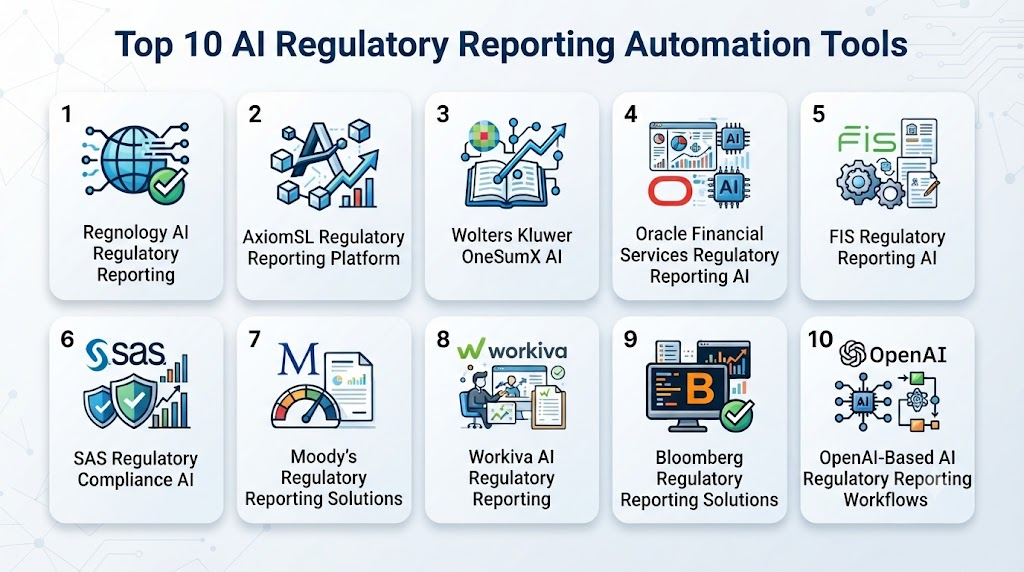
Top 10 AI Regulatory Reporting Automation Tools
1. Regnology AI Regulatory Reporting
Verdict: Enterprise regulatory technology platform for automated financial reporting.
Short Description: Regnology AI helps financial institutions collect, validate, transform, and submit regulatory reports through automated compliance workflows.
Key Features:
- Regulatory reporting automation
- Data transformation
- Compliance workflows
- Reporting validation
- Regulatory updates
Pros:
- Strong regulatory expertise
- Enterprise-scale reporting capabilities
Cons:
- Complex implementation
- Enterprise-focused
Deployment: Cloud and enterprise environments
Security & Compliance: Enterprise security controls
Integrations & Ecosystem: Banking and financial systems
Support & Community: Enterprise support
Pricing Model: Subscription-based
Best-Fit Scenarios: Banks and financial institutions
2. AxiomSL Regulatory Reporting Platform
Verdict: AI-enabled regulatory reporting solution for financial institutions.
Short Description: AxiomSL helps organizations automate regulatory calculations, data management, and compliance reporting processes.
Key Features:
- Regulatory calculations
- Data validation
- Reporting automation
- Risk reporting
- Data governance
Pros:
- Strong financial reporting capabilities
- Supports complex regulations
Cons:
- Requires technical expertise
- Enterprise deployment effort
Deployment: Cloud and enterprise environments
Security & Compliance: Financial security standards
Integrations & Ecosystem: Banking systems and data platforms
Support & Community: Enterprise support
Pricing Model: Subscription-based
Best-Fit Scenarios: Global financial organizations
3. Wolters Kluwer OneSumX AI
Verdict: AI-supported regulatory reporting and compliance management platform.
Short Description: Wolters Kluwer OneSumX helps financial institutions automate reporting, manage regulatory requirements, and improve compliance processes.
Key Features:
- Regulatory reporting
- Compliance management
- Data validation
- Risk reporting
- Regulatory intelligence
Pros:
- Strong compliance expertise
- Broad regulatory coverage
Cons:
- Complex configuration
- Enterprise-oriented
Deployment: Cloud and enterprise environments
Security & Compliance: Enterprise compliance controls
Integrations & Ecosystem: Financial systems
Support & Community: Enterprise support
Pricing Model: Subscription-based
Best-Fit Scenarios: Banking compliance teams
4. Oracle Financial Services Regulatory Reporting AI
Verdict: Enterprise AI reporting platform integrated with financial data systems.
Short Description: Oracle regulatory reporting solutions help financial organizations automate reporting processes, validate data, and manage compliance workflows.
Key Features:
- Regulatory reporting
- Data management
- Compliance analytics
- Reporting automation
- Financial intelligence
Pros:
- Strong enterprise ecosystem
- Broad financial capabilities
Cons:
- Requires Oracle expertise
- Implementation complexity
Deployment: Cloud and enterprise environments
Security & Compliance: Enterprise security standards
Integrations & Ecosystem: Oracle financial platforms
Support & Community: Enterprise support
Pricing Model: Subscription-based
Best-Fit Scenarios: Large financial institutions
5. FIS Regulatory Reporting AI
Verdict: AI-assisted reporting automation platform for financial services organizations.
Short Description: FIS helps financial institutions automate regulatory reporting, improve data accuracy, and streamline compliance operations.
Key Features:
- Reporting automation
- Data aggregation
- Compliance workflows
- Validation checks
- Risk reporting
Pros:
- Financial services expertise
- Enterprise capabilities
Cons:
- Requires integration planning
- Complex environments
Deployment: Cloud and enterprise environments
Security & Compliance: Financial security controls
Integrations & Ecosystem: Banking systems
Support & Community: Enterprise support
Pricing Model: Subscription-based
Best-Fit Scenarios: Financial organizations
6. SAS Regulatory Compliance AI
Verdict: AI analytics platform supporting regulatory reporting and compliance intelligence.
Short Description: SAS helps organizations analyze regulatory data, automate reporting workflows, and improve compliance decision-making.
Key Features:
- Compliance analytics
- Data management
- Reporting automation
- Risk analysis
- Model governance
Pros:
- Strong analytics capabilities
- Enterprise reliability
Cons:
- Requires technical expertise
- Complex deployment
Deployment: Cloud and enterprise environments
Security & Compliance: Enterprise security controls
Integrations & Ecosystem: Enterprise data platforms
Support & Community: Enterprise support
Pricing Model: Subscription-based
Best-Fit Scenarios: Large compliance teams
7. Moody’s Regulatory Reporting Solutions
Verdict: AI-supported financial intelligence platform for regulatory reporting and risk management.
Short Description: Moody’s solutions help organizations analyze financial risks, manage regulatory requirements, and improve reporting accuracy.
Key Features:
- Risk analytics
- Regulatory insights
- Financial data analysis
- Reporting support
- Compliance intelligence
Pros:
- Strong financial analytics
- Global risk expertise
Cons:
- Enterprise-focused
- Requires integration effort
Deployment: Cloud-based
Security & Compliance: Enterprise security controls
Integrations & Ecosystem: Financial data systems
Support & Community: Enterprise support
Pricing Model: Subscription-based
Best-Fit Scenarios: Financial institutions
8. Workiva AI Regulatory Reporting
Verdict: AI-enabled connected reporting platform for compliance and regulatory documentation.
Short Description: Workiva AI helps organizations manage reporting processes, collaborate on compliance documents, and improve reporting accuracy.
Key Features:
- Regulatory reporting
- Document automation
- Data collaboration
- Audit support
- Reporting workflows
Pros:
- Strong collaboration features
- Good reporting workflows
Cons:
- Less focused on complex calculations
- Requires process setup
Deployment: Cloud-based
Security & Compliance: Enterprise security controls
Integrations & Ecosystem: Business systems
Support & Community: Customer support
Pricing Model: Subscription-based
Best-Fit Scenarios: Compliance reporting teams
9. Bloomberg Regulatory Reporting Solutions
Verdict: AI-assisted financial reporting platform powered by market data intelligence.
Short Description: Bloomberg regulatory solutions help institutions manage reporting requirements using financial data and analytics.
Key Features:
- Regulatory data management
- Financial analytics
- Reporting workflows
- Data validation
- Compliance insights
Pros:
- Strong financial data ecosystem
- Professional investment support
Cons:
- Enterprise pricing
- Best within Bloomberg environment
Deployment: Cloud and enterprise environments
Security & Compliance: Financial security standards
Integrations & Ecosystem: Bloomberg ecosystem
Support & Community: Enterprise support
Pricing Model: Subscription-based
Best-Fit Scenarios: Investment organizations
10. OpenAI-Based AI Regulatory Reporting Workflows
Verdict: Custom AI approach for building organization-specific regulatory reporting automation systems.
Short Description: AI workflows can analyze financial records, reporting rules, compliance documents, and internal data sources to automate regulatory reporting tasks.
Key Features:
- Report generation assistance
- Compliance document analysis
- Data validation
- Regulatory interpretation support
- Custom reporting workflows
Pros:
- Highly customizable
- Supports unique reporting requirements
Cons:
- Requires AI governance
- Needs compliance validation
Deployment: API and custom environments
Security & Compliance: Depends on implementation
Integrations & Ecosystem: Financial databases, ERP systems, reporting platforms
Support & Community: Developer ecosystem
Pricing Model: Usage-based
Best-Fit Scenarios: Custom enterprise solutions
Comparison Table
| Platform | Reporting Automation | Compliance Intelligence | Data Management | Integrations | Best Use |
|---|---|---|---|---|---|
| Regnology AI | Excellent | Excellent | Excellent | High | Banking reporting |
| AxiomSL | Excellent | Excellent | Excellent | High | Complex regulations |
| OneSumX AI | Excellent | Excellent | High | High | Compliance teams |
| Oracle Regulatory AI | Excellent | High | Excellent | Excellent | Enterprise finance |
| FIS Regulatory AI | High | High | High | High | Financial services |
| SAS Compliance AI | High | Excellent | Excellent | High | Analytics teams |
| Moody’s AI | High | High | High | High | Risk reporting |
| Workiva AI | High | High | High | High | Reporting collaboration |
| Bloomberg Regulatory | High | High | High | Excellent | Investment firms |
| OpenAI Workflows | Excellent | Custom | Custom | Custom | Custom solutions |
Evaluation & Scoring Table
| Platform | AI Accuracy 25% | Reporting Automation 15% | Compliance 15% | Integrations 15% | Security 10% | Ease 10% | Value 10% | Total |
|---|---|---|---|---|---|---|---|---|
| Regnology AI | 25 | 15 | 15 | 14 | 10 | 8 | 9 | 96 |
| AxiomSL | 25 | 15 | 15 | 14 | 10 | 8 | 8 | 95 |
| OneSumX AI | 24 | 15 | 15 | 14 | 10 | 8 | 8 | 94 |
| Oracle Regulatory AI | 24 | 15 | 14 | 15 | 10 | 8 | 8 | 94 |
| FIS Regulatory AI | 23 | 14 | 14 | 14 | 10 | 8 | 9 | 92 |
| SAS Compliance AI | 24 | 14 | 15 | 13 | 10 | 8 | 8 | 92 |
| Moody’s AI | 23 | 14 | 14 | 14 | 10 | 9 | 8 | 92 |
| Workiva AI | 22 | 13 | 13 | 14 | 10 | 10 | 9 | 91 |
| Bloomberg Regulatory | 23 | 13 | 14 | 15 | 10 | 8 | 8 | 91 |
| OpenAI Workflows | 25 | 15 | 15 | 12 | 8 | 8 | 9 | 92 |
Which AI Regulatory Reporting Automation Tool Is Right for You?
- Large Banks: Regnology AI, AxiomSL, Oracle Regulatory Reporting
- Compliance Departments: Wolters Kluwer OneSumX AI, SAS Compliance AI
- Investment Firms: Bloomberg Regulatory Solutions, Moody’s AI
- Collaborative Reporting Teams: Workiva AI
- Custom Regulatory Automation: OpenAI-based workflows
Implementation Playbook
30 Days
- Identify reporting requirements
- Map regulatory data sources
- Define automation goals
60 Days
- Connect financial systems
- Configure reporting workflows
- Validate generated reports
90 Days
- Automate reporting processes
- Monitor compliance accuracy
- Improve reporting efficiency
Common Mistakes
- Poor data quality management
- Ignoring regulatory updates
- Automating without validation
- Lack of audit trails
- Not involving compliance teams
Frequently Asked Questions
What are AI regulatory reporting automation tools?
They are AI-powered platforms that automate regulatory data preparation, validation, and reporting processes.
How does AI improve regulatory reporting?
AI reduces manual work by analyzing data, identifying errors, and automating reporting workflows.
Can AI generate regulatory reports automatically?
Yes. Many platforms automate report creation and validation tasks.
Do banks use AI for regulatory reporting?
Yes. Financial institutions use AI to improve reporting efficiency and accuracy.
Can AI reduce reporting errors?
AI-based validation and reconciliation help identify inconsistencies.
Do these tools support multiple regulations?
Many enterprise platforms support different regulatory frameworks.
Can AI analyze regulatory documents?
Yes. Natural language processing can help interpret regulatory information.
Are AI reporting systems secure?
Organizations should evaluate security, access controls, and compliance features.
Can fintech companies use regulatory reporting AI?
Yes. Many solutions support fintech compliance needs.
Do AI tools replace compliance teams?
No. They assist compliance professionals with automation and analysis.
Can AI improve audit readiness?
Yes. Automated records and workflows improve audit preparation.
How should organizations implement AI reporting automation?
Start with data preparation, workflow testing, compliance validation, and gradual automation.
Conclusion
AI Regulatory Reporting Automation Tools are transforming compliance operations by reducing manual reporting effort, improving data accuracy, and enabling faster regulatory processes. Platforms such as Regnology AI, AxiomSL, Wolters Kluwer OneSumX AI, and Oracle Regulatory Reporting provide advanced capabilities for financial organizations.Organizations should select solutions based on regulatory complexity, reporting volume, data infrastructure, and compliance requirements. Combining AI-powered reporting automation with expert oversight helps businesses improve accuracy, reduce operational risk, and maintain stronger regulatory compliance.
